
North America · United States
Catalina Island
Walk down the stairs at Casino Point straight into a giant kelp forest
Photo: BavaroGirl2014 · CC BY-SA 4.0
Catalina lies an hour by ferry from Los Angeles and holds the clearest water in southern California, sheltered from the swell that muddies the mainland coast. Casino Point in Avalon was the first underwater park in the state and is still the easiest giant-kelp dive anywhere: walk down the stairs, swim out and the canopy closes overhead. Garibaldi, giant sea bass and bat rays work the kelp, and offshore pinnacles like Farnsworth Bank carry rare hydrocoral at depth.
About diving in Catalina Island
Two rhythms exist here. Base yourself in Avalon and the diving is walk-and-repeat: the entry, the air fills and the rental counter all sit within a few minutes of each other, so people log three or four dives at the same spot across a day and go into town for lunch between them. The alternative is a day boat from the mainland, out of San Pedro, Long Beach or Dana Point, crossing early, running two or three tanks along the sheltered coves and turning for home in the afternoon. A handful of boats stay out overnight and work the far ends of the island.
The island is rock, not coral. Boulders and ledges step down from the shoreline onto sand, giant kelp anchors wherever it finds hard bottom, and most recreational diving happens on that slope. The leeward front side, facing the mainland, holds the calm coves and stays workable in almost any forecast; the exposed back side and the offshore banks need a settled day and a crew willing to make the run. Sites differ mainly in how sheltered they are, and in how far the rock carries before sand takes over.
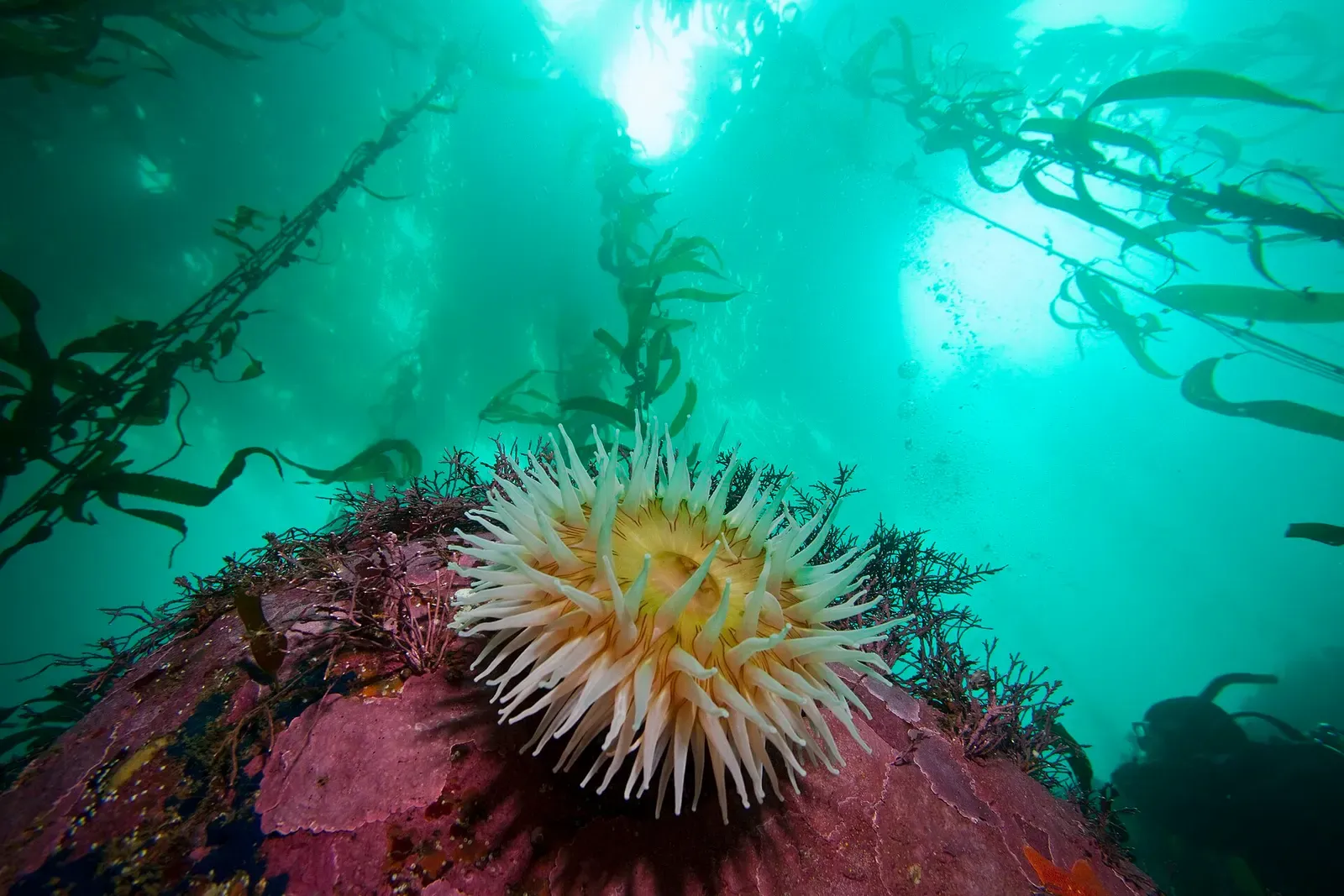
The draw is being inside the canopy: swimming between stipes with the light broken up overhead, then dropping under the fronds to where holdfasts grip the rock. Night diving is the other one, and shore access means it needs no charter, no crossing and no fixed departure time. Farther out the rock stands up into pinnacles and the diving turns vertical rather than sloping, which is the more interesting terrain by some distance, but a poor forecast cancels those days first, so keep spare ones in hand.
It suits divers based in southern California who want a full dive weekend without flying, and anyone logging their first kelp dives, since the sheltered entries are forgiving and the same site rewards repeat visits. Mixed groups work because non-divers have a town to fill a day with. Anyone set on warm water or big pelagic encounters will be happier elsewhere; the appeal here is structure, cool water and animals that hold still long enough to be photographed.
Best time to dive Catalina Island
| Jan | Feb | Mar | Apr | May | Jun | Jul | Aug | Sep | Oct | Nov | Dec | |
|---|---|---|---|---|---|---|---|---|---|---|---|---|
| Season | Fair | Fair | Fair | Good | Good | Good | Prime | Prime | Prime | Prime | Good | Fair |
| Sea surface | 15°C59°F | 15°C59°F | 15°C59°F | 16°C61°F | 17°C63°F | 19°C66°F | 21°C70°F | 21°C70°F | 21°C70°F | 20°C68°F | 18°C64°F | 17°C63°F |
| Daytime high | 23°C73°F | 23°C73°F | 23°C73°F | 25°C77°F | 23°C73°F | 24°C75°F | 26°C79°F | 28°C82°F | 29°C84°F | 30°C86°F | 27°C81°F | 23°C73°F |
| Rain | 63 mm2.5 in | 62 mm2.4 in | 59 mm2.3 in | 13 mm0.5 in | 8 mm0.3 in | 1 mm0.0 in | 2 mm0.1 in | 5 mm0.2 in | 5 mm0.2 in | 9 mm0.4 in | 33 mm1.3 in | 71 mm2.8 in |
| Jan | Feb | Mar | Apr | May | Jun |
|---|---|---|---|---|---|
| Fair | Fair | Fair | Good | Good | Good |
| Sea surface | |||||
| 15°C59°F | 15°C59°F | 15°C59°F | 16°C61°F | 17°C63°F | 19°C66°F |
| Daytime high | |||||
| 23°C73°F | 23°C73°F | 23°C73°F | 25°C77°F | 23°C73°F | 24°C75°F |
| Rain | |||||
| 63 mm2.5 in | 62 mm2.4 in | 59 mm2.3 in | 13 mm0.5 in | 8 mm0.3 in | 1 mm0.0 in |
| Jul | Aug | Sep | Oct | Nov | Dec |
|---|---|---|---|---|---|
| Prime | Prime | Prime | Prime | Good | Fair |
| Sea surface | |||||
| 21°C70°F | 21°C70°F | 21°C70°F | 20°C68°F | 18°C64°F | 17°C63°F |
| Daytime high | |||||
| 26°C79°F | 28°C82°F | 29°C84°F | 30°C86°F | 27°C81°F | 23°C73°F |
| Rain | |||||
| 2 mm0.1 in | 5 mm0.2 in | 5 mm0.2 in | 9 mm0.4 in | 33 mm1.3 in | 71 mm2.8 in |
2011–2025 averages. Sea surface: NOAA Coral Reef Watch, measured at the surface, so deeper water can run colder. Daytime high and rain: NASA POWER.
Jul–Oct brings the warmest water and best visibility as the kelp thins; winter storms cut visibility and cool it to 13°C.
Best months: July, August, September, October
Catalina Island water temperature and weather by month
The sea surface runs from 15 °C (59 °F) in February to 21 °C (70 °F) in August. Most rain falls from November to March, peaking at about 70 mm (2.8 in) in December; it stays largely dry from April to October. Daytime highs reach 30 °C (86 °F) in October and drop to 23 °C (73 °F) in February. The coldest water here is about 13 °C (55 °F), so pack a 7 mm suit with a hood, or a semi-dry.
Dive types & marine life
Sea lions hold around the offshore pinnacles year-round and are most interactive late in the season, once the year's pups are active. Giant sea bass gather over the reef through the summer months, when schooling fish are thickest as well. Night dives are the reliable way to find horn sharks, morays and octopus, and nudibranchs are easier to pick out on shallow rock in the cooler months.
- Kelp forest
- Reef
- Wreck
- Night
- Wall
- Seals & sea lions
- Groupers
- Stingrays
- Octopus & cuttlefish
- Reef fish swarms
- Macro critters
- Nudibranchs
Best dive sites in Catalina Island
Kelp forest
Concrete steps into the first underwater park in the US
Kelp forest
A wreck, elk kelp and summer leopard sharks, all under 20 m
Pinnacle
Swim-throughs and mini-walls on the outer pinnacles
Ship Rock
Pinnacle off Isthmus Cove with walls, kelp and sea lions.
Farnsworth Bank
Offshore seamount at 18–40 m carrying rare hydrocoral.
Italian Gardens
Boulder and kelp site on the leeward shore, good for macro.
Blue Cavern Point
Wall and cavern dive with dense kelp and resident sea lions.
How to get to Catalina Island
Ferries cross to Avalon from San Pedro, Long Beach and Dana Point, with a less frequent service to Two Harbors; LAX and Long Beach are the usual fly-in airports. Avalon puts you within walking distance of the dive park, fills and hotels, while Two Harbors is the quieter base. Day boats from the same mainland ports work the leeward coves without landing anyone.
Photos from Catalina Island
Lonhart · CC BY 3.0
Boothsift · CC BY-SA 4.0
Dive videos
SCUBA How To Dive Casino Point, The Definitive Guide - Catalina Island, CA, 2025 - 4k · Soup Cat JJ on YouTube
What's in an underwater forest? (Scuba Diving Catalina Island) · Triton's Realm on YouTube
Photo credits
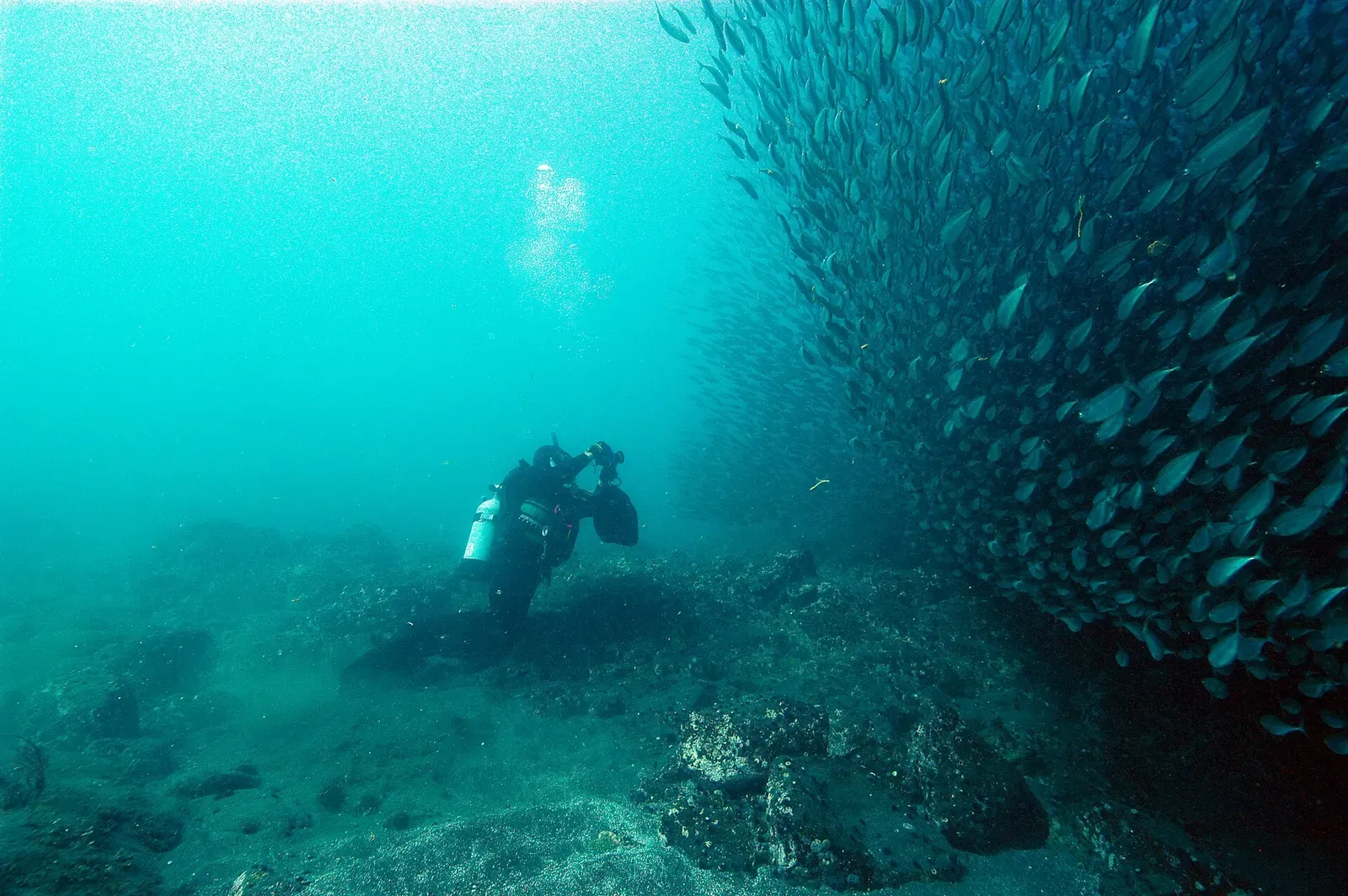
- A dense school of yellow fish glides over a colorful reef at Catalina's Aquarium Reef by BavaroGirl2014, CC BY-SA 4.0, via Wikimedia Commons
- An orange top shell snail crawls up a blade of giant kelp at Pumpernickel Reef, Catalina Island by Lonhart, CC BY 3.0, via Wikimedia Commons
- Sailboats fill Avalon Harbor below the hillside town on Catalina Island by Boothsift, CC BY-SA 4.0, via Wikimedia Commons
Embed
Run a dive centre, club or blog? Embed this map of 9 dive sites near Catalina Island on your own page.
In The Logbook
- Kelp forest diving, and where it still growsCold water · 13 min read
- How much weight do you need to dive?Gear & kit · 8 min read
- The best shore dives in the worldShore diving · 8 min read
Similar destinations
North America
Redondo, Palos Verdes & San Pedro
United States
Market squid spawn on the Redondo canyon edge from mid-December to early March

Market squid spawn in their millions over the sand on winter nights
Playful sea lions and towering kelp forests around rocky island pinnacles.


Beach-entry kelp forests inside a national marine sanctuary