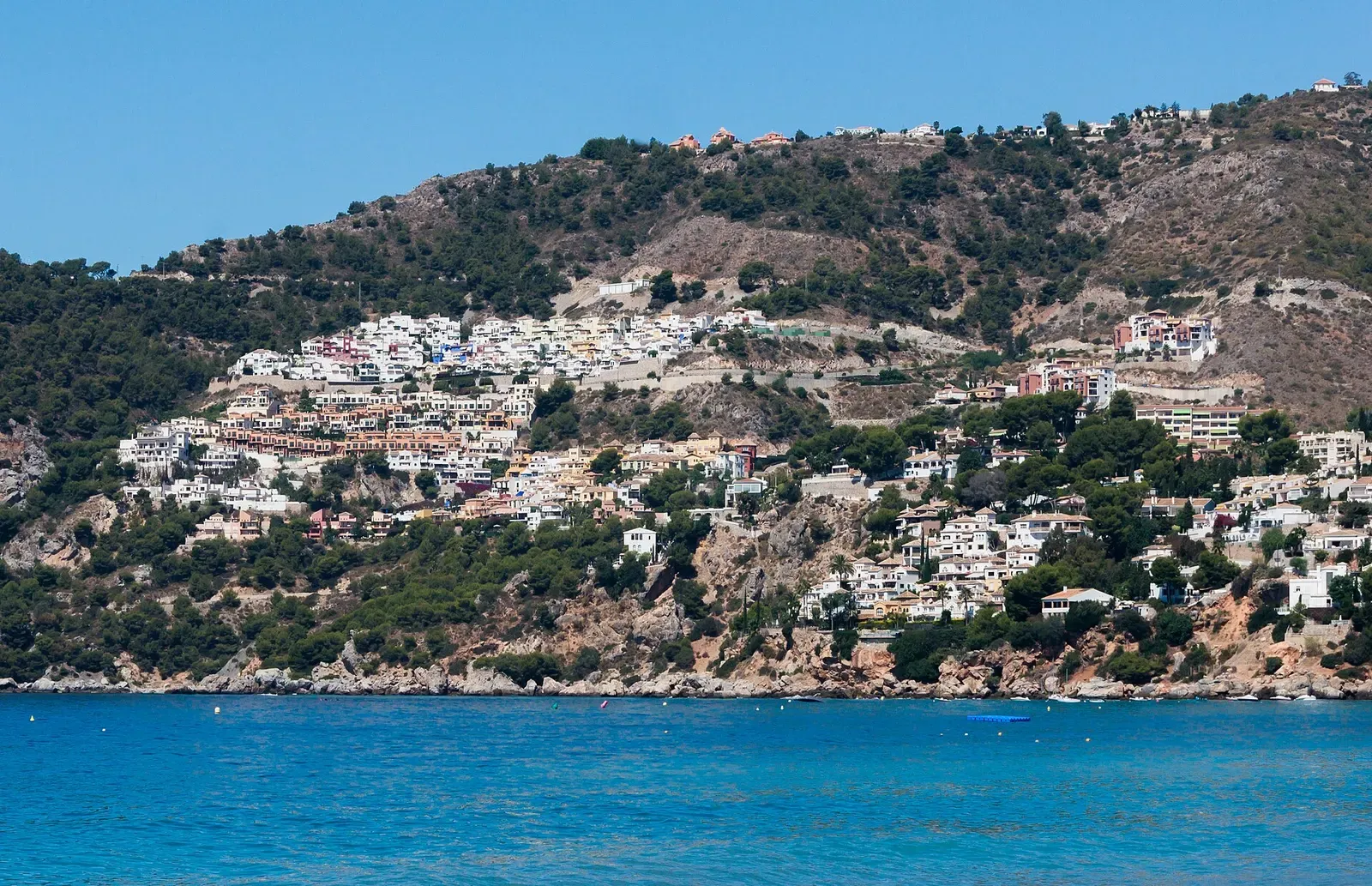
A bay on Granada's Costa Tropical with a cluster of dive centres in the village and a training area beside Marina del Este that runs from 2 to 12 m. Around the bay the diving is boulder and sand: Piedra del Hombre at 8-18 m, Roqueo de los 14 on cracked rock at about 14 m, Piedra de la Higuera with references down to 27 m. West of the bay the Cerro Gordo sites sit inside the protected Acantilados de Maro-Cerro Gordo, where shaded walls carry orange Astroides coral and Pared Amarilla reaches about 20 m. The deep rock off Punta de la Mona runs to about 48 m.
About diving in La Herradura
Diving is run from the village, where Buceo Aqualia, Delta Buceo and Buceo España are based, and the boats work out of Marina del Este. The bay does the shallow work: the course area beside the harbour holds 2 to 12 m of rock, and Piedra del Hombre, east of the bay, is reached from a boat, from the beach, or by jumping from the cliff, an entry that turns awkward when wind or tide change, because the climb out may become impossible. The Cerro Gordo sites west of the bay are boat work inside a protected area that keeps motor craft 200 m off its beaches and 50 m off the rest of the coast, with anchoring confined to marked zones between sunrise and sunset.
The rock is the attraction. Roqueo de los 14 sits in the middle of a rocky area about 14 m down, full of cracks, holes and open sand, and Piedras Altas is a jumble of fallen vertical rocks with tunnels and overhangs under the west side of the Punta de la Mona cliff. Shaded walls carry orange Astroides calycularis, which grows where the sunlight does not reach: it lines the wall at Inmersión de la Virgen, sits on the rock at Piedra del Hombre, and covers the Cerro Gordo walls at Cueva de las Palomas and Pared Amarilla. Cueva de las Palomas is a wall dive in spite of its name, and Pared Amarilla east of it reaches about 20 m, the deepest ground in the protected area.
The bay suits divers in training and divers after short, shallow days, since every Cerro Gordo dive can be made on an Open Water certificate, and the shops brief a no-touch rule for the protected ground - no fins against the rock, no hand down to steady a camera. The deep rock is the other half of the coast: La Calita drops to a plain at 32 m and Punta de la Mona runs 25 to 48 m, both advanced dives on a coast whose ordinary sites stop well short of that. Divers who came for big fish on protected seamounts will do better at Cabo de Palos, and wreck divers should look there too.
When to dive La Herradura
| Jan | Feb | Mar | Apr | May | Jun | Jul | Aug | Sep | Oct | Nov | Dec |
|---|---|---|---|---|---|---|---|---|---|---|---|
| Fair | Fair | Fair | Good | Prime | Prime | Prime | Prime | Prime | Good | Good | Fair |
Dived all year; December to March sits at 14-16 °C and winter storms cut visibility to 5-10 m for days, while spring and autumn hold the most consistent 15-25 m.
Dive types & marine life
Groupers are the constant, named in the site descriptions for Roqueo de los 14, Piedra del Hombre, Inmersión de la Virgen and Pared Amarilla, with a large one often reported under a 44 m overhang at La Calita. Octopus, cuttlefish and nudibranchs turn up across the shallow rock, and orange Astroides calycularis covers the shaded walls. No shark, dolphin or ray encounter is documented here.
- Reef
- Wall
- Groupers
- Octopus & cuttlefish
- Nudibranchs
Notable dive sites in La Herradura
Reef
A shallow cove lap, 6 to 15 m, best reached by boat
A wall dive despite the name, 5 to 19 m
Reef
Blocks down to a 32 m plain, with a grouper under a 44 m overhang
Reef
Shallow Cerro Gordo bottom diving east of Cantarriján
Wall
Wall diving on the Cerro Gordo cliffs, 8 to 22 m
Pinnacle
A square rock in the sand, with old cars on the bottom
Stacked slabs and tunnels between 8 and 18 m
Reef
Tunnels and overhangs under the Punta de la Mona cliff
Wall
Wall to three canyons, then routes from 25 to 48 m
An orange Astroides wall with grottos, 6 to 21 m
Reef
Cracks and stacked-stone tunnels at about 14 m
The bay's course ground: 2 to 12 m of rock by the harbour
Getting there
Two airports sit within about 90 km, Federico García Lorca Granada (GRX) and Málaga-Costa del Sol (AGP); Almuñécar has no railway connection, so the approach is by road. The centres are in La Herradura village and the boats leave from the Marina del Este harbour, minutes from the bay's sites.
Photos from La Herradura
kallerna · CC BY-SA 4.0
Jebulon · CC0
Emilio Morales Barbero · Public domain
jlpino · CC BY 3.0
Photo credits
- White village houses climb the hillside above La Herradura's turquoise bay. by Jebulon, CC0, via Wikimedia Commons
- Aerial view of La Herradura's curved bay and terraced coastal hills. by kallerna, CC BY-SA 4.0, via Wikimedia Commons
- A rocky, tree-covered headland rises above the sea near La Herradura. by Jebulon, CC0, via Wikimedia Commons
- La Herradura's bay and village seen from the cliffs of Cerro Gordo. by Emilio Morales Barbero, Public domain, via Wikimedia Commons
- A view of La Herradura's bay and village from the surrounding coastal hills. by jlpino, CC BY 3.0, via Wikimedia Commons
Similar destinations

Four thousand Classical amphorae still stacked on the seabed at 25 m
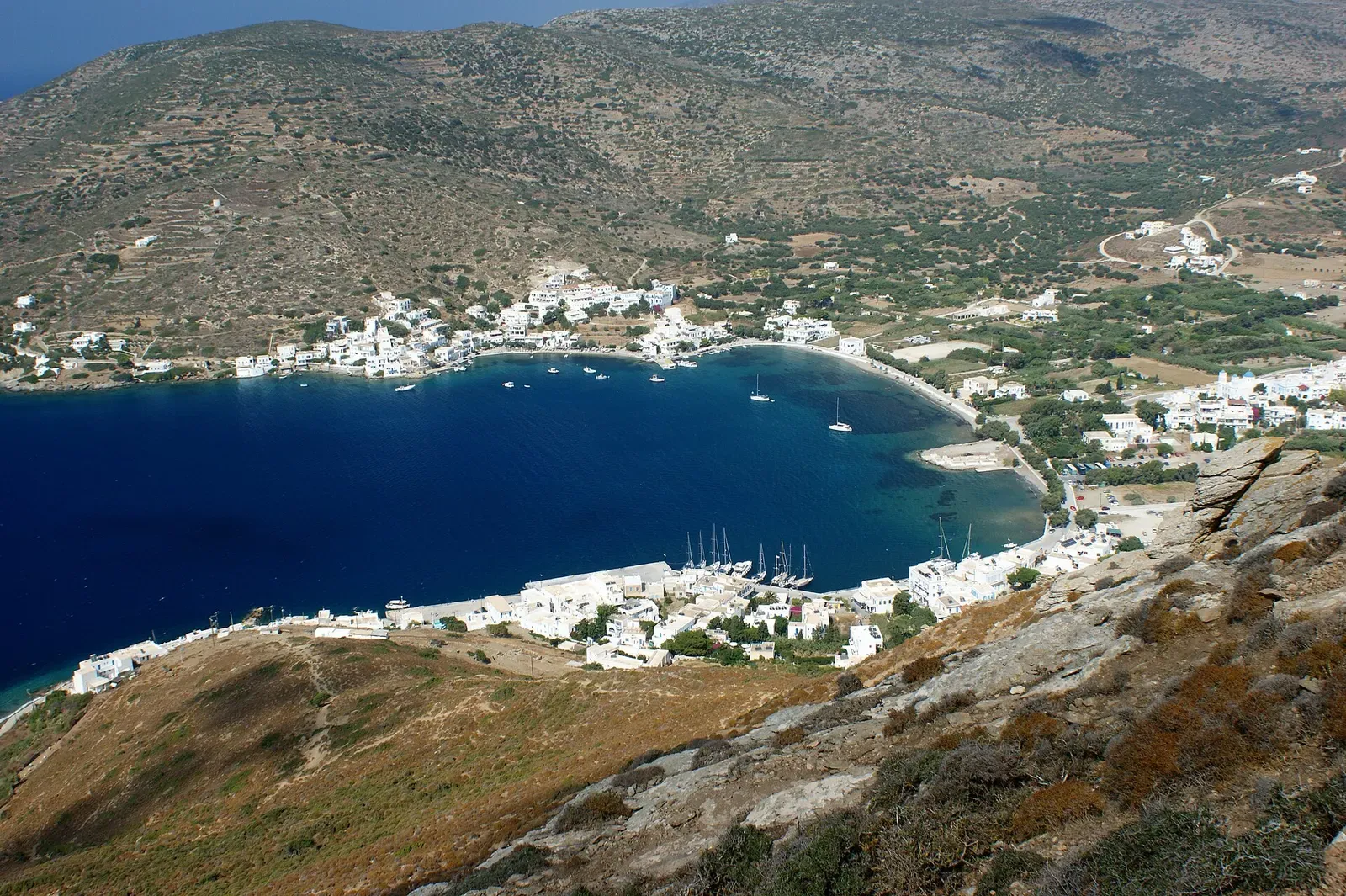
A 40 m wall under the monastery filmed in The Big Blue
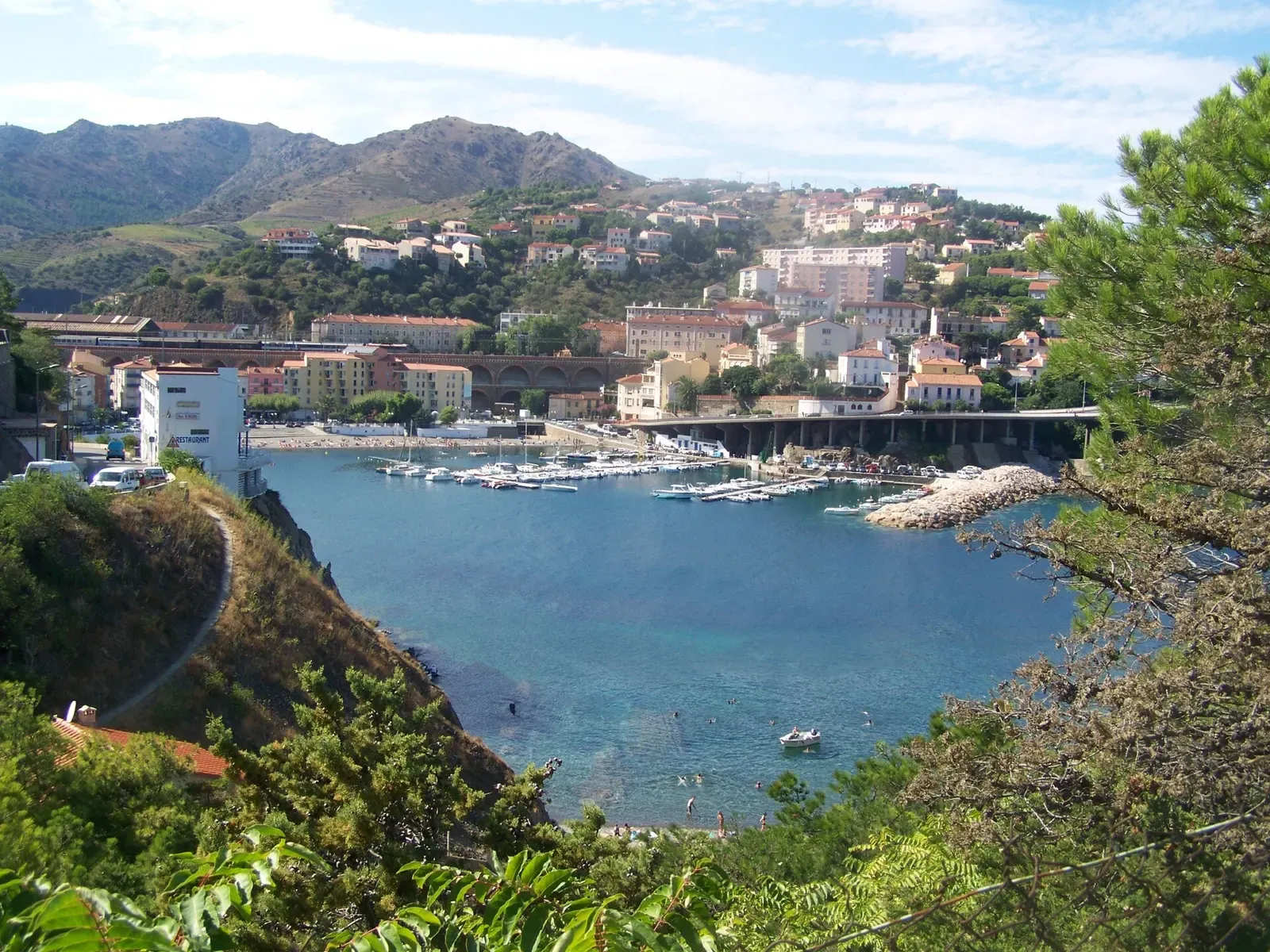
Reserve reef diving at Cerbère-Banyuls, France's first marine reserve
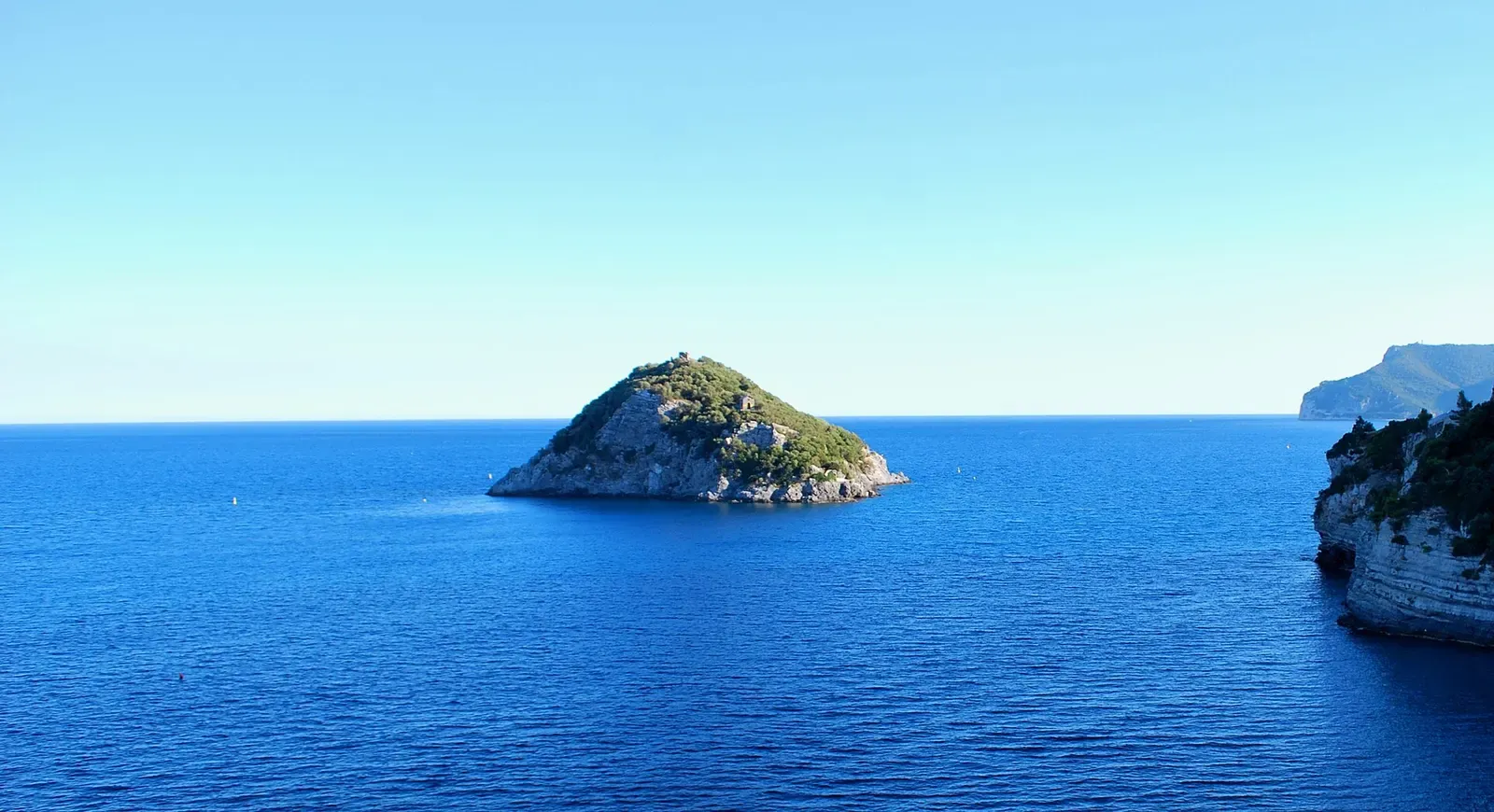


Reserve walls at Bergeggi island and cert-gated gorgonian secche offshore