Mediterranean · France
Banyuls-sur-Mer & the Côte Vermeille
Reserve reef diving at Cerbère-Banyuls, France's first marine reserve
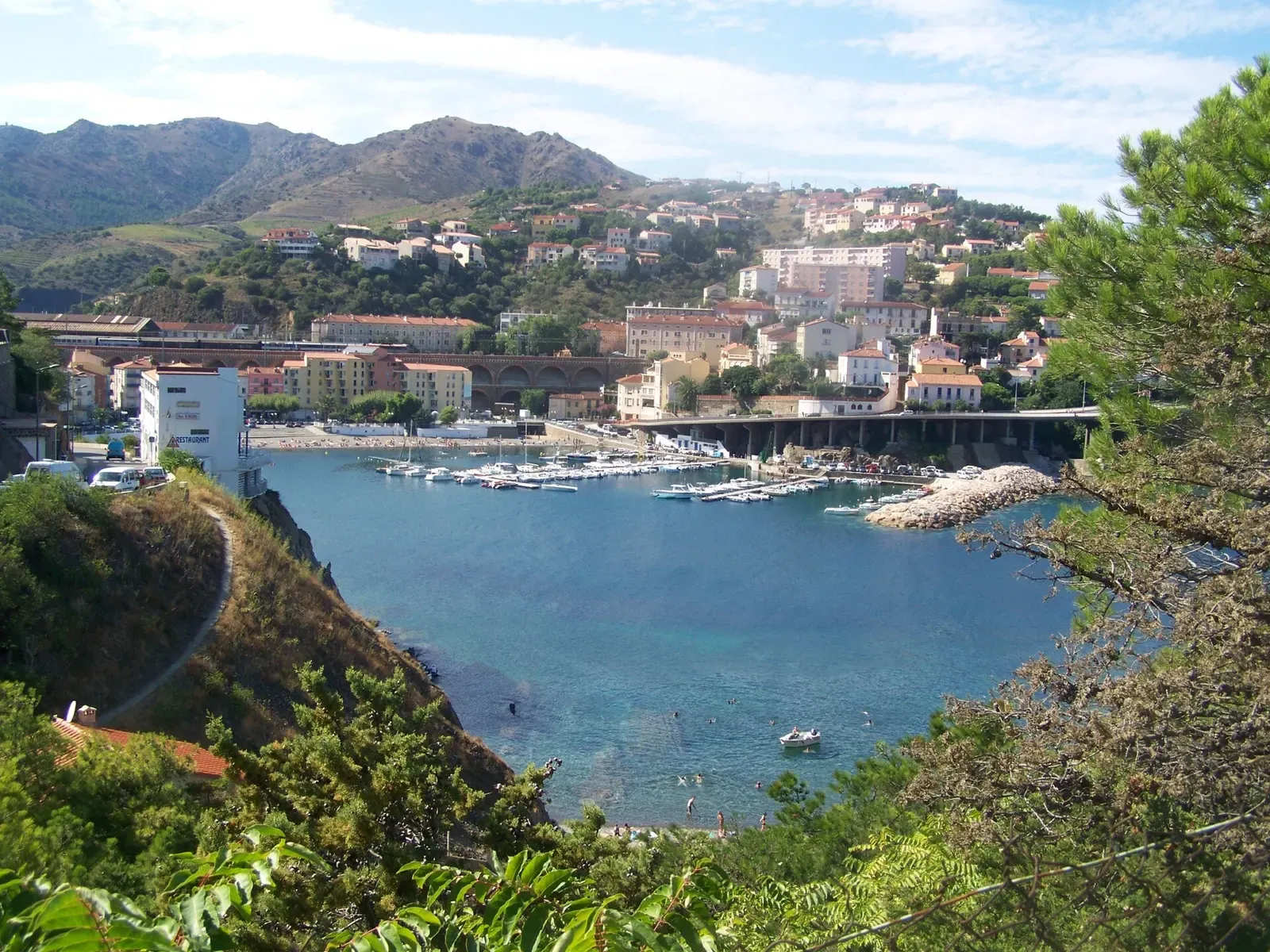
Photo: Florian Pépellin · CC BY-SA 3.0
The Côte Vermeille is the short rocky stretch where the Pyrenees meet the sea between Collioure and the Spanish border, and its diving is anchored by the Réserve Naturelle Marine de Cerbère-Banyuls, France’s first marine reserve, created in 1974. Sites such as Cap Peyrefite and Cap Nègre run from the shallows to about 30 m over faults, small caves and coralligenous rock, with Posidonia meadows between 15 and 30 m. Off Port-Vendres the WWII escort Alice Robert lies at 25–50 m.
About diving in Banyuls-sur-Mer & the Côte Vermeille
Diving is from boats out of Banyuls-sur-Mer, Port-Vendres and Collioure, and runs are short: the Banyuls centres put the reserve at five minutes by boat, Cap Béar sits at the mouth of Port-Vendres, and the reserve’s capes lie along 6.5 km of coast between Banyuls and Cerbère. The Tramontane, the cold northerly wind of the Gulf of Lion, decides the day: when it blows, boats work the sheltered water at Cap Béar; when it drops, the reserve and the wrecks off Port-Vendres are open. Three centres sit on Banyuls harbour, Rédéris, Aquablue and Plongée Bleue, with a fourth at Collioure. From June to September the reserve marks out a free 250 m snorkel trail from Peyrefite beach.
The Pyrenees run straight into the sea here, so the bottom is rock: boulders, faults, overhangs and small caves at Sec de Valenti and Cap Nègre, drop-offs and caves to 40 m at Les Chambres. Cap Gros runs from Posidonia meadow across rock and drop-off to coralligenous crust at 30 m in one dive. The Posidonia lies between 15 and 30 m and shelters fish, octopus and sponges. Anse de la Mauresque carries white gorgonians, nudibranchs and lobsters at 18–20 m, the Jardin aux Gorgones holds purple gorgonians at 26–36 m, and schools of sar and bream are common at Les Tinyes. On the reserve’s sites, Les 3 Moines, Cap l’Abeille and Le Dôme, the centres list grouper, barracuda, dentex and brown meagre.
The reserve has two zones and the difference matters. In the 65 ha zone de protection renforcée off the Rédéris headland all diving, scuba and freediving alike, is banned, as is mooring. In the other 585 ha diving needs an annual authorisation from the reserve: the centres and clubs hold their own, and a diver with a private boat must apply to the Département by 31 March. Boats moor only on the buoys at Cap l’Abeille and Peyrefite, at 3 knots there, 5 knots within 300 m of shore and 8 knots beyond; touching the rock and feeding fish are banned, and night dives are notified before 17:00. Prefectoral orders closed the Alice Robert for ordnance clearance in June 2020 and October 2022.
The area suits divers who want a Mediterranean reserve with rock, caves, gorgonians and grouper at ordinary depths, and it has entry-level ground at Pytheas and Cap Peyrefite. The wrecks are the exception: Le Saumur and L'Astrée bottom out at 47–48 m and the base of the Alice Robert is at 50 m, all planned dives for holders of PE40 or an equivalent deep qualification. Divers who want the Cap de Creus reserve across the border can reach it on the Banyuls centres' own boats; anyone who wants reef diving without a permit regime or Tramontane cancellations should look elsewhere on the Gulf of Lion or along the Côte d'Azur.
When to dive Banyuls-sur-Mer & the Côte Vermeille
| Jan | Feb | Mar | Apr | May | Jun | Jul | Aug | Sep | Oct | Nov | Dec |
|---|---|---|---|---|---|---|---|---|---|---|---|
| Fair | Fair | Fair | Fair | Good | Prime | Prime | Prime | Prime | Good | Fair | Fair |
The Banyuls centres open year-round, but the sea averages 12 °C in February against 23 °C in August, the reserve's snorkel trail runs June to September, and the Tramontane can stop boats in any month.
Dive types & marine life
The reliable life is on the rock: grouper, barracuda, dentex and brown meagre on the reserve sites, octopus, lobster and nudibranchs at Cap Béar, fish and sponges in the Posidonia between 15 and 30 m, white gorgonians from 18 m and purple gorgonians from 26 m down, and schools of sar and gilt-head bream at Les Tinyes. Several dolphin species visit offshore but are not a diving expectation.
- Reef
- Wall
- Wreck
- Cave & cavern
- Groupers
- Octopus & cuttlefish
- Nudibranchs
- Reef fish swarms
- Macro critters
Notable dive sites in Banyuls-sur-Mer & the Côte Vermeille
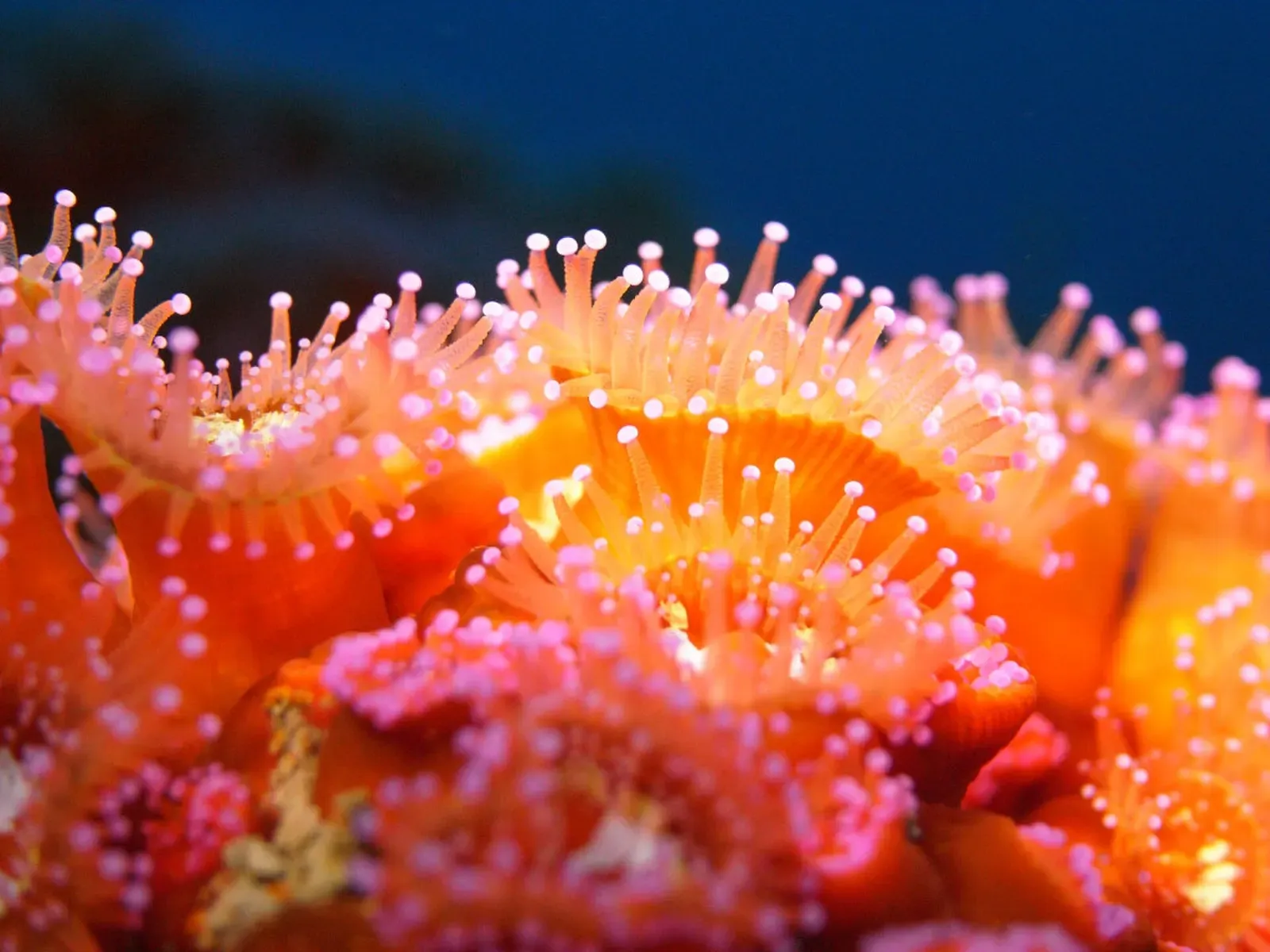
A 95 m WWII escort cut in two by a torpedo, mast top at 25 m, bow at 50 m
White gorgonians, nudibranchs and lobsters in the faults at 18 to 20 m
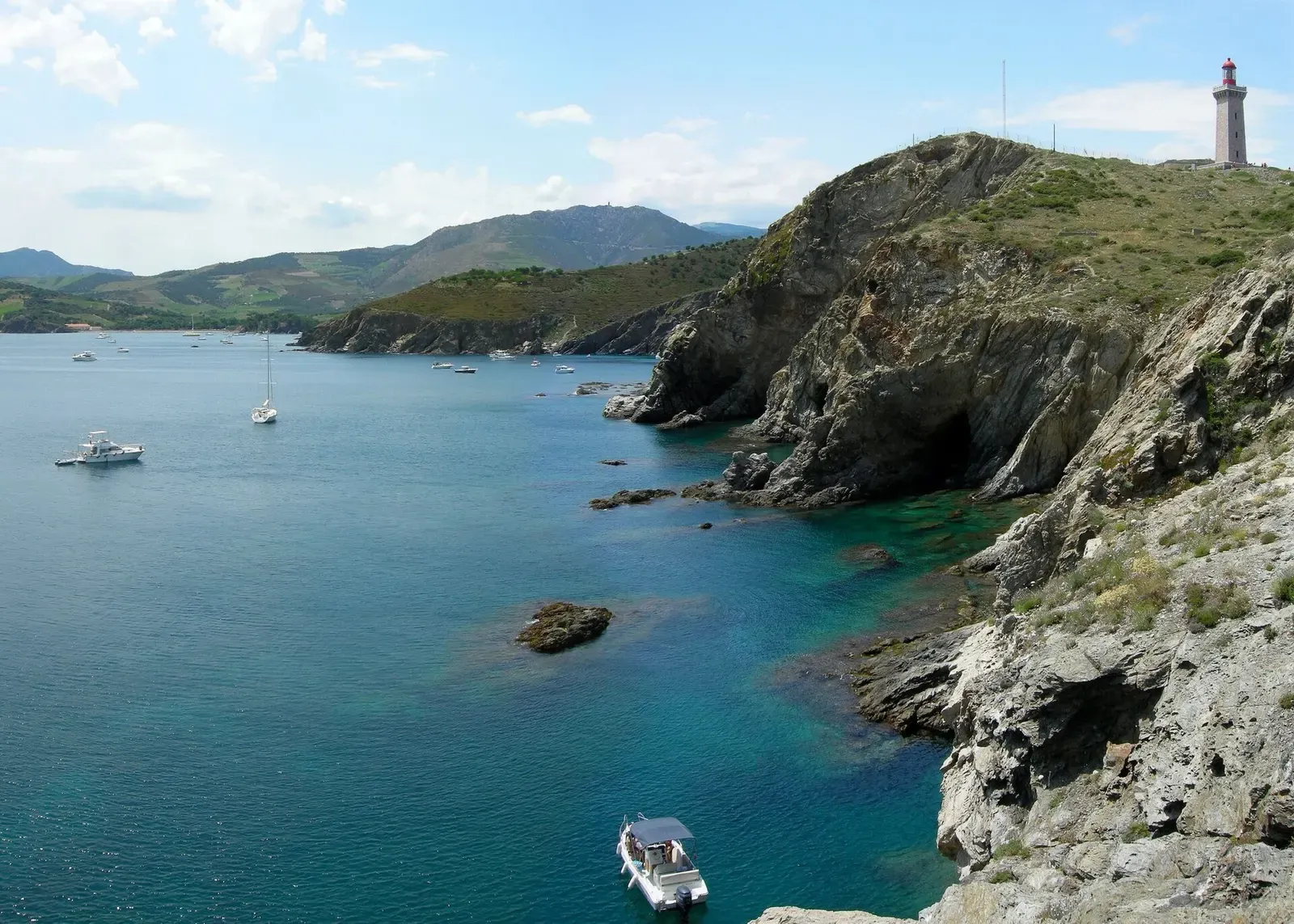
The sheltered fallback dive when the Tramontane blows
Reef
Faults and small caves between 5 and 30 m, with groupers and congers in the holes
Reef
Beach entry into a marine reserve, with a signposted underwater trail
Wreck
Broken collier at 44 m; follow the wreckage to a bow with its anchors still in place
Wreck
A 99 m collier on her keel at 45 m, stern broken off, emergency propeller still visible
Wall
Drop-offs, rocks and caves between 15 and 30 m off Banyuls
Reef
Groupers, dentex, brown meagre and barracuda in 5 to 20 m of reserve water
Wall
Drop-offs and caves that carry on down to 40 m
Reef
Grouper town: rocks and reef at 16 to 30 m with barracuda schools
Sheer walls and rock formations between 10 and 25 m off Collioure
Pytheas
Just outside Port-Vendres: a wreck, an arch and rocky faults in one dive, popular with N1 divers.
Getting there
Perpignan is the nearest airport city. Banyuls-sur-Mer, Port-Vendres (4 km), Cerbère (5 km) and Collioure (6 km) lie along one short coast road and rail line; Cerbère is the border station with Spain. The dive centres are on Banyuls harbour and in Collioure, and boats leave from Banyuls and Port-Vendres; the summer snorkel trail is reached on foot from Peyrefite beach.
Photos from Banyuls-sur-Mer & the Côte Vermeille
Alan Mattingly · CC BY-SA 4.0
Alacoolwiki · CC BY-SA 4.0
Bernard Picton · CC BY-SA 4.0
Rorolinus · CC BY-SA 4.0
Photo credits
- Harbour town of Cerbère seen from the hillside, with mountains running down to the sea. by Florian Pépellin, CC BY-SA 3.0, via Wikimedia Commons
- Rocky headland and pebble beach at Banyuls-sur-Mer with vineyards on the slope above. by Alan Mattingly, CC BY-SA 4.0, via Wikimedia Commons
- Red flags of professional fishermen partnering the marine reserve, flying over Banyuls harbour. by Alacoolwiki, CC BY-SA 4.0, via Wikimedia Commons
- Pink nudibranch Flabellina affinis crawling over rock at Banyuls-sur-Mer. by Bernard Picton, CC BY-SA 4.0, via Wikimedia Commons
- Purple sea urchin among shallow rocks at Banyuls-sur-Mer. by Rorolinus, CC BY-SA 4.0, via Wikimedia Commons
Similar destinations
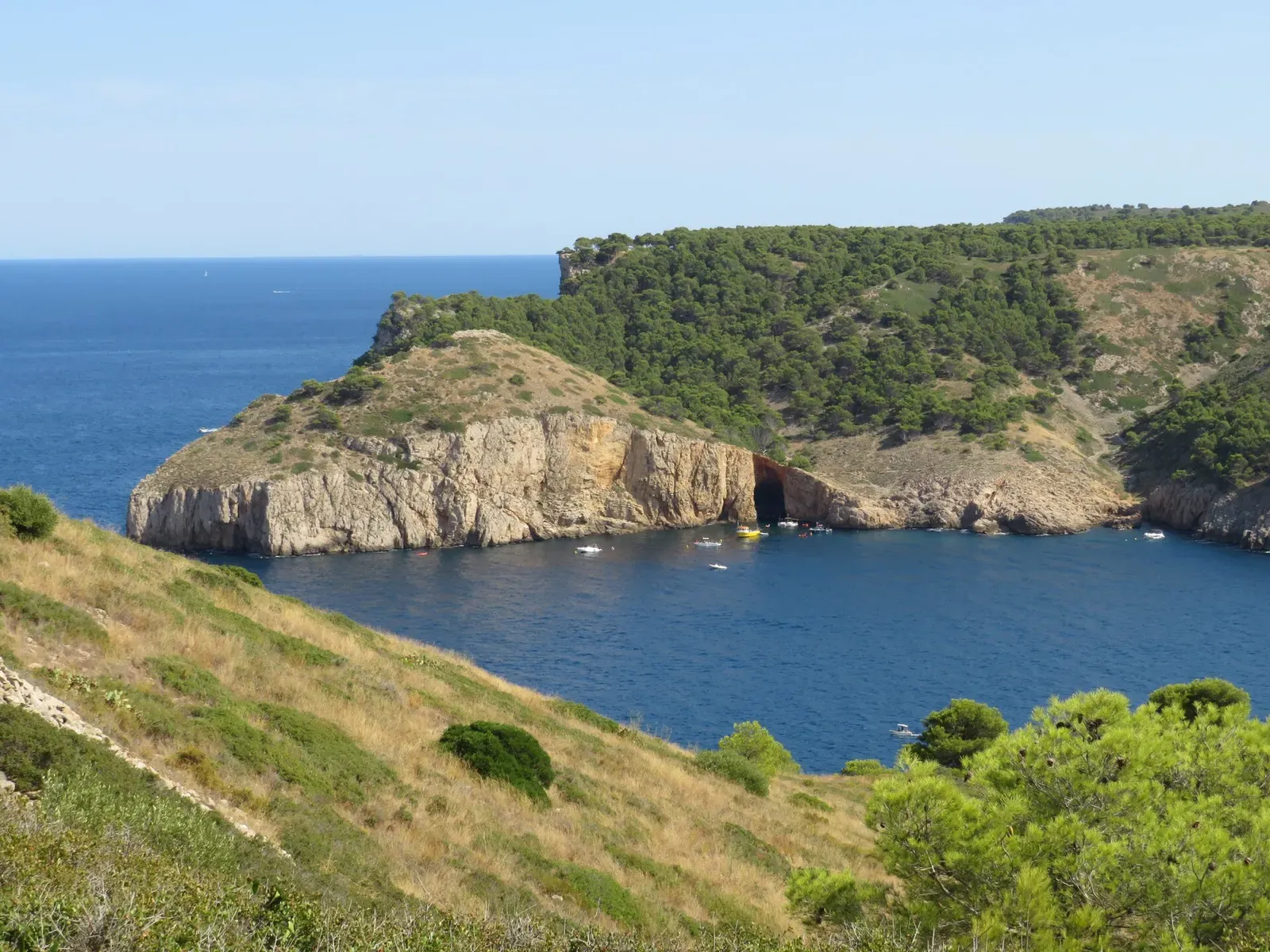
Tunnels, walls and a shallow wreck under the Montgrí cliffs, dived from L'Escala

Dusky grouper by the dozen inside a Costa Brava marine reserve

Schist walls, tunnels and red gorgonian fans at the Pyrenees' end

.JPG)


Granite seamounts rising to the surface off Sardinia's south-east corner