
Australia & New Zealand · Australia
Lord Howe Island
The world's southernmost coral reef, with advanced diving at Balls Pyramid offshore.
Photo: Ryan McMinds · CC BY 2.0
Lord Howe Island sits at the southern limit of coral reef growth, a UNESCO World Heritage volcanic remnant where warm-water coral species mix with temperate fish more typical of mainland New South Wales. Sites inside the lagoon like Erscotts Hole and Neds Beach suit easy shore and boat diving, while the offshore sea stack of Balls Pyramid, 23 kilometers southeast, offers advanced drift diving among big schools of trevally.
About diving in Lord Howe Island
Diving here is small-scale and weather-led. A couple of operators run morning two-dive trips from boats kept in the lagoon, and because the lagoon shallows over the reef flat, departure can shift with the tide rather than sitting at a fixed hour. Visitor numbers on the island are capped at 400 at any one time, so a boat usually carries a handful of divers rather than a crowd. The skipper picks whichever coast is out of the wind that morning, and it is normal for the plan to be settled at the jetty.
The island is the eroded remnant of a far larger volcano, and the ground underwater follows suit: basalt ridges, boulder fields, arches and deep gutters, with corals growing over the rock rather than building it. The exception is the sheltered west side, where coral reef encloses a shallow lagoon. Lagoon dives are bright and easy, over sand patches and isolated coral heads; along the northern and outer coasts the bottom falls away and sites become ledges, caves and gutters with current running along them.
Balls Pyramid is the outlier, and the one thing that can go unticked for a whole trip. It is a long open-ocean run southeast of the island, it only goes when the swell allows, and the settled December-to-April months give the best odds. The stack rises out of deep water with nothing else around it, so the diving is usually a drift along steep rock, watching what hangs in the blue rather than studying reef. Operators want divers who are current and comfortable being dropped in open water.
It suits people who want diving to be one part of an island trip rather than all of it, with mornings underwater and afternoons on the walking tracks or snorkelling. A walk-in dive from the beach fills an afternoon with no boat involved. It is a poor fit for anyone wanting four dives a day, guaranteed encounters with big animals, or a cheap week: flights, beds and boat places are all limited, prices reflect that, and the weather has the last word.
Best time to dive Lord Howe Island
| Jan | Feb | Mar | Apr | May | Jun | Jul | Aug | Sep | Oct | Nov | Dec | |
|---|---|---|---|---|---|---|---|---|---|---|---|---|
| Season | Prime | Prime | Prime | Prime | Good | Good | Fair | Fair | Good | Good | Good | Prime |
| Sea surface | 24°C75°F | 25°C77°F | 24°C75°F | 24°C75°F | 22°C72°F | 21°C70°F | 20°C68°F | 19°C66°F | 19°C66°F | 20°C68°F | 21°C70°F | 23°C73°F |
| Daytime high | 25°C77°F | 25°C77°F | 25°C77°F | 24°C75°F | 23°C73°F | 21°C70°F | 20°C68°F | 20°C68°F | 20°C68°F | 21°C70°F | 22°C72°F | 24°C75°F |
| Rain | 79 mm3.1 in | 65 mm2.6 in | 94 mm3.7 in | 68 mm2.7 in | 62 mm2.4 in | 70 mm2.8 in | 85 mm3.3 in | 67 mm2.6 in | 59 mm2.3 in | 68 mm2.7 in | 76 mm3.0 in | 73 mm2.9 in |
| Jan | Feb | Mar | Apr | May | Jun |
|---|---|---|---|---|---|
| Prime | Prime | Prime | Prime | Good | Good |
| Sea surface | |||||
| 24°C75°F | 25°C77°F | 24°C75°F | 24°C75°F | 22°C72°F | 21°C70°F |
| Daytime high | |||||
| 25°C77°F | 25°C77°F | 25°C77°F | 24°C75°F | 23°C73°F | 21°C70°F |
| Rain | |||||
| 79 mm3.1 in | 65 mm2.6 in | 94 mm3.7 in | 68 mm2.7 in | 62 mm2.4 in | 70 mm2.8 in |
| Jul | Aug | Sep | Oct | Nov | Dec |
|---|---|---|---|---|---|
| Fair | Fair | Good | Good | Good | Prime |
| Sea surface | |||||
| 20°C68°F | 19°C66°F | 19°C66°F | 20°C68°F | 21°C70°F | 23°C73°F |
| Daytime high | |||||
| 20°C68°F | 20°C68°F | 20°C68°F | 21°C70°F | 22°C72°F | 24°C75°F |
| Rain | |||||
| 85 mm3.3 in | 67 mm2.6 in | 59 mm2.3 in | 68 mm2.7 in | 76 mm3.0 in | 73 mm2.9 in |
2011–2025 averages. Sea surface: NOAA Coral Reef Watch, measured at the surface, so deeper water can run colder. Daytime high and rain: NASA POWER.
The warm East Australian Current peaks Dec–Apr for the calmest, clearest diving; winter (Jul–Aug) is cooler with more boat-canceling swell.
Best months: January, February, March, April, December
Lord Howe Island water temperature and weather by month
The sea surface runs from 19 °C (66 °F) in August to 25 °C (77 °F) in February. It is 24 °C (75 °F) or warmer from January to April. Rain falls through the year, about 70 mm (2.8 in) a month on average, with March the wettest. Daytime highs reach 25 °C (77 °F) in February and drop to 20 °C (68 °F) in August. The coldest water here is about 18 °C (64 °F), so pack a 5 mm suit.
Dive types & marine life
Green turtles, eagle rays and the doubleheader wrasse, a fish found only around Lord Howe and a few nearby reefs, are here all year, as are trevally and kingfish schools. Offshore trips that put you among sharks run most reliably in the settled December-to-April window. Humpbacks pass on migration through the cooler middle of the year, and dolphins turn up on the crossings more than on the reef.
- Reef
- Wall
- Drift
- Reef sharks
- Sea turtles
- Trevally & jacks
- Eagle rays
- Nudibranchs
- Pristine corals
- Reef fish swarms
- Dolphins
- Whales
Best dive sites in Lord Howe Island
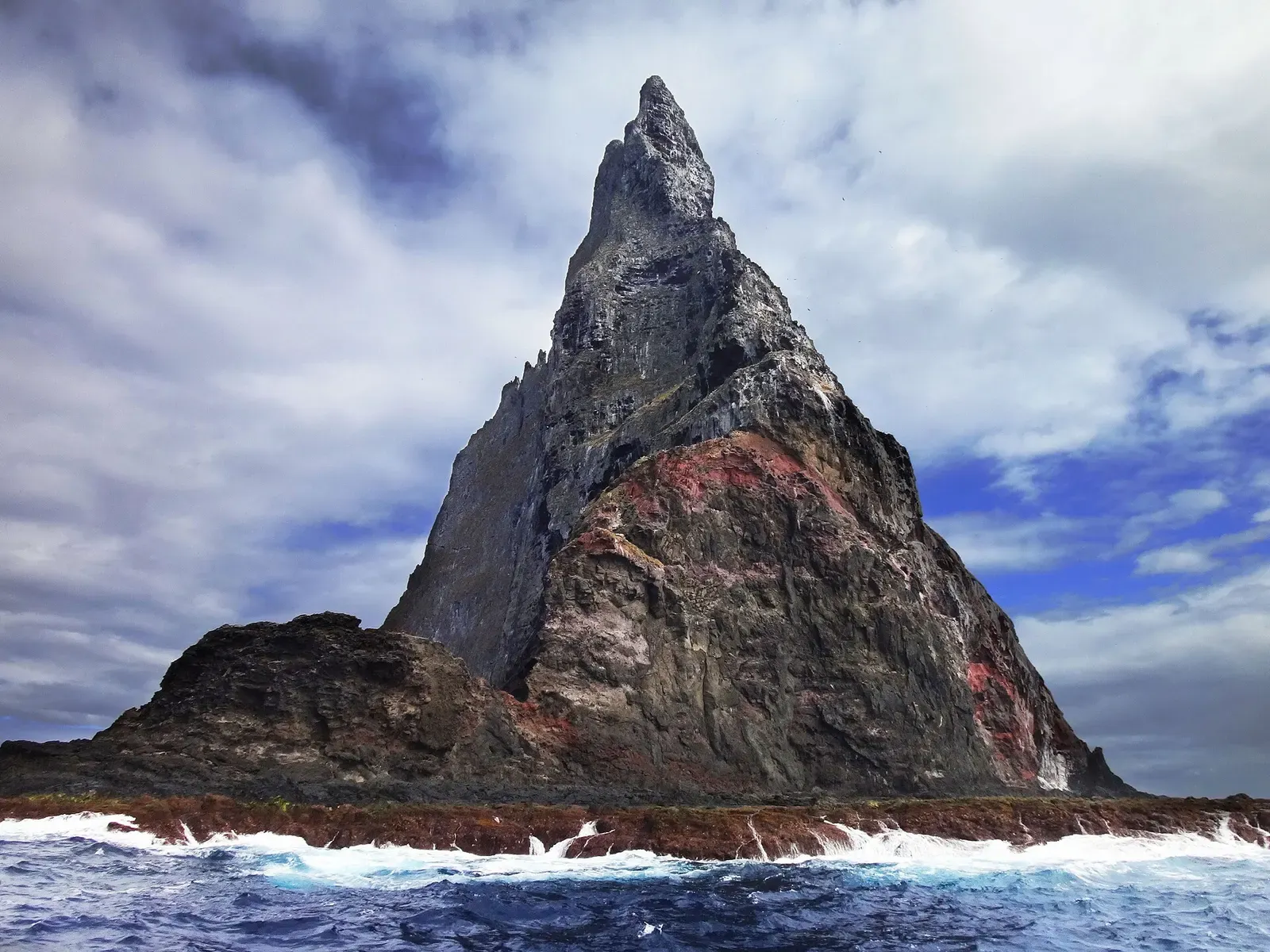
A stack in open ocean, reached only when the sea allows
Black coral and gorgonia on the walls of an offshore Admiralty Group outcrop
Neds Beach
Shallow shore-entry site with hand-friendly reef fish.
Erscotts Hole
Sheltered lagoon dive with soft corals and turtles.
Malabar
Northern reef site known for schooling fish and clear water.
How to get to Lord Howe Island
Access is by light turboprop from Sydney or Brisbane onto a short island airstrip; there is no passenger ferry, and with bed numbers capped, flights and accommodation get booked together and well ahead. Accommodation sits in the settlement, and bicycles are the normal way to get around. Dive boats leave from the lagoon, and the beach entries are walkable.
Photos from Lord Howe Island
Toby Hudson · CC BY-SA 3.0
Toby Hudson · CC BY-SA 3.0
Toby Hudson · CC BY-SA 3.0
Toby Hudson · CC BY-SA 3.0
Dive videos
Dive the world's most southerly coral reef - Lord Howe Island · Lord Howe Island on YouTube
Lord Howe Island scuba diving, Sugarloaf, a rocky outcrop at Admiralty Islands, Lord Howe Island. · Swim Walk Paddle on YouTube
Photo credits
- A lionfish spreads its banded fins over coral at Lord Howe Island's reef by Ryan McMinds, CC BY 2.0, via Wikimedia Commons
- A school of striped bannerfish drifts over the shallow reef at North Bay, Lord Howe Island by Toby Hudson, CC BY-SA 3.0, via Wikimedia Commons
- A black and yellow reef fish swims over a sandy lagoon bottom at North Bay, Lord Howe Island by Toby Hudson, CC BY-SA 3.0, via Wikimedia Commons
- A blue and pink wrasse swims past coral rubble in the shallows off Lord Howe Island by Toby Hudson, CC BY-SA 3.0, via Wikimedia Commons
- Clusters of hard coral bommies cover the reef at North Bay, Lord Howe Island by Toby Hudson, CC BY-SA 3.0, via Wikimedia Commons
Embed
Run a dive centre, club or blog? Embed this map of 2 dive sites near Lord Howe Island on your own page.
In The Logbook
- Where to dive in DecemberTrip planning · 10 min read
Similar destinations

Giant Queensland grouper at Cod Hole and dwarf minke whales in winter.

The highest reef manta density on the Great Barrier Reef, year-round

Tropical and temperate species overlap on one rock 2.5 km offshore
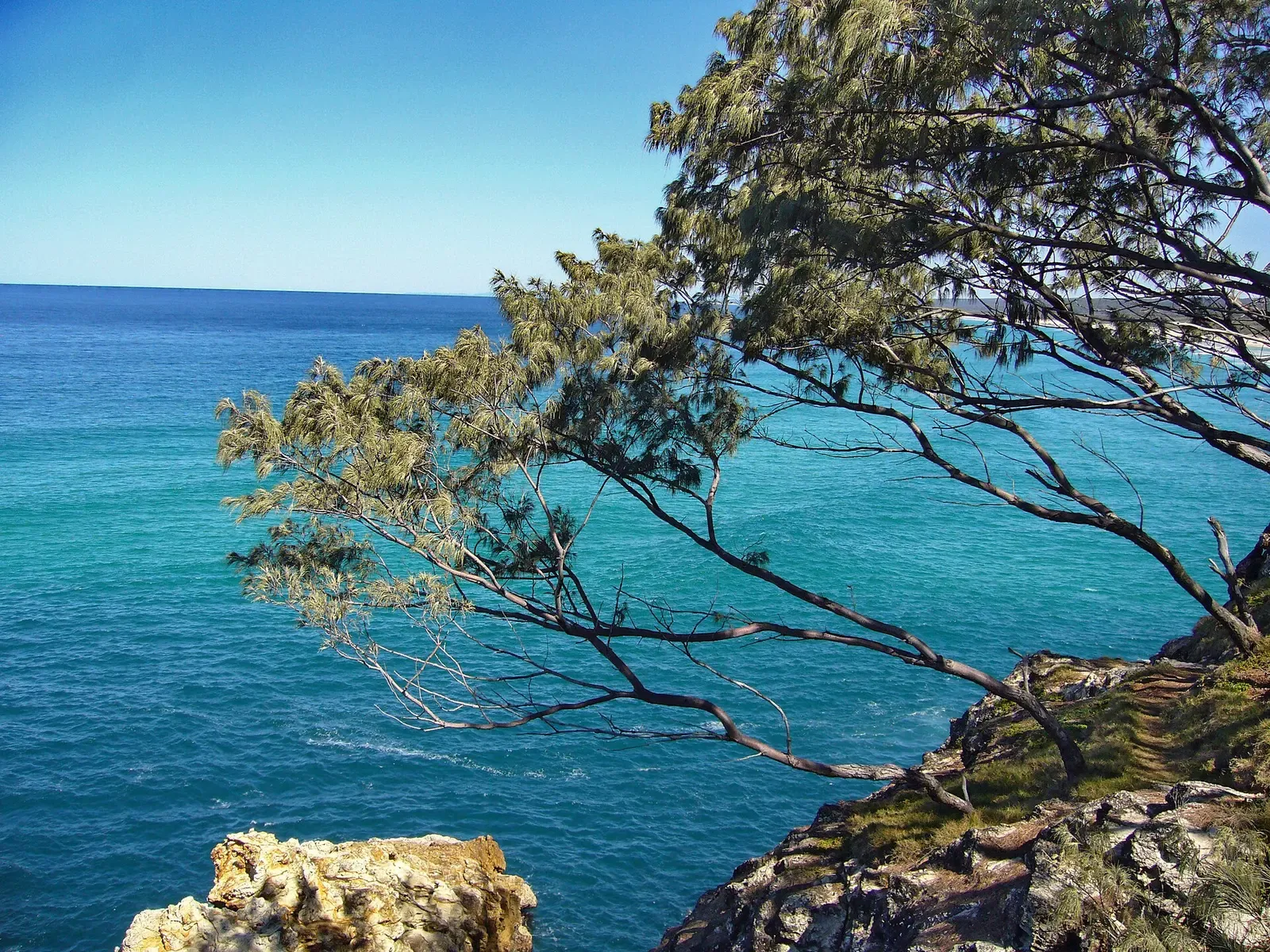


Manta cleaning stations Oct–Apr, grey nurse sharks through winter