Each autumn, sardines pushed south along the Baja Pacific coast are cornered on the offshore banks outside Magdalena Bay, and striped marlin arrive in the hundreds to hunt them. Boats look for birds, drop swimmers into open ocean and marlin light up and lance through baitballs a few metres away, often alongside sea lions, mahi-mahi and the occasional humpback or orca. It is a snorkelling and freediving trip, not a scuba one — bubbles scatter the bait and end the encounter.
About diving in Magdalena Bay
The trip is a search rather than a dive schedule. Boats leave from the fishing town inside the bay, run out through the mouth and then spend the day covering water, watching for working birds and for the surface disturbance that marks bait being pushed from below. When something is found, guides put swimmers in for short bursts: slide in, swim hard, climb back aboard, reposition, and repeat for as long as the action holds. Some days deliver hours of it and some deliver nothing at all.
There is no bottom reference and no site in the usual sense. Everything happens in the top few metres of open ocean, and the banks work as a search area rather than as a mark on a chart. Fitness decides how much you actually see, because the bait keeps moving and anyone who cannot cover ground in swell ends up watching from behind the action. Boats are small and open and the days are long, so seasickness and sun exposure matter as much as the water, which sits in the low to mid twenties.
Kit is minimal: a thin wetsuit, long fins, mask and snorkel, and a wide lens if you shoot. The useful preparation is swimming rather than gear, since the day is a series of sprints, and a little breath-hold work helps, because dropping two or three metres and staying still is what keeps you in the encounter rather than chasing it from the surface.
It suits confident open-water swimmers, freedivers and photographers, and works badly for anyone picturing a conventional dive holiday with a guide and a briefing. Most people book several consecutive days so the blanks average out, and many attach scuba elsewhere in Baja on either side of the trip. The bay's other trade is grey-whale watching from boats in winter, roughly January to March, a separate business with its own operators and no in-water diving attached.
Best time to dive Magdalena Bay
| Jan | Feb | Mar | Apr | May | Jun | Jul | Aug | Sep | Oct | Nov | Dec | |
|---|---|---|---|---|---|---|---|---|---|---|---|---|
| Season | Off-season | Off-season | Off-season | Off-season | Off-season | Off-season | Fair | Fair | Good | Prime | Prime | Good |
| Sea surface | 20°C68°F | 19°C66°F | 18°C64°F | 18°C64°F | 18°C64°F | 19°C66°F | 23°C73°F | 26°C79°F | 27°C81°F | 26°C79°F | 24°C75°F | 22°C72°F |
| Daytime high | 27°C81°F | 28°C82°F | 28°C82°F | 29°C84°F | 28°C82°F | 31°C88°F | 33°C91°F | 35°C95°F | 34°C93°F | 34°C93°F | 30°C86°F | 27°C81°F |
| Rain | 4 mm0.2 in | 7 mm0.3 in | 5 mm0.2 in | 1 mm0.0 in | 2 mm0.1 in | 4 mm0.2 in | 10 mm0.4 in | 42 mm1.7 in | 83 mm3.3 in | 34 mm1.3 in | 13 mm0.5 in | 11 mm0.4 in |
| Jan | Feb | Mar | Apr | May | Jun |
|---|---|---|---|---|---|
| Off-season | Off-season | Off-season | Off-season | Off-season | Off-season |
| Sea surface | |||||
| 20°C68°F | 19°C66°F | 18°C64°F | 18°C64°F | 18°C64°F | 19°C66°F |
| Daytime high | |||||
| 27°C81°F | 28°C82°F | 28°C82°F | 29°C84°F | 28°C82°F | 31°C88°F |
| Rain | |||||
| 4 mm0.2 in | 7 mm0.3 in | 5 mm0.2 in | 1 mm0.0 in | 2 mm0.1 in | 4 mm0.2 in |
| Jul | Aug | Sep | Oct | Nov | Dec |
|---|---|---|---|---|---|
| Fair | Fair | Good | Prime | Prime | Good |
| Sea surface | |||||
| 23°C73°F | 26°C79°F | 27°C81°F | 26°C79°F | 24°C75°F | 22°C72°F |
| Daytime high | |||||
| 33°C91°F | 35°C95°F | 34°C93°F | 34°C93°F | 30°C86°F | 27°C81°F |
| Rain | |||||
| 10 mm0.4 in | 42 mm1.7 in | 83 mm3.3 in | 34 mm1.3 in | 13 mm0.5 in | 11 mm0.4 in |
2011–2025 averages. Sea surface: NOAA Coral Reef Watch, measured at the surface, so deeper water can run colder. Daytime high and rain: NASA POWER.
The baitball season runs Oct–Dec and peaks in November; outside it the marlin disperse and operators do not run trips.
Best months: October, November
Magdalena Bay water temperature and weather by month
The sea surface runs from 18 °C (64 °F) in April to 27 °C (81 °F) in September. It is 24 °C (75 °F) or warmer from August to November. Rain is scarce: about 220 mm (8.7 in) falls in a typical year. Daytime highs reach 35 °C (95 °F) in August and drop to 27 °C (81 °F) in January. The coldest water here is about 18 °C (64 °F), so pack a 5 mm suit.
Dive types & marine life
Striped marlin are the target, and the hunting builds through the autumn to a peak in October and November before easing off in December. Common dolphins and sea lions often work the same bait, tuna push through it and blue sharks turn up around the edges. Whales move along the coast later in the window, and orcas appear unpredictably rather than to any schedule.
- Pelagic & blue water
- Marlin & sailfish
- Sardine baitballs
- Seals & sea lions
- Dolphins
- Whales
- Orcas
- Tuna
- Blue & mako sharks
Best dive sites in Magdalena Bay
Channel & pass
The 45 m Boca Entrada, deepest water in the bay
Pelagic & blue water
Striped marlin hunting sardines offshore of Magdalena Bay, October to early December
Sunk twice in twelve days: aground in 1920, refloated, gone in 45 minutes
Isla Santa Margarita
Southern barrier island with sea lion colonies and sheltered water.
Boca de Soledad
Northern channel used for grey whale encounters later in the season.
How to get to Magdalena Bay
Trips stage from Puerto San Carlos on the Baja Pacific coast, reached by road in three to four hours from Loreto or La Paz, which are the usual fly-in airports. Everything runs in small open boats out through the bay mouth, and some operators keep guests aboard a larger vessel offshore instead of returning to town each night.
Dive videos
Sardine Run Mexico | Baja California | Magdalena Bay | Sony A7S III · rolf kolenbrander on YouTube
Embed
Run a dive centre, club or blog? Embed this map of 2 dive sites near Magdalena Bay on your own page.
In The Logbook
- Where to dive in every month of the yearTrip planning · 14 min read
- Where to dive with seals and sea lionsBig animals · 17 min read
Similar destinations

Habituated giant oceanic manta rays circle divers at open-water cleaning stations.
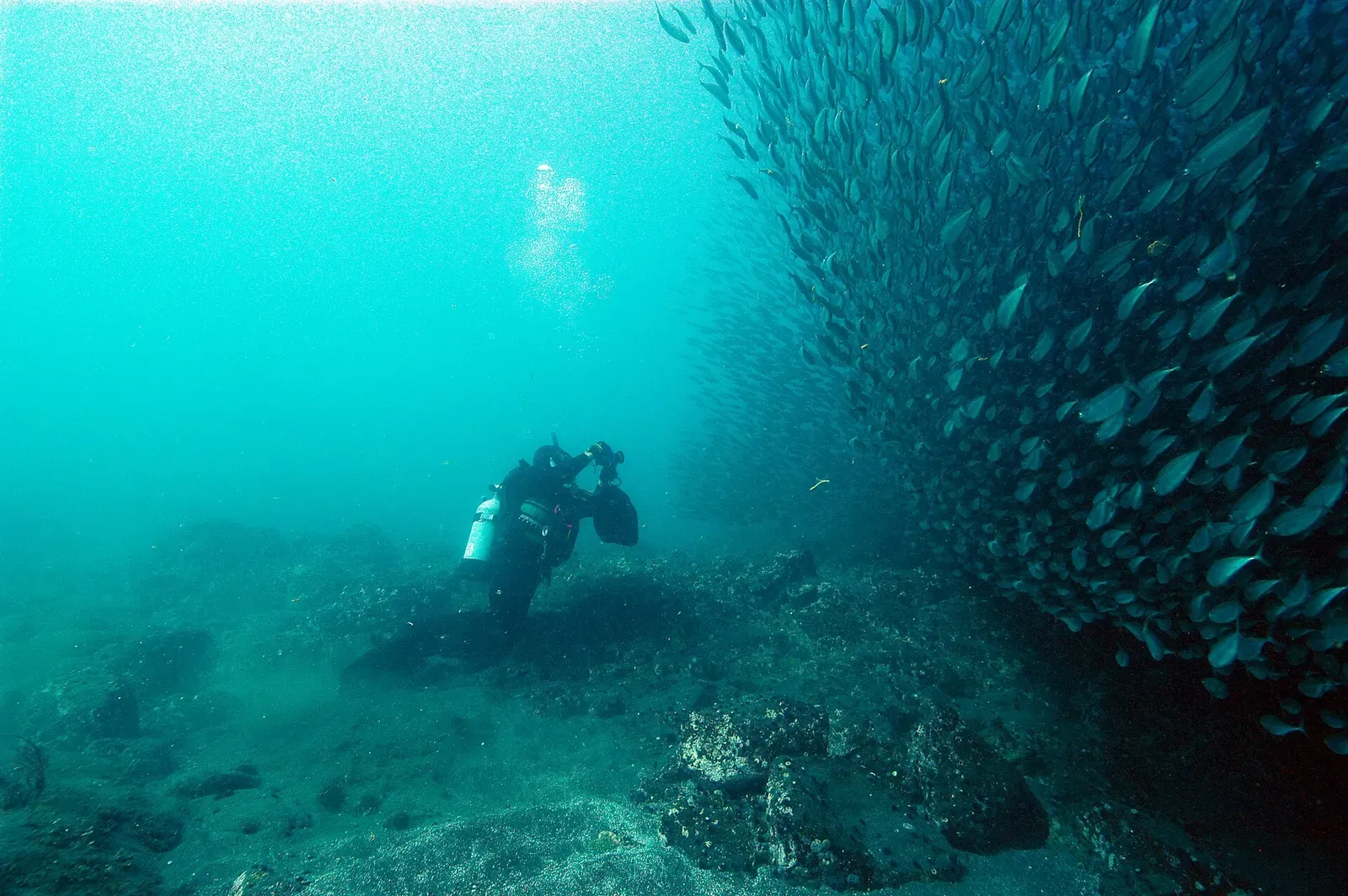
Playful sea lions and towering kelp forests around rocky island pinnacles.
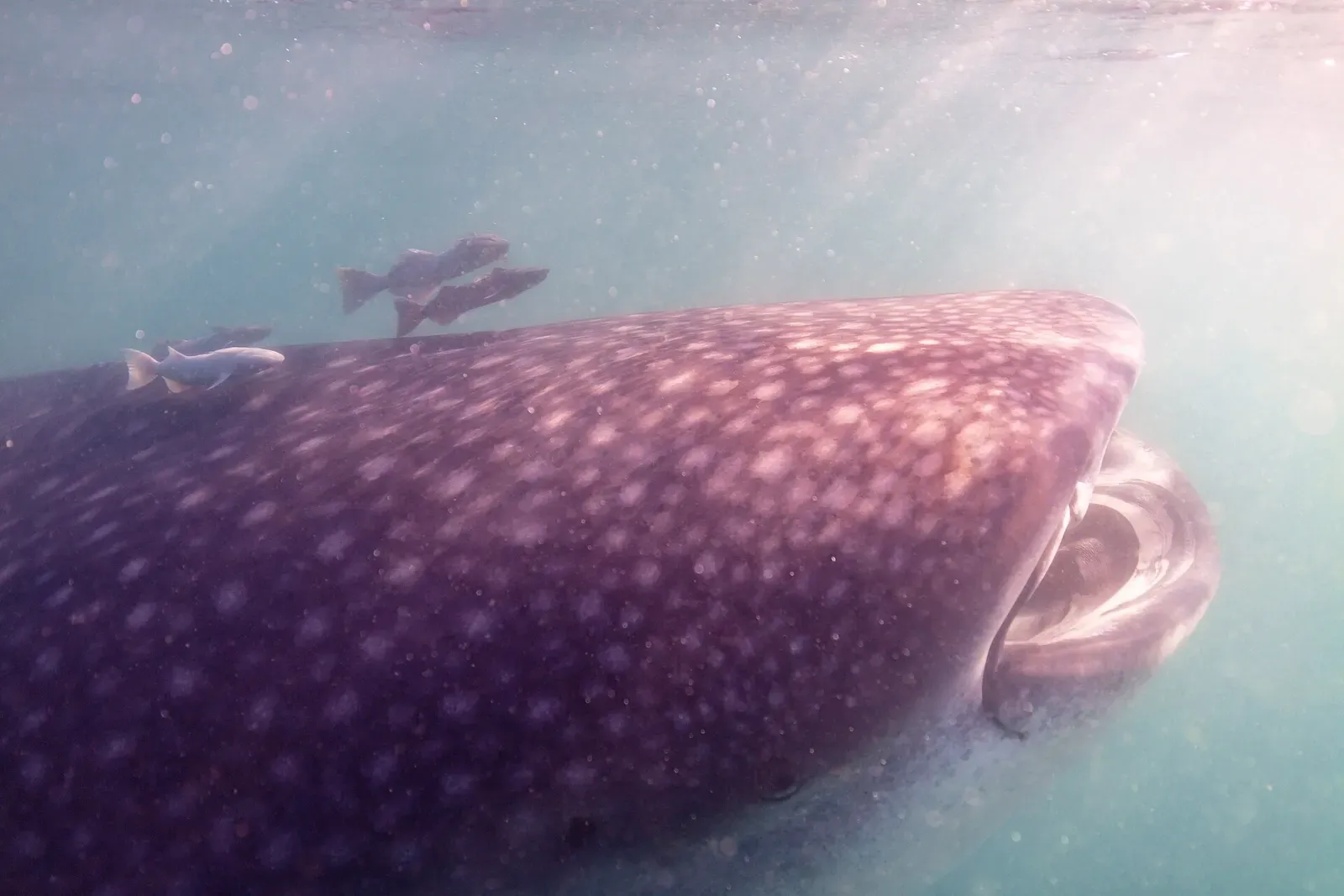
Sea lions at Los Islotes and whale sharks in La Paz Bay

Healthy coral reef caps 161 km offshore (100 miles), famous for August coral spawning.