North America · United States
Channel Islands
Playful sea lions and towering kelp forests around rocky island pinnacles.
Photo: National Marine Sanctuaries · Public domain
California's Channel Islands National Park protects dense giant kelp forests around Anacapa, Santa Cruz, Santa Rosa, and San Miguel, where cold, nutrient-rich water supports large numbers of California sea lions and a wide range of nudibranchs and other macro life. Boat divers work through the kelp canopy into rocky reef and pinnacle terrain, with a scattering of shipwrecks and sea caves such as Santa Cruz Island's Painted Cave. Water stays cold year-round, and visibility improves most reliably in autumn after summer plankton blooms settle.
About diving in Channel Islands
Diving here is a boat day from the mainland: an early departure from one of the Santa Barbara Channel harbours, a crossing of an hour or more, then three or four dives while the skipper shifts anchorage between coves as the wind changes. Anacapa and Santa Cruz sit within comfortable day-trip range. Santa Rosa and San Miguel usually need an overnight or multi-day charter, and those trips get cancelled or rerouted often enough that flexibility has to be part of the plan.
Underwater the structure is rock and kelp rather than reef. Giant kelp grows from boulder bottoms all the way to a surface canopy, so dives are as vertical as they are horizontal: you drop through the stalks, work the reef below, then push back up through the canopy at the line. Sheltered coves are shallow and gentle; the exposed pinnacles off the western end of the chain sit in colder, faster water and carry denser growth on every surface, which is why boats push for them when weather allows.
The appeal splits between wildlife and close-focus work. Sea lion rookeries make for shallow, fast, noisy dives, with young animals running circuits around divers and losing interest the moment you stop reacting. Away from the colonies the diving rewards patience: nudibranchs and invertebrate cover on the rock, octopus tucked into ledges, and the shallow debris fields left by a long wrecking history, among them the gold-rush steamer Winfield Scott, lost on Anacapa in 1853. For many photographers the kelp itself is the subject.
This is committed cold-water diving. Water runs roughly 12-19°C through the year, hood and gloves are standard, and surface intervals are spent on an open deck in the wind. It suits divers who enjoy technique, meaning kelp navigation, anchor-line work and buoyancy in surge, and who accept that a booked trip can be blown out. A network of state marine reserves covers parts of the islands and wreck sites carry their own protections, so what may be taken or touched varies from cove to cove. Visibility swings from a few metres to around 20 depending on swell and how recently it has blown.
Best time to dive Channel Islands
| Jan | Feb | Mar | Apr | May | Jun | Jul | Aug | Sep | Oct | Nov | Dec | |
|---|---|---|---|---|---|---|---|---|---|---|---|---|
| Season | Fair | Fair | Fair | Fair | Good | Good | Good | Good | Prime | Prime | Prime | Fair |
| Sea surface | 14°C57°F | 14°C57°F | 14°C57°F | 14°C57°F | 14°C57°F | 16°C61°F | 18°C64°F | 19°C66°F | 19°C66°F | 19°C66°F | 17°C63°F | 15°C59°F |
| Daytime high | 20°C68°F | 19°C66°F | 19°C66°F | 20°C68°F | 19°C66°F | 21°C70°F | 22°C72°F | 23°C73°F | 25°C77°F | 25°C77°F | 22°C72°F | 20°C68°F |
| Rain | 78 mm3.1 in | 72 mm2.8 in | 81 mm3.2 in | 15 mm0.6 in | 8 mm0.3 in | 3 mm0.1 in | 2 mm0.1 in | 2 mm0.1 in | 4 mm0.2 in | 11 mm0.4 in | 35 mm1.4 in | 79 mm3.1 in |
| Jan | Feb | Mar | Apr | May | Jun |
|---|---|---|---|---|---|
| Fair | Fair | Fair | Fair | Good | Good |
| Sea surface | |||||
| 14°C57°F | 14°C57°F | 14°C57°F | 14°C57°F | 14°C57°F | 16°C61°F |
| Daytime high | |||||
| 20°C68°F | 19°C66°F | 19°C66°F | 20°C68°F | 19°C66°F | 21°C70°F |
| Rain | |||||
| 78 mm3.1 in | 72 mm2.8 in | 81 mm3.2 in | 15 mm0.6 in | 8 mm0.3 in | 3 mm0.1 in |
| Jul | Aug | Sep | Oct | Nov | Dec |
|---|---|---|---|---|---|
| Good | Good | Prime | Prime | Prime | Fair |
| Sea surface | |||||
| 18°C64°F | 19°C66°F | 19°C66°F | 19°C66°F | 17°C63°F | 15°C59°F |
| Daytime high | |||||
| 22°C72°F | 23°C73°F | 25°C77°F | 25°C77°F | 22°C72°F | 20°C68°F |
| Rain | |||||
| 2 mm0.1 in | 2 mm0.1 in | 4 mm0.2 in | 11 mm0.4 in | 35 mm1.4 in | 79 mm3.1 in |
2011–2025 averages. Sea surface: NOAA Coral Reef Watch, measured at the surface, so deeper water can run colder. Daytime high and rain: NASA POWER.
Water is clearest and calmest September-November after summer plankton blooms settle; winter storms bring rough crossings and colder water.
Best months: September, October, November
Channel Islands water temperature and weather by month
The sea surface runs from 14 °C (57 °F) in April to 19 °C (66 °F) in September. Most rain falls from November to March, peaking at about 80 mm (3.1 in) in March; it stays largely dry from April to October. Daytime highs reach 25 °C (77 °F) in October and drop to 19 °C (66 °F) in March. The coldest water here is about 12 °C (54 °F), so pack a 7 mm suit with a hood, or a semi-dry.
Dive types & marine life
Sea lions, garibaldi, rockfish and nudibranchs are present year-round. September through November is rated prime and is also the easiest window for the outer islands. Gray whales and dolphins are common on winter and spring crossings, blue and humpback whales on summer ones, though those are deck sightings rather than dives.
- Kelp forest
- Reef
- Wall
- Wreck
- Cave & cavern
- Seals & sea lions
- Whales
- Dolphins
- Octopus & cuttlefish
- Nudibranchs
- Macro critters
- Reef fish swarms
Best dive sites in Channel Islands
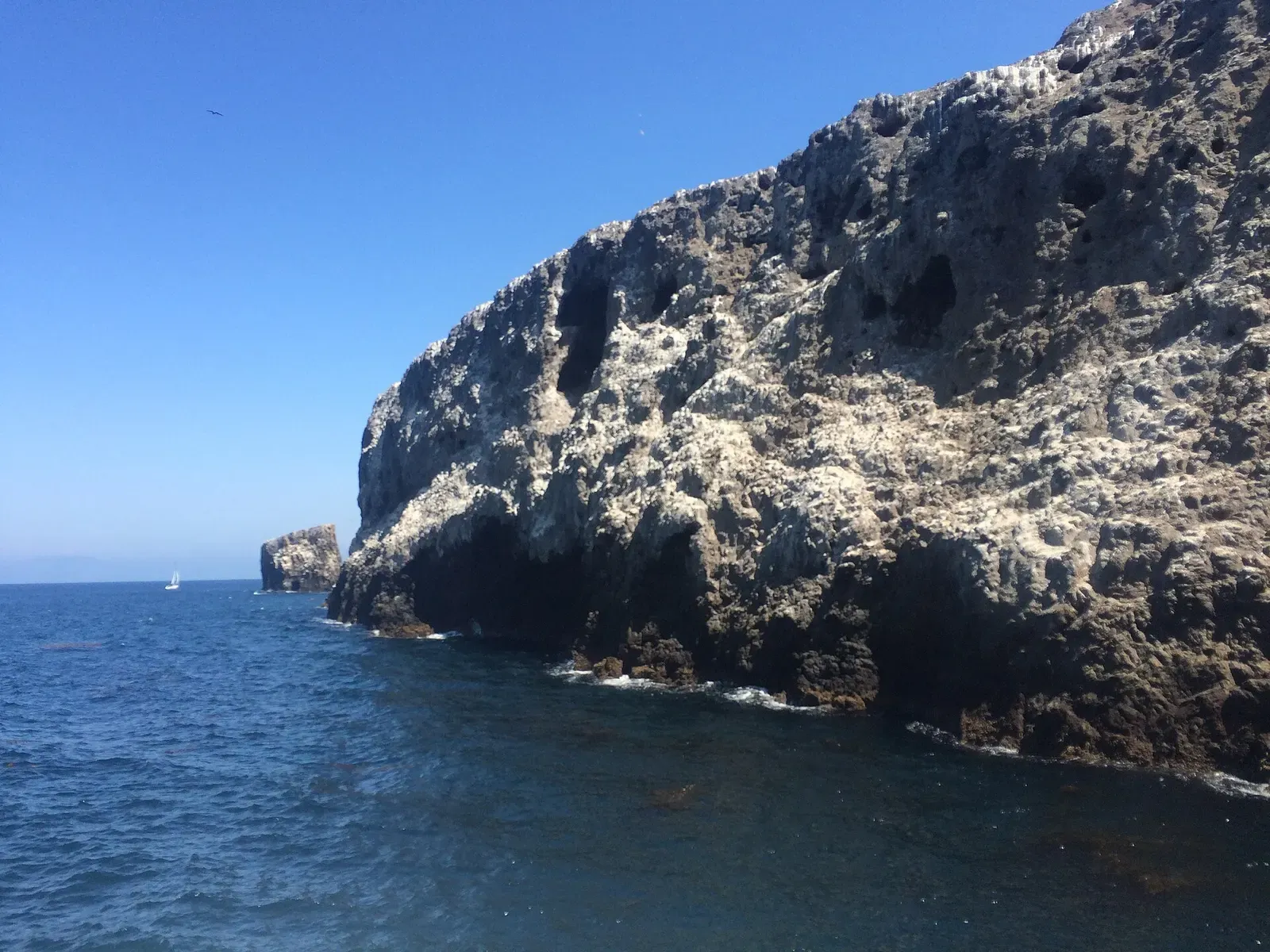
A 12 m natural bridge marking the edge of a no-take marine reserve
A WWII torpedo bomber intact on sand at 37 m off Anacapa
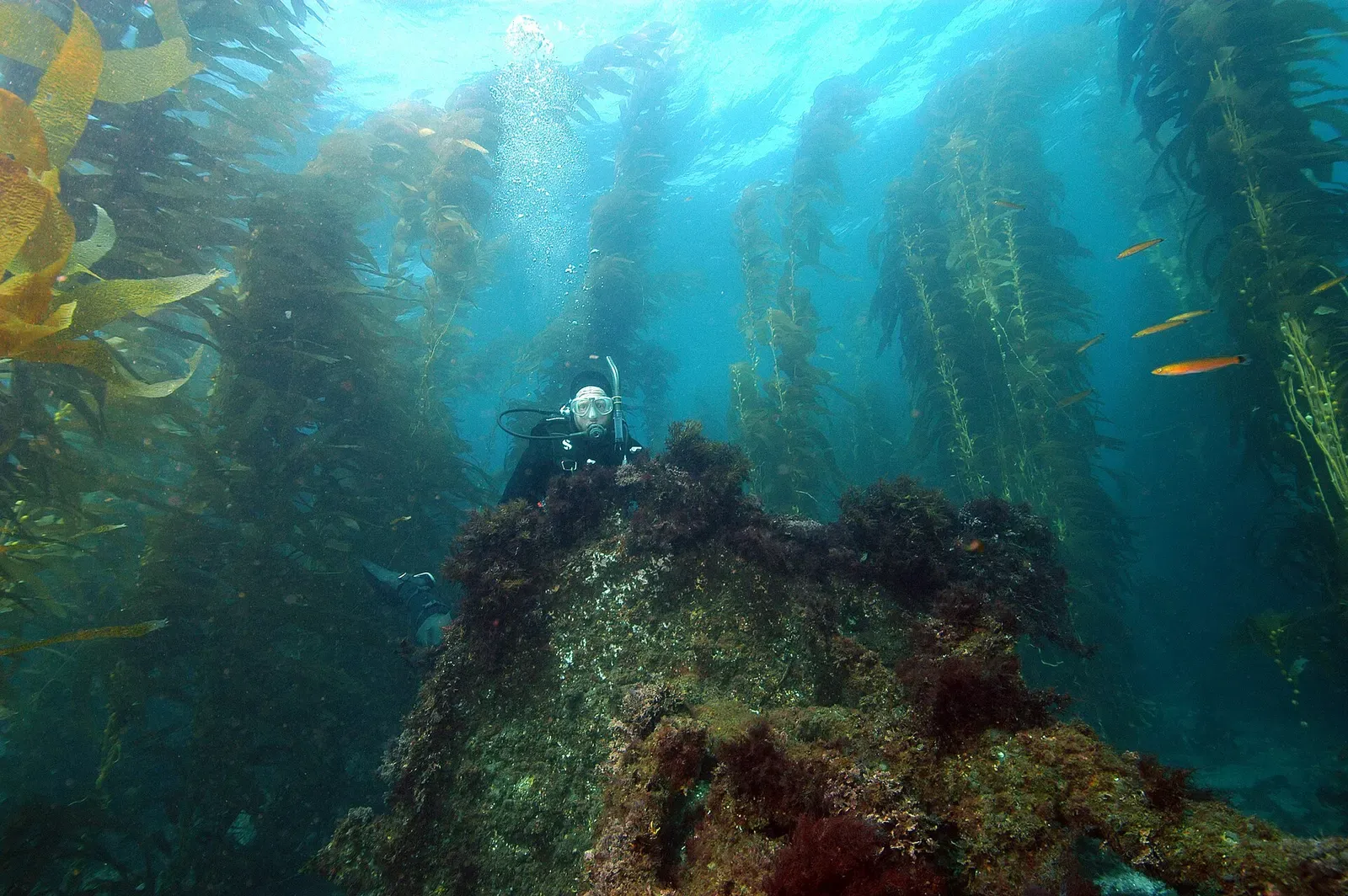
An 1850s gold-rush steamer in 8-9 m of water off Anacapa
Santa Cruz Island — Painted Cave
One of the world's largest sea caves, divable near its mouth.
Scorpion Anchorage
Santa Cruz Island kelp forest popular for easy multi-level dives.
San Miguel Island — Wilson Rock
Remote pinnacle with a large, boisterous sea lion rookery.
Santa Barbara Island
Isolated islet with kelp forest and a resident sea lion colony.
How to get to Channel Islands
Boats run as day trips and multi-day charters out of Santa Barbara, Ventura and Oxnard, while Santa Barbara Island and other southern sites are usually reached from the San Pedro and Long Beach side. There are no hotels or dive services on the islands, so every dive starts and ends at a mainland harbour.
Photos from Channel Islands
National Marine Sanctuaries · CC BY 2.0
Ed Bierman · CC BY 2.0
Ed Bierman · CC BY 2.0
Ed Bierman · CC BY 2.0
Dive videos
Channel Islands Kelp Forest Scuba Diving, 12/18/2022 - 70ft visibility · Calvin Wen on YouTube
Diving Anacapa - Channel Islands - Nov 21 · Lauren MacKenzie on YouTube
Photo credits
- Storm clouds break over the silhouetted cliffs of Santa Cruz Island in Channel Islands National Marine Sanctuary by National Marine Sanctuaries, CC BY 2.0, via Wikimedia Commons
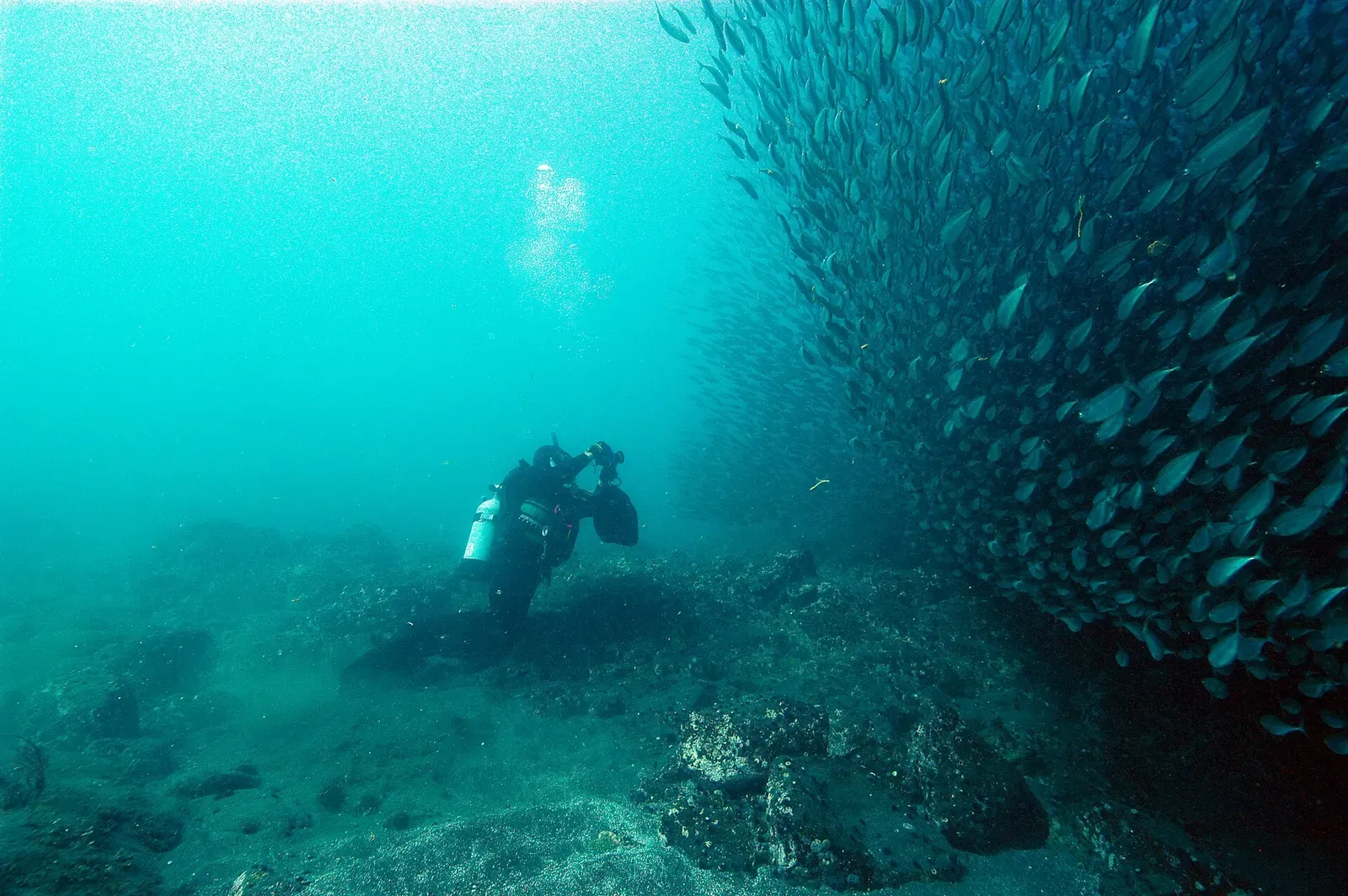
- A scuba diver photographs a dense bait ball of schooling fish in the blue waters of Channel Islands National Marine Sanctuary by National Marine Sanctuaries, Public domain, via Wikimedia Commons
- Two Navanax inermis sea slugs crawl over a rocky reef on a Channel Islands dive trip by Ed Bierman, CC BY 2.0, via Wikimedia Commons
- Cluster of orange gorgonian polyps, Adelogorgia phyllosclera, open on a Channel Islands reef by Ed Bierman, CC BY 2.0, via Wikimedia Commons
- An orange ochre sea star, Pisaster ochraceus, clings to a rocky reef near the Channel Islands by Ed Bierman, CC BY 2.0, via Wikimedia Commons
Embed
Run a dive centre, club or blog? Embed this map of 3 dive sites near Channel Islands on your own page.
In The Logbook
- Kelp forest diving, and where it still growsCold water · 13 min read
- Wetsuit thickness by water temperatureGear & kit · 11 min read
- What is surge in diving, and how deep it goesOcean science · 8 min read
- Cold-water diving: is it worth the drysuit?Cold water · 8 min read
Similar destinations

Walk down the stairs at Casino Point straight into a giant kelp forest
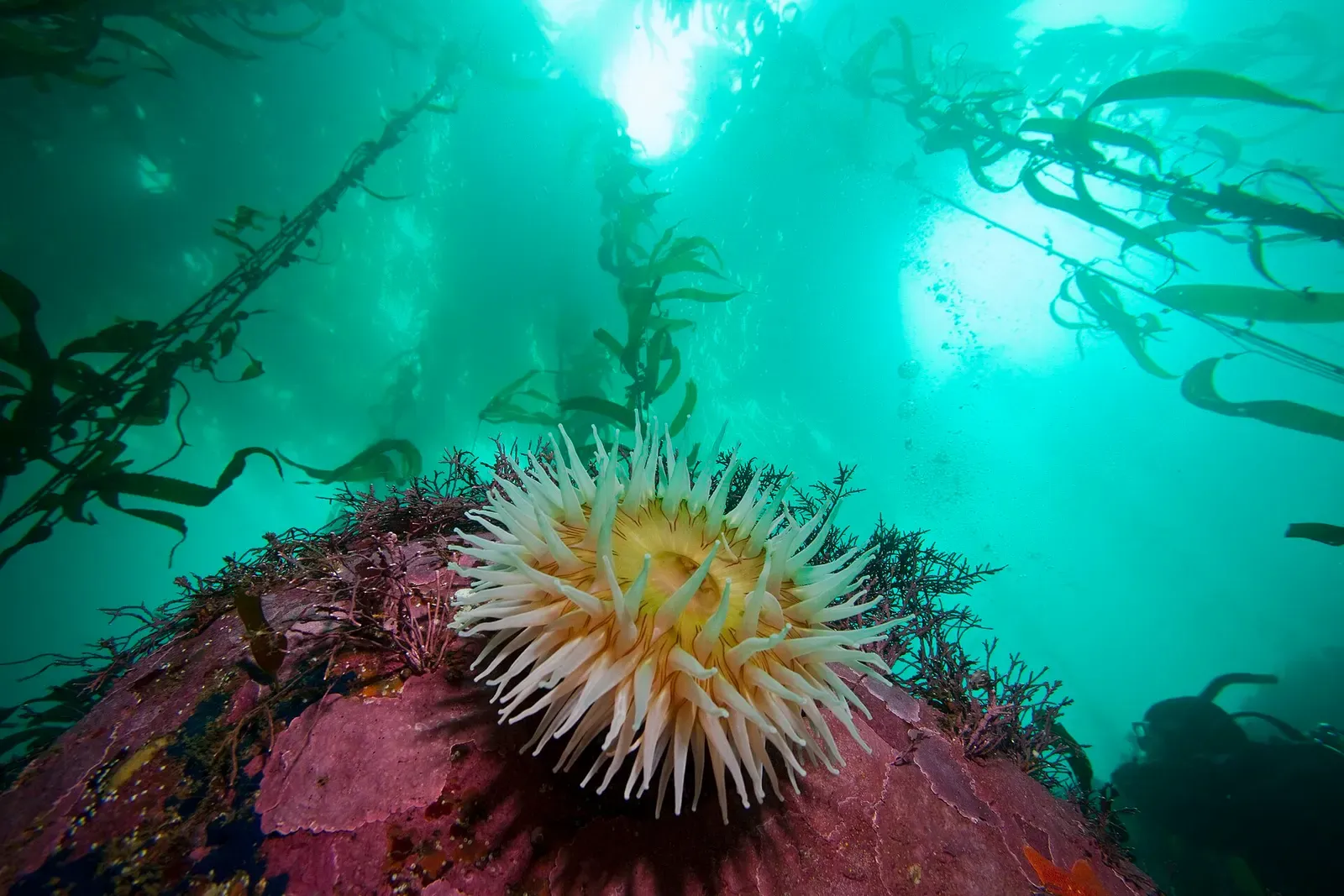
Beach-entry kelp forests inside a national marine sanctuary

Market squid spawn in their millions over the sand on winter nights

.jpg)
.jpg)


.jpg)
Permit-limited giant kelp forest with sea otters working the shallows