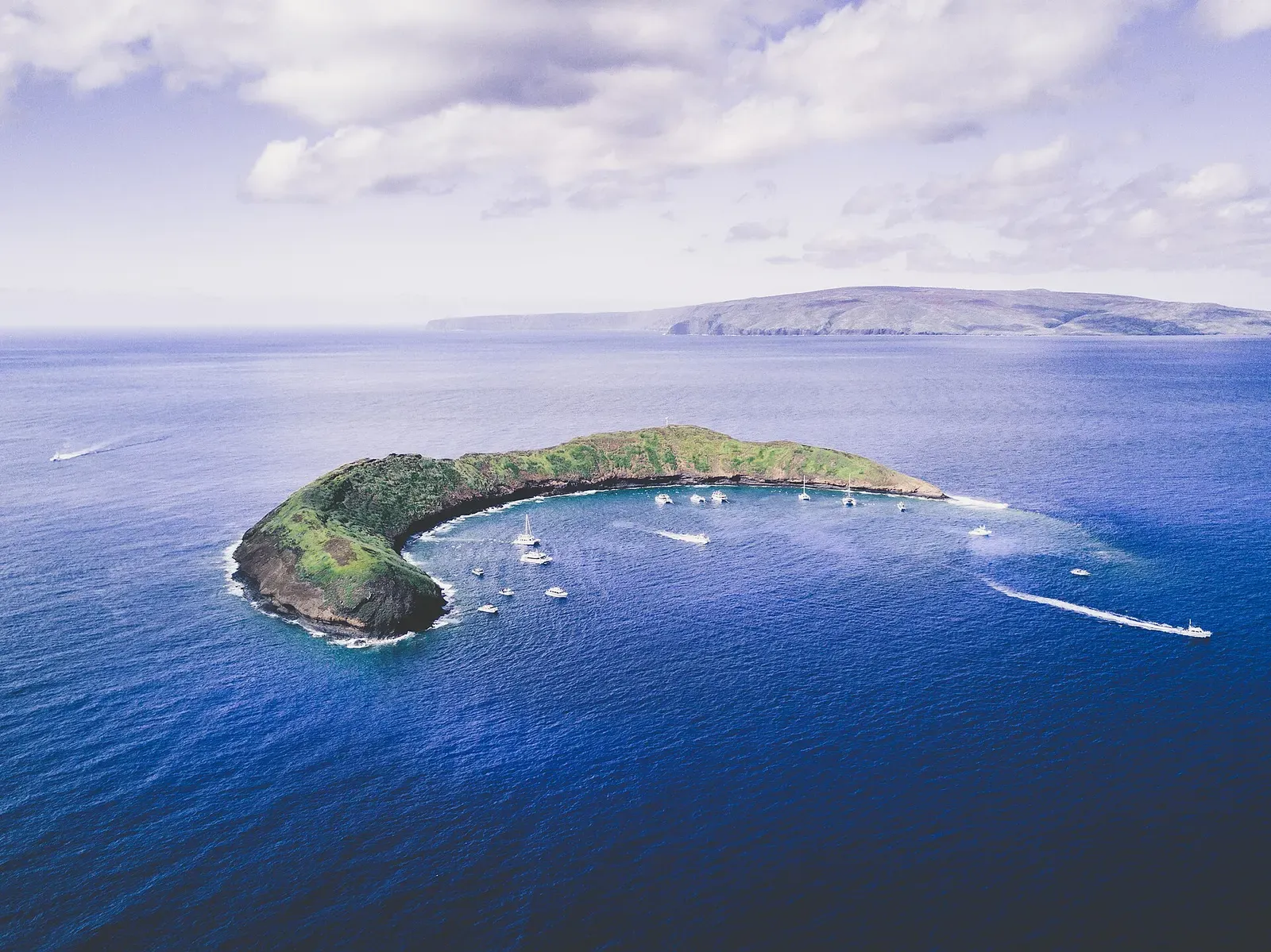
Maui, Molokini & Lānaʻi · United States · Reef · Coral garden
Molokini Crater
250 fish species in a bowl the swell cannot reach
Photo: Farid Askerov · CC0
The inside of the crescent: a floor of sand and coral heads in 6-15 m, screened from the waves and from the channel's currents by the arc of crater rim standing above it. Around 250 fish species live in the bowl, among them black triggerfish, yellow tang and Moorish idol, and visibility regularly beats 15 m.
Also known as Molokini Inner Crater, Molokini Bowl.
Where it is and how deep
20.6333° N, 156.4961° WPublished position for this site.
The dive
Most of the permitted dive area inside the crescent sits in 20-50 feet (6-15 m). The floor is sand and coral heads, and the rim standing above you takes the waves and the channel's currents off the site, so the dive is a slow tour of the bowl rather than a fight with the water. Visibility regularly exceeds 50 feet (15 m) and on the clearest days reaches 150 feet (45 m).
The fish are the reason to be here. Roughly 250 species live in the crater, and black triggerfish, yellow tang, Moorish idol, parrotfish and raccoon butterflyfish are the ones you see most often. The reef itself holds 38 species of hard coral and something like 100 species of algae. Whitetip reef sharks and moray eels show up under ledges from time to time rather than reliably.
Timing matters more than route-finding. The best conditions in the crater come in the early morning, which is what the boats out of Māʻalaea Harbor and the Kīhei Boat Ramp are built around, and the same trip usually takes in snorkellers and snuba as well as divers. Through the winter months humpback whales visit the channel, so the season adds the chance of a whale to a dive that is otherwise about small fish on a sheltered reef.
Background
Molokini is what is left of a Pleistocene-epoch volcano: a crescent-shaped, partially submerged crater forming a small islet in the Alalakeiki Channel between Maui and Kahoʻolawe. The islet, the crater and the surrounding 77 acres (31 ha) of underwater terrain were declared a Marine Life Conservation District in 1977.
Marine life and season
- Reef fish swarms
- Reef sharks
- Whales
| Jan | Feb | Mar | Apr | May | Jun | Jul | Aug | Sep | Oct | Nov | Dec |
|---|---|---|---|---|---|---|---|---|---|---|---|
| Good | Good | Good | Prime | Prime | Prime | Prime | Prime | Prime | Prime | Good | Good |
Season follows Maui, Molokini & Lānaʻi: April to October is the calm dry season; winter swells hit the north coast while south-facing sites stay open.
Photos from Molokini Crater
Tony Webster · CC BY-SA 3.0
SNORKELINGDIVES.COM · CC BY 2.0
SNORKELINGDIVES.COM · CC BY 2.0
Dive videos
Scuba Diving Molokini Crater Maui Hawaii · Nick Vanderbilt on YouTube
Questions divers ask
How deep is Molokini Crater?+
The water is 20-50 feet (6-15 m) deep across most of the permitted dive area inside the crescent, so it is a shallow dive with a long bottom time rather than a deep one.
Is Molokini Crater suitable for beginner divers?+
Yes. The bowl is shallow at 6-15 m, and its crescent shape shelters it from the waves and from the strong currents in the channel outside, which is what makes it the calmest boat dive on this coast.
What is the best time of day to dive Molokini?+
Early morning. Conditions in the crater are at their best then, and that is when the boats run out from Māʻalaea Harbor and the Kīhei Boat Ramp, about three miles off Maui's south-west coast.
Sources
- Molokini — Wikipedia
- Diving in the United States — Wikivoyage
- Maui — Wikivoyage
Photo credits
- Aerial view of Molokini's crescent-shaped crater rim enclosing a sheltered bay full of moored dive boats by Farid Askerov, CC0, via Wikimedia Commons
- Molokini's crescent islet seen at boat level from the wake of a departing vessel by Tony Webster, CC BY-SA 3.0, via Wikimedia Commons
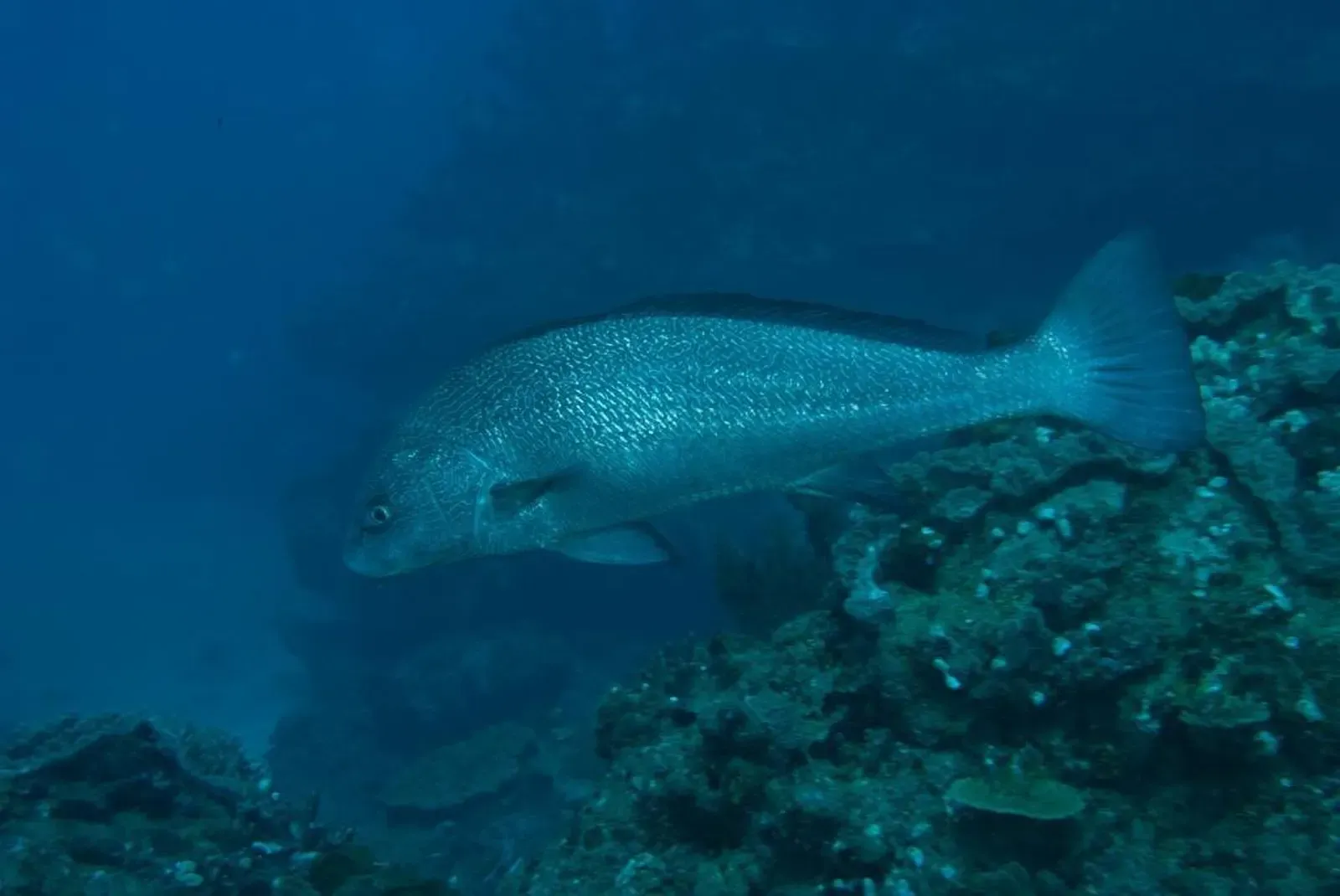
- A bluefin trevally cruising past a coral head with a sea urchin tucked beneath it by SNORKELINGDIVES.COM, CC BY 2.0, via Openverse
- Coral terrace inside the crater with a yellow butterflyfish and passing reef fish by SNORKELINGDIVES.COM, CC BY 2.0, via Openverse
In The Logbook
- Hearing underwater: why sound has no directionOcean science · 14 min read
- Why things look bigger underwaterOcean science · 12 min read
- Where can you legally swim with whales?Big animals · 14 min read
- Why is the sea blue? Water filters out redOcean science · 7 min read
More dive sites in Maui, Molokini & Lānaʻi
Reef
Five to ten green turtles on a dive, in 11 m off the beach
Cave & cavern
A skylit lava cavern with a fallen-rock altar
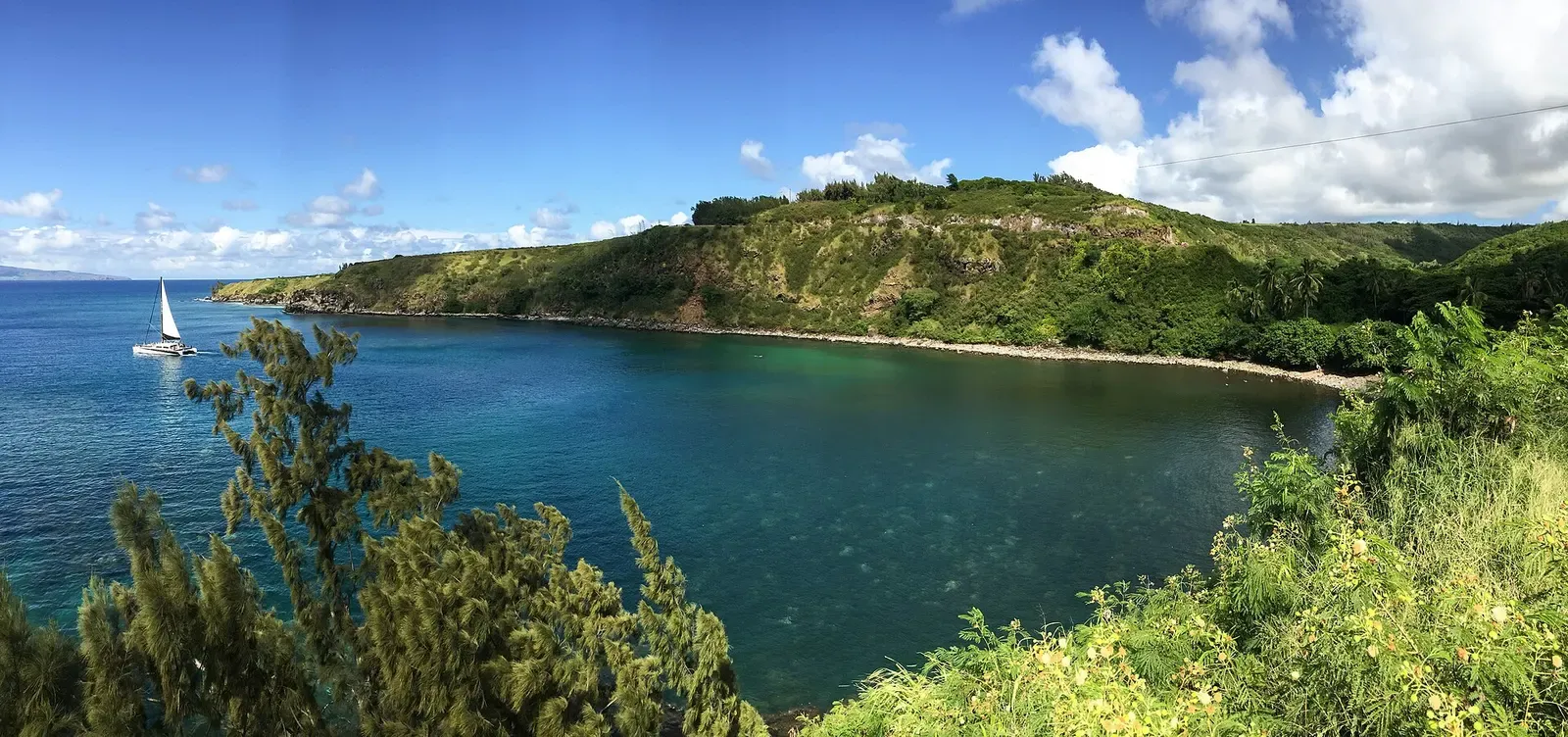
A protected bay 4 m deep, reached on foot by trail
A reef running for miles, dived from 6 m down to 24 m
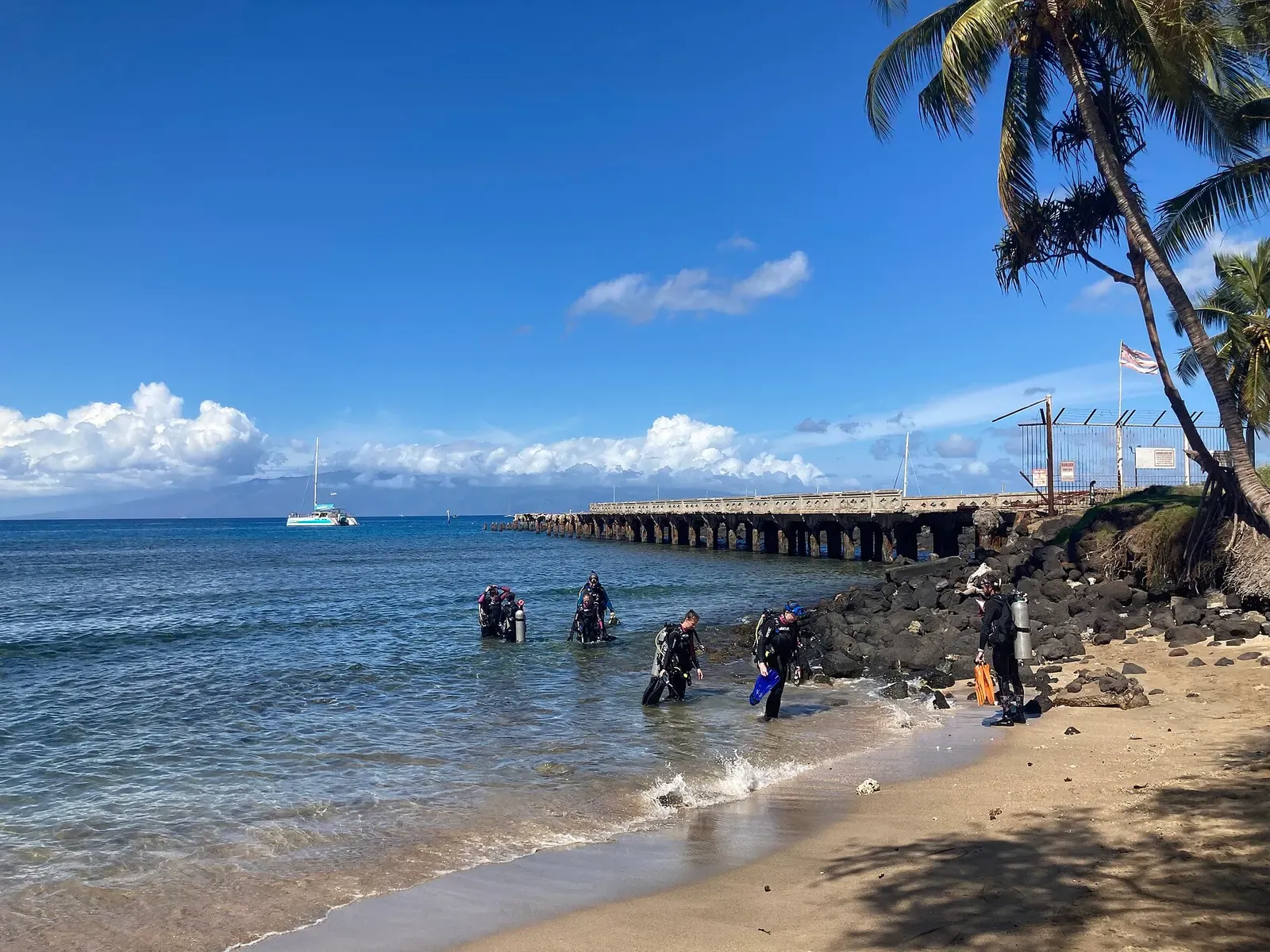
A hurricane-flattened pier turned artificial reef
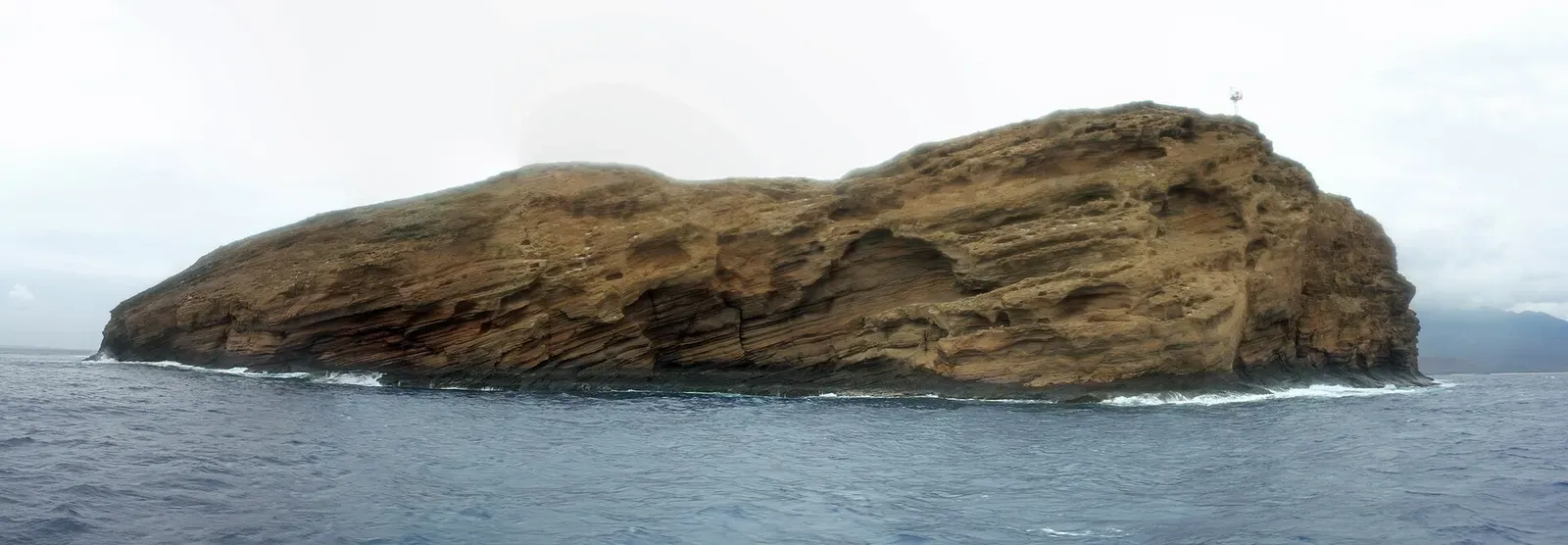
The outer rim's face drops 91 m into open ocean
Reef
Fingered shallow reefs averaging about 4.6 m, in calm water
Similar dives elsewhere
Reef
Manta Reef
Kadavu & the Great Astrolabe Reef · Fiji
Mantas over a coral-covered reef top at 15 metres

Coral canyons and gentle slopes at 15-20 m outside Opunohu Bay
The 'Christmas Tree' green tree coral on the seaward drop-off
.jpg)

Calm 22 m reef with frogfish, sea snakes and passing mantas