Palau · Palau · Wall · Drift · Reef
Blue Corner
Hook into the plateau lip and let the sharks stack up off the edge
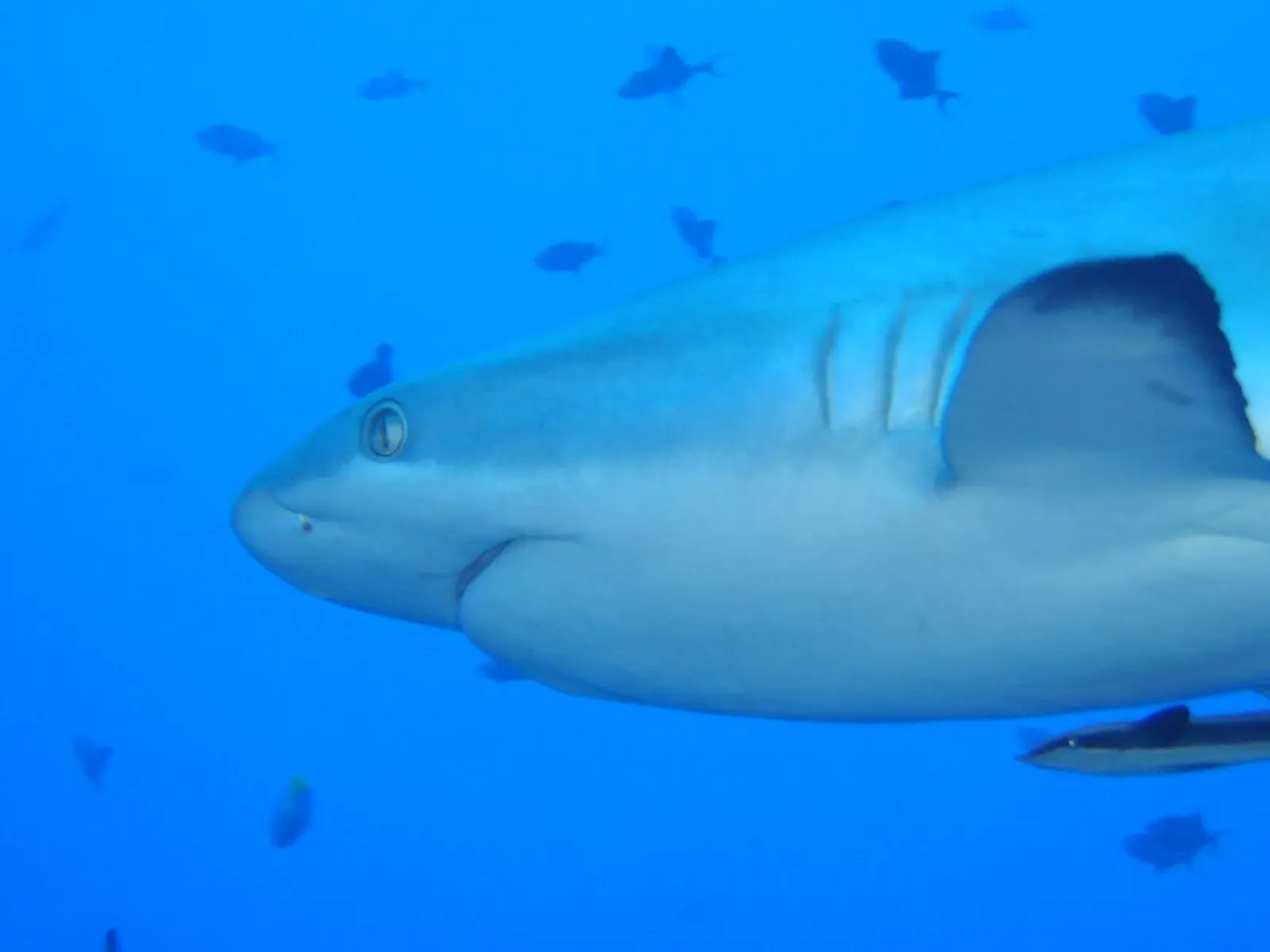
Photo: Shinji · CC BY-SA 2.0
Blue Corner is a triangular promontory off the north-west end of Ngemelis, running from about 8 m at its shallowest to around 30 m where the reef falls away. Divers set a reef hook on the lip of the plateau and hang there while grey reef sharks, barracuda and big-eye trevally hold station off the edge. The currents are variable and can change direction, which is both what makes the site work and what makes it demanding.
Where it is and how deep
7.1136° N, 134.2410° EApproximate position — the dashed circle shows where the site lies; your operator's briefing has the mooring.
The dive
Boats use one of two entry points: along the main reef wall, or at the eastern end of the reef, where you descend to a cavern at 22 m. Either way the target is the same underwater promontory, a triangular terrace at 15 to 20 m that juts out of the reef. Get down without wasting time and work towards the edge of the plateau, which is where you aim to hook in.
Hooked in on the lip with your hands free, you have the best seat in the house. Resident grey reef and whitetip reef sharks patrol back and forth, big-eye trevally and blue fin tuna cut across the blue, and large schools of snapper and barracuda hang off the corner while napoleon wrasse pass by close enough to look you over. The area is also known for huge spawning aggregations of bohar snapper.
Look out into the deeper water from time to time: hammerheads, bull sharks, tiger sharks and the occasional whale shark all turn up here, though never on a schedule. Unhook when it is time and finish over the reef itself, which comes up as shallow as about 8 m, where hawksbill and green turtles work the coral alongside bumphead parrotfish, mackerel and wahoo, and spotted eagle rays pass through on occasion. Visibility tracks the tide, averaging 16 m on the outgoing and 28 m or more on the incoming.
Marine life and season
- Reef sharks
- Napoleon wrasse
- Barracuda
- Trevally & jacks
- Tuna
- Sea turtles
- Eagle rays
- Hammerheads
- Bull sharks
- Tiger sharks
- Whale sharks
| Jan | Feb | Mar | Apr | May | Jun | Jul | Aug | Sep | Oct | Nov | Dec |
|---|---|---|---|---|---|---|---|---|---|---|---|
| Prime | Prime | Prime | Prime | Good | Fair | Fair | Fair | Fair | Fair | Good | Prime |
Season follows Palau: Boats run every month; November to April has the best conditions, and June to December is typhoon season.
Know before you go
- Currents are strong and unpredictable and can change direction, horizontally or vertically, at any moment; divers are advised to carry and use a reef hook.
- Visibility drops to around 16 m on the outgoing tide, so keep the group tight and agree the hook-in point before you drop.
Photos from Blue Corner
Luka Peternel · CC BY-SA 4.0
mattk1979 · CC BY-SA 2.0
LuxTonnerre · CC BY 2.0
Dive videos
Blue Corner scuba dive, Palau · DonAnderson51 on YouTube
Questions divers ask
How deep is Blue Corner?+
The plateau sits at 15 to 20 m, the reef top runs as shallow as about 8 m, and the edge drops to around 30 m. The dive is worked from the edge of the plateau, where divers hook in rather than fin against the current.
Do you need a reef hook at Blue Corner?+
Yes. The currents are strong and can change direction at any moment, so divers are advised to hook in rather than fin against the flow. Palau is the birthplace of the reef hook.
What certification do you need for Blue Corner?+
It is generally reserved for experienced or advanced qualified divers. Novices can dive it during slack tide, but the site is generally treated as one for experienced divers.
Sources
- Blue Corner Diving, Palau — Dive The World
- Ngemelis Wall (OpenStreetMap) — OpenStreetMap
Photo credits
- A grey reef shark glides close to the camera in open blue water. by Shinji, CC BY-SA 2.0, via Wikimedia Commons
- Aerial view of the triangular reef promontory jutting from Palau's barrier reef. by Luka Peternel, CC BY-SA 4.0, via Wikimedia Commons
- A reef shark swims over the coral-covered edge of the plateau. by mattk1979, CC BY-SA 2.0, via Openverse
- A blue and yellow angelfish over the reef at Blue Corner. by LuxTonnerre, CC BY 2.0, via Wikimedia Commons
In The Logbook
- Where to dive in DecemberTrip planning · 10 min read
- The best wall dives in the worldWalls & drop-offs · 11 min read
- Where to dive in every month of the yearTrip planning · 14 min read
- When does coral spawn? The moon's calendarBig animals · 10 min read
- When is slack water? Tides for diversOcean science · 7 min read
- How long does a tank of air last?Gear & kit · 9 min read
- Why your ears hurt diving, and how to stop itBody & health · 8 min read
- Where to dive with whale sharks, month by monthBig animals · 16 min read
- Drift diving: how to read and ride a currentDrift & current · 8 min read
- When and where to dive with hammerheadsBig animals · 16 min read
More dive sites in Palau
Grey reef, whitetip and leopard sharks patrolling a wall into the deep
Cave & cavern
Four holes in the reef top that open into a single large cavern
Cave & cavern
Surfacing inside air-filled limestone chambers under Malakal Island
Wreck
A freighter so thick with lionfish it took their name
A manta cleaning station at the mouth of a channel cut in 1908
Wreck
Rifles, ammunition and helmets still aboard an upright mystery ship
Wreck
Following the mooring line down to the forward tower of an upright fleet oiler
Wreck
A coral-covered Japanese Navy seaplane visible from the surface
Similar dives elsewhere
Hundreds of batfish and jacks holding in the current
Whip corals along a drifted wall, with bumpheads passing
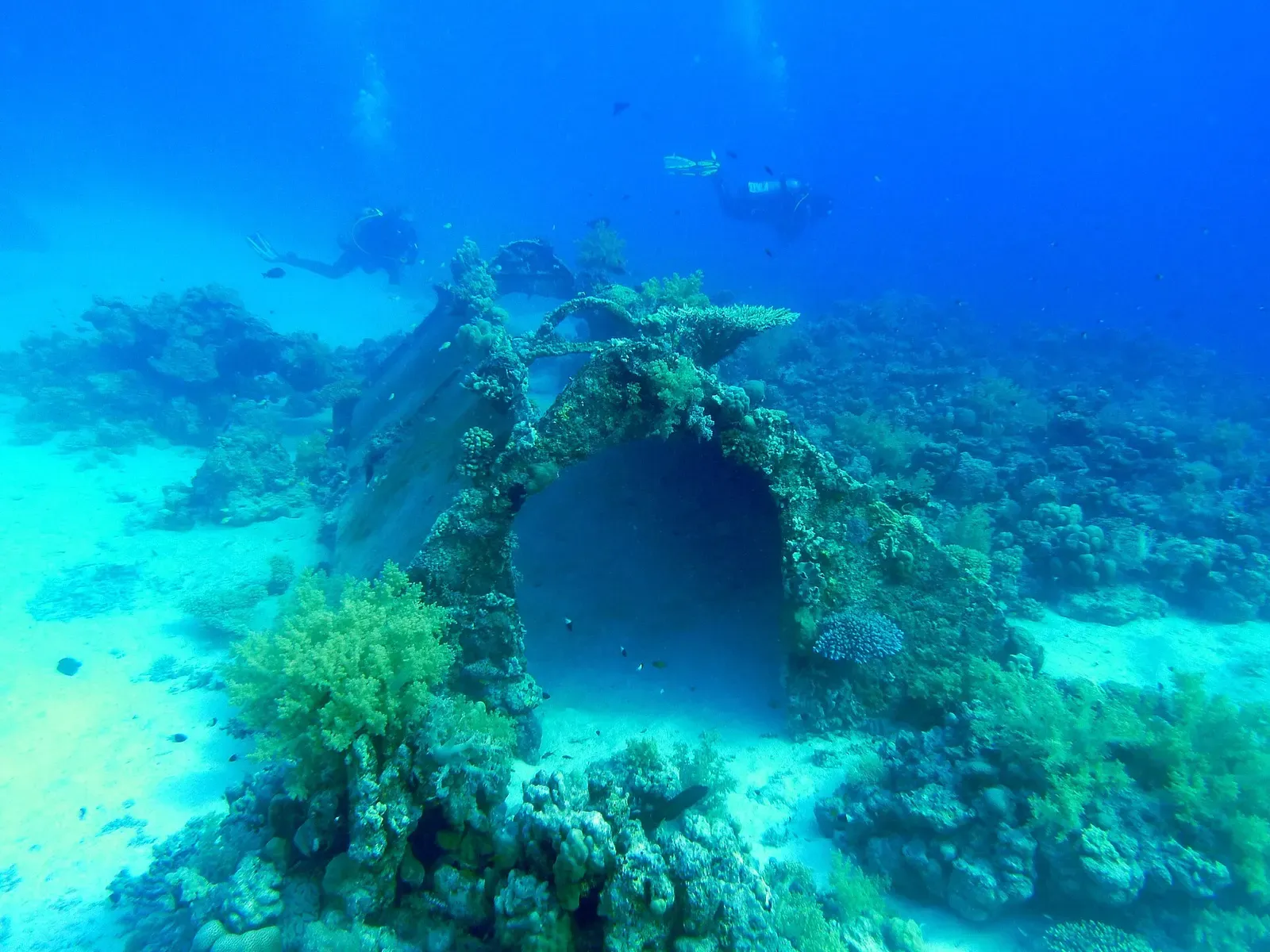


Cousteau's diving-saucer hangar still on the sand at 13 m
Wall
Shark Island
Kosrae · Micronesia
Sharks, barracuda and dog-tooth tuna along a current-swept wall