Phi Phi & the King Cruiser · Thailand · Wall · Reef
Koh Bida Nok
A wall to 30 m and the soft-coral spur called Finger Reef
Photo: (c) portioid, some rights reserved (CC BY-SA) · CC BY-SA 4.0
Koh Bida Nok is the outer of the two Bida rocks, an island whose northwest side plunges straight down to 30 m as a wall. Divers work the face and the soft-coral spur called Finger Reef, where schools of glassfish and snapper ball up as tuna cut into them. Blacktip, leopard and nurse sharks are the regular sightings, and the bottom is at 33 m.
Also known as Ko Bida Nok, Bida Nok Outer Rock.
Where it is and how deep
7.6544° N, 98.7676° EApproximate position — the dashed circle shows where the site lies; your operator's briefing has the mooring.
The dive
The dive is usually run along the northwest side of the island, where the rock plunges straight down to 30 m as a wall. Typical profiles sit between 10 and 25 m along the face, with the bottom at 33 m below that, which is why the site is a popular spot for conducting deep diver training. Current can be strong here, so the descent is made close to the rock and the wall is worked in whichever direction the water is going.
Finger Reef, the spur pointing south out of Bida Nok bay, is the other half of the site. It is completely covered in brightly coloured soft corals and holds a huge variety and density of marine life: enormous schools of glassfish, yellow snapper and rainbow runners, balling and swirling as tuna and other large predators chase into them.
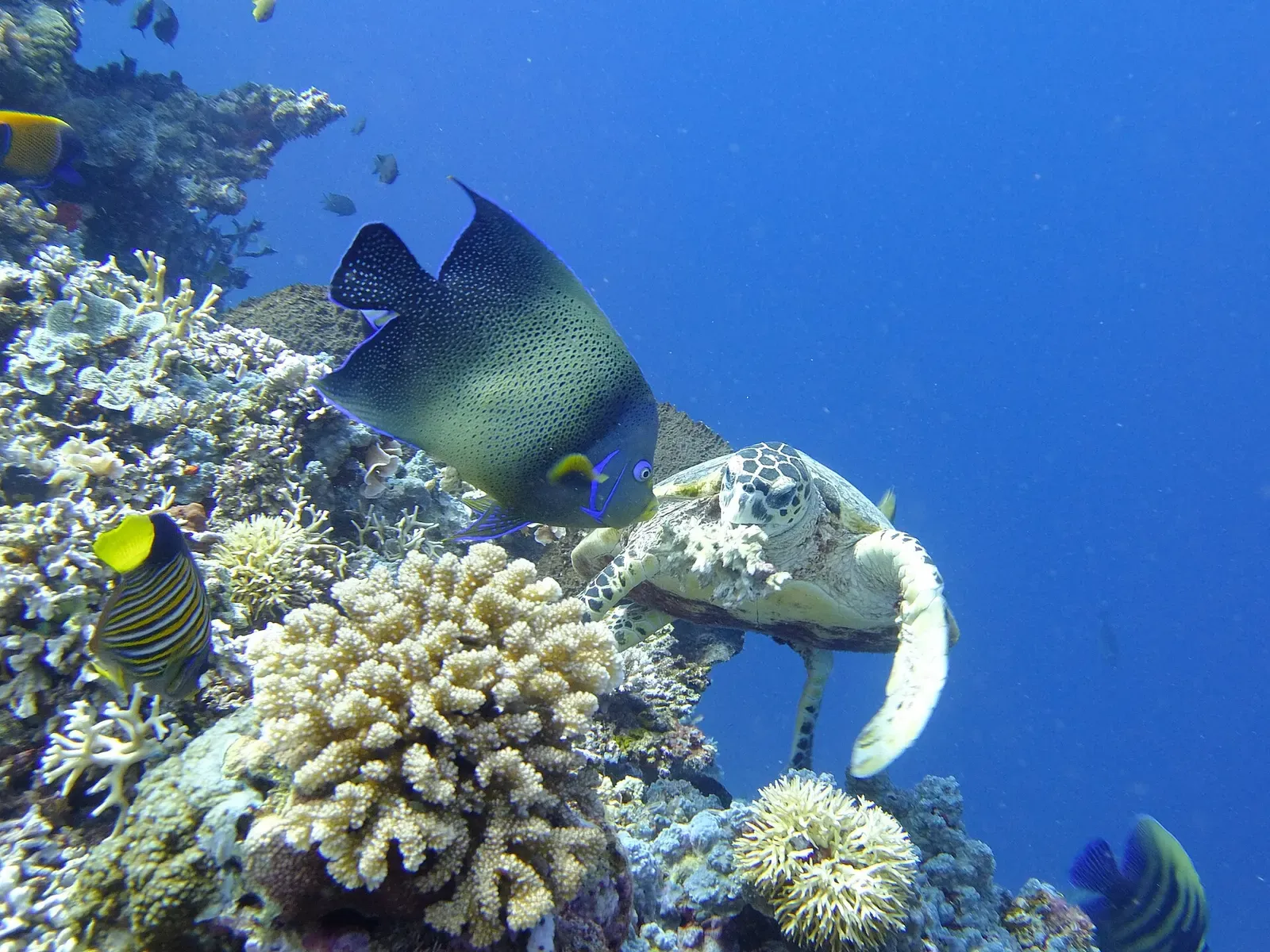
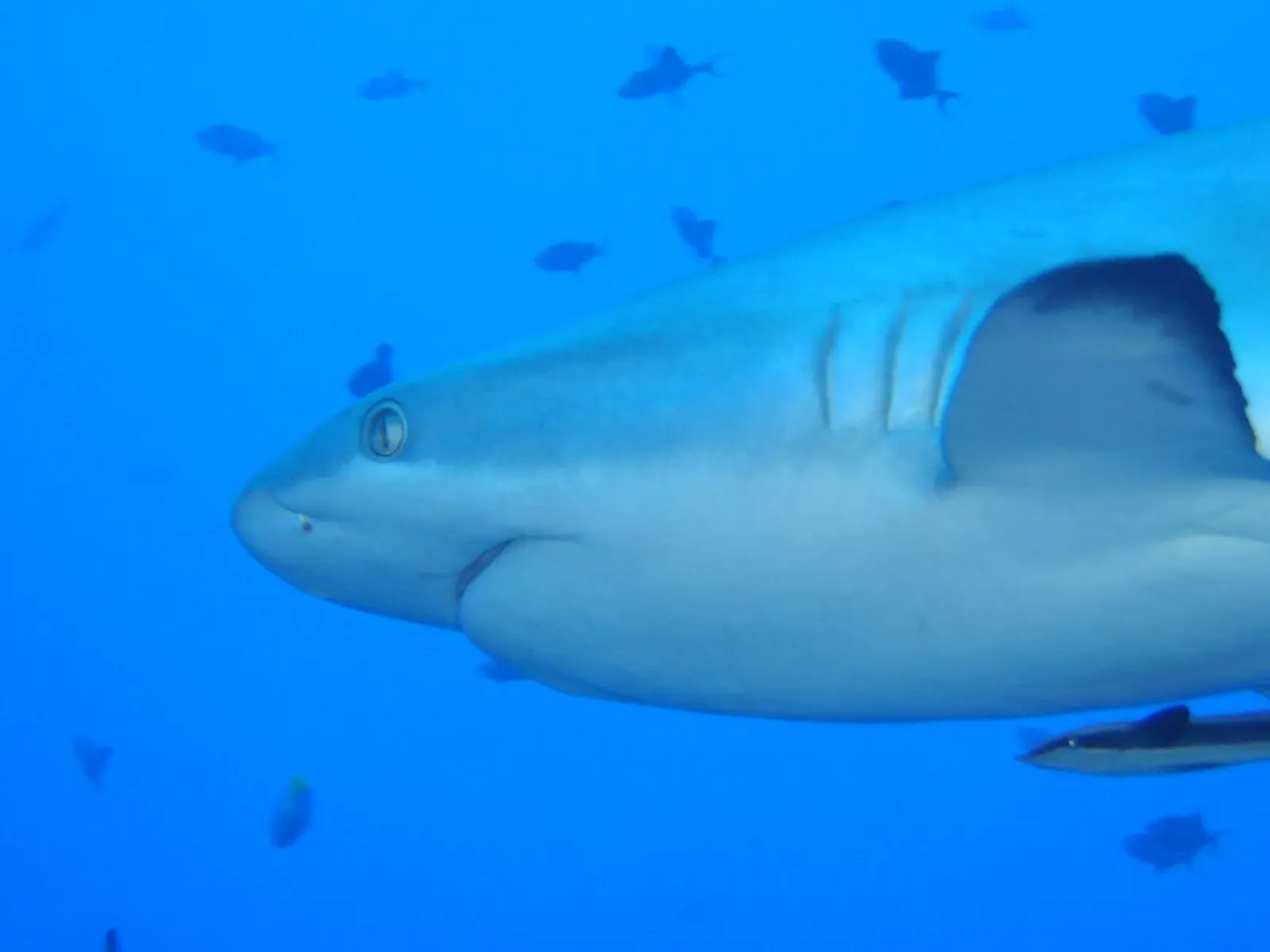
The sharks are the reason many divers book it: blacktip, leopard and nurse sharks are all regular sightings, with turtles and moray eels through the reef between them. From December to February there is an outside chance of a manta ray or even a whale shark passing the wall, and visibility of 20 m and more makes the face worth photographing.
Marine life and season
- Reef sharks
- Sea turtles
- Reef fish swarms
- Tuna
| Jan | Feb | Mar | Apr | May | Jun | Jul | Aug | Sep | Oct | Nov | Dec |
|---|---|---|---|---|---|---|---|---|---|---|---|
| Prime | Prime | Prime | Prime | Good | Fair | Fair | Fair | Fair | Good | Prime | Prime |
Season follows Phi Phi & the King Cruiser: Nov–Apr is the dry season with the calmest, clearest water; the south-west monsoon from May to October brings swell and rain.
Know before you go
- Current on the wall can run strong, which is why the site is rated for advanced divers; descend close to the rock and let the flow decide the direction.
- Parts of the site are treated as cave diving — do not enter the enclosed sections without the required certifications.
Photos from Koh Bida Nok
Donald Davesne · CC BY 4.0
Donald Davesne · CC BY 4.0
Dive videos
Diving Koh Bida Nok · Dan Tirto on YouTube
Questions divers ask
How deep is Koh Bida Nok?+
The wall on the northwest side drops straight to 30 m and the maximum depth at the site is 33 m. Typical dives are run between 10 and 25 m along the face.
When can you see manta rays at Koh Bida Nok?+
December to February is the window: a manta ray or even a whale shark is sometimes spotted then, though it is luck rather than a reliable feature of the dive.
Sources
- Koh Bida Nok — Divezone
- Diving in Thailand — Wikivoyage
- Ko Bida Nok (OpenStreetMap) — OpenStreetMap
Photo credits
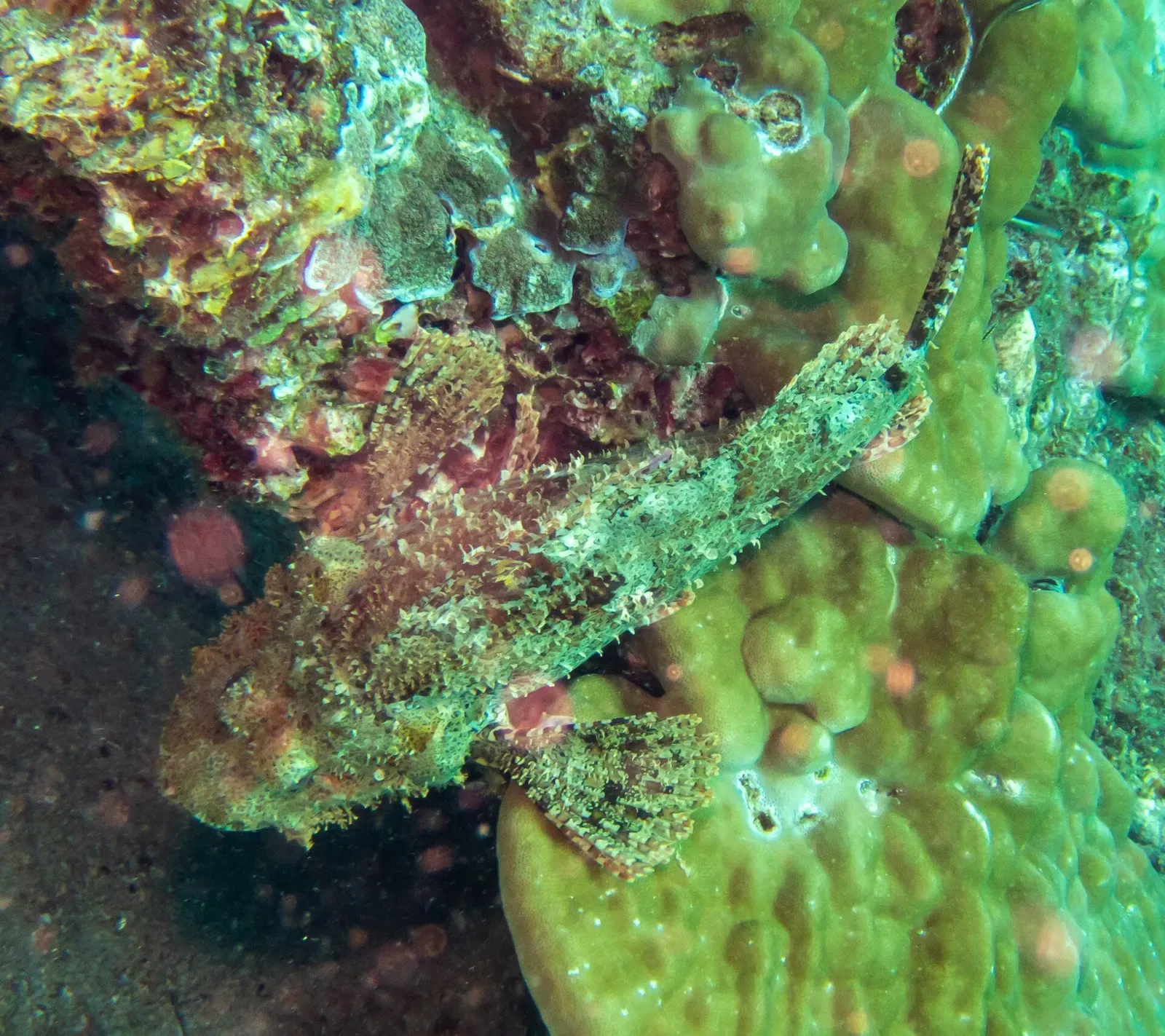
- Camouflaged smallscale scorpionfish resting on coral at Koh Bida Nok by (c) portioid, some rights reserved (CC BY-SA), CC BY-SA 4.0, via Wikimedia Commons
- Blue-lined rockcod with vivid blue and green stripes swimming over the reef by Donald Davesne, CC BY 4.0, via Wikimedia Commons
- Spiny lobster with long antennae tucked into a colorful sponge-covered crevice by Donald Davesne, CC BY 4.0, via Wikimedia Commons
More dive sites in Phi Phi & the King Cruiser
Pinnacle
The pinnacle the King Cruiser struck, carpeted in anemones
Reef
An easy reef slope and mini wall, also dived from Krabi
Pinnacle
A coral-covered pinnacle east of the Bidas, rarely on the schedule
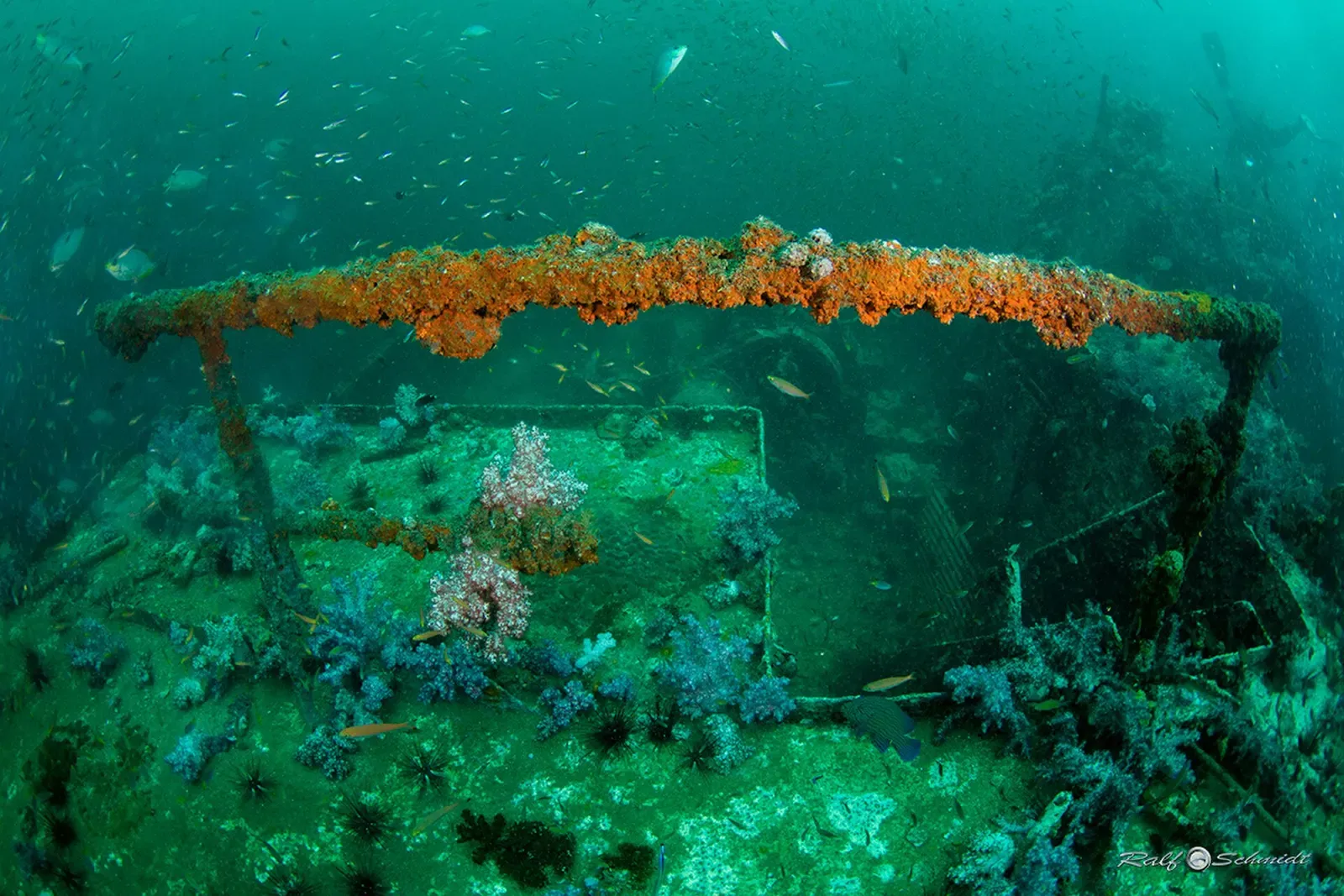
An 85 m ferry upright on the sand, captain's cabin at 12 m
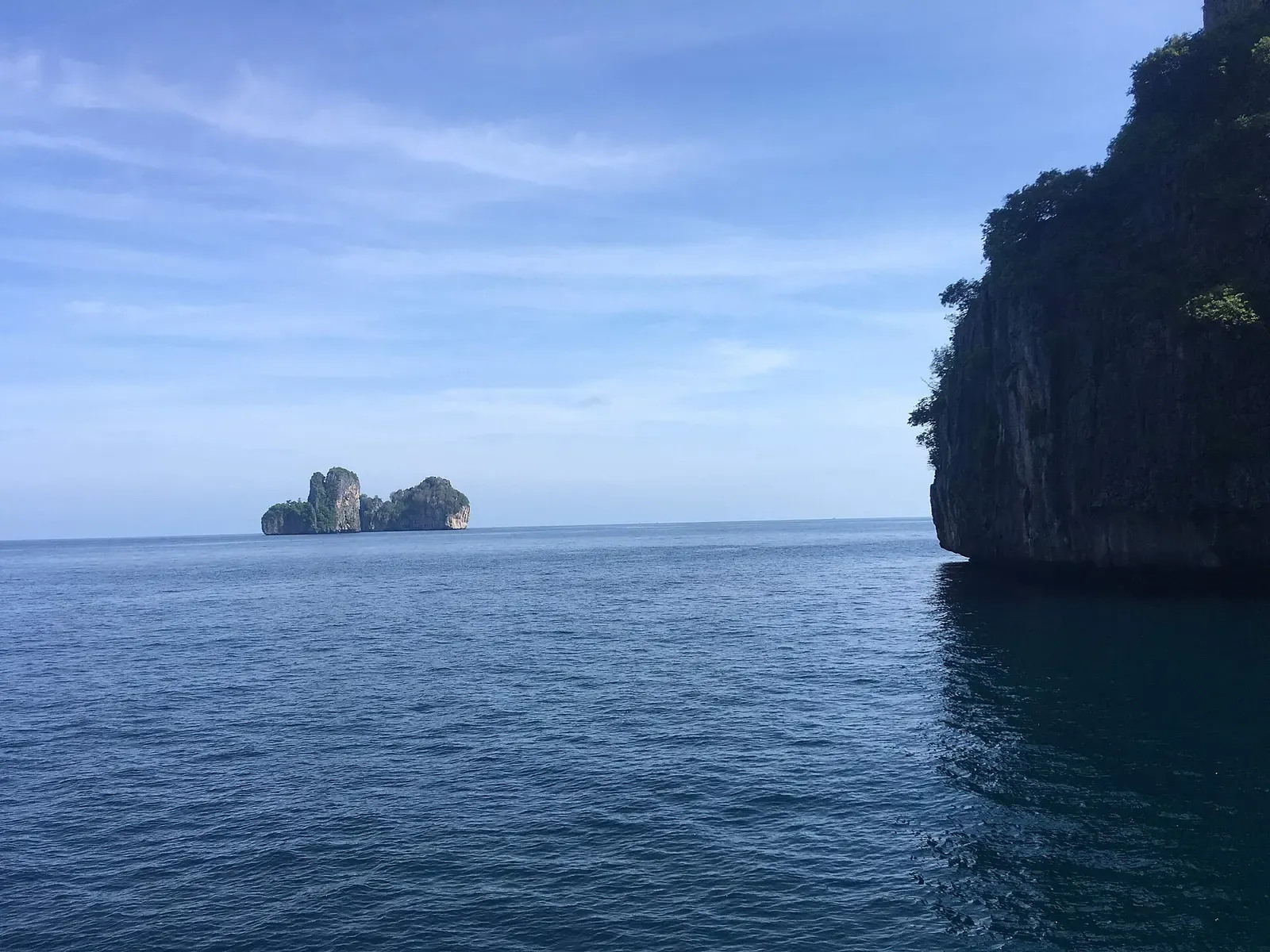
Swim-throughs behind walls of glassfish, and no current
Wall
A limestone wall running from the surface to 33 m
Pinnacle
A multi-headed pinnacle off an uninhabited islet, around 15 m
Wall
Underwater cliffs to 21 m, cut by small caverns and swim-throughs
Similar dives elsewhere

A wall covered in purple and white soft corals, home to nudibranchs and tiny shrimps
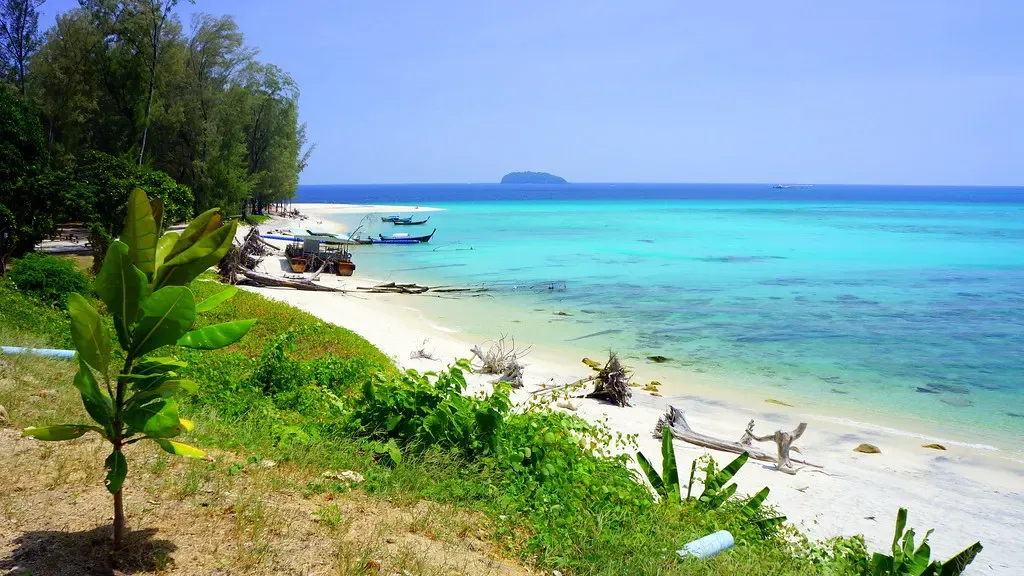
Crevices and overhangs down a 10 to 30 m wall
Black-tip reef sharks hunting along a sheer coral wall


Hook into the plateau lip and let the sharks stack up off the edge