Pacific Islands · France
Poindimié & Hienghène
Pygmy seahorses on gorgonian pinnacles inside the UNESCO-listed north-east lagoon
Photo: Unknown author · Public domain
Poindimié sits on the wet, trade-wind side of Grande Terre, 309 km up the east coast from Nouméa, inside the 'zone côtière nord et est' of New Caledonia's UNESCO-listed lagoons, a listing that leaves Nouméa's own lagoon out. One small club, Tiéti Diving, has dived it since 1996: coral gardens on white sand inside a double barrier reef, gorgonian-covered pinnacles cut by tunnels and arches outside it, the tidal Grande Passe, and a drop-off into the Poindimié trench that shelves at 40 m and needs Advanced Nitrox. Pygmy seahorses on the sea fans are the house speciality.
About diving in Poindimié & Hienghène
Every dive here leaves from one dock. Tiéti Diving works out of the Hôtel Tiéti compound in Poindimié village, loads its 12-diver semi-rigid at the quay and runs two-dive mornings; the far sites, such as the four pinnacles of Natacha in the Bayes channel, are about 45 minutes out. The centre opens every day of the year except 1 January, weather permitting, and trips are postponed when the trade-wind coast is blowing. It runs what it says is the only multi-gas fill station on Grande Terre outside Nouméa, with free nitrox for certified divers and trimix, sidemount and rebreather support, so the trench-edge technical sites are dived from the same boat as the lagoon coral gardens.
The reef is a double barrier and each side dives differently. Inside it, Val d'Isère and Tignes are white-sand bottoms dotted with hard corals, linked by the staghorn-studded 'Vallée Blanche'. Outside, the diving is a chain of pinnacles thick with gorgonians and cut by canyons, arches and tunnels: Dahab de Nous links five of them through a long lit tunnel, and Zorglub's tunnels are packed with hatchetfish. Pygmy seahorses live on the sea fans at Pascaline, Waneck and Bargibenti, beside nudibranchs and orang-utan crabs. Off the pass mouth the bottom falls into the Poindimié trench: Tombant 60 shelves at 40 m and drops past 120 m; the Caverne d'Albi Baba reaches the trench ridge at 60 m.
The World Heritage listing applies here in a way it does not in Nouméa. The reef off Poindimié and Hienghène falls in the 'zone côtière nord et est', one of six zones inscribed in 2008 as Les lagons de Nouvelle-Calédonie, whereas the lagoon off Nouméa is named among those UNESCO did not recognise. From Pouébo to Ponérihouen the coast faces the prevailing winds, so it is wetter than the rest of Grande Terre, with forest on a narrow strip between the mountains and the sea. Near Hienghène the Hienga and Doïman islets are protected marine areas and habitat of a dwarf seahorse, with an underwater trail at Îlot Hienga.
This is a single-operator destination and should be planned as one. A diver here is booking with one small club and diving whatever its boat runs that morning, with no second centre to fall back on; a centre listed at Hienghène's marina has no confirmed name or evidence it still operates, so Manta Point and the Labyrinthe, about 16 km along the reef, cannot be counted on. It suits macro divers after pygmy seahorses, divers who want the listed north-east lagoon rather than the Nouméa side, and technical divers who want a trench wall with trimix fills on site. Divers wanting a choice of operators or a week of easy diving are better served by Nouméa's day-boat scene.
Best time to dive Poindimié & Hienghène
| Jan | Feb | Mar | Apr | May | Jun | Jul | Aug | Sep | Oct | Nov | Dec | |
|---|---|---|---|---|---|---|---|---|---|---|---|---|
| Season | Fair | Fair | Fair | Fair | Good | Good | Good | Good | Good | Good | Good | Fair |
| Sea surface | 28°C82°F | 28°C82°F | 28°C82°F | 27°C81°F | 26°C79°F | 25°C77°F | 24°C75°F | 24°C75°F | 24°C75°F | 25°C77°F | 26°C79°F | 27°C81°F |
| Daytime high | 30°C86°F | 30°C86°F | 29°C84°F | 29°C84°F | 27°C81°F | 26°C79°F | 25°C77°F | 25°C77°F | 26°C79°F | 27°C81°F | 28°C82°F | 29°C84°F |
| Rain | 185 mm7.3 in | 159 mm6.3 in | 166 mm6.5 in | 136 mm5.4 in | 79 mm3.1 in | 68 mm2.7 in | 62 mm2.4 in | 58 mm2.3 in | 47 mm1.9 in | 65 mm2.6 in | 77 mm3.0 in | 158 mm6.2 in |
| Jan | Feb | Mar | Apr | May | Jun |
|---|---|---|---|---|---|
| Fair | Fair | Fair | Fair | Good | Good |
| Sea surface | |||||
| 28°C82°F | 28°C82°F | 28°C82°F | 27°C81°F | 26°C79°F | 25°C77°F |
| Daytime high | |||||
| 30°C86°F | 30°C86°F | 29°C84°F | 29°C84°F | 27°C81°F | 26°C79°F |
| Rain | |||||
| 185 mm7.3 in | 159 mm6.3 in | 166 mm6.5 in | 136 mm5.4 in | 79 mm3.1 in | 68 mm2.7 in |
| Jul | Aug | Sep | Oct | Nov | Dec |
|---|---|---|---|---|---|
| Good | Good | Good | Good | Good | Fair |
| Sea surface | |||||
| 24°C75°F | 24°C75°F | 24°C75°F | 25°C77°F | 26°C79°F | 27°C81°F |
| Daytime high | |||||
| 25°C77°F | 25°C77°F | 26°C79°F | 27°C81°F | 28°C82°F | 29°C84°F |
| Rain | |||||
| 62 mm2.4 in | 58 mm2.3 in | 47 mm1.9 in | 65 mm2.6 in | 77 mm3.0 in | 158 mm6.2 in |
2011–2025 averages. Sea surface: NOAA Coral Reef Watch, measured at the surface, so deeper water can run colder. Daytime high and rain: NASA POWER.
Diveable year-round, weather permitting. Dec–Apr is cyclone season and Jan–Mar the wettest months; mid-Sep to mid-Nov is driest but the trades blow hardest then. Winter water can fall to 20°C.
Best months: May, June, July, August, September, October, November
Poindimié & Hienghène water temperature and weather by month
The sea surface runs from 24 °C (75 °F) in August to 28 °C (82 °F) in February. Most rain falls from December to April, peaking at about 190 mm (7.5 in) in January; July to September are the driest. Daytime highs reach 30 °C (86 °F) in February and drop to 25 °C (77 °F) in August. Below the surface the water can drop to about 20 °C (68 °F), so pack a 5 mm suit.
Dive types & marine life
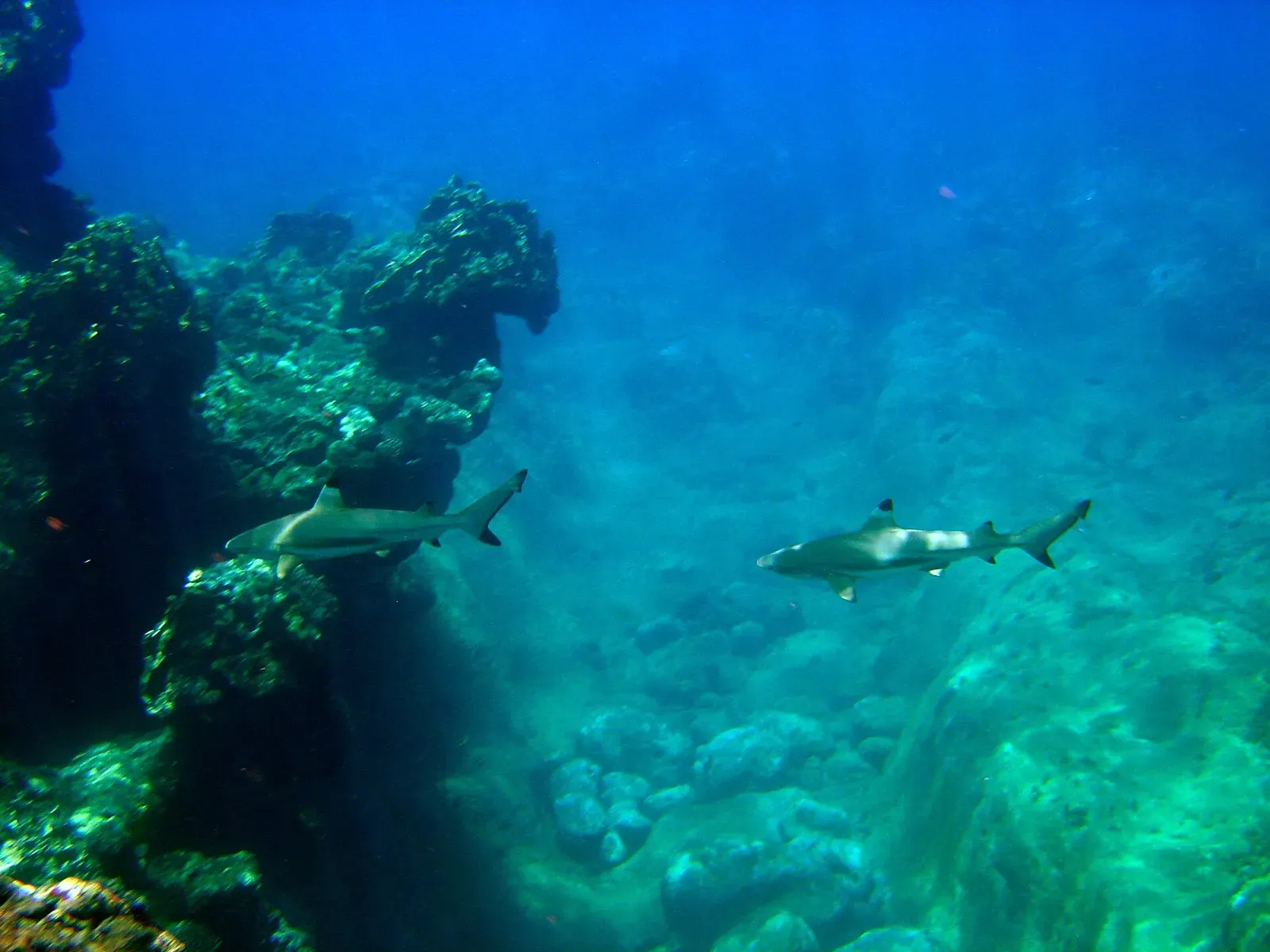
Gorgonians cover nearly every site and pygmy seahorses live on them at Pascaline, Waneck and Bargibenti, beside nudibranchs and orang-utan crabs. Blacktip reef sharks, turtles and a school of napoleon wrasse are reported by visitors, and garden eels sit on the sand at the pass mouth. The manta cleaning station is Manta Point off Hienghène, a blue-water descent that no confirmed operator serves.
- Reef
- Coral garden
- Cave & cavern
- Drift
- Pelagic & blue water
- Night
- Pygmy seahorses
- Reef sharks
- Napoleon wrasse
- Sea turtles
- Nudibranchs
- Macro critters
- Pristine corals
Best dive sites in Poindimié & Hienghène
Cave & cavern
A chimney and cavern that exit onto the trench ridge at 60 m
Pinnacle
A cave at 25 m with a resident moray on a pass pinnacle
Wall
Gorgonians over 4 m long on a wall that drops past 120 m
Val d'Isère
Coral garden on white sand inside the double barrier reef; more than 130 coral species counted.
Dahab de Nous
Five pinnacles outside the reef studded with giant gorgonians, linked by canyons and a long lit tunnel.
Zorglub
Tunnels pierced by shafts of light and packed with hatchetfish; good buoyancy essential.
Bargibenti
Two pinnacles at the mouth of the Grande Passe with pygmy seahorses, garden eels and passing sharks.
Grande Passe
Tidal pass drifted across the main plateau in either direction; entries and exits can be tricky.
How to get to Poindimié & Hienghène
Poindimié is 309 km from Nouméa by road on the east coast of Grande Terre; Touho airstrip, about 30 km away, has Air Calédonie flights from Nouméa's Magenta airport. Hienghène is a further 70 km north. The one dive centre is inside the Hôtel Tiéti compound in Poindimié village and its boat is loaded at the quay.
Photos from Poindimié & Hienghène
gérard · CC BY-SA 2.0
Photo credits
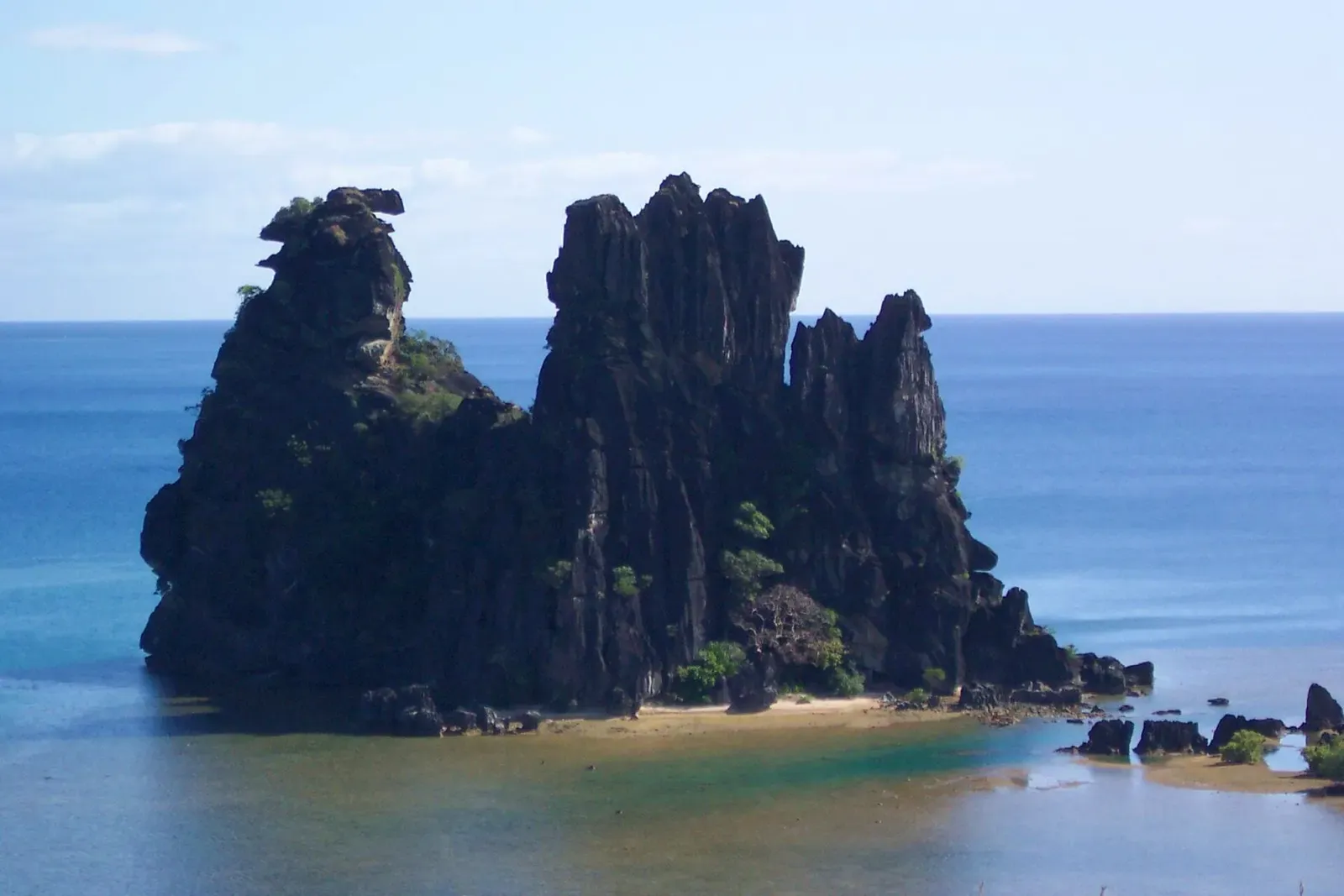
- Dark volcanic sea stack rising from turquoise water off Hienghène by Unknown author, Public domain, via Wikimedia Commons
- Fossilized coral reef flat exposed at low tide off Îlot Tibarama near Poindimié by gérard, CC BY-SA 2.0, via Wikimedia Commons
Embed
Run a dive centre, club or blog? Embed this map of 3 dive sites near Poindimié & Hienghène on your own page.
Similar destinations
Pacific Islands
A pinnacle rising 900 m from the seabed to within metres of the surface
Wrecks from two wars touching in Apra Harbor, plus the Blue Hole sinkhole
Pacific Islands
A hundred kilometres of barrier reef with almost no divers on it


Molokini's crater wall and Lānaʻi's skylit lava caverns