Pacific Islands · Fiji
Kadavu & the Great Astrolabe Reef
A hundred kilometres of barrier reef with almost no divers on it
The Great Astrolabe wraps around Kadavu for a hundred kilometres, one of the largest barrier reefs on earth and among the least visited. There is no road network on the island and a handful of small dive lodges, so sites see a fraction of the traffic that Fiji's northern reefs get. Naiqoro Passage cuts the barrier and runs hard on the tide past soft coral walls, and reef mantas hold at cleaning stations inside the lagoon through most of the year.
About diving in Kadavu & the Great Astrolabe Reef
Diving is organised around the lodges, each with its own boats and its own stretch of reef. The day is usually a two-tank morning out to the barrier, with the surface interval spent on a beach or in the boat, and something shallower closer to home in the afternoon. Rides are long and open, so trips get built around the tide at the passages and around the wind; a day that blows out is spent inside the lagoon rather than written off.
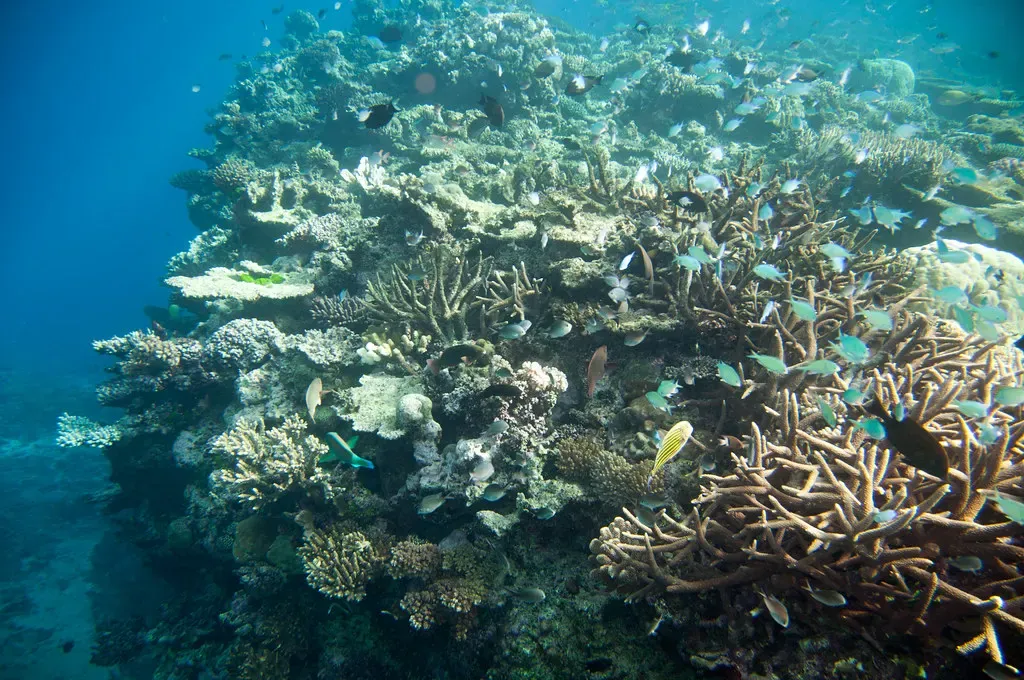
The reef offers three fairly distinct kinds of dive. Inside the lagoon are patch reefs and isolated bommies rising off sand in easy depth, calm enough to settle beside a cleaning station and wait. The cuts through the barrier are timed rather than simply chosen: the flooding tide pushes ocean water in and brings the clearer water with it, and slack is when a camera is any use. Outside, the barrier becomes an ocean-facing wall and slope, with hard coral gardens on the shallow shoulder and blue water off the edge.
April to October is the best of it, but those are also the months when the south-east trades blow hardest, so a guide's real job is picking which side of the island is in the lee. The water is at its coolest and clearest then. November to March is warmer, wetter and quieter above water, and it carries Fiji's cyclone risk, so days get cut short or lost outright. Lodges are small and largely self-contained, which makes nitrox, gear sizes and charging worth confirming before you book — there is no shore diving here and no second operator down the road.
Best time to dive Kadavu & the Great Astrolabe Reef
| Jan | Feb | Mar | Apr | May | Jun | Jul | Aug | Sep | Oct | Nov | Dec | |
|---|---|---|---|---|---|---|---|---|---|---|---|---|
| Season | Fair | Fair | Good | Prime | Prime | Prime | Prime | Prime | Prime | Prime | Good | Fair |
| Sea surface | 28°C82°F | 29°C84°F | 29°C84°F | 28°C82°F | 27°C81°F | 27°C81°F | 26°C79°F | 25°C77°F | 25°C77°F | 26°C79°F | 27°C81°F | 28°C82°F |
| Daytime high | 29°C84°F | 29°C84°F | 29°C84°F | 29°C84°F | 28°C82°F | 27°C81°F | 26°C79°F | 26°C79°F | 26°C79°F | 26°C79°F | 27°C81°F | 28°C82°F |
| Rain | 324 mm12.8 in | 320 mm12.6 in | 354 mm13.9 in | 232 mm9.1 in | 136 mm5.4 in | 91 mm3.6 in | 68 mm2.7 in | 81 mm3.2 in | 91 mm3.6 in | 150 mm5.9 in | 162 mm6.4 in | 236 mm9.3 in |
| Jan | Feb | Mar | Apr | May | Jun |
|---|---|---|---|---|---|
| Fair | Fair | Good | Prime | Prime | Prime |
| Sea surface | |||||
| 28°C82°F | 29°C84°F | 29°C84°F | 28°C82°F | 27°C81°F | 27°C81°F |
| Daytime high | |||||
| 29°C84°F | 29°C84°F | 29°C84°F | 29°C84°F | 28°C82°F | 27°C81°F |
| Rain | |||||
| 324 mm12.8 in | 320 mm12.6 in | 354 mm13.9 in | 232 mm9.1 in | 136 mm5.4 in | 91 mm3.6 in |
| Jul | Aug | Sep | Oct | Nov | Dec |
|---|---|---|---|---|---|
| Prime | Prime | Prime | Prime | Good | Fair |
| Sea surface | |||||
| 26°C79°F | 25°C77°F | 25°C77°F | 26°C79°F | 27°C81°F | 28°C82°F |
| Daytime high | |||||
| 26°C79°F | 26°C79°F | 26°C79°F | 26°C79°F | 27°C81°F | 28°C82°F |
| Rain | |||||
| 68 mm2.7 in | 81 mm3.2 in | 91 mm3.6 in | 150 mm5.9 in | 162 mm6.4 in | 236 mm9.3 in |
2011–2025 averages. Sea surface: NOAA Coral Reef Watch, measured at the surface, so deeper water can run colder. Daytime high and rain: NASA POWER.
Apr–Oct is the dry season with the best visibility; Nov–Mar brings cyclone risk and rain, though the water is warmest then.
Best months: April, May, June, July, August, September, October
Kadavu water temperature and weather by month
The sea surface runs from 25 °C (77 °F) in August to 29 °C (84 °F) in February. Most rain falls from December to April, peaking at about 350 mm (14 in) in March; it stays largely dry from June to September. Daytime highs sit around 28 °C (82 °F) all year. The coldest water here is about 24 °C (75 °F), so pack a 3 mm full suit.
Dive types & marine life
Grey reef sharks, barracuda and trevally stack up in the tidal cuts when the water is running, while napoleon wrasse and turtles work the lagoon bommies. Reef mantas are a year-round proposition here rather than a seasonal one; April to October simply gives the weather and the visibility to get to them, and the walls repay slow looking for nudibranchs.
- Reef
- Wall
- Drift
- Coral garden
- Pelagic & blue water
- Manta rays
- Reef sharks
- Sea turtles
- Napoleon wrasse
- Trevally & jacks
- Pristine corals
- Barracuda
- Nudibranchs
- Eagle rays
Best dive sites in Kadavu & the Great Astrolabe Reef
Reef
Mantas over a coral-covered reef top at 15 metres
Channel & pass
Potato cod gather here in numbers to breed, inside a 2018 marine reserve
Half a dozen pinnacles under yellow soft coral, down to 28 m
Broken Stone
Maze of coral canyons, arches and swim-throughs in 10–20 m.
Vouwa
Outer reef bommie field with schooling barracuda and grey reef sharks.
How to get to Kadavu & the Great Astrolabe Reef
Kadavu is reached by a short flight from Nadi or Suva to Vunisea, then a boat transfer to the lodge that can be a long, wet ride in open water. Leave a night's slack around international connections. Everything is dived from lodge boats, and some Fiji liveaboards call in on longer itineraries.
Dive videos
Diving the Great Astrolabe Reef, Kadavu Island, Fiji - August 2022 · reneadventures on YouTube
FIJI | Kadavu Island scuba diving the Great Astrolabe Reef · Joshua Turner on YouTube
Embed
Run a dive centre, club or blog? Embed this map of 1 dive sites near Kadavu on your own page.
In The Logbook
- When does coral spawn? The moon's calendarBig animals · 10 min read
- When is slack water? Tides for diversOcean science · 7 min read
- Where to dive with manta rays, month by monthBig animals · 8 min read
Similar destinations
Pacific Islands
A pinnacle rising 900 m from the seabed to within metres of the surface
A pass so packed with fish Cousteau's team singled it out

A 38 m chimney built by freshwater springs venting inside the lagoon

Soft corals turn ghostly white along the current-fed Great White Wall.