
Riviera Maya Cenotes · Mexico · Cenote · Cave & cavern
Cenote Chan Hol
Where cave divers found three prehistoric skeletons
Area photo: diego_cue · CC BY-SA 3.0
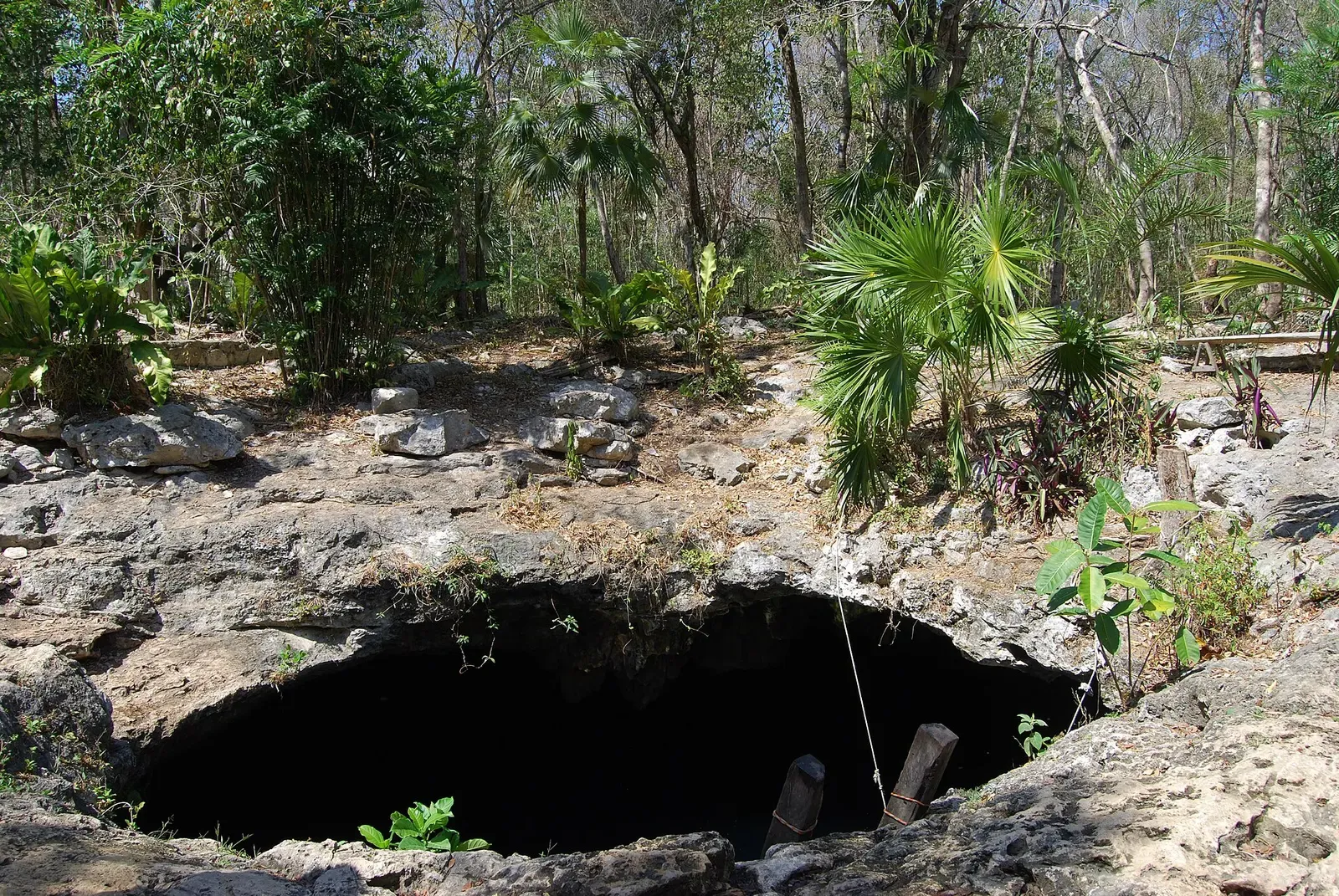
Chan Hol is a cenote and submerged cave in the Toh Ha system, about 15 km inland from Tulum, best known outside diving for the three prehistoric human skeletons divers found in it. The cave runs for more than 5,000 m, and the remains lay in shallow passage: Chan Hol II was found at around 8.5 m of water.
Where it is and how deep
20.1577° N, 87.5693° WPublished position for this site.
The dive
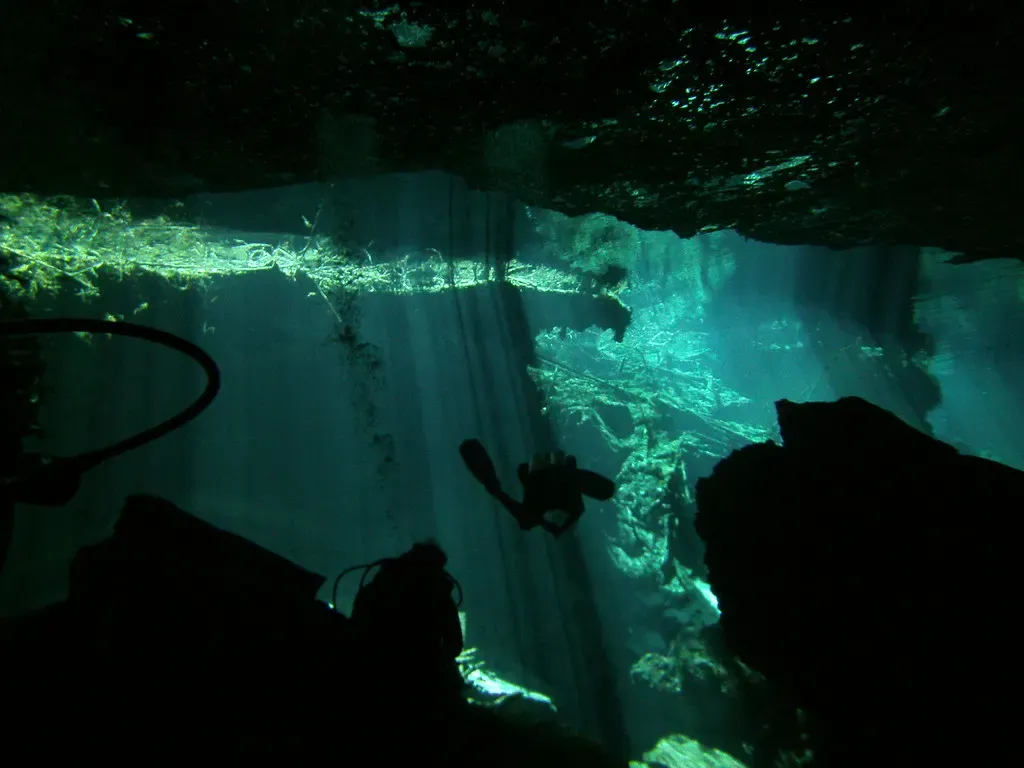
The cenote sits well inland, around 15 km from Tulum and 11.5 km back from the modern coastline, so getting there is a drive rather than a boat trip and the dive starts at the water's edge. The work is entirely about buoyancy, light and staying with the line the guide is running, in an overhead environment from the moment you leave the entrance.
Beyond the entrance the cave extends over 5,000 m and stays shallow along the sections where the fossil finds were made, with Chan Hol II found at around 8.5 m of water. Shallow does not mean casual here: it is overhead the whole way, the floor of these passages has yielded human remains, and anything past the cavern zone is cave diving under cave rules.
Background
Chan Hol is part of the Toh Ha cave system and is of long-standing interest to paleoanthropologists: the remains of three prehistoric humans, Chan Hol I, II and III, were found in the flooded passages by divers between 2006 and 2016, at depths of around 8 to 8.5 m. The cave system was dry during the Late Pleistocene, when sea level sat over 100 m below where it is today. It extends over 5,000 m in length.
Marine life and season
The sources we used don't single out particular species here.
| Jan | Feb | Mar | Apr | May | Jun | Jul | Aug | Sep | Oct | Nov | Dec |
|---|---|---|---|---|---|---|---|---|---|---|---|
| Prime | Prime | Prime | Prime | Good | Good | Good | Good | Good | Good | Prime | Prime |
Season follows Riviera Maya Cenotes: Divable year-round at a constant 25°C; the Nov–Apr dry season is clearest, while summer downpours can cloud shallow cenotes for a day or two.
Know before you go
- Prehistoric human remains have come out of these passages, so a silt-out or a hand on the floor is not just a visibility problem here: nothing gets touched or disturbed.
- The cave extends over 5,000 m past the entrance, and everything beyond the daylight zone is full cave: it needs cave certification and a continuous guideline, not a guided cavern briefing.
Questions divers ask
Why is Cenote Chan Hol famous?+
Divers found the remains of three prehistoric humans, known as Chan Hol I, II and III, in its flooded passages between 2006 and 2016, which made the cave a paleoanthropology site as well as a dive site.
How deep is Cenote Chan Hol?+
The fossil passages are shallow: the Chan Hol II skeleton lay at around 8.5 m underwater. No typical recreational depth range is published for the cenote itself.
Sources
- Cenote Chan Hol - Scubago — Scubago
- Chan Hol — Wikipedia
More dive sites in Riviera Maya Cenotes
A sulphide cloud you can put a hand through, at 27 m
A mangrove channel dive with no overhead at all
Lily pads on the surface, decorated cavern underneath
Jump through the roof or take the ladder beside it
An air dome you can surface in, under two levels of stalactites
Cenote
A crossing to the neighbouring Rainbow Cenote
Cenote
Nine metres of clear water used for course skills
Cenote
Two 40-minute circuits through wall-to-wall formations
Similar dives elsewhere

A shallow air-filled cavern next to Mushroom Forest
Taíno artefacts in place in a 9 m freshwater cave

Long tunnels full of tarpon, straight off the shore


Sponge-painted canyons and an archway into a shallow pool