Riviera Maya Cenotes · Mexico · Cenote · Cave & cavern · Freshwater
Cenote Zapote
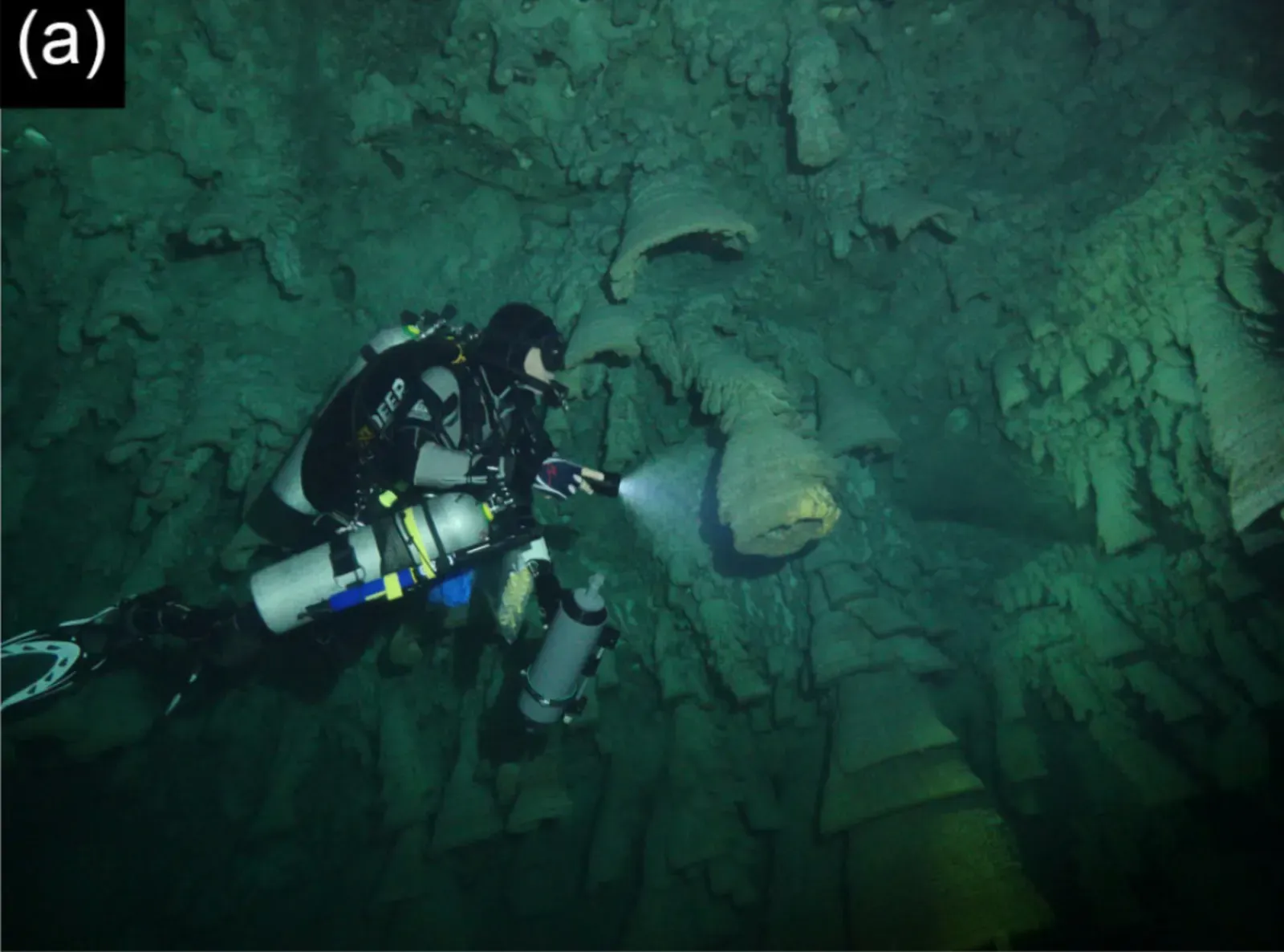
Carbonate bells up to 2 m long hanging at 30 m
Photo: Simon Michael Ritter, Margot Isenbeck-Schröter, Christian Scholz, Frank Keppler, Johannes Gescher, Lukas Klose, Nils Sch · CC BY 4.0
A bottle-shaped shaft on the old Puerto Morelos road, 54 m deep, whose walls carry formations found almost nowhere else: hollow carbonate cones up to 2 m long that hang from the overhang between 29 and 35 m. Divers descend a narrow neck to 20 m, then the rock opens out and the bells appear in the dark below.
Also known as Hells Bells, El Zapote.
Where it is and how deep
20.8538° N, 87.1253° WPublished position for this site.
The dive
The shaft narrows to about 20 m wide before opening out again below, so the first part of the descent is a controlled drop through a neck with the daylight shrinking above you. There is nothing to hold and nothing to reference, which is the reason operators keep this one for divers with deep experience.
At 30 m you come out above the talus cone in a bell-shaped chamber, and the formations are on the overhanging walls around you. They have been described as bells, elephant feet, shower heads and trumpets; the largest exceed 2 m in length and 0.8 m across, with walls up to 3 cm thick. They occur between 29 and 35 m and almost nowhere outside a handful of cenotes in this region.
Below the bells lies a halocline with a thin misty layer of hydrogen sulphide floating on it, and the oxygen content drops to nothing inside that layer. The shaft bottoms at 54 m. The dive is a slow circuit of the chamber rather than a penetration, then a straight ascent back up the neck.
Background
The Hells Bells formations were first found in El Zapote and have since been recorded in a few other cenotes of the region, among them Xkolac, Maravilla and Tortugas. They grow in the oxygen-poor water at the halocline, where the freshwater layer above holds oxygen and the boundary layer does not.
Marine life and season
The sources we used don't single out particular species here.
| Jan | Feb | Mar | Apr | May | Jun | Jul | Aug | Sep | Oct | Nov | Dec |
|---|---|---|---|---|---|---|---|---|---|---|---|
| Prime | Prime | Prime | Prime | Good | Good | Good | Good | Good | Good | Prime | Prime |
Season follows Riviera Maya Cenotes: Divable year-round at a constant 25°C; the Nov–Apr dry season is clearest, while summer downpours can cloud shallow cenotes for a day or two.
Know before you go
- The bells are brittle carbonate a few centimetres thick and are destroyed by contact; an uncontrolled ascent into the overhang does permanent damage.
- The profile sits below 29 m with no wall to reference and an anoxic layer beneath it, so gas planning and descent control are the whole dive.
Photos from Cenote Zapote
Simon Michael Ritter, Margot Isenbeck-Schröter, Christian Scholz, Frank Keppler, Johannes Gescher, Lukas Klose, Nils Sch · CC BY 4.0
Simon Michael Ritter, Margot Isenbeck-Schröter, Christian Scholz, Frank Keppler, Johannes Gescher, Lukas Klose, Nils Sch · CC BY 4.0
Questions divers ask
How deep are the Hells Bells in Cenote Zapote?+
They hang between 29 and 35 m, on the overhanging walls above the talus cone. The cenote itself is 54 m deep, and the guided dive works the bell chamber rather than the bottom.
What certification do you need for Cenote Zapote?+
Deep-dive experience. The formations sit below 29 m, the shaft has no reference wall through the neck, and operators treat it as an advanced dive rather than part of the standard cenote circuit.
Sources
- Cenote Zapote / Hell's Bells — Pro Dive International
- Hells Bells (cave formations) — Wikipedia
- Cenote Zapote (Hells Bells) — Scubago
Photo credits
- Diver examining large bell-shaped carbonate formations on a cave wall by Simon Michael Ritter, Margot Isenbeck-Schröter, Christian Scholz, Frank Keppler, Johannes Gescher, Lukas Klose, Nils Sch, CC BY 4.0, via Wikimedia Commons
- Close view of hollow cone-shaped carbonate formations with a 5 cm scale bar by Simon Michael Ritter, Margot Isenbeck-Schröter, Christian Scholz, Frank Keppler, Johannes Gescher, Lukas Klose, Nils Sch, CC BY 4.0, via Wikimedia Commons
- Bell formations above a turbid boundary layer in the water column by Simon Michael Ritter, Margot Isenbeck-Schröter, Christian Scholz, Frank Keppler, Johannes Gescher, Lukas Klose, Nils Sch, CC BY 4.0, via Wikimedia Commons
More dive sites in Riviera Maya Cenotes
A sulphide cloud you can put a hand through, at 27 m
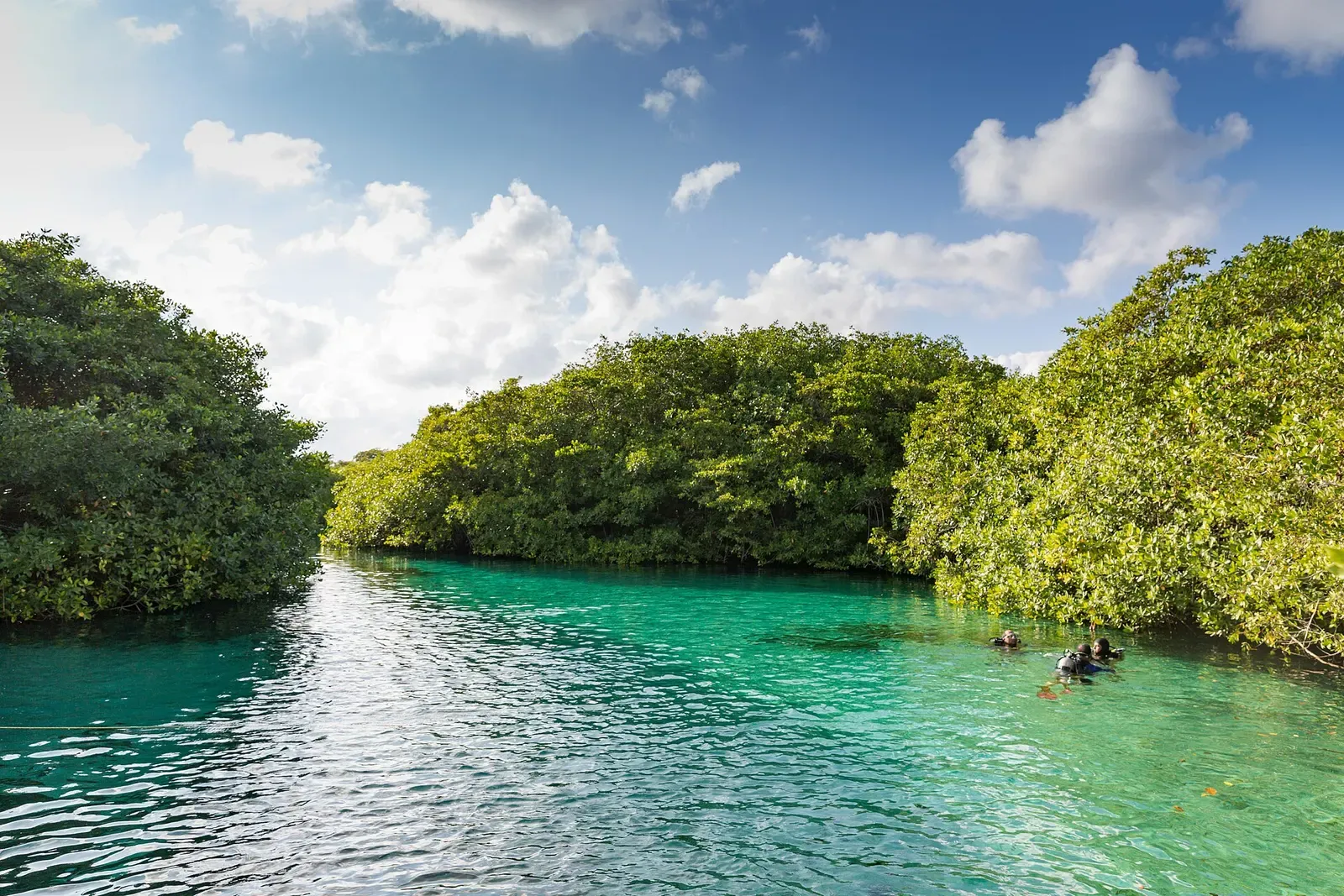
A mangrove channel dive with no overhead at all
Lily pads on the surface, decorated cavern underneath
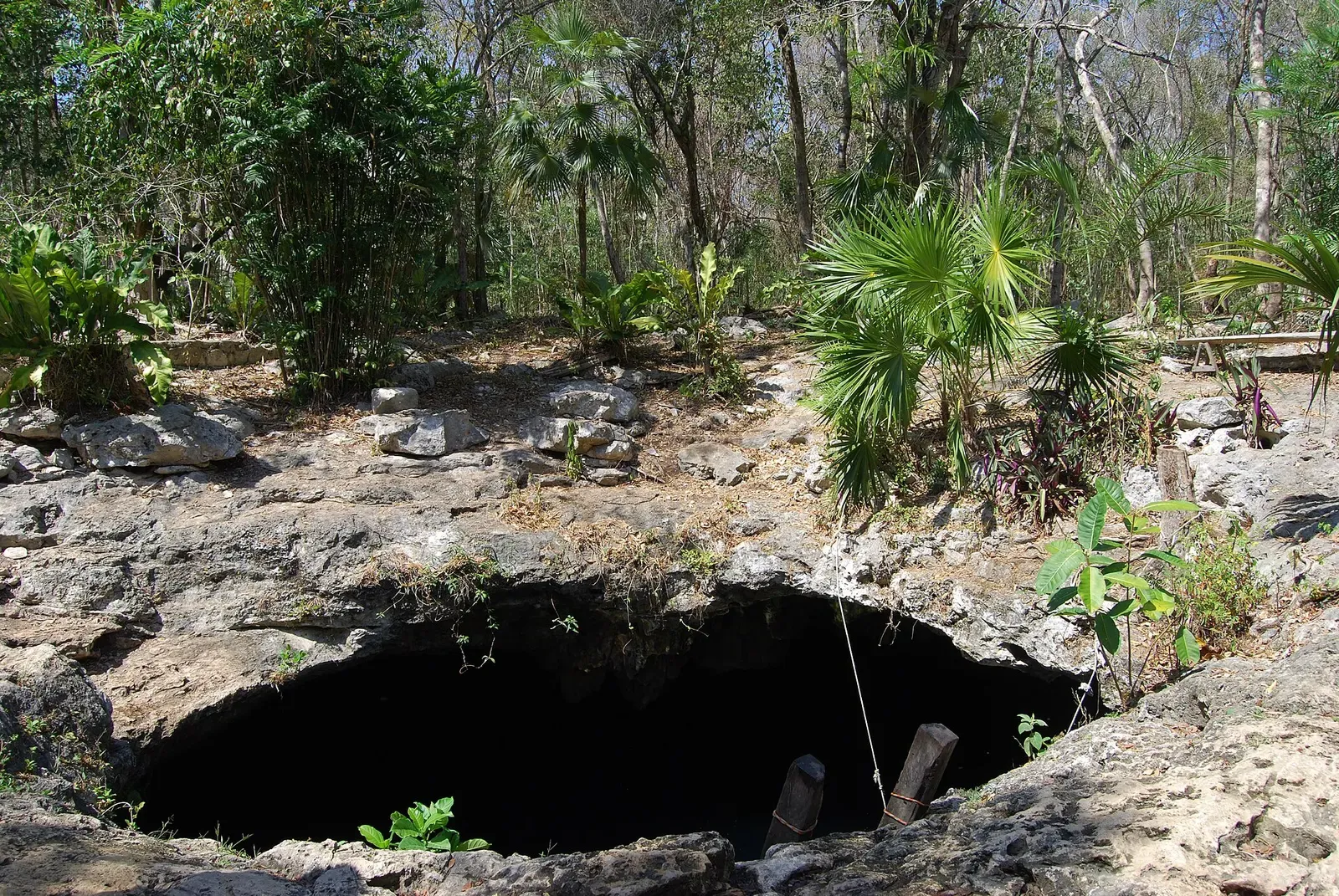
Jump through the roof or take the ladder beside it
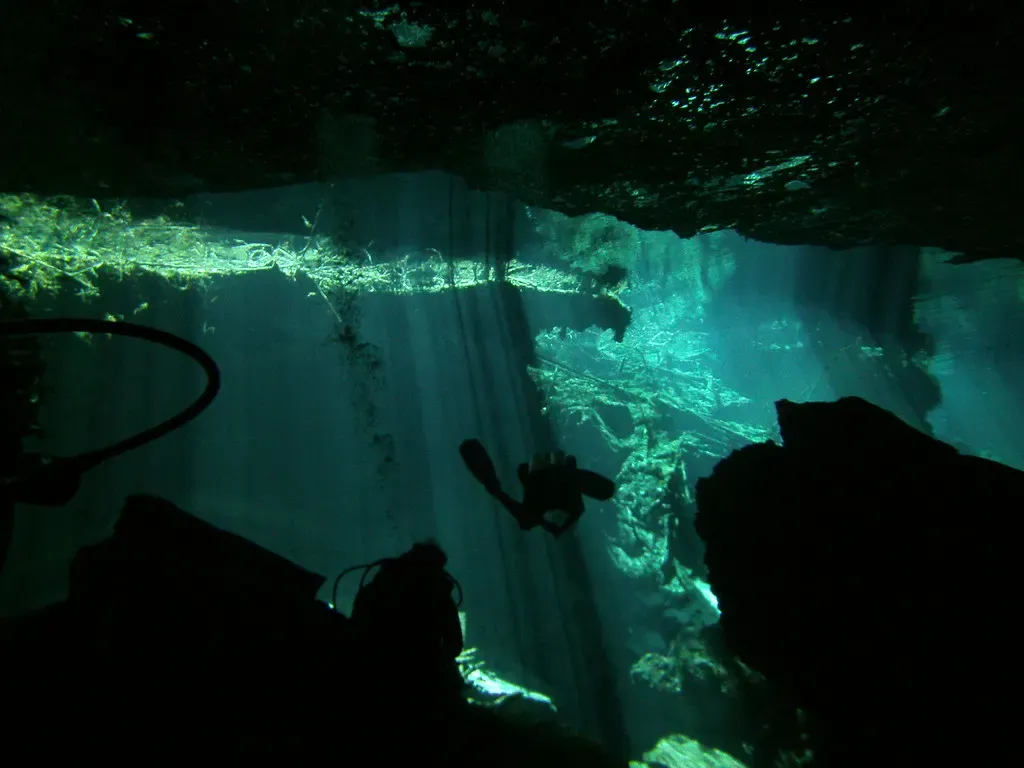
An air dome you can surface in, under two levels of stalactites
Cenote
Where cave divers found three prehistoric skeletons
Cenote
A crossing to the neighbouring Rainbow Cenote
Cenote
Nine metres of clear water used for course skills
Similar dives elsewhere
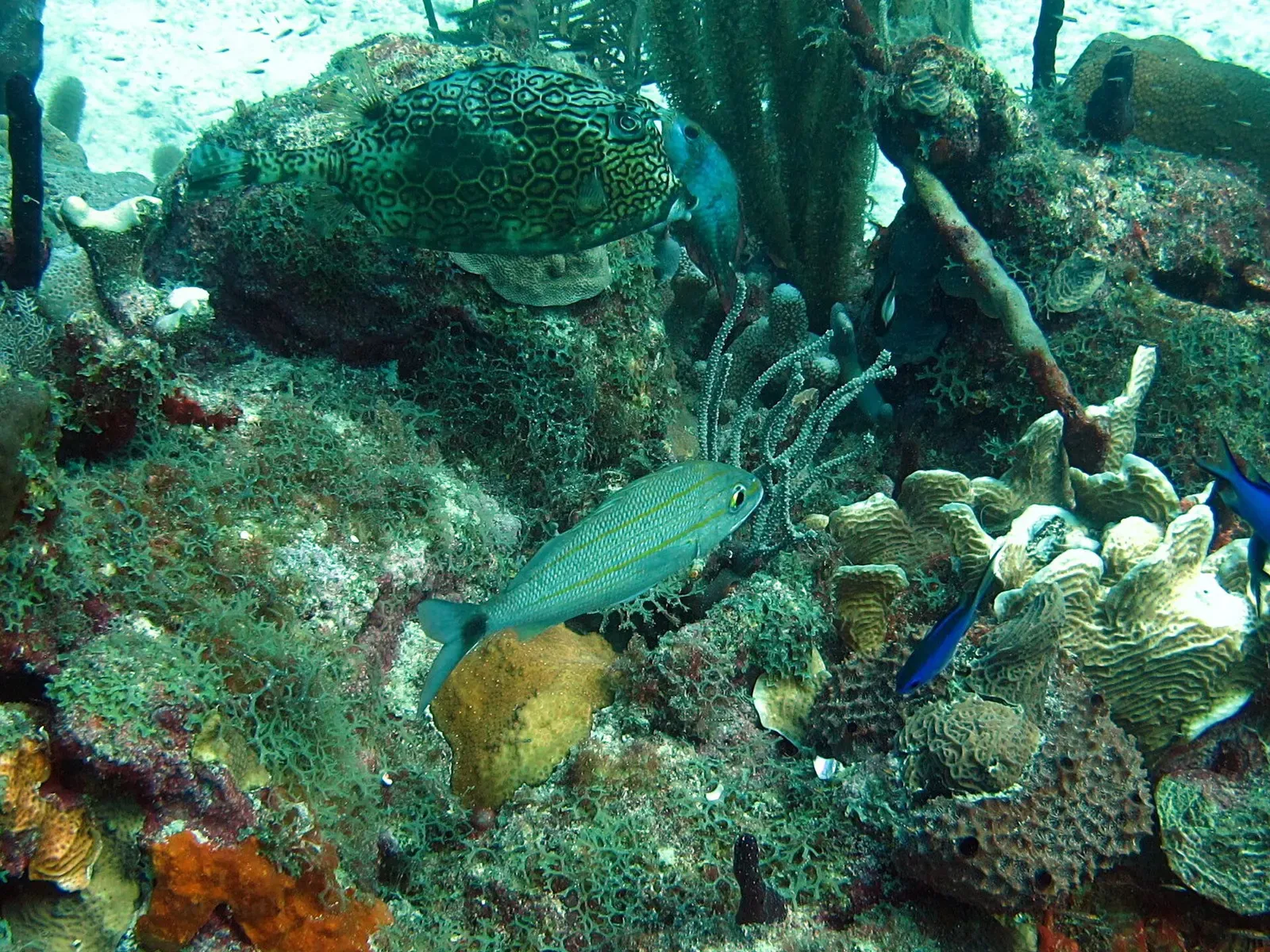
Taíno artefacts in place in a 9 m freshwater cave
Cave & cavern
Dan's Cave
South Abaco Blue Holes · Bahamas
Cascade Room entrance leads to crystal rooms with names like Fangorn Forest
Cave & cavern
Ralph's Cave
South Abaco Blue Holes · Bahamas
Formations 13,000 to 350,000 years old inside a deep, roller-coaster passage
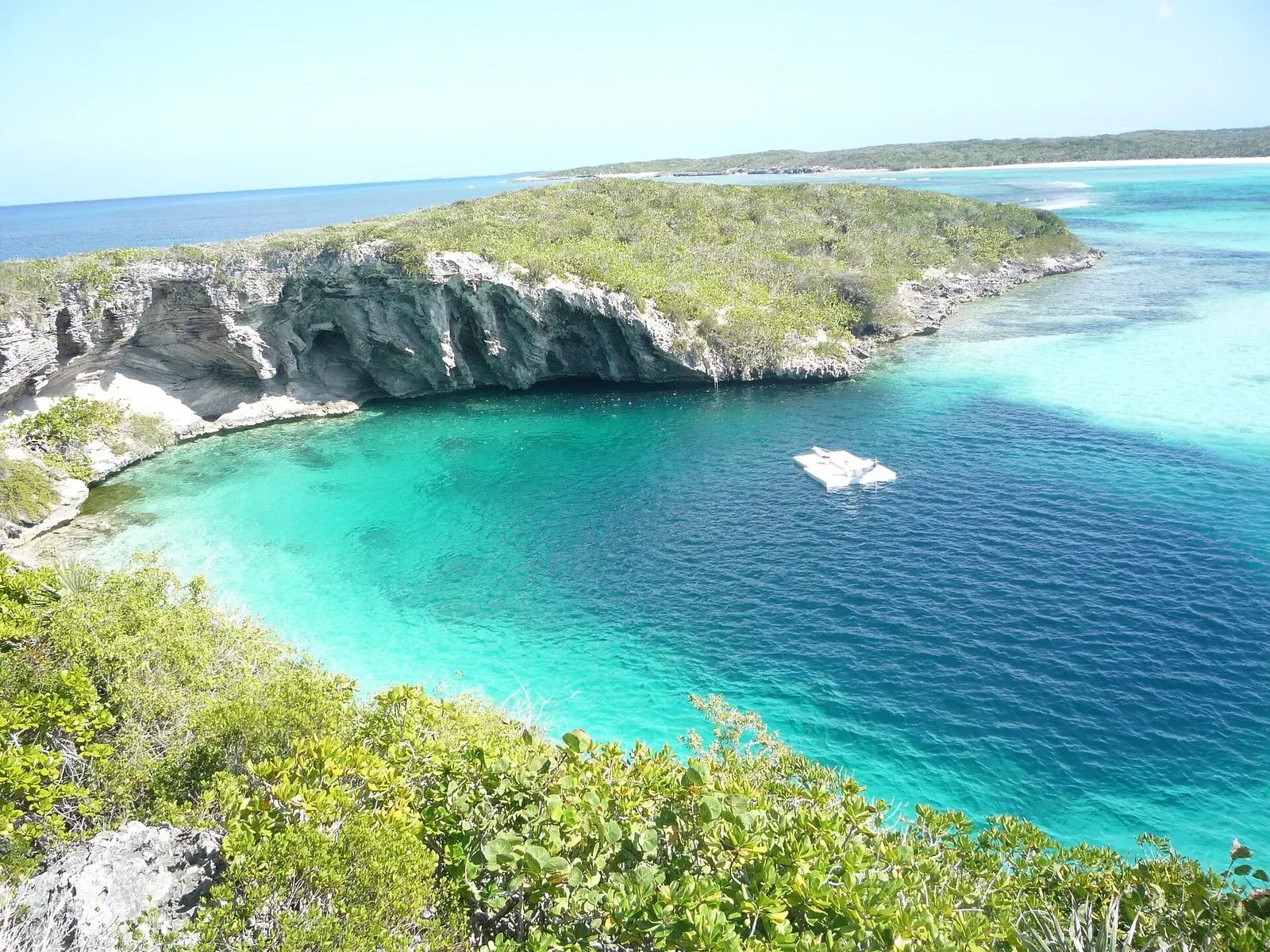


A 202 m blue hole entered from the beach, home of the Vertical Blue freediving competition