
Caribbean · Mexico
Riviera Maya Cenotes
Flooded limestone caverns with haloclines, open to Open Water divers
Photo: diego_cue · CC BY-SA 3.0
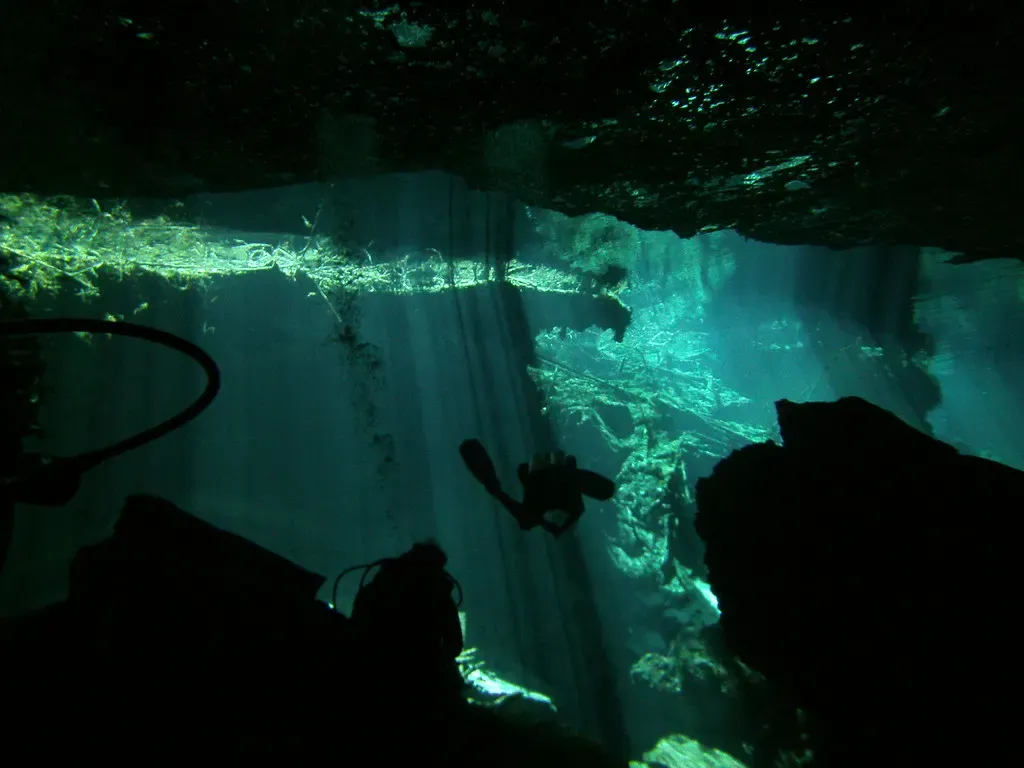
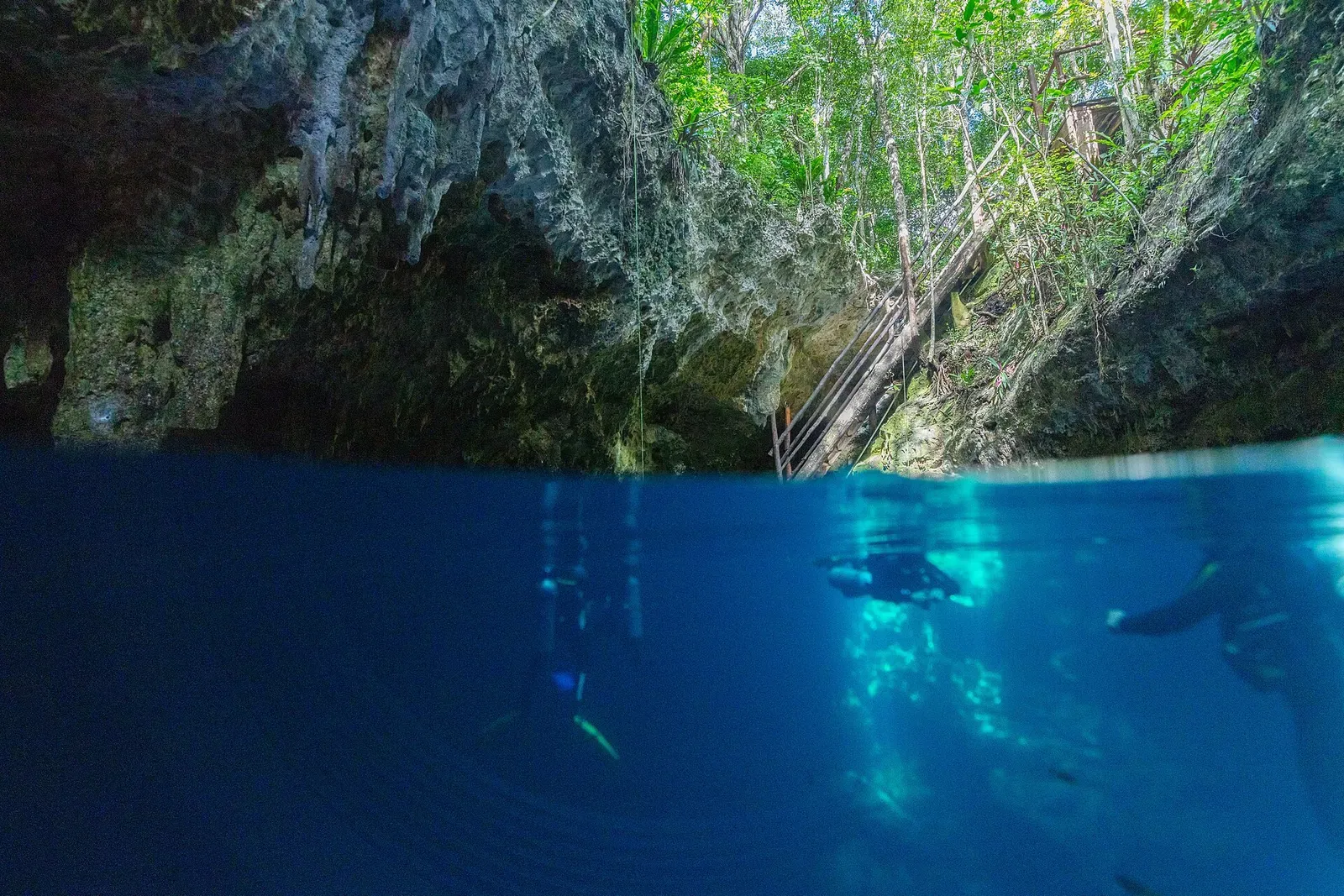
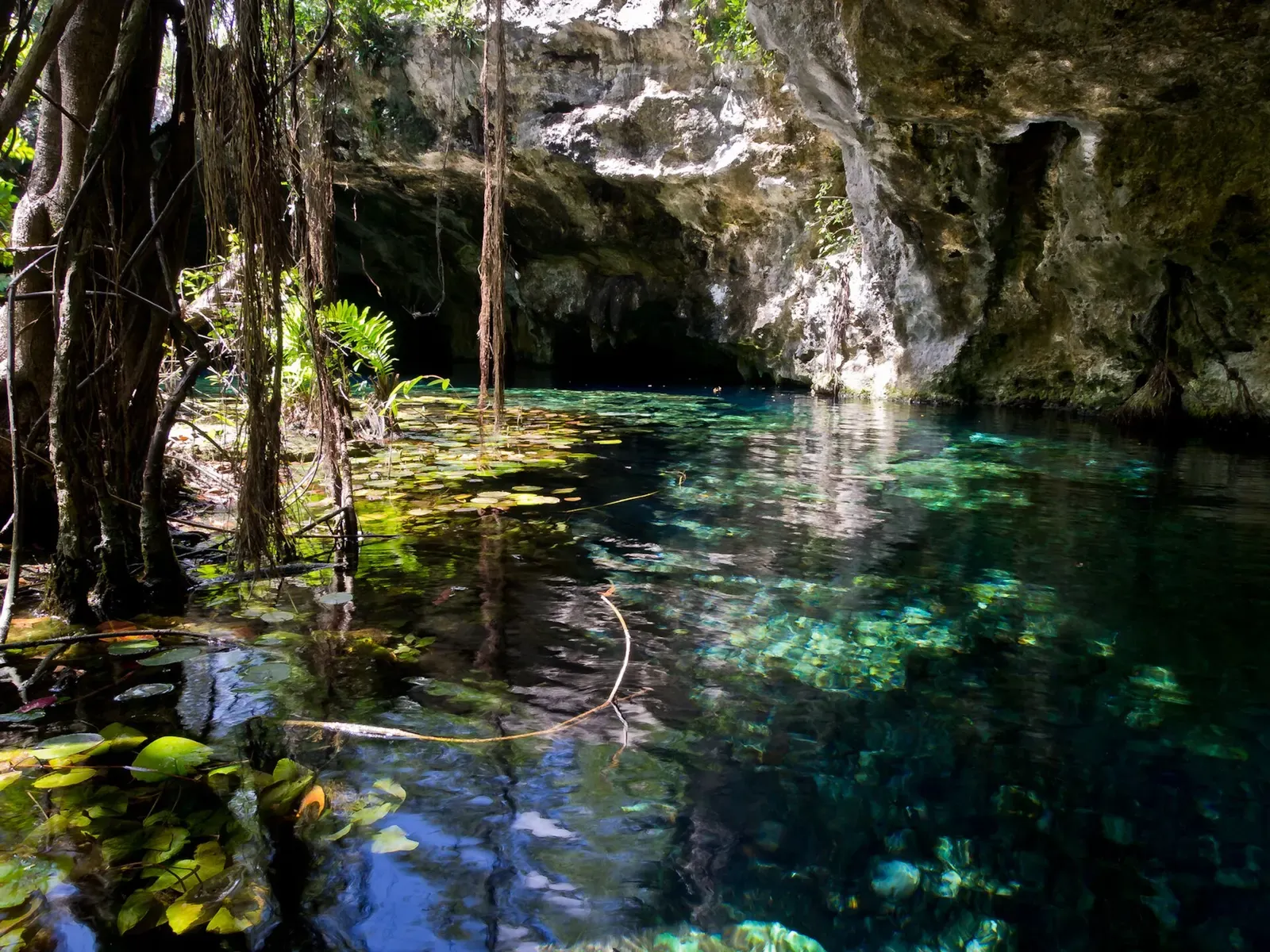
Beneath the Riviera Maya runs the Yucatán's underground river system, and hundreds of cenotes, limestone sinkholes filled with fresh water, open into its flooded caverns. Divers follow fixed guidelines through the shared cavern of Dos Ojos and the large rooms of Chac Mool, watch haloclines shimmer where salt water meets fresh, sink towards the hydrogen sulfide cloud in El Pit, or swim the mangrove channel of Casa Cenote among turtles. With no current and no waves, most cavern zones are open to Open Water divers.
About diving in Riviera Maya Cenotes
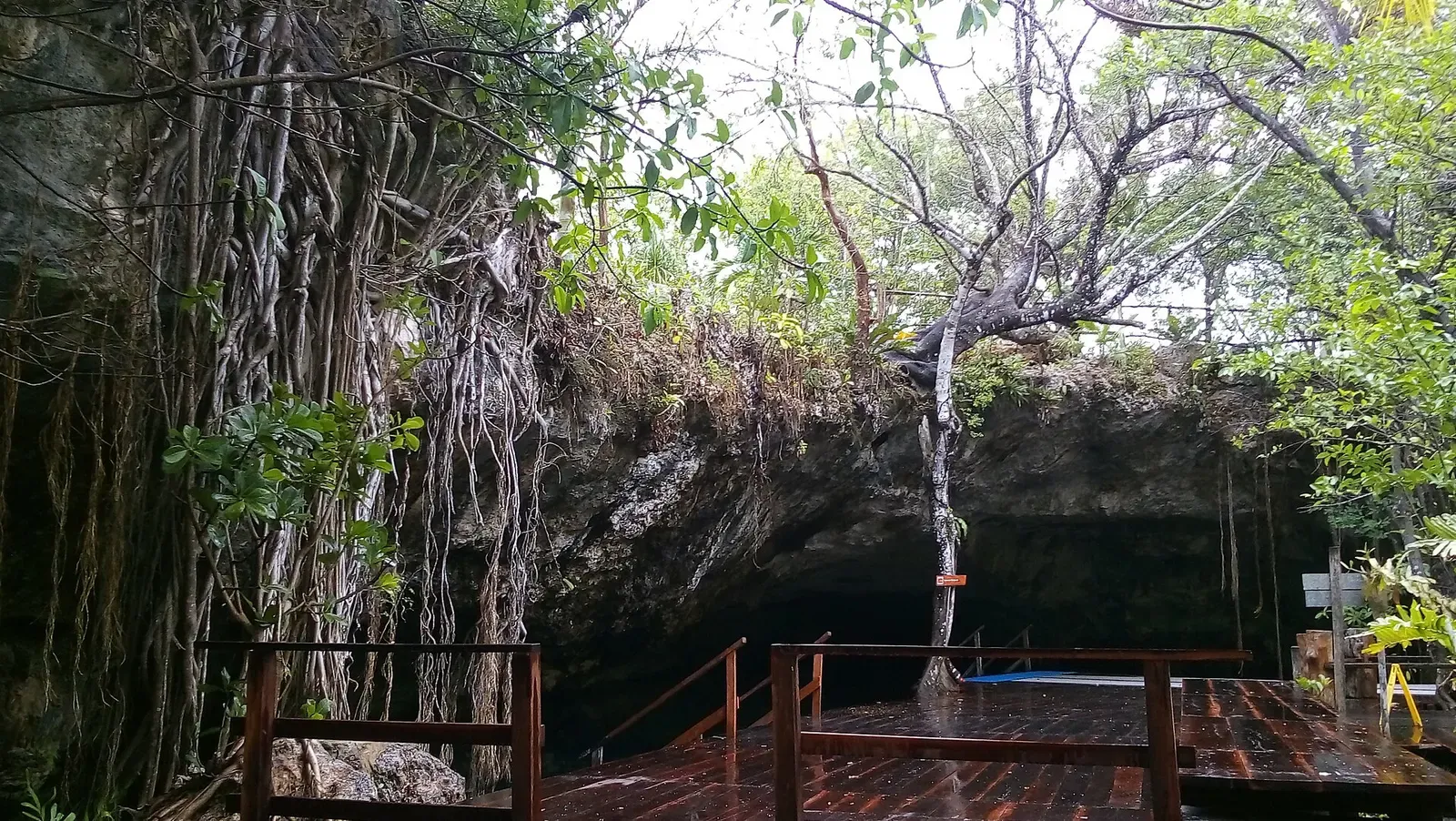
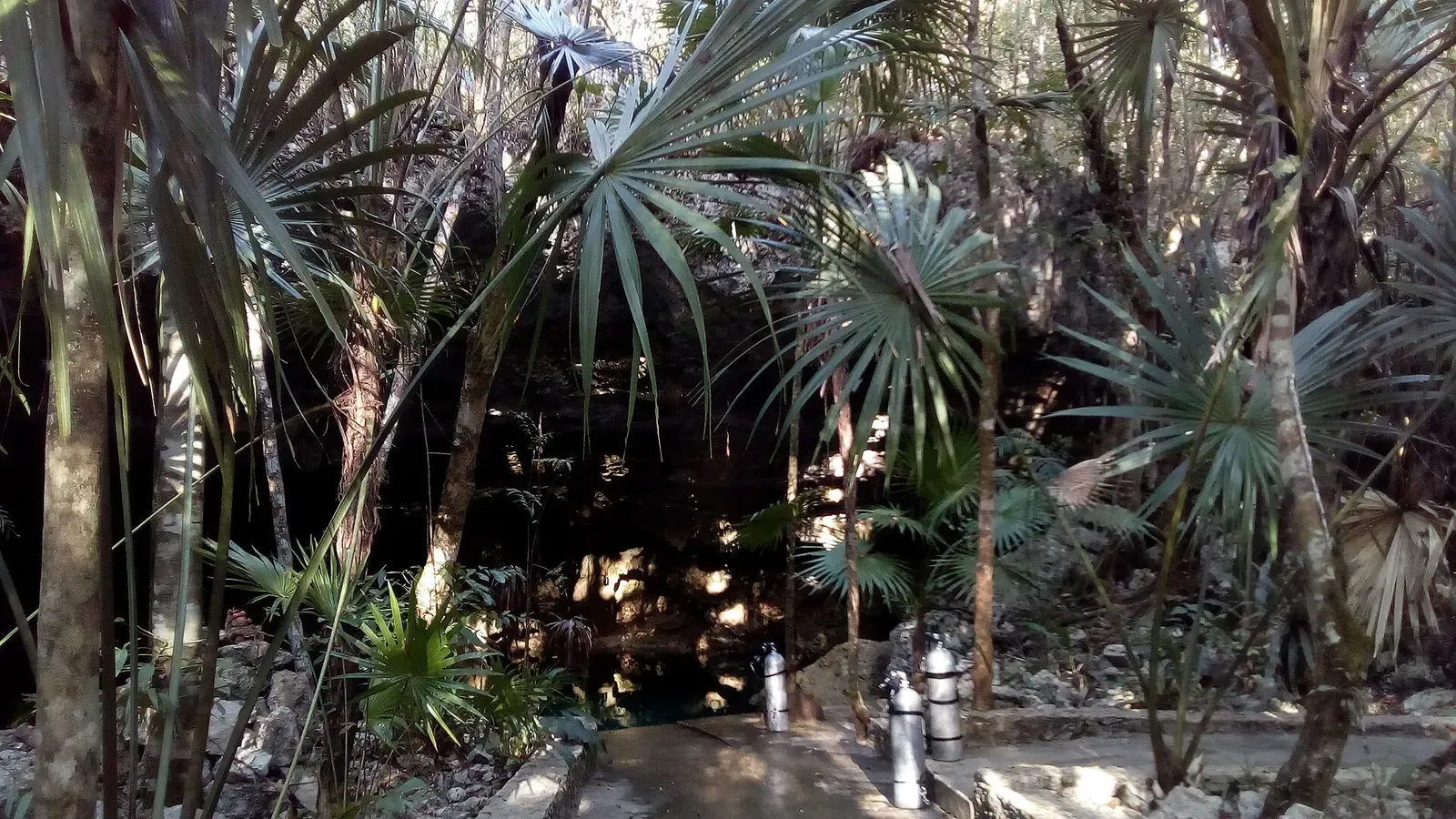
Every dive here starts from land. Pickups run from hotels anywhere between Cancún and Tulum, and the drive ends at the cenote's edge, where entry can be as plain as a ladder or as abrupt as the jump through the main opening at Calavera. A guided day visits two cenotes, with two dives of about 45 minutes and a 60-minute surface interval between them. Playa del Carmen is the closest base, 15 to 35 minutes from the cenotes by road.
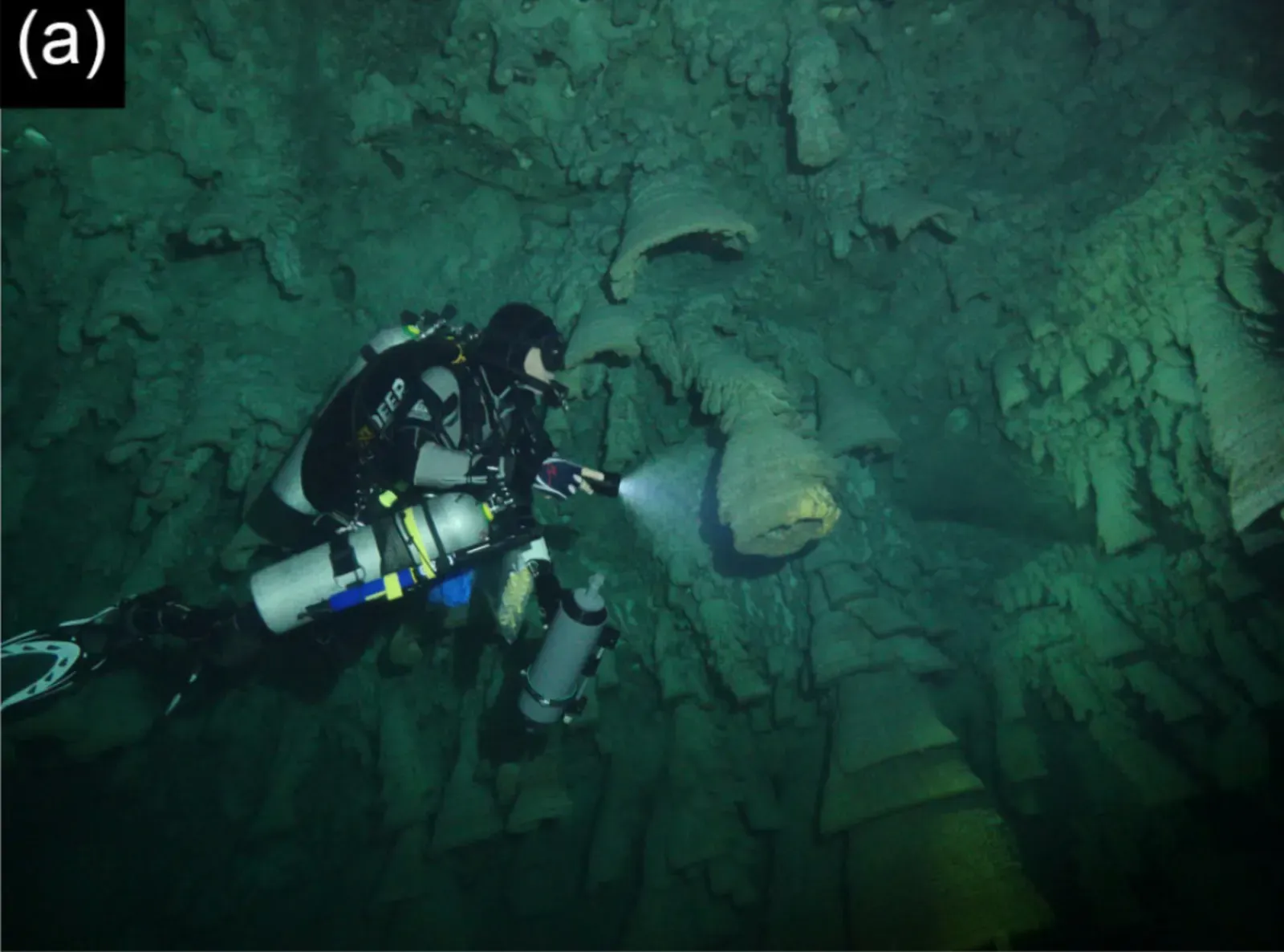
The terrain is limestone: sinkholes that open into the cavern zones of an underground river network, decorated with stalactites and stalagmites. Most cavern dives in Dos Ojos run at 5 to 7 m (16 to 23 ft), and the cavern zones at Tajma-Ha and Calavera stay above about 15 m. Haloclines blur the view where fresh and salt water meet, as at Chac Mool, and El Pit drops through a hydrogen sulfide cloud at 30 m to beyond 40 m.
The cavern zones are open to Open Water divers, but good buoyancy matters around fragile formations, which is why Tajma-Ha counts as an intermediate dive. A cavern dive stays within sight of natural light along a permanent guideline, and the cave zone beyond it needs specialised cave diving training. Dos Ojos typically receives a hundred or more snorkellers and cavern divers a day, so divers who want quiet water choose another cenote.
Best time to dive Riviera Maya Cenotes
| Jan | Feb | Mar | Apr | May | Jun | Jul | Aug | Sep | Oct | Nov | Dec | |
|---|---|---|---|---|---|---|---|---|---|---|---|---|
| Season | Good | Good | Good | Good | Good | Good | Good | Good | Good | Good | Good | Good |
| Daytime high | 31°C88°F | 32°C90°F | 34°C93°F | 35°C95°F | 36°C97°F | 34°C93°F | 33°C91°F | 33°C91°F | 32°C90°F | 31°C88°F | 30°C86°F | 30°C86°F |
| Rain | 78 mm3.1 in | 41 mm1.6 in | 38 mm1.5 in | 40 mm1.6 in | 77 mm3.0 in | 213 mm8.4 in | 115 mm4.5 in | 158 mm6.2 in | 187 mm7.4 in | 208 mm8.2 in | 128 mm5.0 in | 72 mm2.8 in |
| Jan | Feb | Mar | Apr | May | Jun |
|---|---|---|---|---|---|
| Good | Good | Good | Good | Good | Good |
| Daytime high | |||||
| 31°C88°F | 32°C90°F | 34°C93°F | 35°C95°F | 36°C97°F | 34°C93°F |
| Rain | |||||
| 78 mm3.1 in | 41 mm1.6 in | 38 mm1.5 in | 40 mm1.6 in | 77 mm3.0 in | 213 mm8.4 in |
| Jul | Aug | Sep | Oct | Nov | Dec |
|---|---|---|---|---|---|
| Good | Good | Good | Good | Good | Good |
| Daytime high | |||||
| 33°C91°F | 33°C91°F | 32°C90°F | 31°C88°F | 30°C86°F | 30°C86°F |
| Rain | |||||
| 115 mm4.5 in | 158 mm6.2 in | 187 mm7.4 in | 208 mm8.2 in | 128 mm5.0 in | 72 mm2.8 in |
2011–2025 averages. Daytime high and rain: NASA POWER.
Cenote water temperature holds steady all year; Dos Ojos gets busier in the December–April peak season while most other cenotes stay quiet.
Best months: January, February, March, April, May, June, July, August, September, October, November, December
Riviera Maya Cenotes water temperature and weather by month
Most rain falls from June to November, peaking at about 210 mm (8.3 in) in June; February to April are the driest. Daytime highs reach 36 °C (97 °F) in May and drop to 30 °C (86 °F) in December. The coldest water here is about 24 °C (75 °F), so pack a 3 mm full suit.
Dive types & marine life
Sea turtles visit Casa Cenote because it sits where the underground river meets salt water from the sea, and they turn up on most visits, alongside tropical fish, young barracuda and, now and then, small crocodiles resting in the shallows. No sighting is guaranteed.
- Cenote
- Cave & cavern
- Freshwater
- Sea turtles
- Crocodiles
Best dive sites in Riviera Maya Cenotes
- 1
Dos Ojos
Two neighbouring cenotes joined by one large shared cavern zone, to about 10 m (33 ft).
- 2
El Pit
Deep shaft through a shallow halocline to a hydrogen sulfide cloud at 30 m.
- 3
Casa Cenote
Open-air river channel through mangroves, 2 to 7 m deep, open to complete beginners.
- 4
Chac Mool
Large rooms with a halocline to a maximum of 12 m, suited to novice cavern divers.
- 5
Calavera
Cavern lit by columns of light from three roof openings, with a ladder or jump entry.
- 6
Gran Cenote
Shallow, clear cavern with a typical depth of around 10 m (33 ft).
- 7
Angelita
Cavern dive to 55 m with a hydrogen sulfide cloud at around 27 m, for experienced divers.
- 8
El Zapote (Hells Bells)
Bell-shaped rock formations hanging at 29 to 35 m (95 to 115 ft).
Site guides
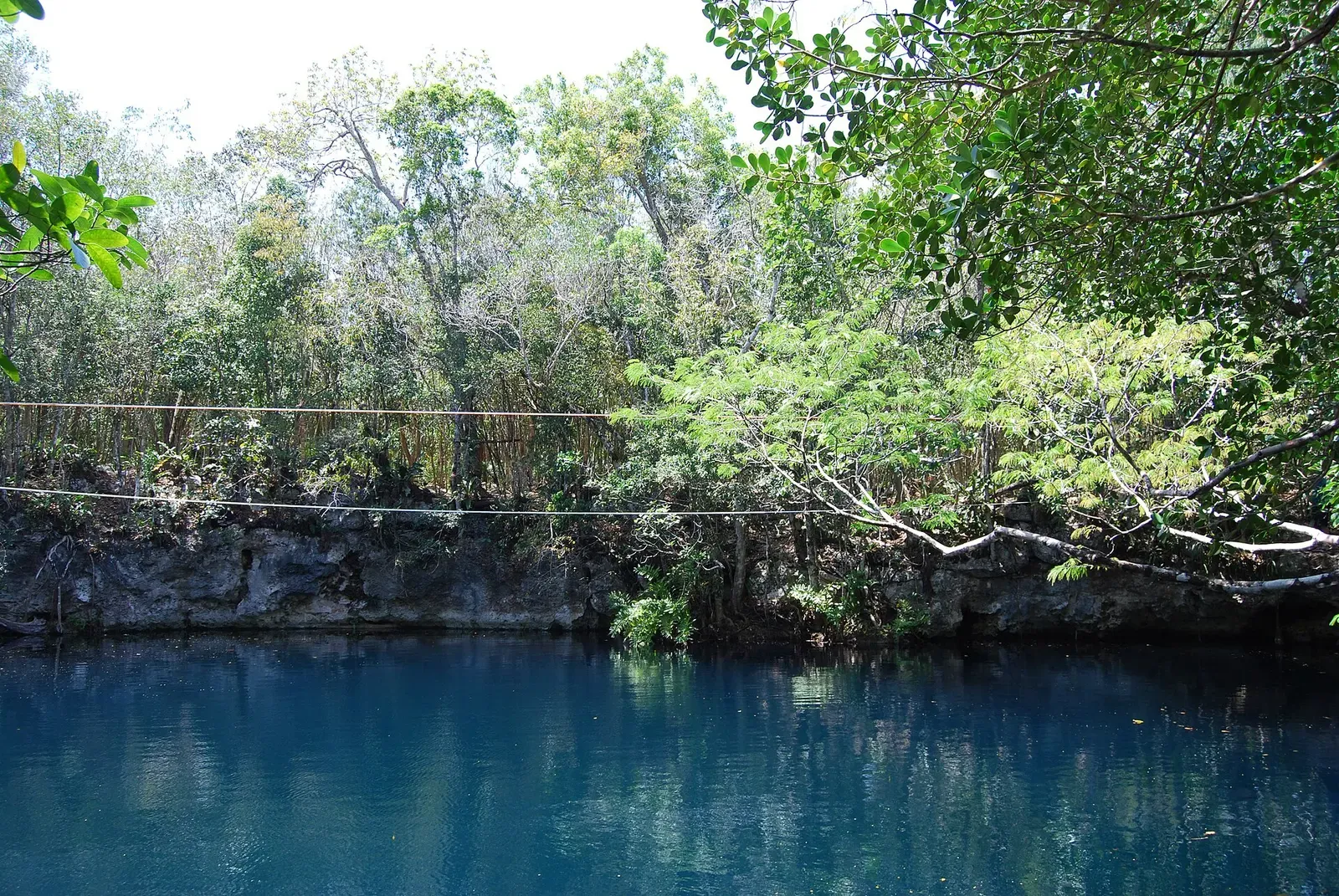
A sulphide cloud you can put a hand through, at 27 m
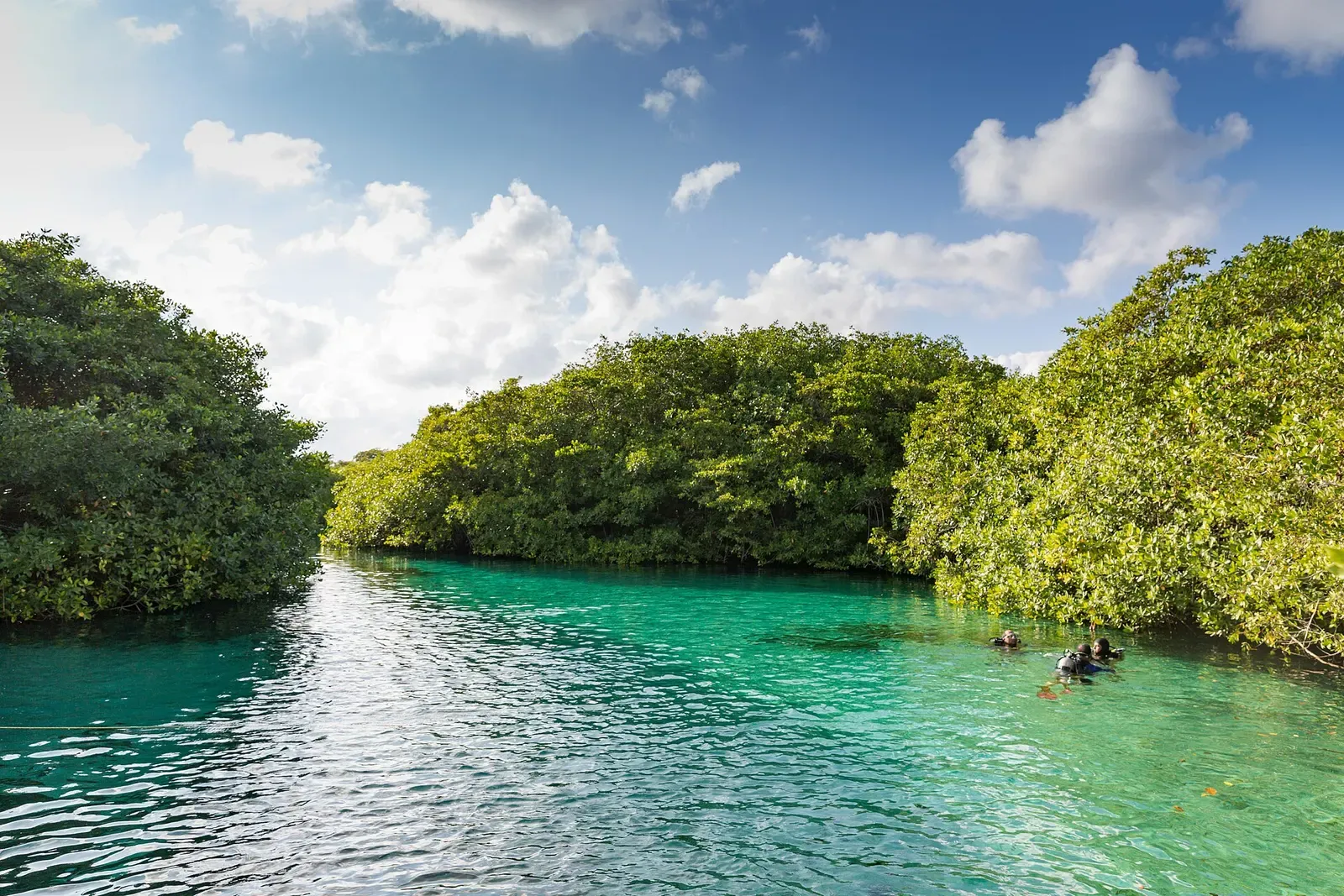
A mangrove channel dive with no overhead at all
Lily pads on the surface, decorated cavern underneath
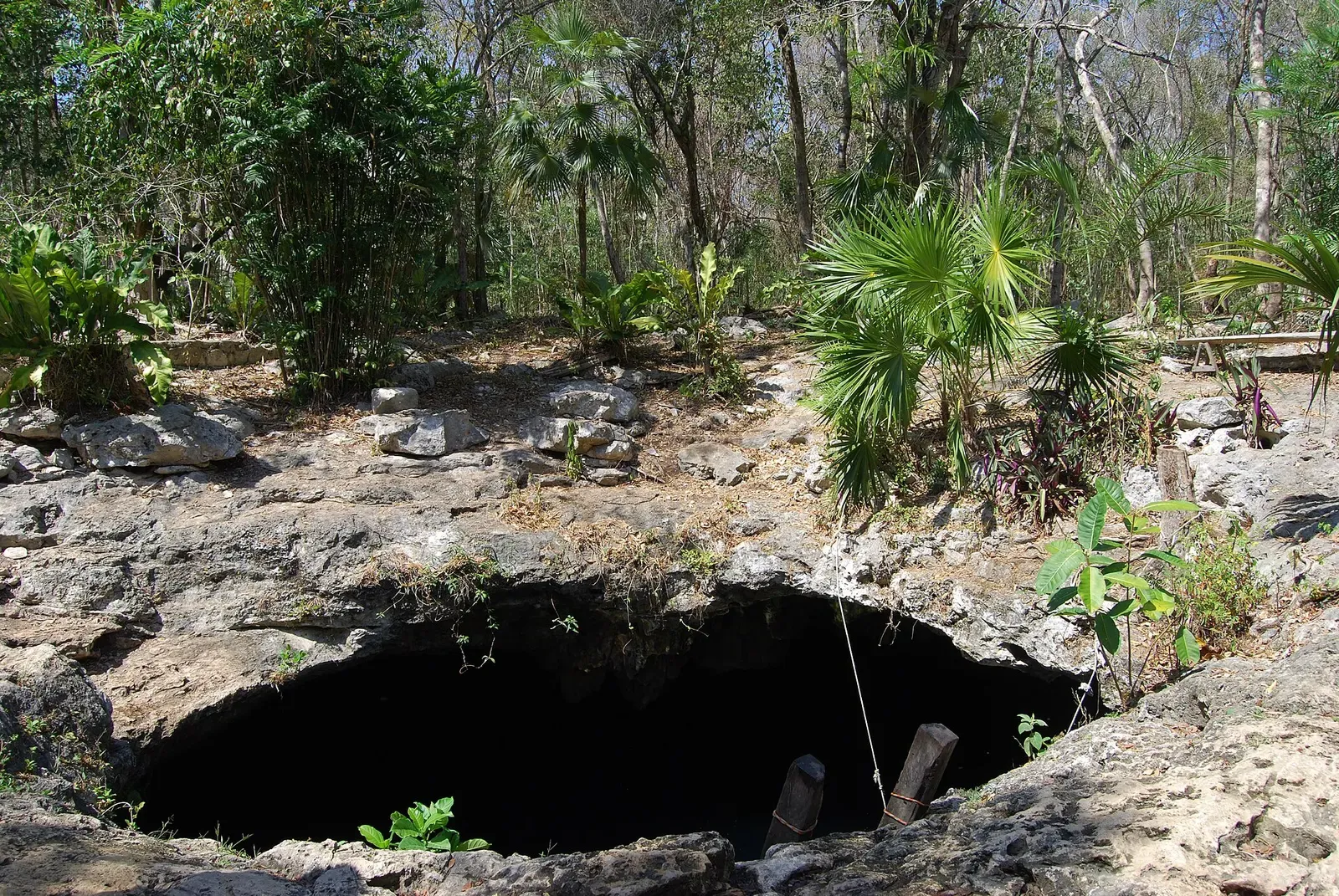
Jump through the roof or take the ladder beside it
An air dome you can surface in, under two levels of stalactites
Cenote
Where cave divers found three prehistoric skeletons
Cenote
A crossing to the neighbouring Rainbow Cenote
Cenote
Nine metres of clear water used for course skills
Cenote
Four permanent cave lines from one platform
Cenote
Two 40-minute circuits through wall-to-wall formations
Cenote
A halocline at 10 m in rooms wide enough to lose a group in
Cenote
Shallow neighbour of Dos Ojos on the same ejido road
The cenote door into Sistema Sac Actun
Cenote
White formations in three metres of water, and a fossil camel
Cenote
Seven metres of water under a ceiling of stalactites
Three linked cenotes on a single cavern circuit
Cenote
Dripstone cavern that never gets deeper than 6 m
Cenote
Open cenote of Ox Bel Ha with a tannic thermocline
Carbonate bells up to 2 m long hanging at 30 m
Cavern circuits at 5 to 7 m in 25 °C water year-round
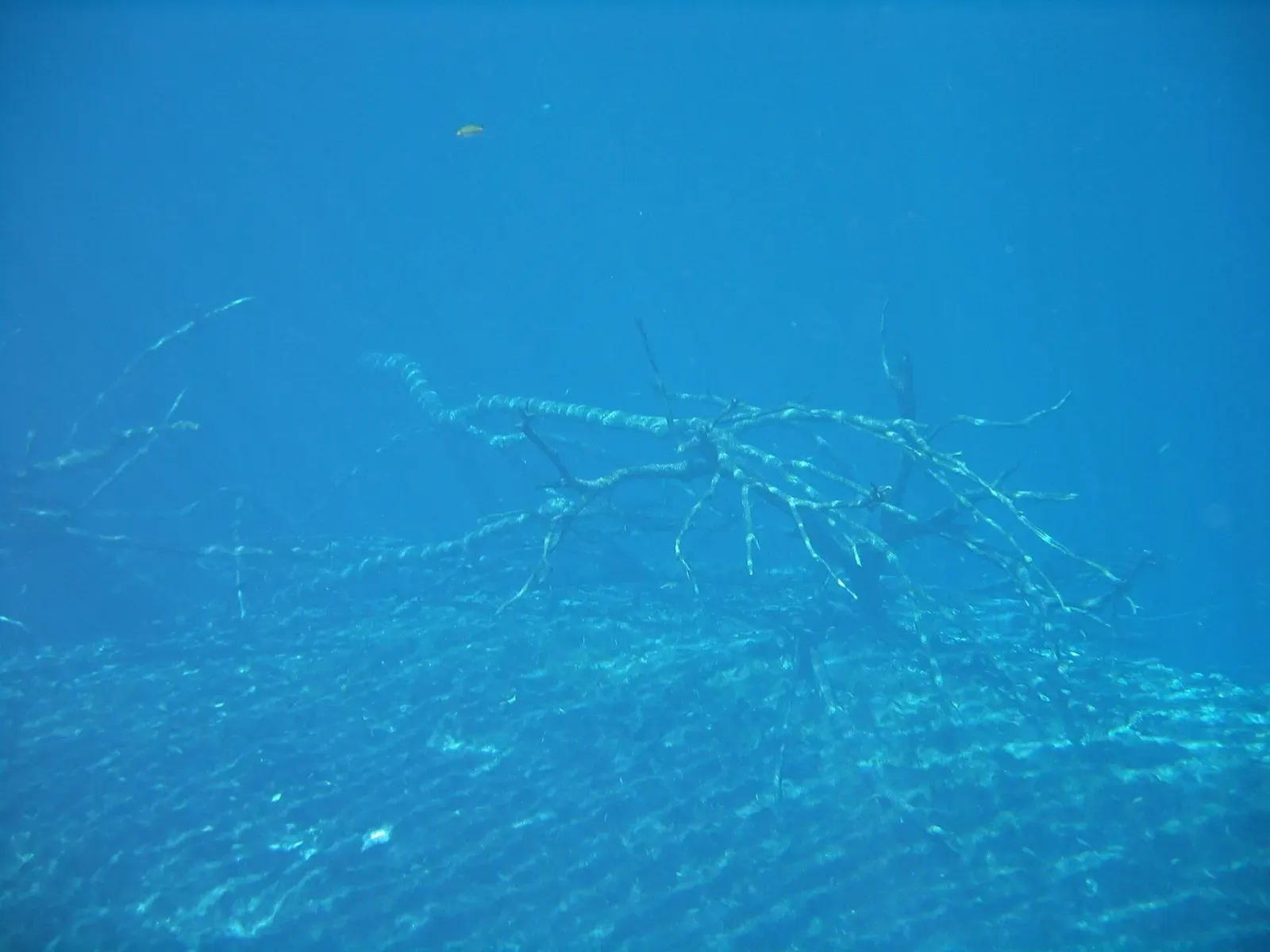
Tree branches standing out of a sulphide cloud at 30 m
Where the survey of Sistema Sac Actun started
Cenote
A staircase through a rabbit hole into a 50 m wide shaft
Cenote
A shaft to about 80 m under a turquoise lagoon
Cenote
Tree roots floating in the light of a vast cylindrical chamber
Cenote
Seven round sinkholes linked by one cavern line
How to get to Riviera Maya Cenotes
Cancún International Airport is the nearest international airport, and the modern Tulum International Airport is more convenient for many parts of the coast. Playa del Carmen is about 45 minutes by car from Cancún airport.
Photos from Riviera Maya Cenotes
dronepicr · CC BY 2.0
dronepicr · CC BY 2.0
dronepicr · CC BY 2.0
Zhongqi Wang · CC BY 4.0
Dive videos
The World’s BEST Cave Dive (The Pit) · Adam Radcliffe on YouTube
CENOTE DIVING IN MEXICO! (4K) The Pit & Dos Ojos · Tom Nagel on YouTube
Questions divers ask
Is a cave diving certification needed to dive the cenotes?+
No. Cavern dives stay within sight of natural light and need Open Water at minimum; El Pit asks for Advanced Open Water because of its depth. Entering the cave zone needs specialised cave training.
Which wetsuit suits cenote water?+
The water holds 24 to 26 °C (75 to 79 °F) all year because it comes from deep aquifers. Most divers are comfortable in 3 mm for a single dive and prefer 5 mm for a two-dive day.
Which cenote dives go deepest?+
Angelita drops to 55 m, and El Pit continues below its hydrogen sulfide cloud at 30 m to beyond 40 m. Both lie well below the 15 m limit of cavern zones such as Tajma-Ha and Calavera.
Sources
- Riviera Maya — Wikivoyage
- Sistema Dos Ojos — Wikipedia
- Hells Bells (cave formations) — Wikipedia
- Cenote diving — Seth Dive Mexico
- Casa Cenote — Seth Dive Mexico
- Calavera — Seth Dive Mexico
- Tajma-Ha — Cenote Diving — Seth Dive Mexico
- El Pit Cenote — Pro Dive International
- Cenote Chac Mool — Pro Dive International
- Cenote Angelita dive site — PADI
- Gran Cenote dive info — Gran Cenote
Photo credits
- Crystal-clear turquoise pool inside Cenote Dos Ojos, with limestone stalactites hanging from the cavern ceiling by diego_cue, CC BY-SA 3.0, via Wikimedia Commons
- Cave diver descending through beams of sunlight inside a Yucatan cenote by dronepicr, CC BY 2.0, via Wikimedia Commons
- Sunbeams piercing the water inside a limestone cenote, lighting up rock on the cavern floor by dronepicr, CC BY 2.0, via Wikimedia Commons
- Snorkelers swim through a turquoise mangrove channel at Casa Cenote, Mexico by dronepicr, CC BY 2.0, via Wikimedia Commons
- Two small characid fish with green and orange fins swimming in clear cenote water by Zhongqi Wang, CC BY 4.0, via Wikimedia Commons
Embed
Run a dive centre, club or blog? Embed this map of 12 dive sites near Riviera Maya Cenotes on your own page.
In The Logbook
- Why things look bigger underwaterOcean science · 12 min read
- Cave diving: what it takes and where to goCaves & caverns · 12 min read
- How far you can see underwaterOcean science · 12 min read
- How a rebreather works, and what it buys youGear & kit · 8 min read
- What are thermoclines and haloclines?Ocean science · 8 min read
- What is a blue hole, and what's down there?Caves & caverns · 13 min read
- How long does a tank of air last?Gear & kit · 9 min read
- Why is the sea blue? Water filters out redOcean science · 7 min read
- Cheapest places to scuba dive, and the catchTrip planning · 15 min read
- Freshwater diving: lakes, springs and quarriesFreshwater · 15 min read
- Cavern and cenote diving without cave trainingCaves & caverns · 8 min read
Similar destinations
A wall dived from the beach, and Cuba's deepest cenote across the road
A 73 m freighter offshore and Taíno cave dives in the forest behind
Caribbean
South Abaco Blue Holes
Bahamas
Full-cave-only diving through ice-age passages hiding extinct-crocodile fossils


.jpg)
.jpg)
.jpg)

Atoll walls at Lighthouse Reef and Turneffe, and the Great Blue Hole