
Thunder Bay · United States · Wreck · Freshwater
Corsican
Steering wheel and chained windlass on a broken schooner
Area photo: NOAA's National Ocean Service · CC BY 2.0
A coal-carrying schooner of 1862, cut nearly in two by a steel steam barge on a foggy June morning in 1893 and on the bottom instantly with her whole crew. At 49 m the wreck is a broken one: the cabin and stern are largely gone and jumbled timber covers the collapsed deck, with the wrenched steering wheel and the chained bow windlass still there to find.
Where it is and how deep
44.9127° N, 83.0550° WPublished position for this site.
The dive
The drop lands you on a wreck that came apart rather than settled. Large sections of the cabin and stern are missing and piles of jumbled wreckage lie over the collapsed deck, so the first minutes are spent working out which way the ship is pointing. At 49 m the light is thin and the detail comes from a torch beam rather than from ambient light.
The rewards are the fittings rather than the structure. The ship's wheel lies wrenched upwards, no longer attached to its rudder, and the bow windlass is still wrapped with anchor chain. Rigged spars rest on top of the wreckage and out on the lake bottom beside it. All of it survives only because the water is cold and fresh, and all of it stays where it is — the site is inside the sanctuary. Divers usually take one pass along the wreckage and start up while the gas plan still allows a comfortable deco.
The wreck
- Vessel
- Corsican
- Type
- Wooden two-masted schooner
- Length
- 34 m (112 ft)
- Built
- 1862
- Sunk
- 1893
- Cause
- Rammed in fog by the steel steam barge Corsica and nearly cut in two
- Lies
- Cabin and stern largely missing, jumbled wreckage over a collapsed deck, wheel and windlass in place
The Corsican was launched in 1862 by H. Rogers at Olcott, New York — 34 metres long (112 feet) with an 8 m beam (25 ft), working the lakes with coal. On a foggy morning on 1 June 1893 the steel steam barge Corsica ran into her off Thunder Bay in Lake Huron. The schooner was nearly cut in two and went to the bottom instantly, taking her entire crew with her. What is left is a grave site, protected inside Thunder Bay National Marine Sanctuary.
Marine life and season
The sources we used don't single out particular species here.
| Jan | Feb | Mar | Apr | May | Jun | Jul | Aug | Sep | Oct | Nov | Dec |
|---|---|---|---|---|---|---|---|---|---|---|---|
| Off-season | Off-season | Off-season | Off-season | Fair | Good | Prime | Prime | Prime | Fair | Off-season | Off-season |
Season follows Thunder Bay: The season runs late May to early October, with July and August warmest; the lake is unworkably cold and rough otherwise.
Know before you go
- Collapsed deck timber and loose wreckage make this a poor site for getting under anything; stay above the debris and off the structure.
Questions divers ask
How deep is the Corsican wreck?+
The wreck lies at 49 m — 160 feet — in Lake Huron, a technical depth that puts it out of reach for recreational certification levels.
Sources
- Corsican — NOAA Thunder Bay National Marine Sanctuary
More dive sites in Thunder Bay
Wreck
Ghost schooner upright at 56 m, masts still standing
Wreck
The sanctuary's largest wreck, 162 m and inverted
Wreck
An intact 1848 schooner on an even keel at 56 m
Wreck
Three masts still on deck at 63 m
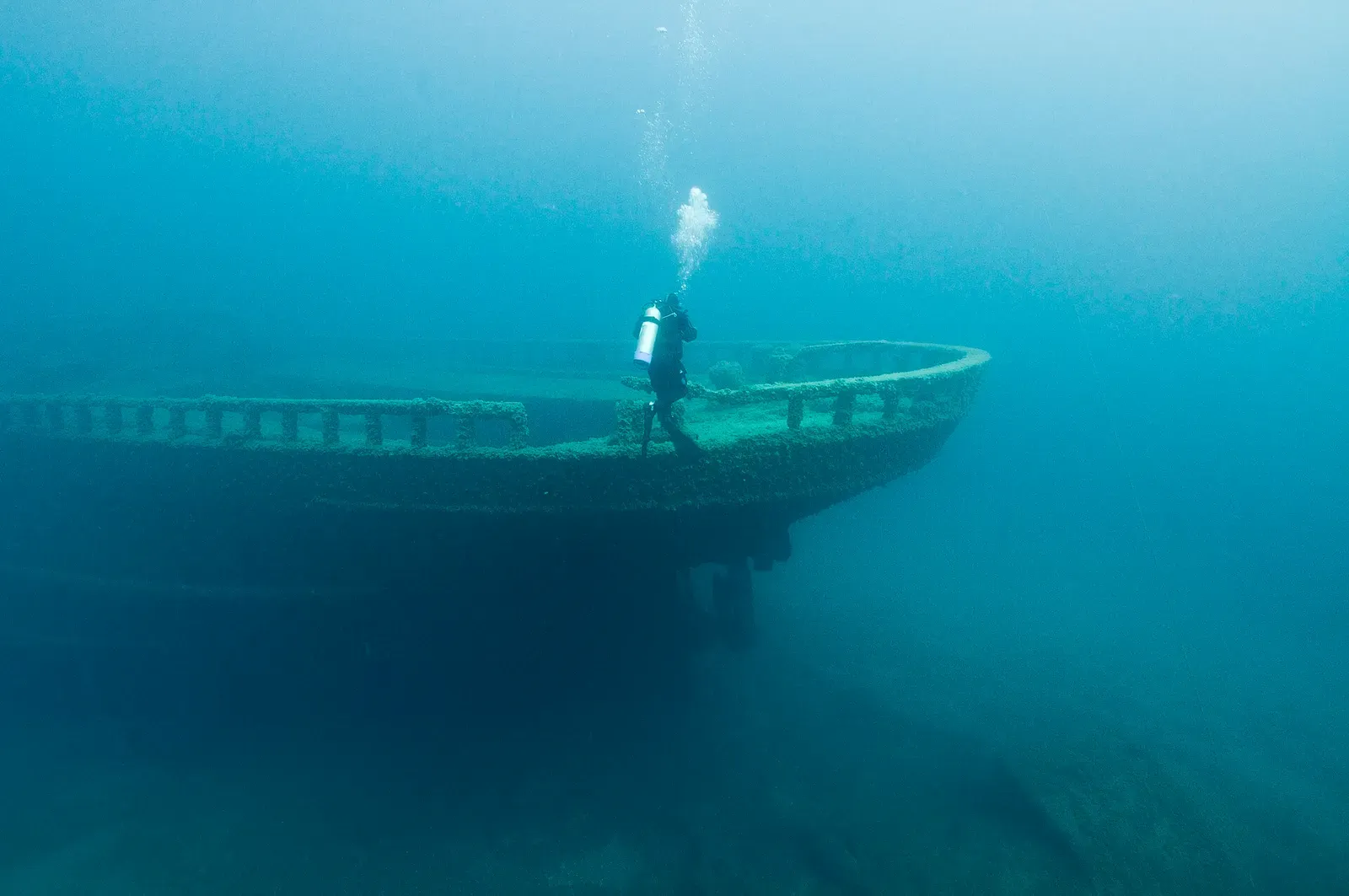
Upright steel freighter with engine and boilers still in place
Wreck
A Great Lakes freighter lying inverted at 53 m
An 1862 schooner in 18 m on a mooring buoy
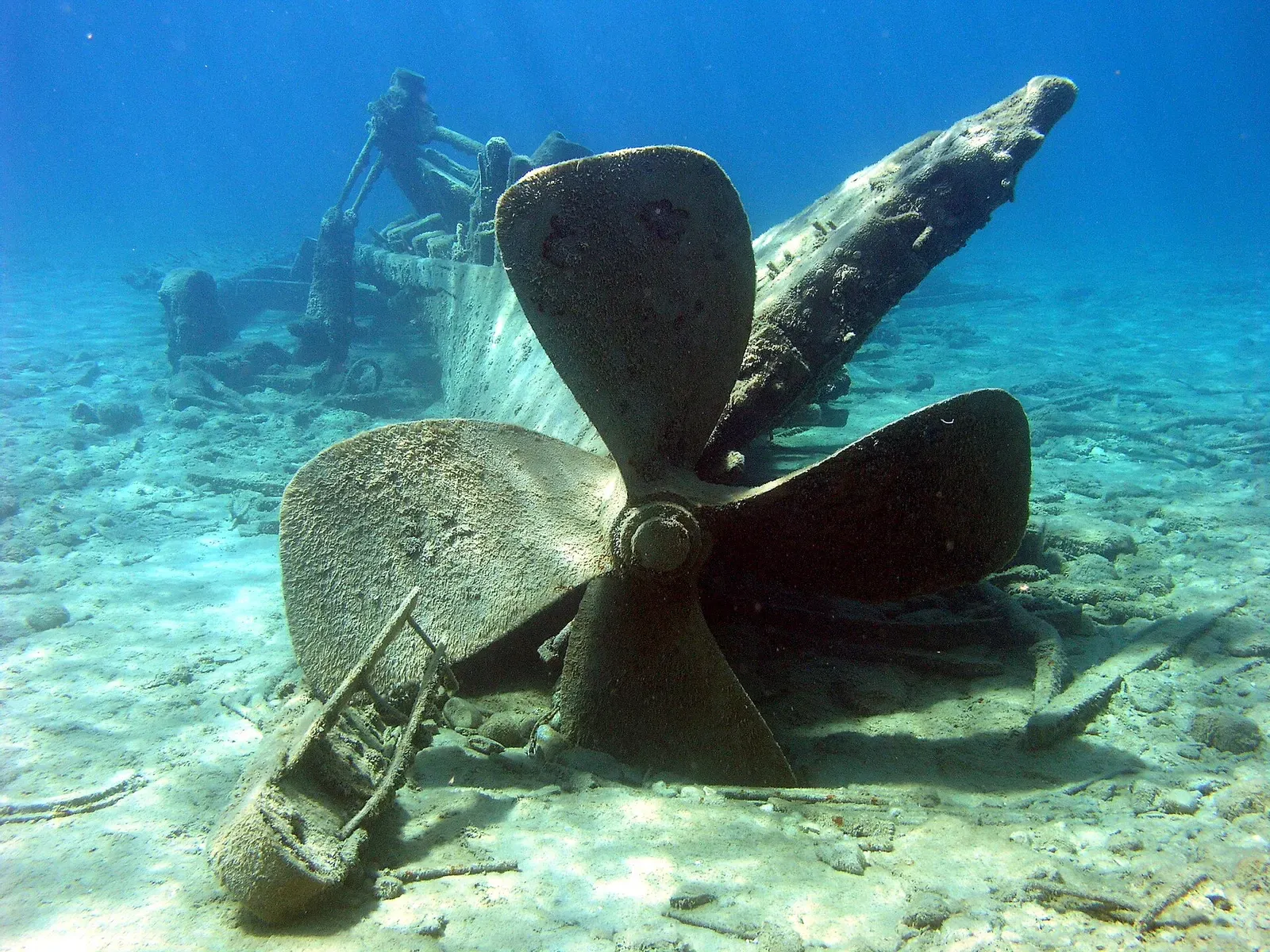
A burned steamer in 5.5 m, readable from the surface
Similar dives elsewhere

A steamer down a slope from 18 m to an intact stern at 46 m
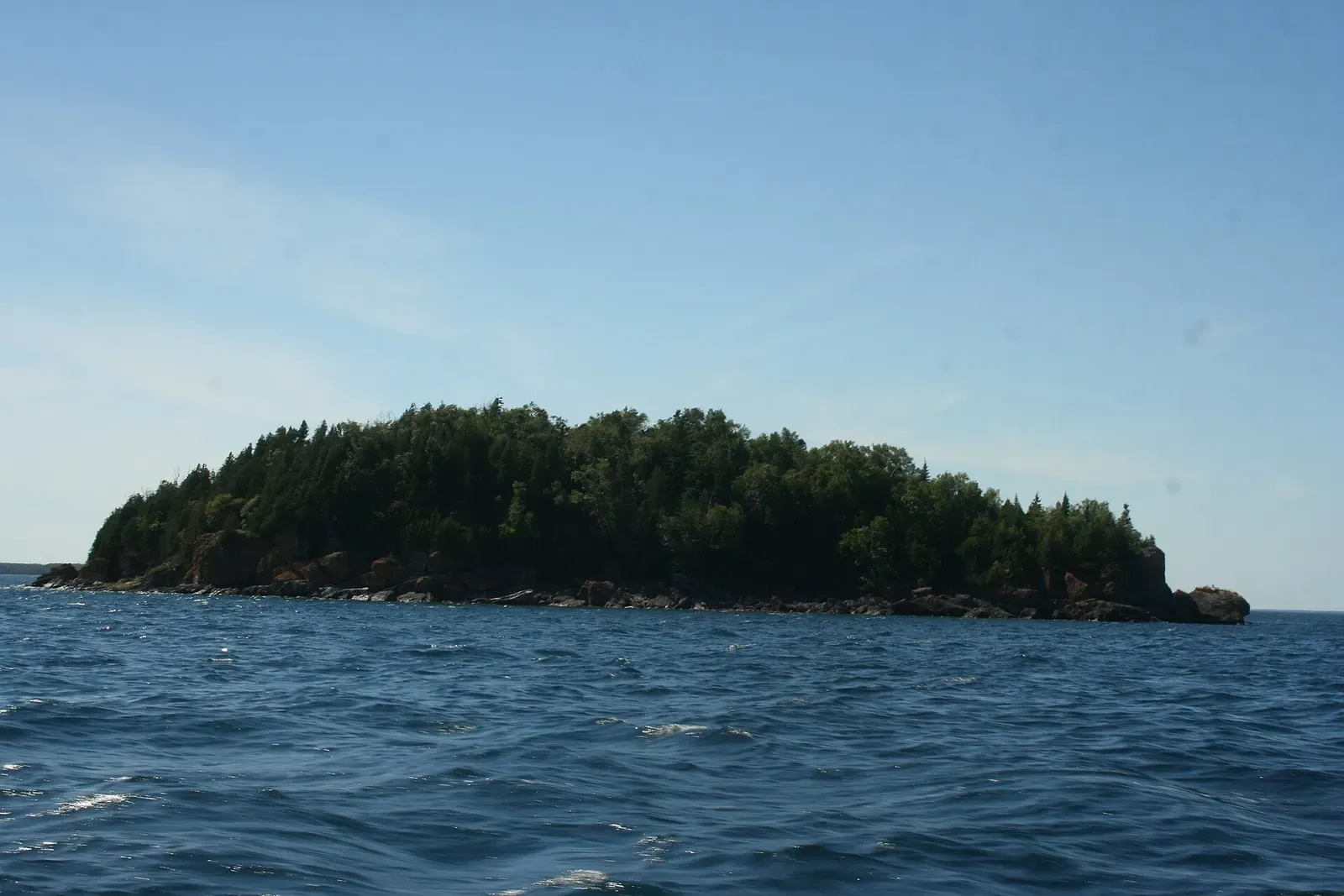
Bowsprit still extending from an 1852 hull at 32 m
A 1940 Lunenburg schooner scuttled for divers at 17 m

.jpg)
Twin propellers at the shot line, then the length of an upturned keel