Caribbean · Trinidad and Tobago
Tobago — Crown Point & Mount Irvine
A critter wall on the calm Caribbean side and drift dives at the Atlantic south end
Crown Point and Pigeon Point, at the south-west tip of Tobago, hold the dive centres that work the island's south and Caribbean coasts. Boats drift the Atlantic reefs at the south end, such as Flying Reef, and run up the calm Caribbean side to Mount Irvine Wall, Arnos Vale and the sunken ferry Maverick. Most dives sit between 9 and 18 m (30 to 60 ft), with drift dives on the Atlantic side and virtually no current on the Caribbean coast.
About diving in Tobago — Crown Point & Mount Irvine
The dive centres sit at Crown Point and Pigeon Point, and their boats work two coasts. A 10-minute ride rounds the point into the Atlantic, where the prevailing current carries divers along the reef from east to west, while Arnos Vale, just north of Plymouth on the Caribbean coast, is about 30 minutes by boat. Entry is usually a backward roll and the exit a ladder, and Kariwak Reef off Store Bay is dived from the beach as well as by boat. Dives range from 9 to 40 m (30 to 130 ft) across the sites.
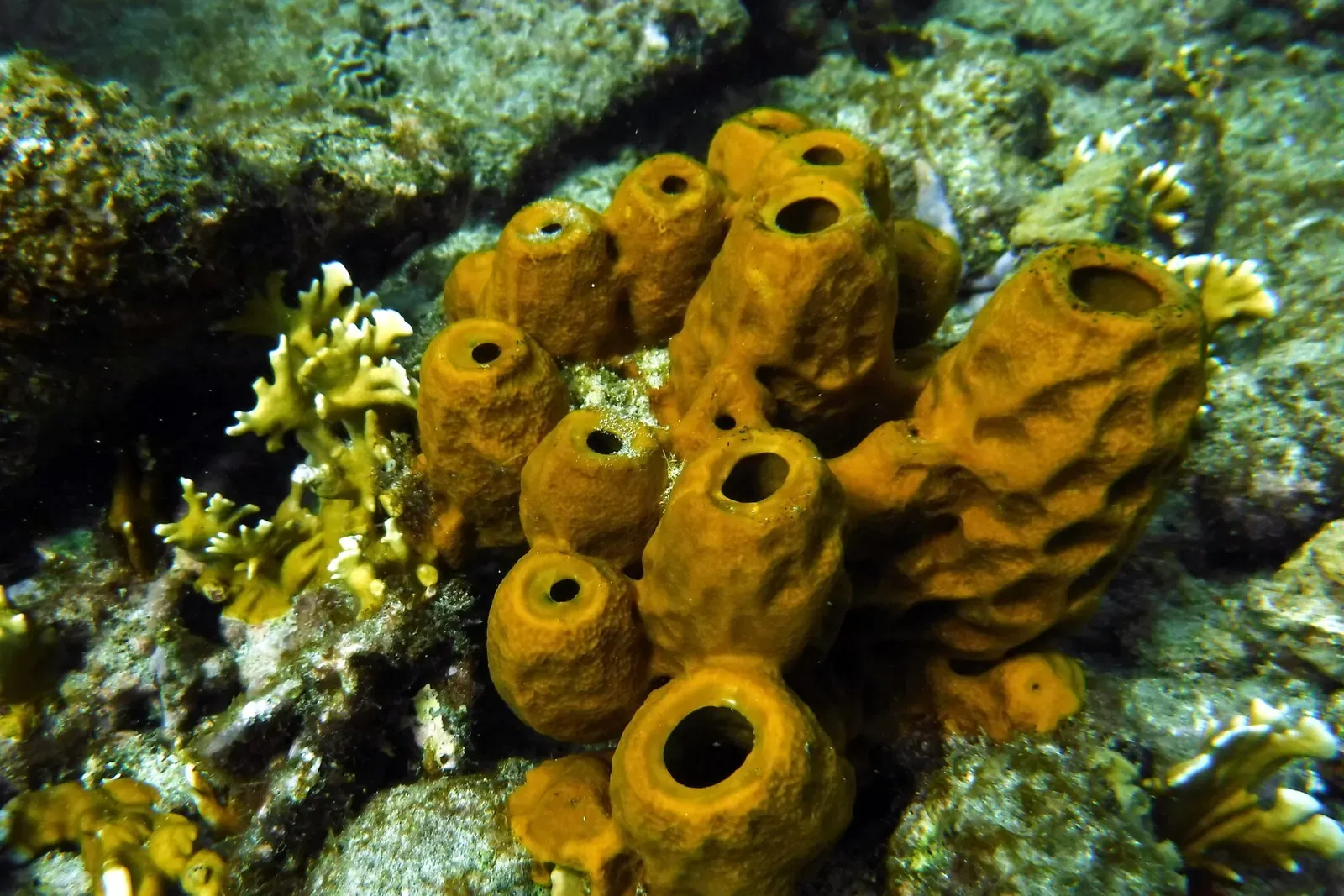
The two coasts behave differently underwater. Dives on the Atlantic side are usually drifts, and strong tidal currents can sweep the reefs off the southern tip, where Diver's Dream and Diver's Thirst are dived only when conditions are right. The Caribbean coast has virtually no current. Mount Irvine Wall is a shallow sponge- and coral-encrusted wall with octopus, short-nosed batfish and hawksbill turtles, and seahorses hide along it. The Maverick, a passenger and car ferry deliberately sunk as a dive site, has its top deck at 18 m (60 ft) and the bottom at 33 m (100 ft).
The south-west suits a wide spread of divers. New divers have the calm Caribbean-coast sites such as Arnos Vale, and at the south end Kariwak and Bopez are shallow, sloping reefs with minimal current. Flying Reef is a place for beginners to get introduced to drift diving. Diver's Dream and Diver's Thirst are for more experienced divers, and the Maverick, with light penetration possible, draws advanced open-water divers.
Best time to dive Tobago — Crown Point & Mount Irvine
| Jan | Feb | Mar | Apr | May | Jun | Jul | Aug | Sep | Oct | Nov | Dec |
|---|---|---|---|---|---|---|---|---|---|---|---|
| Good | Good | Good | Good | Good | Good | Fair | Fair | Fair | Fair | Fair | Good |
No month stands out for the diving; July to November are the wettest months, with frequent heavy rain.
Best months: January, February, March, April, May, June, December
Dive types & marine life
Hawksbill turtles, octopus and short-nosed batfish are reliable at Mount Irvine Wall, and seahorses are found along the same wall. Nurse sharks and stingrays rest at Majestan on the south end, and stingrays lie in the sand at the edge of Flying Reef.
- Reef
- Wall
- Drift
- Wreck
- Night
- Muck & macro
- Sea turtles
- Reef sharks
- Stingrays
- Octopus & cuttlefish
- Macro critters
Best dive sites in Tobago — Crown Point & Mount Irvine
- 1
Mount Irvine Wall
Shallow critter wall sloping from 8 to 18 m (25 to 60 ft), reliable for hawksbill turtles and octopus
- 2
The Maverick
Car ferry sunk as a dive site, with light penetration possible for advanced divers
- 3
Flying Reef
Drift dive along the reef at the south end of the island
- 4
Diver's Dream
Rocky reef plateau at 15 to 21 m (50 to 70 ft) off the southern tip, swept by tidal current
- 5
Arnos Vale
Shallow 14 m (40 ft) dive with minimal current, north of Plymouth
- 6
Kariwak Reef
Night and training dive off Store Bay on a shallow, sloping reef to 15 m (50 ft)
- 7
Culloden Reef
Horseshoe reef curving between the two headlands of Culloden Bay
Site guides
Reef
An easy, shallow reef dive north of Plymouth with almost no current
Drift
An east-to-west Atlantic drift along a shallow south-end reef
Reef
A sheltered shore reef off Store Bay used for training and night dives
Seahorses and short-nosed batfish hiding along a sponge-covered wall
Wreck
A scuttled car ferry with its top deck at 18 m
How to get to Tobago — Crown Point & Mount Irvine
A.N.R. Robinson International Airport sits at Crown Point on the south-west end of Tobago, 10 km west of Scarborough; the dive centres are at Crown Point and Pigeon Point on the same end of the island. From Trinidad, 3 ferries a day run from Port of Spain to Scarborough, a crossing of at least 3 hours.
Questions divers ask
Is the diving at Crown Point drift diving?+
On the Atlantic side, usually. Boats round the point into the prevailing current and drift east to west, while the Caribbean coast sites have virtually no current.
What wetsuit is needed for Tobago's south-west coast?+
Water runs 26 to 27 °C (78 to 81 °F), and a 2 mm or 3 mm shorty wetsuit is recommended.
Can a new diver dive the Maverick wreck?+
The top deck lies at 18 m (60 ft), the depth limit of the Open Water certification, and the bottom at 33 m (100 ft). The wreck is a favourite with advanced open-water divers, and light penetration is possible.
When is the rainy season in Tobago?+
July to November are the wettest months, with frequent heavy rain. Tobago lies at the southern edge of the Atlantic hurricane belt and is less exposed than islands further north.
Sources
- Tobago Dive Sites - underseatobago.com — Undersea Tobago
- Scuba Diving in Tobago - underseatobago.com — Undersea Tobago
- Dive Sites - R and Sea Divers — Caribbean Coastal Adventures
- R and Sea Divers — Caribbean Coastal Adventures
- In Tobago, a World of Diverse Diving Awaits — Scuba Diving
- Diving in Tobago — DIVEIN
- Tobago — Wikivoyage
Embed
Run a dive centre, club or blog? Embed this map of 9 dive sites near Tobago on your own page.
Similar destinations
Giant brain corals on current-fed reefs, and schooling hammerheads at the Sisters

Swim off a beach onto a wall that drops past 900 metres
Cold upwelling makes Colombia's Caribbean coast unexpectedly productive

Shore and boat reefs, plus wrecks from a shallow tug to a harbour-mouth hull