Cold Water · Russia
White Sea — Chupa Bay & Nilmoguba
Marine ice diving over anemone walls beneath tide-broken hummocks
Nilmoguba sits on the Karelian shore of the White Sea, where a year-round PADI centre dives the islands and straits nearby. In winter the sea freezes and divers drop through holes cut in the ice to find soft corals and sea anemones under a ceiling of tide-broken hummocks. In summer speedboats run to walls and ridges such as Cheremshikha Island and Tokarev Ridge, thick with anemones, soft corals and kelp, plus a sunken diving boat close to the base.
About diving in White Sea — Chupa Bay & Nilmoguba
There are 29 dive sites around the village of Nilmoguba, and how they are reached depends on the sea. In winter snowmobiles carry divers across the ice to a hole cut at each site, where heated wooden huts give a place to change and warm up between the two dives of the day. Pairs descend clipped to one safety line held by a tender at the hole, and the rope keeps them within about 25 m of it. In summer speedboats carry divers out to the near and remote islands instead.
The bottom is mostly sand with kelp and scattered rocks, and the rock faces are covered in soft corals, sea anemones, sponges, sea squirts and hydroids. Starfish, sea urchins, crabs, hermit crabs, shrimps, nudibranchs and the large predatory gastropods Neptunea and Buccinum live among them, and cod, wolffish, sea perch, butterfish and flounder shelter in the rocks. Under the ice, daily two-metre tides break the floes into bands of hummocks that hang down into the water.
The place suits divers who want to learn or practise ice diving at sea, and photographers working among the hummocks and icicles under the ice. Water below freezing tests every piece of kit, and cold-water regulators on factory settings have frozen into free-flow within 15 minutes. Under the ice there are few fish, so anemones and starfish are the subjects. Group programmes are run for both novice and experienced divers, and most gear can be hired at the centre.
Best time to dive White Sea — Chupa Bay & Nilmoguba
| Jan | Feb | Mar | Apr | May | Jun | Jul | Aug | Sep | Oct | Nov | Dec |
|---|---|---|---|---|---|---|---|---|---|---|---|
| Good | Prime | Prime | Prime | Fair | Good | Good | Good | Good | Fair | Fair | Good |
The ice-diving season usually runs from February to April, though it depends on the thickness of the ice, and water under it sits near -2 °C (28 °F) with visibility of 20 to 30 m. By May the sea averages about 3 °C, and the dirt road to the base can become nearly impassable for an ordinary car in spring and autumn. Summer brings speedboat trips to the near and remote islands, with the water averaging 9 °C in June and 14 °C in July. It cools to about 7 °C in October and 1 °C by December.
Dive types & marine life
Soft corals and sea anemones cover the rocks in both seasons, under the ice in winter and on the summer boat dives. In winter wolffish, flounder and lumpfish let divers come close, and sea angels drift under the ice.
- Ice
- Kelp forest
- Wall
- Drift
- Wreck
- Nudibranchs
- Macro critters
Best dive sites in White Sea — Chupa Bay & Nilmoguba
- 1
Biofilter Bay
Sheltered bay where a 7–8 m rock wall slopes to silt; known in winter for its ice hummocks.
- 2
Big Cross Island (Anemone Rock)
Lone rock on a sandy plateau beside Big Cross Island, carpeted in anemones.
- 3
Tokarev Ridge
Ridge of arctic soft corals and anemones where rare Head of Gorgon brittle stars live.
- 4
White Whale Rock
Rocky ledge rising from a flat seabed almost to the surface, dived under the ice in winter.
- 5
Nautchniy Wreck
A sunken 21 m Yaroslavets diving boat lying between 17 and 22 m.
- 6
Kishkin Island (the Grotto)
Distant island grotto with large anemone colonies and arctic soft corals, rated difficult.
- 7
Velikaya Salma Strait
Strait with strong, at times very strong current over sponges, hydroids and kelp.
- 8
Cheremshikha Island (the Wall)
Wall dropping to 47 m past kelp forest, with cod and wolffish.
Site guides
Pinnacle
A lone rock carpeted in plumose anemones
Ice hummocks under a cliff shaped like a mammoth
A kelp-topped wall falling into deep water
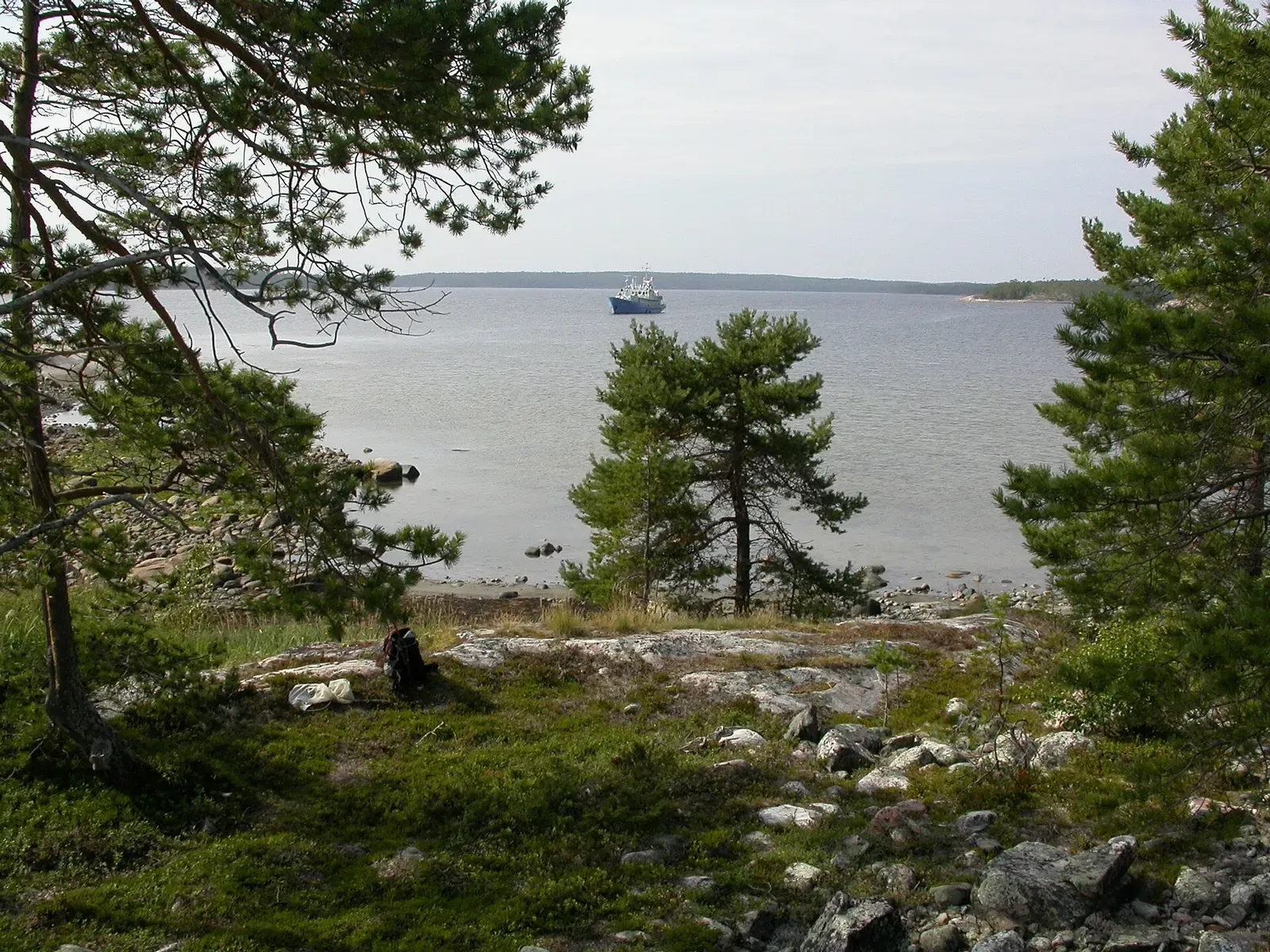
Deep anemone and soft-coral colonies far out from Nilmoguba
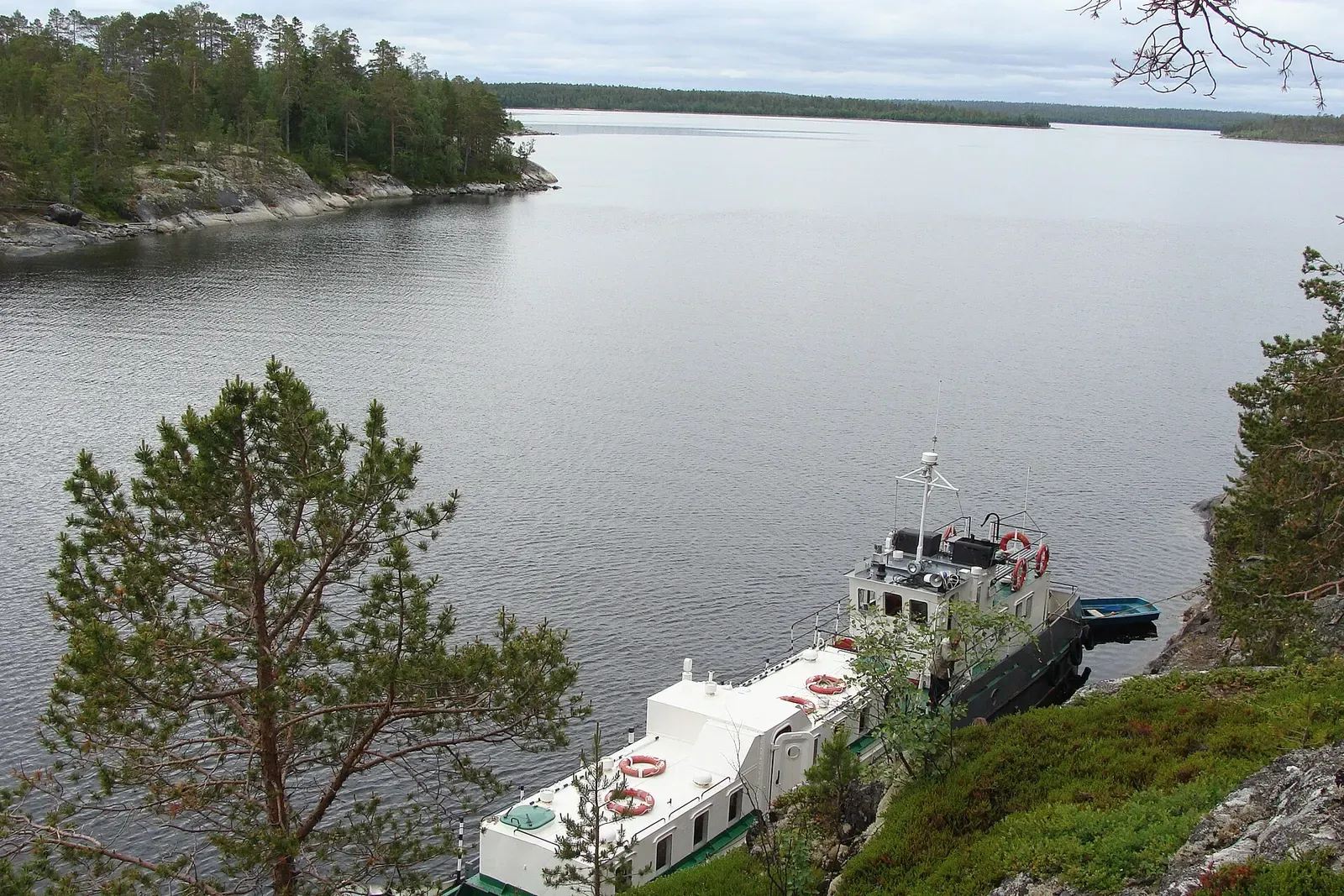
Sea angels drifting over a kelp forest
Kelp forest
Fucus shallows above a slope into deep water
Wreck
A Yaroslavets diving boat from a biological station
Reef
Rare Gorgon's head brittle stars among Arctic soft corals
Channel & pass
Sponge and hydroid gardens fed by a strong tidal flow
Pinnacle
A ledge rising from a flat bottom almost to the ice
How to get to White Sea — Chupa Bay & Nilmoguba
Trains from Moscow and St Petersburg run to Chupa station, 18 hours from St Petersburg, and the centre's transfer from Chupa to Nilmoguba takes about 2 hours by car or bus. The other route is a flight to Murmansk and a 5–6 hour road transfer to the base.
Dive videos
Arctic Circle Ice Diving, White Sea, Russia · John-Paul Bland on YouTube
White Sea ICE diving with GH5 · Global Dive Media on YouTube
Questions divers ask
Can divers learn ice diving at Nilmoguba?+
Yes. The centre runs courses through both PADI and TDI, and recreational ice dives are kept no-decompression, to 20 m and up to an hour.
Are there drift dives near Nilmoguba?+
Yes. In the straits between the islands the tidal stream runs much faster than the regular currents and can reach 4 m/s, while most other sites have weak currents.
Is the road route from Kuusamo in Finland open?+
No. The route from Kuusamo to the centre is closed while the land border at the Salla checkpoint stays shut, so travel runs through Murmansk or Chupa station.
Sources
- Dive Centre — The Arctic Circle
- Dive Sites — The Arctic Circle
- How to get there — The Arctic Circle
- Ice Diving in the White Sea — X-Ray Mag
- DR White Sea — Off Beaten Waves
- Chupa average sea temperature — seatemperature.org
Embed
Run a dive centre, club or blog? Embed this map of 6 dive sites near White Sea on your own page.
Similar destinations
England's first marine reserve, and its grey seals follow divers around

The Rondo stands almost vertical, stern at 15 m and bow at 50

Four ore carriers torpedoed at their pier in 1942, still lying at 27–40 m

Sweden's only cold-water coral reefs, inside its first marine national park