
Australia & New Zealand · Australia
Whitsundays
Tame Maori wrasse inshore, and the outer barrier sixty kilometres out
Photo: Elemaki · CC BY-SA 3.0
The Whitsundays are seventy-four continental islands sitting inside the Great Barrier Reef, and the diving splits in two. Inshore fringing reefs off Hook and Hayman Islands are shallow, sheltered and easy, with a famous population of tame Maori wrasse at Manta Ray Bay. Sixty kilometres out, Bait and Hardy Reefs on the outer barrier give the clear water and hard coral the region is sold on, reached by day boat or overnight pontoon trip.
About diving in Whitsundays
Diving here is usually bolted onto a boat trip rather than sold on its own. Many people arrive on a two- or three-day sailing itinerary and dive from the yacht between anchorages, kitting up on deck for one or two guided dives a day. The alternative is a dedicated charter out of Airlie Beach: an early start, a long transit each way, and a full day afloat before you are back on the dock. Neither format gives you the four-dive rhythm of a purpose-built dive destination.
These are drowned continental peaks rather than coral cays, and that shows underwater. Close in, the reef runs off the rock as an apron of bommies, soft coral and boulder rubble grading onto sand, and the water clears or dirties with the tide and the wind rather than holding steady. Out on the barrier it is a different coast: oceanic water, hard coral in continuous plates and columns, and gutters between the bommies you can swim through. Neither side runs deep — around 30 m is the practical floor.
Pontoon operations exist because most groups are mixed. A moored platform gives a stable base, gear set up under cover, and room to run a guided dive, an introductory dive and a long snorkel in the same session when only half the party is certified. Overnight versions leave you out there after the day boats have gone, and the night dive — off the pontoon or off a moored yacht — is the one people tend to remember, with the polyps open and the daytime fish sitting still under a torch.
It suits new divers, families and anyone travelling with non-divers. Photographers do well on the sheltered inshore bays, where slow, shallow passes over the bommies favour macro over wide angle. Divers after wrecks or a dependable big-animal encounter will find the region thin, and what gets sold as wall diving is reef edge rather than deep drop-off. What the Whitsundays do properly is warm, easy, heavily serviced reef diving with a sailing holiday wrapped around it.
Best time to dive Whitsundays
| Jan | Feb | Mar | Apr | May | Jun | Jul | Aug | Sep | Oct | Nov | Dec | |
|---|---|---|---|---|---|---|---|---|---|---|---|---|
| Season | Fair | Fair | Good | Good | Prime | Prime | Prime | Prime | Prime | Good | Good | Fair |
| Sea surface | 29°C84°F | 29°C84°F | 28°C82°F | 27°C81°F | 26°C79°F | 24°C75°F | 23°C73°F | 23°C73°F | 24°C75°F | 25°C77°F | 27°C81°F | 28°C82°F |
| Daytime high | 30°C86°F | 31°C88°F | 29°C84°F | 28°C82°F | 27°C81°F | 25°C77°F | 24°C75°F | 25°C77°F | 26°C79°F | 27°C81°F | 29°C84°F | 30°C86°F |
| Rain | 204 mm8.0 in | 173 mm6.8 in | 171 mm6.7 in | 72 mm2.8 in | 48 mm1.9 in | 23 mm0.9 in | 29 mm1.1 in | 17 mm0.7 in | 8 mm0.3 in | 30 mm1.2 in | 36 mm1.4 in | 113 mm4.4 in |
| Jan | Feb | Mar | Apr | May | Jun |
|---|---|---|---|---|---|
| Fair | Fair | Good | Good | Prime | Prime |
| Sea surface | |||||
| 29°C84°F | 29°C84°F | 28°C82°F | 27°C81°F | 26°C79°F | 24°C75°F |
| Daytime high | |||||
| 30°C86°F | 31°C88°F | 29°C84°F | 28°C82°F | 27°C81°F | 25°C77°F |
| Rain | |||||
| 204 mm8.0 in | 173 mm6.8 in | 171 mm6.7 in | 72 mm2.8 in | 48 mm1.9 in | 23 mm0.9 in |
| Jul | Aug | Sep | Oct | Nov | Dec |
|---|---|---|---|---|---|
| Prime | Prime | Prime | Good | Good | Fair |
| Sea surface | |||||
| 23°C73°F | 23°C73°F | 24°C75°F | 25°C77°F | 27°C81°F | 28°C82°F |
| Daytime high | |||||
| 24°C75°F | 25°C77°F | 26°C79°F | 27°C81°F | 29°C84°F | 30°C86°F |
| Rain | |||||
| 29 mm1.1 in | 17 mm0.7 in | 8 mm0.3 in | 30 mm1.2 in | 36 mm1.4 in | 113 mm4.4 in |
2011–2025 averages. Sea surface: NOAA Coral Reef Watch, measured at the surface, so deeper water can run colder. Daytime high and rain: NASA POWER.
May–Sep is dry with the best visibility; Nov–Mar is the wet season with cyclone risk and stinger suits required inshore.
Best months: May, June, July, August, September
Whitsundays water temperature and weather by month
The sea surface runs from 23 °C (73 °F) in August to 29 °C (84 °F) in February. It is 24 °C (75 °F) or warmer from September to June. Most rain falls from December to March, peaking at about 200 mm (7.9 in) in January; it stays largely dry from June to November. Daytime highs reach 31 °C (88 °F) in February and drop to 24 °C (75 °F) in July. The coldest water here is about 22 °C (72 °F), so pack a 5 mm suit.
Dive types & marine life
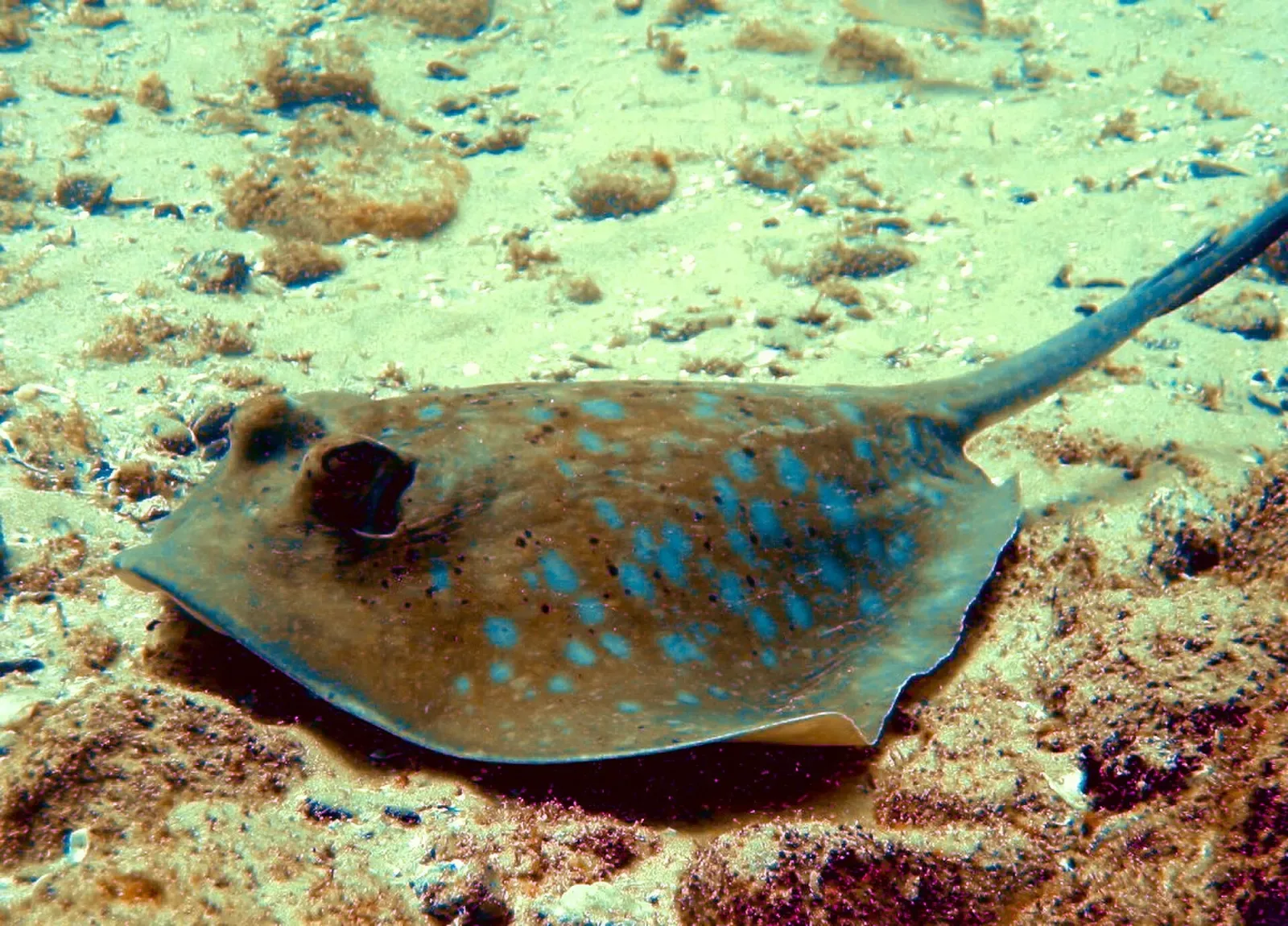
Green turtles work the fringing reefs year-round, whitetips are the usual shark resting under the outer-reef bommies, and eagle rays cross the sand between them. Mantas are recorded but not reliable enough to plan around. The dry May-to-September stretch brings the clearest water; nudibranchs are easiest on the sheltered inshore bays.
- Reef
- Coral garden
- Drift
- Wall
- Night
- Sea turtles
- Reef fish swarms
- Manta rays
- Reef sharks
- Napoleon wrasse
- Eagle rays
- Nudibranchs
- Groupers
Best dive sites in Whitsundays
Reef
A training-depth bay with a reef regrowing after Cyclone Debbie
Reef
Soft coral shelf to hard coral heads on Hook Island's north end
Reef
A resident Maori wrasse called George, and a slope to 30 m
Bait Reef
Outer barrier reef with the Stepping Stones coral columns at 15 m.
Hardy Reef
Pontoon-served outer reef with clear water and hard coral gardens.
Black Island
Small island with coral bommies and good macro on the sand.
How to get to Whitsundays
Most visitors route through Proserpine (Whitsunday Coast) or Hamilton Island and base in Airlie Beach, where sailing and dive charters leave from Port of Airlie and Abell Point Marina. Outer-reef trips are a full day by fast catamaran, the island reefs are reached by boat, and there is no meaningful shore diving in the group.
Photos from Whitsundays
Mediastudent2001 · CC BY-SA 4.0
Alpha Juliet · CC BY-SA 4.0
datadan · CC BY 4.0
Klaas Ole Kürtz · CC BY-SA 3.0
Dive videos
Bait Reef, Scuba Diving, Great Barrier Reef, Whitsundays, Australia · Tommy’s Wild Adventures on YouTube
Diving Bait Reef from our Catamaran Adventure 116 · Sailing LukimYu on YouTube
Photo credits
- Panoramic view over Whitehaven Beach and the Whitsunday Islands National Park, Queensland by Elemaki, CC BY-SA 3.0, via Wikimedia Commons
- Branching hard coral colonies on a reef in the Whitsunday Islands by Mediastudent2001, CC BY-SA 4.0, via Wikimedia Commons
- A green turtle surfaces for air in the clear waters of the Whitsunday Islands by Alpha Juliet, CC BY-SA 4.0, via Wikimedia Commons
- A giant trevally cruises over a reef in the Whitsunday Islands by datadan, CC BY 4.0, via Wikimedia Commons
- Rocky shoreline and turquoise bay at Black Island in the Whitsundays by Klaas Ole Kürtz, CC BY-SA 3.0, via Wikimedia Commons
Embed
Run a dive centre, club or blog? Embed this map of 3 dive sites near Whitsundays on your own page.
In The Logbook
- What stings you underwater, and how to avoid itBody & health · 8 min read
Similar destinations

Giant Queensland grouper at Cod Hole and dwarf minke whales in winter.

The highest reef manta density on the Great Barrier Reef, year-round

Tropical and temperate species overlap on one rock 2.5 km offshore


A 125 m ocean through-cave, and grey nurse sharks in the gutters