What the dark changes
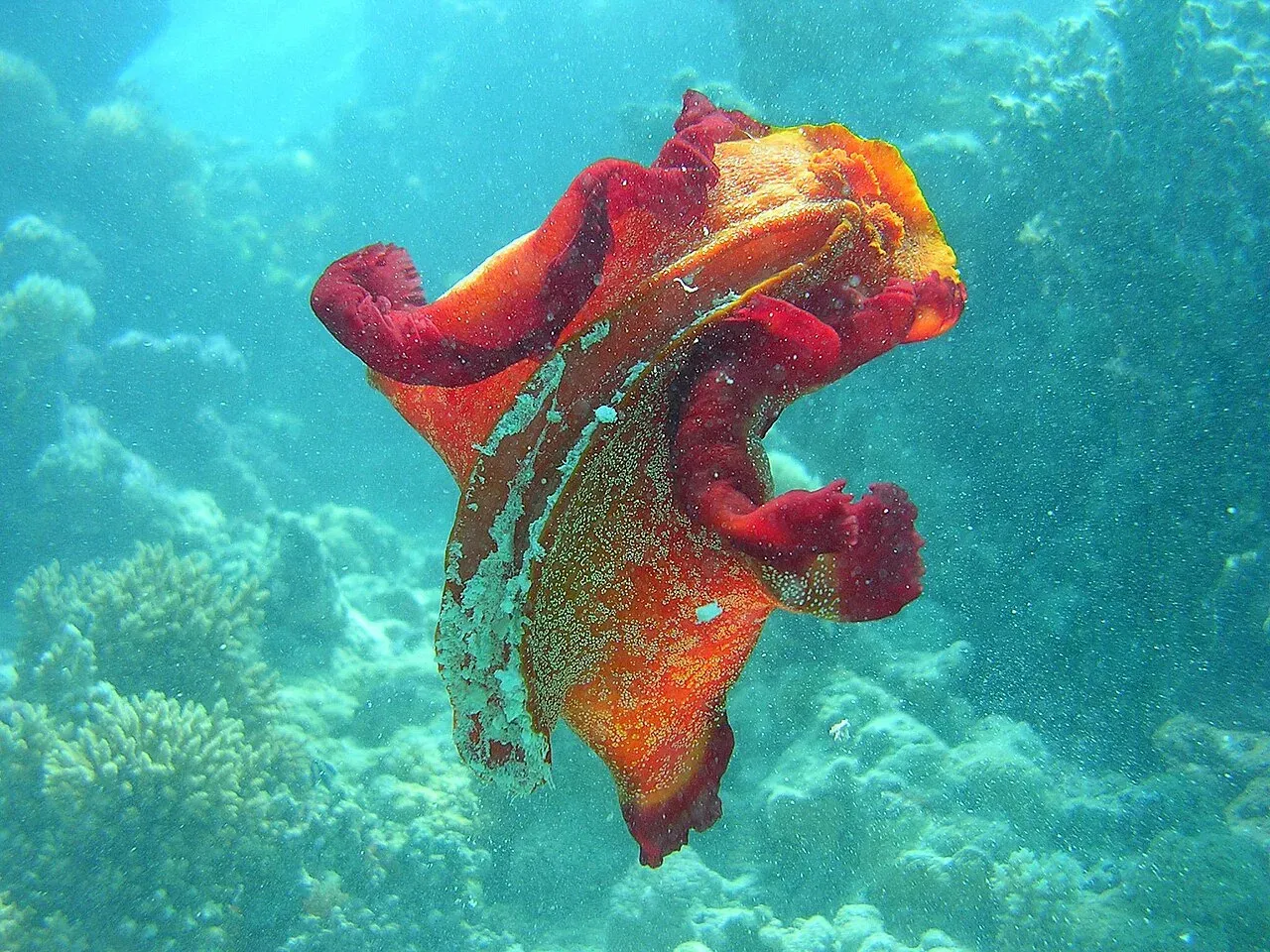
A night dive is not a day dive with worse visibility. Turn the sun off and the reef changes staff: the parrotfish wedge themselves into the structure and go to sleep, the octopus and squid clock on, morays hunt free of their holes, and basket stars unfold on coral heads that looked bare eight hours earlier. Some animals exist, for a diver, only after dark. The Spanish dancer — a red nudibranch that can reach 25 centimetres, with Red Sea animals recorded to 40 — spends the day hidden in crevices and only comes out late at night, swimming free in open water with contractions and undulations of its whole body.
The torch changes the diving as much as the dark does. Your world narrows to a beam a few metres long, which sounds like a loss and works like a gift: you stop surveying and start looking. And on a handful of dives, the light itself is the mechanism — it gathers the plankton, and the plankton gathers everything else.
Our dataset lists over a hundred areas that offer night diving, and most of them mean exactly that: the house reef, again, after dinner. Worth doing, not worth a flight. This guide is about the other kind — the dives where night is the event — and they sort themselves into genres, each with its own canonical site and its own craft.
The manta feed that light built
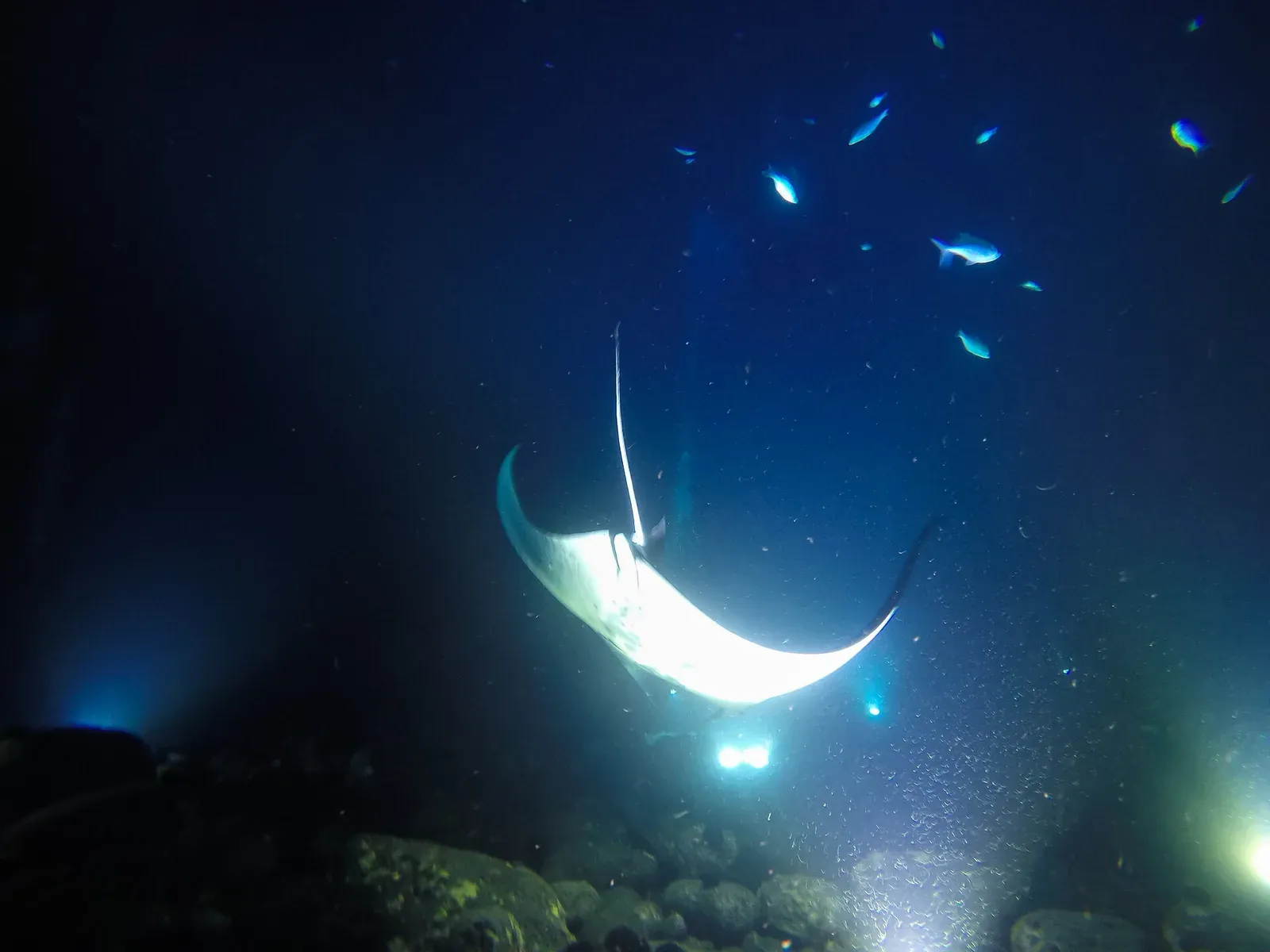
The most famous night dive in the world happens off Kona, on the Big Island of Hawai’i, and it exists because of hotel lighting. In the early 1970s, floodlights from the Kona Surf Hotel lit the surf zone at Keauhou Bay; plankton gathered in the light, and reef mantas learned to come in and feed on it. In 1991 Jim Robinson’s Kona Coast Divers became the first operation to schedule weekly scuba night dives on the phenomenon, using custom-built underwater lights placed on the seabed to draw the mantas out to divers at around 30 feet — and the dive has run on the same conditioning ever since.
It is run at two sites. Manta Village, off Keauhou Bay, is the original: a sand bottom at about 10 metres, no wall, no reef, where you kneel with the group and point your light straight up. Garden Eel Cove — Manta Heaven, in the language of the instructor who created and named it, Ranya Henson — is the northern site, a sand chute at 12 to 14 metres where guides settle divers around a ring of stones they call the campfire, laid by one of the first operators to run the dive here so that groups land in the same place every night and leave the rest of the sand alone. Snorkellers float overhead holding lighted boards, plankton concentrates between the two layers of light, and the mantas work the gap, barrel-rolling through the beams close enough that the briefing has to insist on the obvious: no touching, no kicking, stay on the sand and let the light do the work.
What is Manta ray night dive at Garden Eel Cove · AmazingPlanet4U on YouTube
Be honest with yourself about the odds. Manta numbers swing dramatically from night to night, and sightings are most consistent from September through May, so a blank evening is a reason to go again rather than proof the dive is oversold. The animals themselves carry more protection than they used to: Hawai’i’s Act 92, signed in 2009, made it a misdemeanour to knowingly capture or kill a manta ray in state waters, and in 2018 NOAA listed the giant oceanic manta ray as threatened under the US Endangered Species Act. Kona’s mantas are the smaller reef species, assessed as Vulnerable by the IUCN and listed on CITES Appendix II — which is worth remembering when one banks a hand’s width over your head.
| Site | Depth | Level | Best months |
|---|---|---|---|
| Manta Village Kona · United States | to 10 m | Beginner | Dec–Apr |
| Garden Eel Cove Kona · United States | 12–21 m | Intermediate | Dec–Apr |
Blackwater: the dive with no bottom
Blackwater diving is mid-water diving at night — ideally a moonless night — in open ocean where the bottom is not just out of sight but thousands of metres away. It was invented in Kona, for a simple geographic reason: there is more than ten thousand feet of water just off the coast. The boat runs two to three miles offshore after dark, hangs a 50-foot line under the hull with lights on it, and you clip a tether to the line and hang in the top 13 to 15 metres (50 feet) for about 45 minutes while the ocean’s nightly vertical migration comes up past you. What the torch picks out is the drifting night plankton — larval fish and invertebrates, squid, octopus, ctenophores, siphonophores, salps — much of it transparent, some of it unidentifiable even to the crew.
The genre has one other destination with the same credentials. Off Palau, the seabed beyond the barrier reef drops into a trench more than 7,600 metres deep, and the Palau blackwater dive — pioneered by Unique Dive Expeditions, the specialty arm of Sam’s Tours — runs over it from a GPS-marked position, with a lit hang-bar lowered to about 16 metres as the only reference in any direction. Anilao’s resorts run their own blackwater drifts over deep water offshore as well, as an adjunct to the muck diving, though Kona and Palau remain the two places the genre is built around.
The entry bar is real and higher than any other dive in this guide. Kona’s operator asks for Open Water plus at least 25 logged dives and a night dive with their own crew within the past twelve months, takes nobody under 15, and requires that you can climb a floating vertical ladder unassisted in full kit. Palau operators generally want 50 logged dives and the ability to deploy your own surface marker if you are separated. None of that is gatekeeping. It is what “no bottom, no wall, no reference” costs.
| Site | Depth | Level | Best months |
|---|---|---|---|
| Kona Blackwater Dive Kona · United States | to 15 m | Advanced | Dec–Apr |
| Palau Blackwater Dive Palau · Palau | to 16 m | Advanced | Dec–Mar |
The last minutes of daylight
The mandarinfish dive is the shortest event in diving, and the only one on this list that happens before dark rather than after it. Mandarinfish — tiny, patterned in orange, green and electric blue like nothing else in the sea — spend the day deep in coral rubble and rise off it to court and spawn in the last minutes of daylight. Miss the window and you have dived a rubble patch at dusk for nothing.
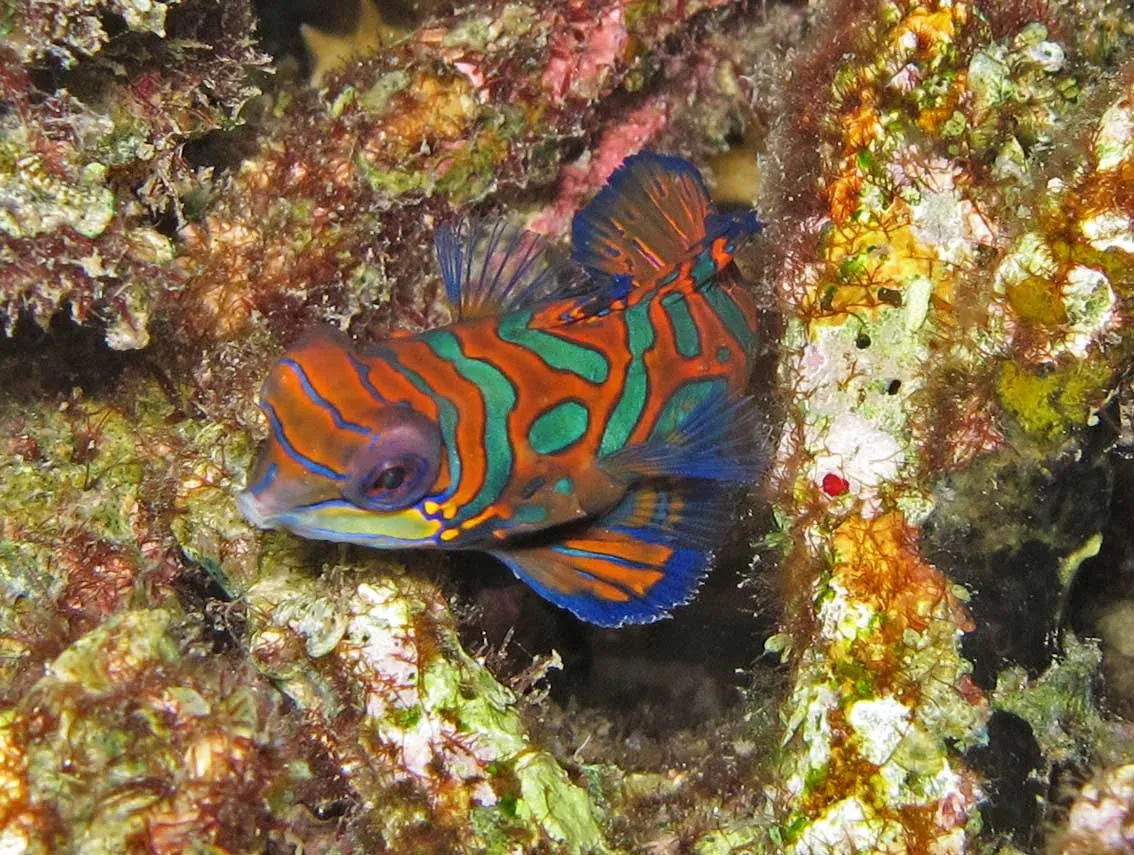
The anchor site is Mandarin Valley off Kapalai in Sabah, a shallow slope where the technique matters more than the site: settle over one patch of rubble, hold still, and wait. The fish are shy, and a diver who patrols or crowds the patch ends the display for everyone. The same event runs nightly across the Coral Triangle — at Masaplod in Dauin, where pairs spiral up out of the rubble at sunset; at Wonderwall on Anda’s coast and Talisay Pier on Cabilao; under the jetty at Tufi Wharf in Papua New Guinea; and off the rubble slopes of Anilao. Buoyancy discipline is at its most consequential here, because stonefish sit on exactly the rubble you are tempted to settle on.
| Site | Depth | Level | Best months |
|---|---|---|---|
| Mandarin Valley Mabul & Kapalai · Malaysia | to 10 m | Beginner | Mar–Oct |
| Masaplod Muck Dauin · Philippines | to 15 m | Beginner | Apr–May |
| Wonderwall Anda · Philippines | 3–26 m | Intermediate | Nov–May |
| Talisay Pier Cabilao · Philippines | 3–40 m | Intermediate | Nov–May |
| Tufi Wharf Tufi · Papua New Guinea | to 10 m | Beginner | Apr–Jun |
Light the sea makes itself
Turn every torch off and the best night dives keep going. The benchmark display belongs to an animal smaller than a grain of rice: in the western Caribbean, about an hour after sunset, male ostracods — seed shrimp under two millimetres long — put on a ritualised courtship display over shallow grassbeds, each male laying down a bright string of luminescent pulses and then spiralling upward through a dimmer helical phase, in display trains up to 60 centimetres long. Rivers and Morin, who described the display’s mechanics in 2008, called it a complex and ritualised light show of precise, vertically placed pulses; divers who switch off and hover over the grass at the right hour know it as the string of pearls.
The Caribbean is where this genre lives. On Bonaire, Something Special is the standing night dive on the edge of Kralendijk, with tarpon shadowing torch beams along the whole coast. Utila’s Duppy Waters is named for its after-dark glow. And on St Lucia, the Anse Chastanet house reef is a walk-in night dive where bioluminescence in the water column comes with basket stars opening on the coral and parrotfish asleep in the structure. The craft is the same everywhere: get away from the group’s lights, cover your torch, wave a hand and watch the water fire.
The night the reef reproduces
Around three-quarters of reef-building corals reproduce by broadcast spawning, and they do it at night, on a schedule set by the moon: the trigger is the dark gap between sunset and moonrise, moonlight itself suppresses spawning, and when it comes it typically comes within a ten-to-thirty-minute window. On the Great Barrier Reef, the inner reefs spawn during the week after the full moon in October, while the outer reefs spawn in November and December, and boats out of Great Barrier Reef — Cairns & Ribbons run one-off charters timed to the predictions. The Caribbean’s version belongs to elkhorn coral, which spawns on a few nights after a full moon in July, August or September.
This is the calendar dive: unlike everything else in this guide it is not a standing nightly product but an event you book a trip around, with a real chance the corals hold off a night or a month. It also carries the sharpest conservation point in night diving. Artificial light at night has been shown to desynchronise spawning in some Red Sea coral populations — the reef’s whole reproductive strategy depends on darkness arriving on schedule, which is a good thing to remember about every light you take into the water, and every light the shore keeps adding.
When the hunters clock on
Some reefs do not quiet down after dark; they speed up. Whitetip reef sharks hunt primarily at night, when reef fish are asleep and easily taken, and they do it in groups that methodically scour the reef, their slender bodies letting them wriggle into crevices no other reef shark can enter. The canonical place to watch it is Manuelita at Cocos Island, where the sheltered coral garden you dived by day becomes, off the anchored liveaboard, a hunt you sit inside: once the light goes the whitetips move over the reef in numbers, following the torch beams and sometimes coming straight through the group.
The Maldives has the pinnacle version. Maaya Thila is regularly called the number one site in the country, and the night dive is what made its name: whitetip and grey reef sharks resident in the teens, fusiliers arriving on the crown in vast numbers to feed, and a rock compact enough that a torch turns its caves and overhangs into the whole dive. And in Western Australia, Ningaloo’s Navy Pier — a working naval jetty dived only on regulated trips with its single licensed operator — packs wobbegongs, grey nurse sharks and whitetips under 110 metres of structure in under 15 metres of water, where the modest visibility stops mattering the moment everything worth seeing is inside torch range.
Maaya Thila Night Dive @ Maldives 2013 · David ST Loh on YouTube
The rest of the night shift
Beneath the headline genres sits a second tier of dives that are genuinely night-famous rather than merely night-capable. The muck coasts lead it: Police Pier in Lembeh is dived almost entirely after dark, for flamboyant cuttlefish, stargazers, snake eels, free-swimming morays and Banggai cardinalfish in the hundreds; Secret Bay, the pick of Anilao’s muck slopes, sends its mimic, wonderpus and blue-ringed octopus out to hunt over open sand once the sun is down; Bali’s Seraya Secrets and Dauin’s Ducomi Pier are night dives first and day dives second; and Laha 1 — the slope that produced the psychedelic frogfish holotype in 2008 — carries on producing after dark. Australia’s Pipeline at Nelson Bay is worked more often by night than by day for its cephalopods and seahorses, Wakatobi’s Roma re-runs its coral garden after dark with banded sea snakes sometimes in double figures, and at Manta Sandy in Raja Ampat the mantas linger over the cleaning station after sunset with bioluminescent plankton in the water. Two outliers prove the genre has no temperature or salinity requirement: liveaboards moored inside Shaab Rumi’s lagoon run night dives a fin kick from Cousteau’s 1963 Conshelf II site, and Tobermory’s Niagara II is a scuttled 55-metre sandsucker dived at night in cold Great Lakes fresh water.
Two famous names need honest labels. Bonaire’s Town Pier is one of the legendary night dives of the Caribbean — orange cup coral solid on the pilings, seahorses and frogfish in the growth — and it is not a dive you can simply plan on. It is Kralendijk’s working cargo and cruise dock: access has historically run through the harbourmaster with a fee and a divemaster-led group of four, it has been closed for long stretches since Hurricane Omar in 2008, and at the time of writing a Bonaire tourism page and a dive-site directory both call it closed. Ask a Kralendijk shop what the current status is, and treat a yes as a bonus. Florida’s Blue Heron Bridge is the same lesson in milder form: the day diving is a walk-in tied to the tide table, but night diving is permit-controlled, arranged through a local shop rather than by turning up after dark.
| Site | Depth | Level | Best months |
|---|---|---|---|
| Police Pier Lembeh Strait · Indonesia | 8–15 m | Intermediate | May–Oct |
| Secret Bay Anilao · Philippines | to 24 m | Beginner | Dec–Apr |
| Seraya Secrets Tulamben · Indonesia | to 10 m | Advanced | May–Oct |
| Ducomi Pier Dauin · Philippines | to 12 m | Beginner | Apr–May |
| Laha 1 Ambon · Indonesia | 2–12 m | Beginner | Mar–Apr |
| The Pipeline Nelson Bay · Australia | to 18 m | Intermediate | Apr–Aug |
| Roma Wakatobi · Indonesia | to 25 m | Beginner | Jul–Sep |
| Manta Sandy Raja Ampat · Indonesia | 8–15 m | Beginner | Nov–Mar |
| Shaab Rumi Sudanese Red Sea · Sudan | 5–30 m | Advanced | Apr–May |
| Niagara II Tobermory · Canada | to 30 m | Advanced | Jul–Sep |
| Town Pier Bonaire · Caribbean Netherlands | to 11 m | Intermediate | Dec–Apr |
| West Bridge Span Blue Heron Bridge · United States | 1.5–6 m | Beginner | Apr–Aug |
Night diving, done well
Time the dive by the sun, not the clock. A mandarinfish dive is booked against sunset, wherever sunset happens to be that week; arrive settled on your patch before the light goes, because the display will not wait for you. Coral spawning runs the same logic on a lunar scale — you book the charter against a full-moon prediction and accept that the reef holds the only reliable calendar.
Carry two lights and agree the signals before you get wet. A primary, a backup, and a buddy who knows what your beam waved in a circle means. On open sand, night dives spread divers apart as each torch finds its own subject; the pre-dive agreement is what keeps that from becoming separation.
Let the briefing overrule your instincts. The best night dives are the most choreographed ones. At Kona you stay on the sand, point the light up and never touch a manta; on blackwater you stay on the tether and mind the line; at a mandarinfish patch you pick your spot and stop moving. In every case the rules exist because the dive collapses without them — the mantas leave, the fish stay down, the diver drifts off the light.
Mind where the beam goes, and how much of it you use. A torch in another diver’s eyes ends their night vision for minutes; a beam parked on a hunting octopus turns every predator on the site into its audience; and the reef itself reads light as information — bright nights suppress and desynchronise coral spawning. Use the light you need, keep it low and moving, and spend part of every night dive with it covered, watching what the sea does with the dark.
Respect the entry bars. Blackwater’s 25-to-50-dive minimums, Navy Pier’s single licensed operator, Town Pier’s harbourmaster, Blue Heron Bridge’s permit: none of it is bureaucracy for its own sake. The genres in this guide are safe precisely because somebody is allowed to say no.
Where this joins the rest of the Logbook
Half of the second tier here is muck diving after dark, and our guide to the best muck diving in the world covers the same coasts by day — Police Pier, Seraya Secrets and Ducomi Pier appear in both, because a great muck site and a great night site are usually the same square of sand at different hours, and Jahir makes the same point in Lembeh. Several of these dives are also walk-ins, and the best shore dives in the world has the entries, tides and flags for Bonaire, Blue Heron Bridge and the pier dives. And if the Kona campfire is the dive that gets you on the plane, our month-by-month manta guide puts it beside the world’s other reliable manta sites, daylight ones included.