Antarctic Peninsula · Antarctica · Channel & pass
Half Moon Island
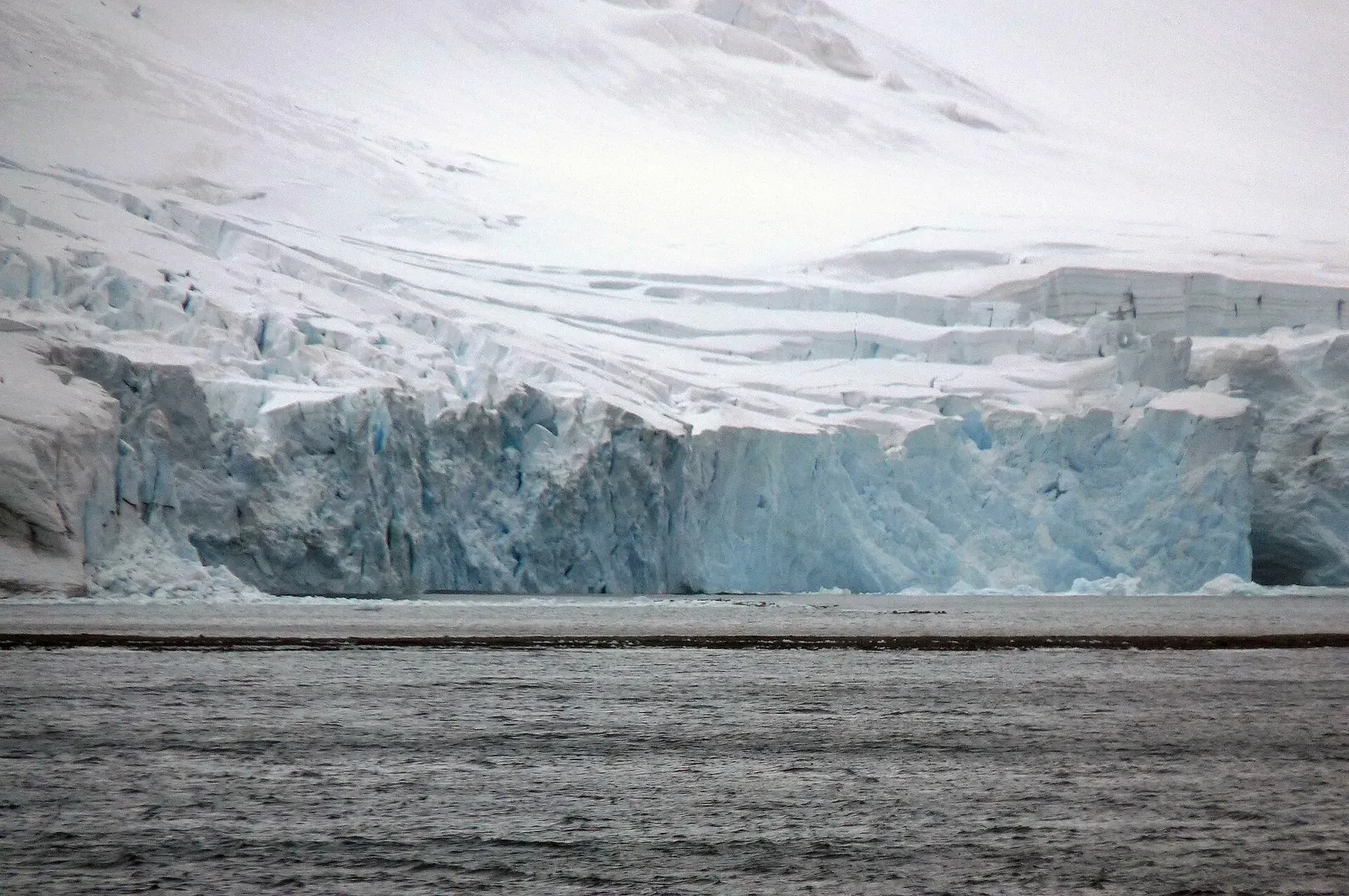
Chinstrap colony and seal haul-outs in McFarlane Strait
Photo: michael clarke stuff · CC BY-SA 2.0
Half Moon Island is a 171-hectare crescent in McFarlane Strait, 1.35 km off the Burgas Peninsula of Livingston Island, built from gravel bars tying outcrops of volcanic bedrock together. About 2,000 pairs of chinstrap penguins breed on it, Weddell and Antarctic fur seals haul out on its beaches, and it is uninhabited and reachable only by sea or helicopter.
Where it is and how deep
62.5900° S, 59.9100° WApproximate position — the dashed circle shows where the site lies; your operator's briefing has the mooring.
The dive
The island is small, 171 hectares, and its shape comes from gravel bars, tombolos, tying several volcanic bedrock islands together into one crescent. It lies in McFarlane Strait, 1.35 km north of the Burgas Peninsula on Livingston Island, and there is no way to reach it except by sea or helicopter, which in practice means a Zodiac off an expedition ship anchored offshore.
The wildlife is the reason ships stop. Around 2,000 pairs of chinstrap penguins breed on the island, Weddell seals and Antarctic fur seals haul out regularly on the beaches, and southern elephant seals have been recorded here too. The island is designated an Important Bird Area, so the shore programme is run to keep distance from the colony and dive plans are fitted around the landing schedule rather than the other way round.
Marine life and season
- Penguins
- Seals & sea lions
| Jan | Feb | Mar | Apr | May | Jun | Jul | Aug | Sep | Oct | Nov | Dec |
|---|---|---|---|---|---|---|---|---|---|---|---|
| Prime | Prime | Good | Off-season | Off-season | Off-season | Off-season | Off-season | Off-season | Off-season | Good | Prime |
Season follows Antarctic Peninsula: Expedition ships operate only during the austral summer; the peninsula is inaccessible to tourism the rest of the year.
Know before you go
- Weddell and Antarctic fur seals haul out on the beaches and elephant seals have been recorded, so entries and exits are planned away from occupied beaches and divers follow the guide's line.
- The island is uninhabited and reachable only by sea or helicopter, so there is no shore support of any kind; all cover, including any evacuation, comes from the ship and its Zodiacs.
Photos from Half Moon Island
Joseph W. Holliday · CC BY-SA 4.0
W. Bulach · CC BY-SA 4.0
Apcbg · CC BY-SA 3.0
Questions divers ask
When can you visit Half Moon Island?+
Peak visitation runs from November to March, the season when Antarctic cruises operate. Outside that window there is no scheduled way to reach the island, which is uninhabited and accessible only by sea or helicopter.
How deep are the dives at Half Moon Island?+
Polar dive operations on this coast work to a maximum of around 20 m. Nothing more specific is published for Half Moon Island: no depth profile, visibility or current figures, and no described underwater route. Dives are a Zodiac operation planned on the day around ice, weather and the landing schedule.
Sources
- Half Moon Island — Wikipedia
- Polar Diving — Oceanwide Expeditions
Photo credits
- A jagged volcanic rock spire on Half Moon Island under blue sky with a small boat offshore by michael clarke stuff, CC BY-SA 2.0, via Wikimedia Commons
- A rusted 1968 boat wreck on the gravel beach of Half Moon Island with chinstrap penguins nearby by Joseph W. Holliday, CC BY-SA 4.0, via Wikimedia Commons
- Bizarre snow-streaked rock towers along the ridge of Half Moon Island by W. Bulach, CC BY-SA 4.0, via Wikimedia Commons
- Argentina's red-roofed Cámara Base station on the snowy shore of Half Moon Island by Apcbg, CC BY-SA 3.0, via Wikimedia Commons
In The Logbook
- Where to dive with seals and sea lionsBig animals · 17 min read
- Cold-water diving: is it worth the drysuit?Cold water · 8 min read
More dive sites in Antarctic Peninsula
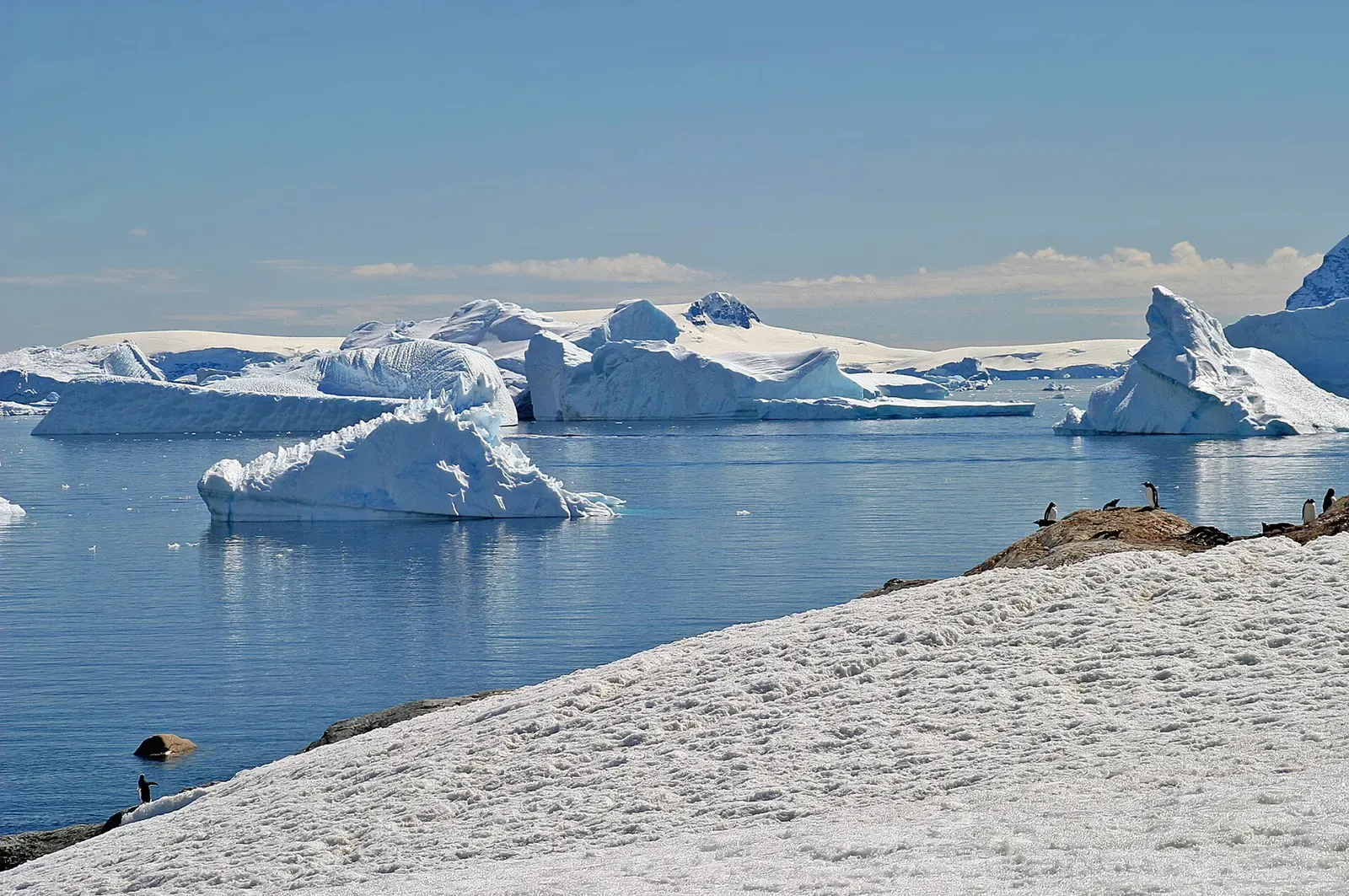
The peninsula's largest gentoo colony, 6,500 pairs
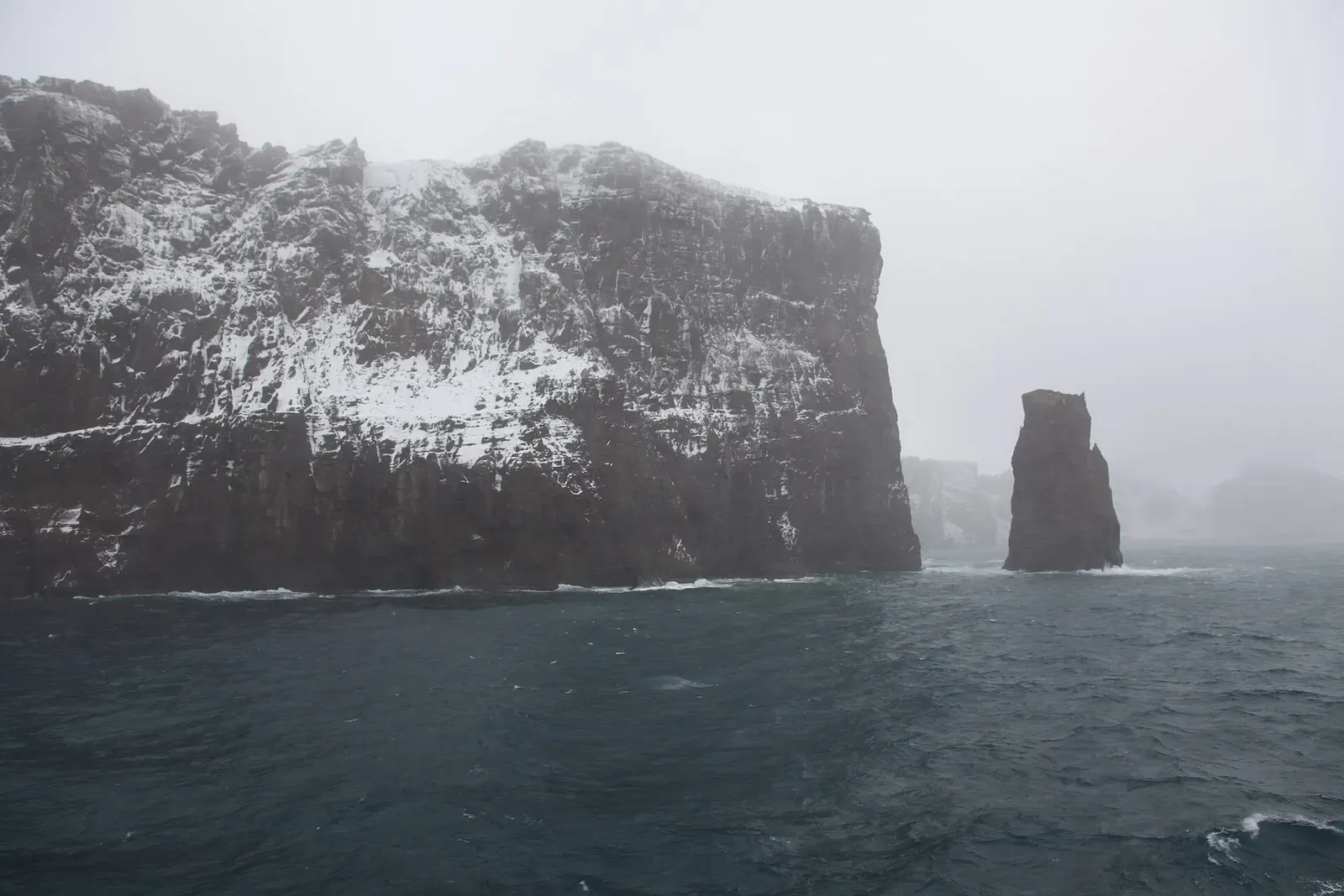
Dive inside the flooded caldera of an active volcano
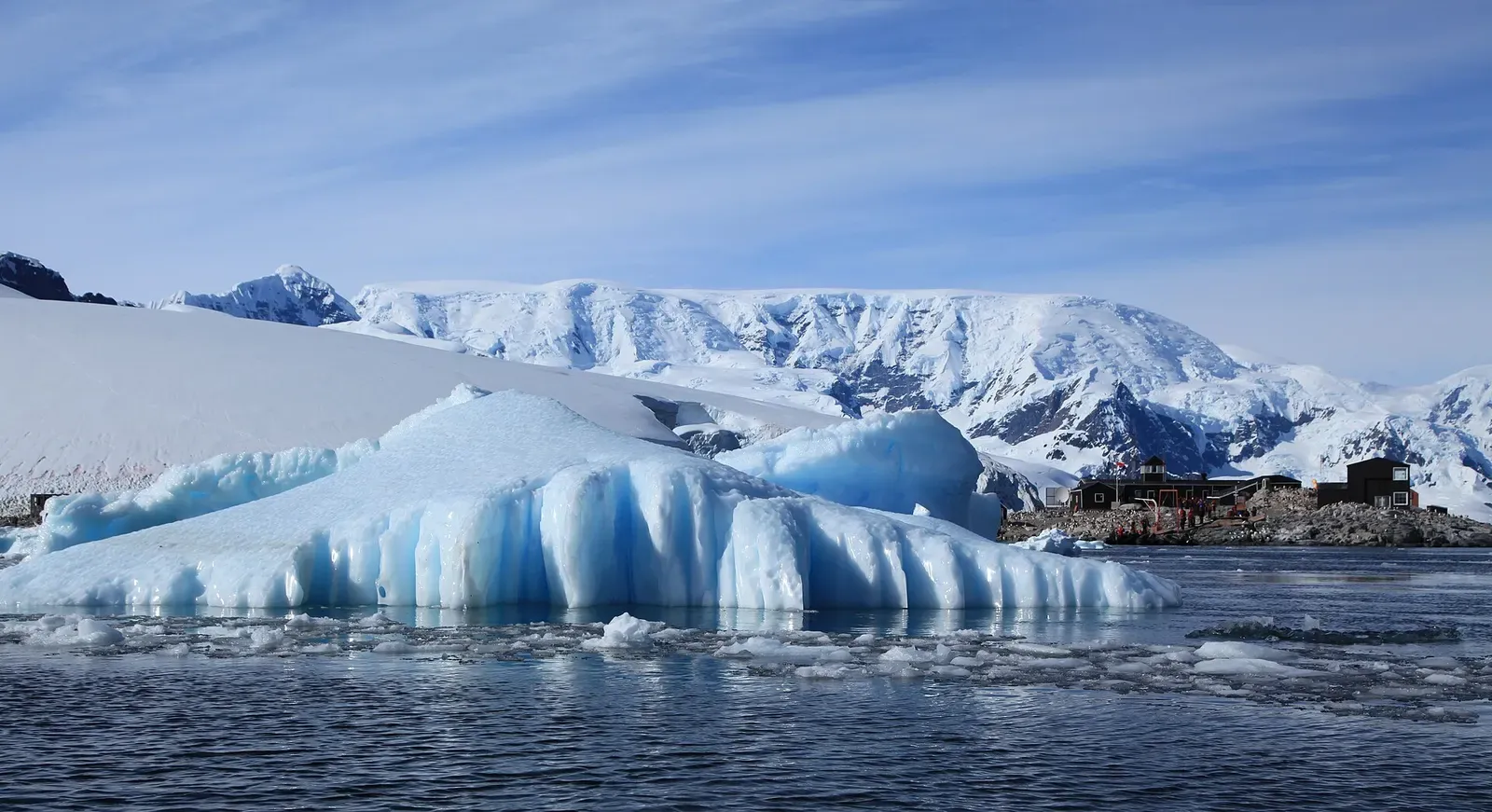
A tidal current keeps this glacier-backed bay ice-free
Similar dives elsewhere
A documented walrus haul-out inside a national park
Dahlia anemones in their hundreds, reached on a short slack-water window
Channel & pass
Velikaya Salma Strait
White Sea · Russia
Sponge and hydroid gardens fed by a strong tidal flow


Swim straight into a giant tidal pothole