Antarctic Peninsula · Antarctica · Lagoon · Channel & pass
Deception Island
Dive inside the flooded caldera of an active volcano
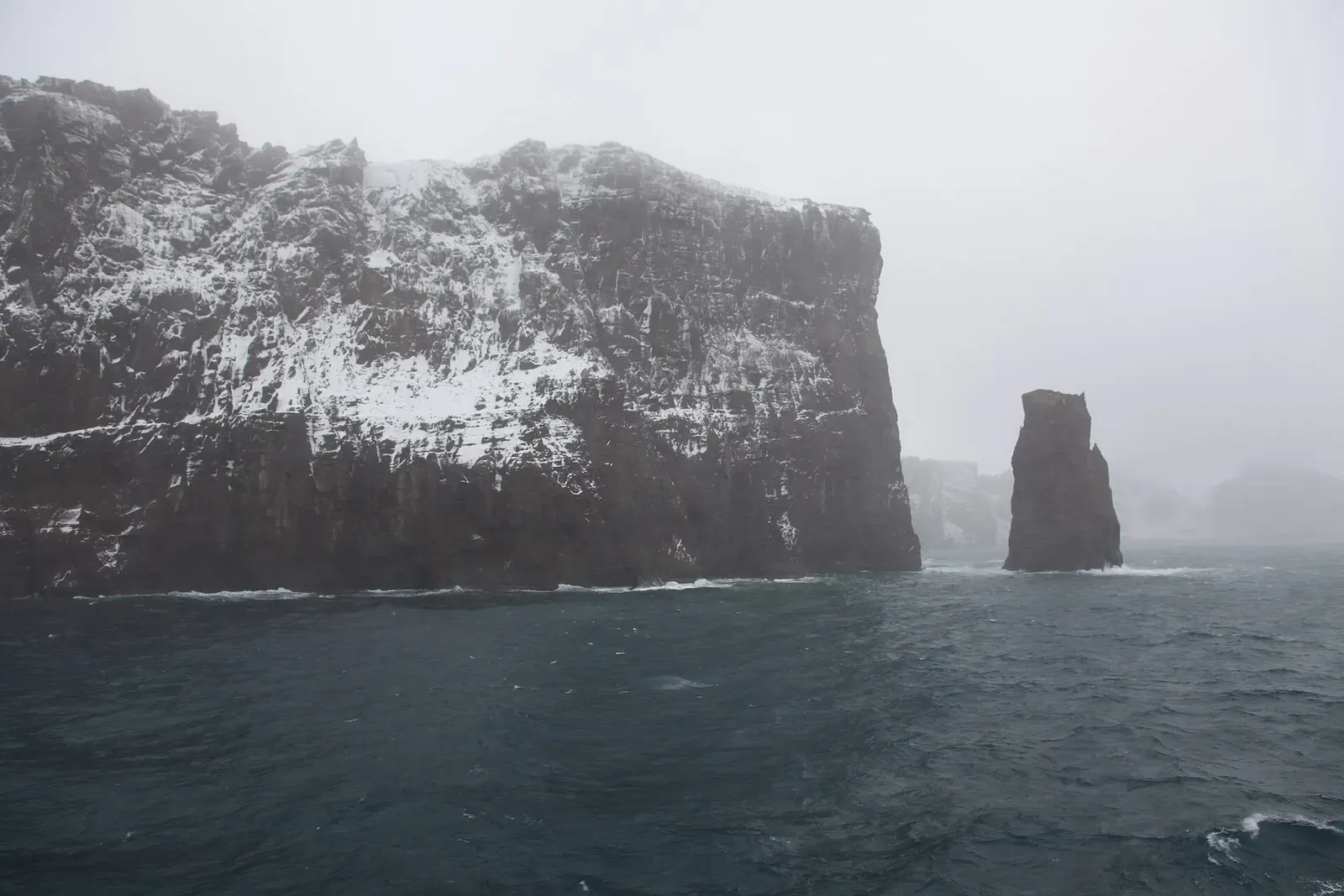
Photo: Liam Quinn from Canada · CC BY-SA 2.0
Deception Island is a flooded volcanic caldera in the South Shetlands, entered through Neptune's Bellows, a channel only 560 m wide that opens into the 10 by 7 km basin of Port Foster. Ships anchor inside a large, usually safe natural harbour, and the diving works the black volcanic margins of a seabed the volcano itself keeps rearranging.
Where it is and how deep
63.0000° S, 60.5667° WApproximate position — the dashed circle shows where the site lies; your operator's briefing has the mooring.
The dive
Everything starts with the passage in. Neptune's Bellows, on the southeast side of the island, is 560 m wide and is the only entrance to Port Foster, and the wind that gave the channel its name gusts in and out of it hard enough to be felt from the deck. Inside, the caldera opens into a basin roughly 10 by 7 km across with a flat floor lying as deep as 170 m, far below anything a diver goes near; polar dive operations here work to a maximum of around 20 m. Zodiacs, which is how every dive on this coast is launched, work the shallow margins instead.
The shoreline is black volcanic sand, and in places it is warm enough that digging into the beach produces a hole that fills with water you can bathe in. The harbour floor is why two parts of Port Foster are collectively protected as Antarctic Specially Protected Area No. 145: the benthic zone here is naturally disturbed by the volcanic activity, which makes it of great ecological interest and puts limits on where anyone may get in the water. Confirm with the expedition leader which parts of the basin fall inside the protected areas before a dive is planned.
Wildlife is largely a topside matter. Baily Head, on the island, holds a breeding colony of about 100,000 pairs of chinstrap penguins, and it is visited as a landing rather than as a dive. Inside the caldera the interest is the volcanic ground itself, the sand, the heat still in it, and a seabed community that is periodically wiped over by the volcano rather than left to settle.
Background
Industrial whaling ran from Whalers Bay, a cove bordered by black sand beach, between 1906 and 1931. The volcano has not been quiet since: historical eruptions occurred in 1839-1842, 1967, 1969 and 1970, and the activity in 1967 and 1969 destroyed the scientific stations then standing on the island. That same volcanic disturbance is what makes the benthic zone of Port Foster ecologically distinctive enough to hold protected status today.
Marine life and season
The sources we used don't single out particular species here.
| Jan | Feb | Mar | Apr | May | Jun | Jul | Aug | Sep | Oct | Nov | Dec |
|---|---|---|---|---|---|---|---|---|---|---|---|
| Prime | Prime | Good | Off-season | Off-season | Off-season | Off-season | Off-season | Off-season | Off-season | Good | Prime |
Season follows Antarctic Peninsula: Expedition ships operate only during the austral summer; the peninsula is inaccessible to tourism the rest of the year.
Know before you go
- Wind funnels through Neptune's Bellows, gusting in and out of the 560 m entrance, so a Zodiac transfer that is calm alongside the ship can turn rough in the channel; plans here are set on the morning.
- Deception is an active volcano, with eruptions in 1839-1842, 1967, 1969 and 1970; the 1967 and 1969 activity destroyed the scientific stations then on the island. Follow the ship's briefing on access.
Photos from Deception Island
*christopher* · CC BY 2.0
Christopher.Michel · CC BY 2.0
Dive videos
Diving in Antarctica (Deception Island) · Blanca Figuerola on YouTube
Questions divers ask
What is Neptune's Bellows?+
It is the channel on the southeast side of Deception Island, only 560 m wide, that forms the entrance to Port Foster. Ships pass through it to reach the harbour inside the caldera, and the gusting wind that gave it its name can make the passage rough.
Is Deception Island still an active volcano?+
Yes. Historical eruptions occurred in 1839-1842, 1967, 1969 and 1970, and the 1967 and 1969 activity destroyed the scientific stations then on the island. Where landings and dives are permitted inside the caldera follows the guidance given on board.
Sources
- Deception Island — Wikipedia
- Port Foster — Wikipedia
- Neptune's Bellows — Wikipedia
- Polar Diving — Oceanwide Expeditions
Photo credits
- The narrow cliff-lined entrance of Neptune's Bellows into Deception Island's flooded caldera by Liam Quinn from Canada, CC BY-SA 2.0, via Wikimedia Commons
- Weathered rock pillars rising from the sea at the entrance to Port Foster, Deception Island by *christopher*, CC BY 2.0, via Wikimedia Commons
- Ruined whaling station buildings and a memorial cross on the shore of Deception Island by Christopher.Michel, CC BY 2.0, via Openverse
In The Logbook
- Why you get cold diving, even in a wetsuitBody & health · 8 min read
- How long to wait before flying after divingBody & health · 8 min read
- Cold-water diving: is it worth the drysuit?Cold water · 8 min read
More dive sites in Antarctic Peninsula
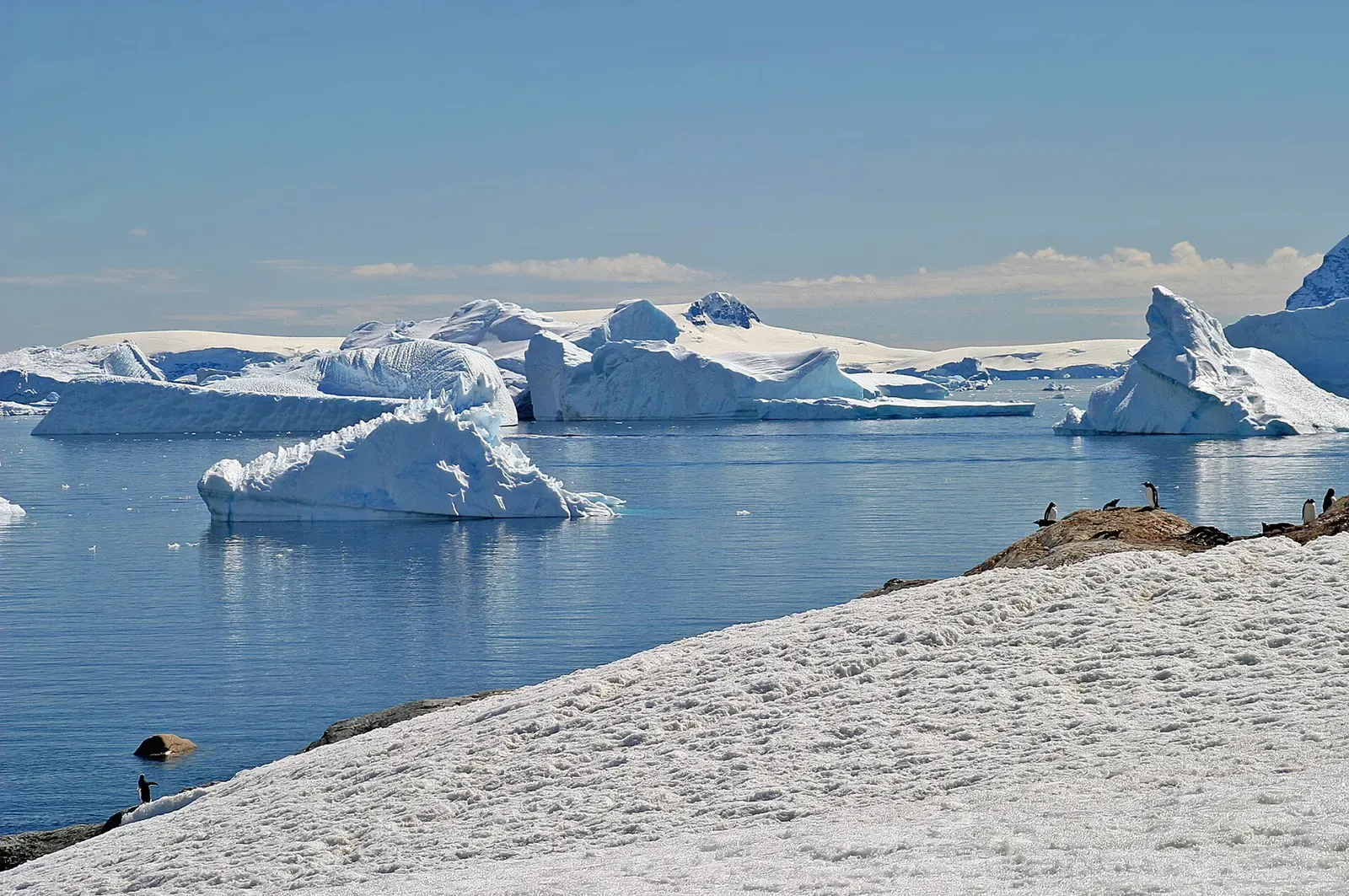
The peninsula's largest gentoo colony, 6,500 pairs
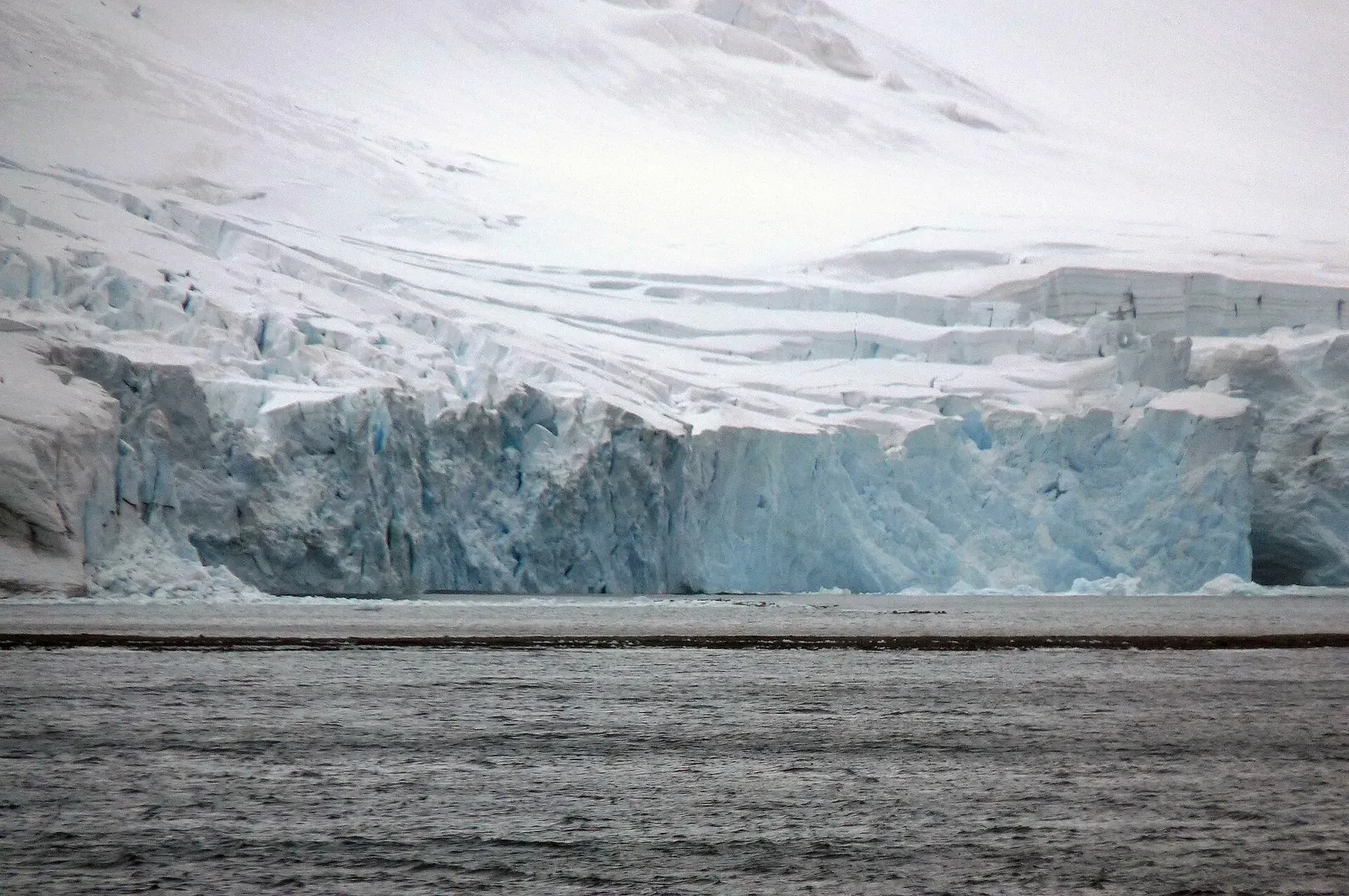
Chinstrap colony and seal haul-outs in McFarlane Strait
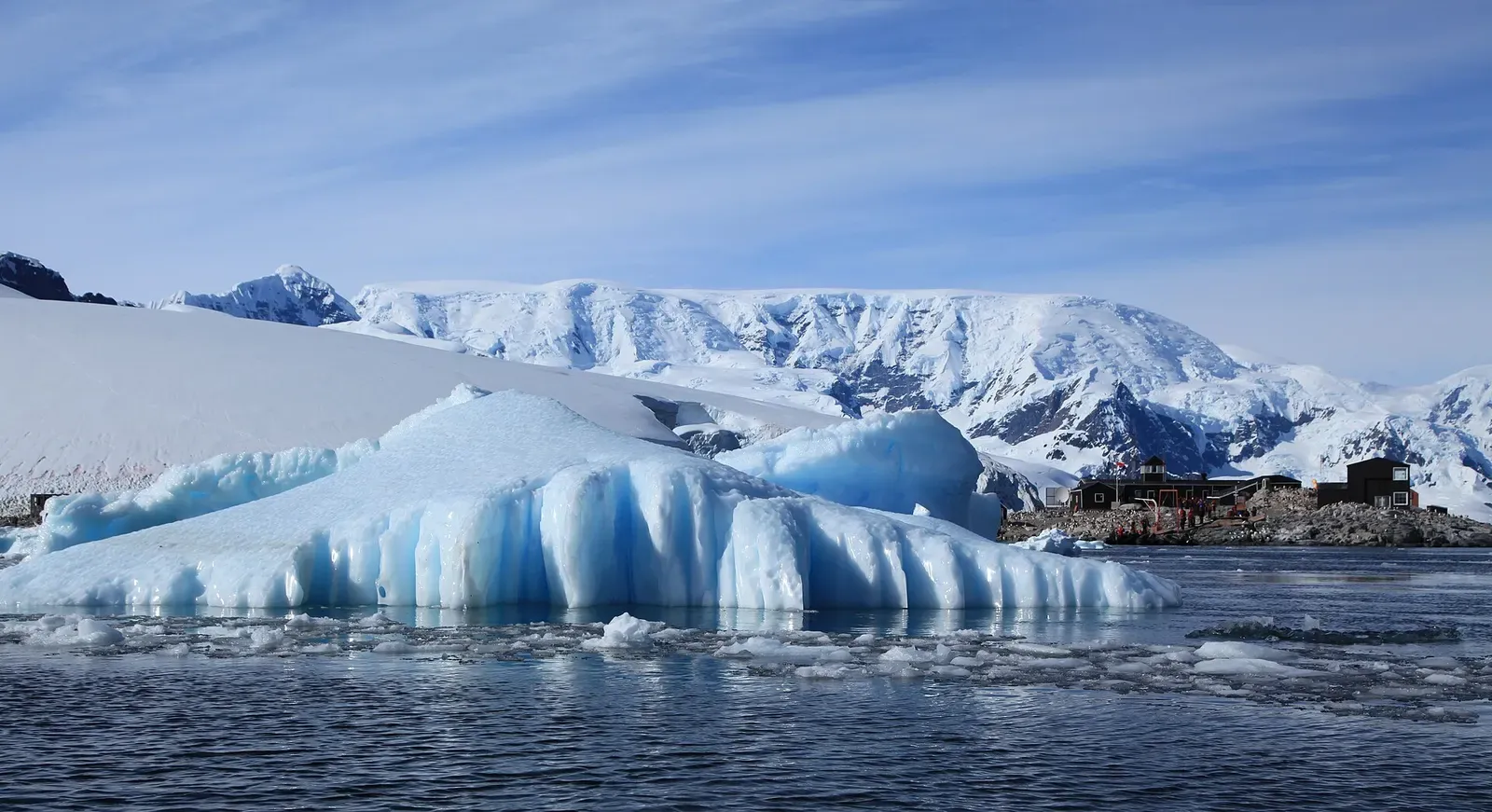
A tidal current keeps this glacier-backed bay ice-free
Similar dives elsewhere
Dozens of blue-spotted stingrays in the lagoon's main channel
Two resident dugongs graze the seagrass in a bay you wade into
A long, well-lit tunnel through the rock of a sheltered lagoon
.jpg)

The tide carries divers between Dalkey Island and the mainland