
Coral Triangle · Philippines
Apo Island
A community-run no-take reef since 1982, with turtles on nearly every dive
Photo: Anna Varona · CC BY 4.0
Apo Island is a small volcanic island off the southern tip of Negros Oriental whose community closed part of its reef to fishing in 1982, one of the earliest locally run marine sanctuaries in the Philippines. The reef has recovered into dense hard coral stacked down the slopes, with green and hawksbill turtles on nearly every dive, banded sea kraits, schooling jacks and barracuda off the points, and walls with overhangs and caverns on the exposed sides. Sites ring the island and are dived on outrigger day trips from the Dauin coast or from the island's own small resorts.
About diving in Apo Island
Diving Apo is a committed trip for most people: an outrigger crossing from the Negros coast, two or three dives with the surface interval spent ashore, and sanctuary and landing fees paid on arrival. A handful of small resorts on the island take divers who want to stay, with the sanctuary reef a walk from the beach, but the bulk of the traffic is day boats out of Dauin's resorts and the Malatapay landing in Zamboanguita.
Sites ring the island, from sheltered coral on the lee side to exposed points where the tide pushes hard enough that the dive becomes a one-way drift and the boatman follows the bubbles to pick divers up downstream. The reef is hard coral grown over volcanic rock, with plate and boulder coral stacked down the slope, seaward drop-offs broken by overhangs and caverns, and shallow bommies that snorkellers work from the surface. Guides read the tide before choosing which side to drop on.
The sanctuary is the reason the island is famous, and its recent history matters. Closed to fishing by the community in 1982 with Silliman University's backing, it rebuilt fish stocks around the whole island and became the model for hundreds of village-run reserves across the Philippines. Typhoons in 2011 and 2012 then drove storm surge across it and destroyed an estimated 99 per cent of its coral, while the reefs on the north side were spared. Rubble has since been stabilised with mesh to help new coral settle, and the turtles never left.
Apo suits divers who want coral, turtles and schooling fish rather than critters. The lee-side slopes are easy enough for newly certified divers, while Coconut Point and Mamsa Point run as drifts for divers used to current and carrying a surface marker buoy. Two days covers it, one for the drifts and one for the walls and slopes. Divers after frogfish, seahorses and flamboyant cuttlefish on black sand should stay on the Dauin coast, where the diving is the opposite of Apo's.
Best time to dive Apo Island
| Jan | Feb | Mar | Apr | May | Jun | Jul | Aug | Sep | Oct | Nov | Dec | |
|---|---|---|---|---|---|---|---|---|---|---|---|---|
| Season | Fair | Fair | Good | Prime | Prime | Good | Good | Good | Good | Good | Good | Fair |
| Sea surface | 28°C82°F | 27°C81°F | 27°C81°F | 28°C82°F | 29°C84°F | 29°C84°F | 29°C84°F | 29°C84°F | 29°C84°F | 29°C84°F | 29°C84°F | 28°C82°F |
| Daytime high | 29°C84°F | 29°C84°F | 30°C86°F | 31°C88°F | 31°C88°F | 31°C88°F | 29°C84°F | 30°C86°F | 30°C86°F | 30°C86°F | 29°C84°F | 29°C84°F |
| Rain | 139 mm5.5 in | 97 mm3.8 in | 91 mm3.6 in | 79 mm3.1 in | 154 mm6.1 in | 252 mm9.9 in | 277 mm10.9 in | 219 mm8.6 in | 214 mm8.4 in | 258 mm10.2 in | 219 mm8.6 in | 179 mm7.0 in |
| Jan | Feb | Mar | Apr | May | Jun |
|---|---|---|---|---|---|
| Fair | Fair | Good | Prime | Prime | Good |
| Sea surface | |||||
| 28°C82°F | 27°C81°F | 27°C81°F | 28°C82°F | 29°C84°F | 29°C84°F |
| Daytime high | |||||
| 29°C84°F | 29°C84°F | 30°C86°F | 31°C88°F | 31°C88°F | 31°C88°F |
| Rain | |||||
| 139 mm5.5 in | 97 mm3.8 in | 91 mm3.6 in | 79 mm3.1 in | 154 mm6.1 in | 252 mm9.9 in |
| Jul | Aug | Sep | Oct | Nov | Dec |
|---|---|---|---|---|---|
| Good | Good | Good | Good | Good | Fair |
| Sea surface | |||||
| 29°C84°F | 29°C84°F | 29°C84°F | 29°C84°F | 29°C84°F | 28°C82°F |
| Daytime high | |||||
| 29°C84°F | 30°C86°F | 30°C86°F | 30°C86°F | 29°C84°F | 29°C84°F |
| Rain | |||||
| 277 mm10.9 in | 219 mm8.6 in | 214 mm8.4 in | 258 mm10.2 in | 219 mm8.6 in | 179 mm7.0 in |
2011–2025 averages. Sea surface: NOAA Coral Reef Watch, measured at the surface, so deeper water can run colder. Daytime high and rain: NASA POWER.
March to May is the settled end of the dry season: rain is least likely, and April and May, the hottest months, give the calmest crossings and the best chance of diving the current-swept points on the north side. June to November is the south-west monsoon, hot, humid and wetter, and typhoon season runs from July to October, although storms hit the Philippines unevenly and the Visayas are dived right through it. December to February brings the north-east trade winds and the coolest weather of the year; squalls can make the open-water crossing from Negros choppy and keep boats off the exposed points, so leave a spare day. The water stays between about 25 and 30 °C all year.
Apo Island water temperature and weather by month
The sea surface stays between 27 and 29 °C (81–84 °F) all year. Most rain falls from June to November, peaking at about 280 mm (11 in) in July; February to April are the driest. Daytime highs sit around 30 °C (86 °F) all year. The coldest water here is about 25 °C (77 °F), so pack a 3 mm full suit.
Dive types & marine life
Green and hawksbill turtles graze the shallows off Apo in any month and are the reliable sighting, with banded sea kraits working the reef and jacks, barracuda and dogtooth tuna schooling off the current-swept points. April and May give the calmest crossings and the clearest water on the exposed sides.
- Reef
- Coral garden
- Wall
- Drift
- Sea turtles
- Sea snakes
- Trevally & jacks
- Barracuda
- Tuna
- Reef fish swarms
- Pristine corals
- Nudibranchs
Best dive sites in Apo Island
- 1
Coconut Point
The island's signature drift on the north tip: jacks, barracuda and big table corals in strong current.
- 2
The Chapel
Coral garden dropping to a wall of overhangs and small caverns, with its foot at about 30 m.
- 3
Rock Point West
The densest hard coral around Apo, with frogfish, cuttlefish and sea kraits in the 5–18 m band.
- 4
Mamsa Point
Named for the jacks that school here in huge numbers; eagle rays and reef sharks when the current runs.
- 5
Apo Island Marine Sanctuary
The 1982 no-take reef, a 5–25 m slope hit hard by the 2011–12 typhoons and under restoration.
- 6
Katipanan Reef
Gentle slope with its best coral above 18 m, the usual site for check-out and first dives.
- 7
Largahan
Easy north-west wall and slope where volcanic gas bubbles rise from the dark sand.
- 8
Rock Point East
Reef finger off the south-east corner that catches the current, and with it schools and pelagics.
Site guides
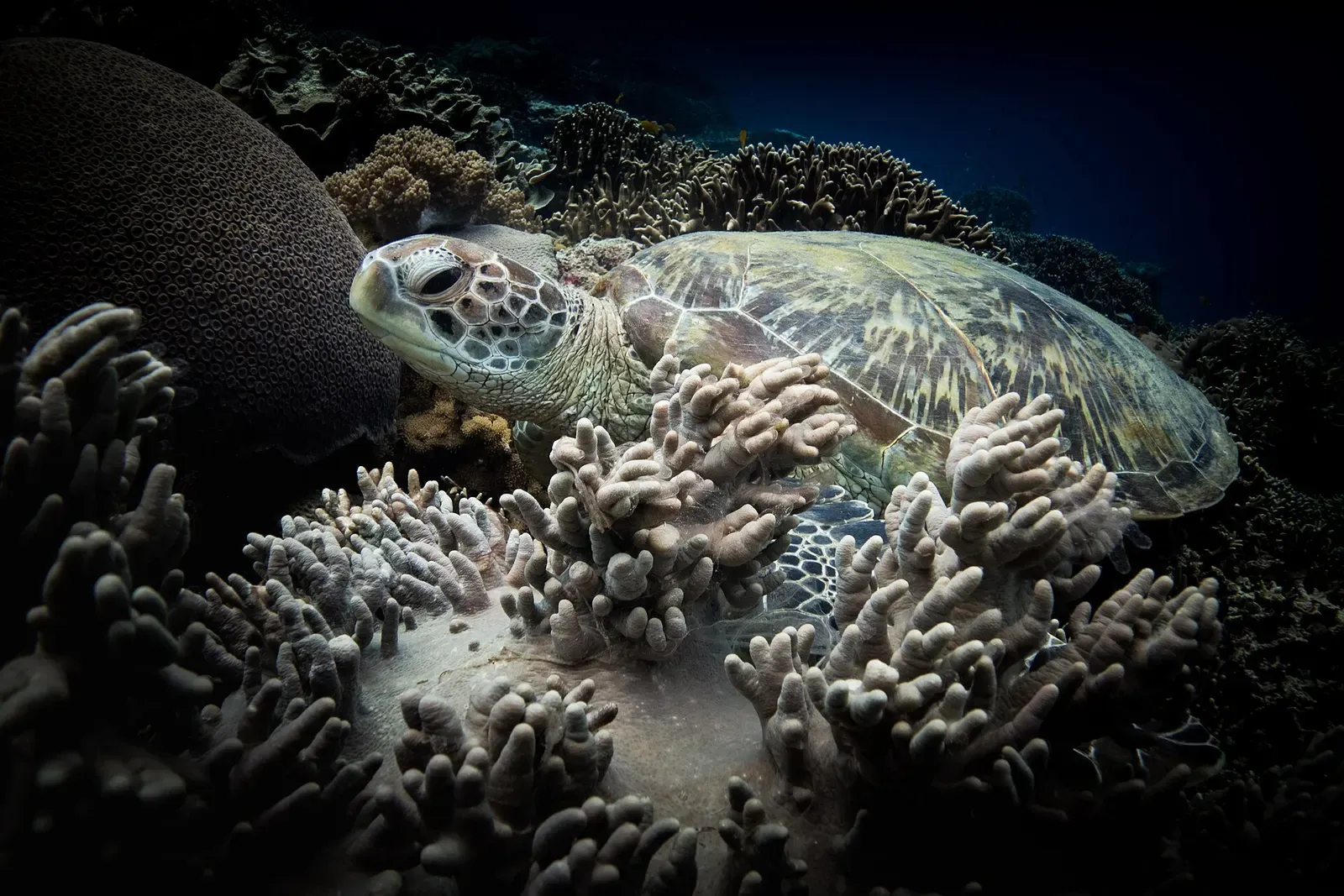
A no-take reef since 1982, with turtles on nearly every dive
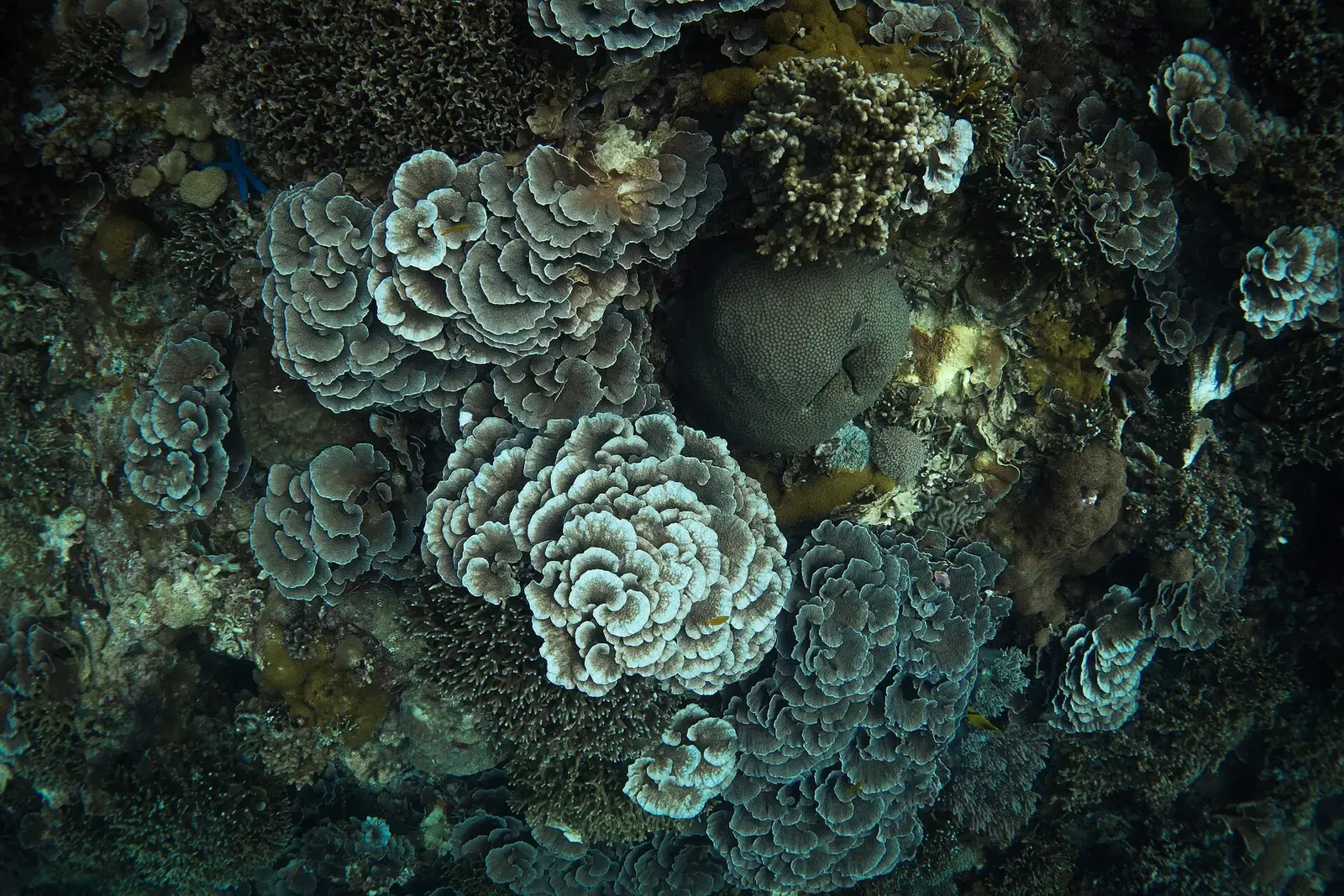
Coral gardens on a gentle slope, with the best of the reef above 18 m
A reef finger on the island's southeast corner, fed by the prevailing current
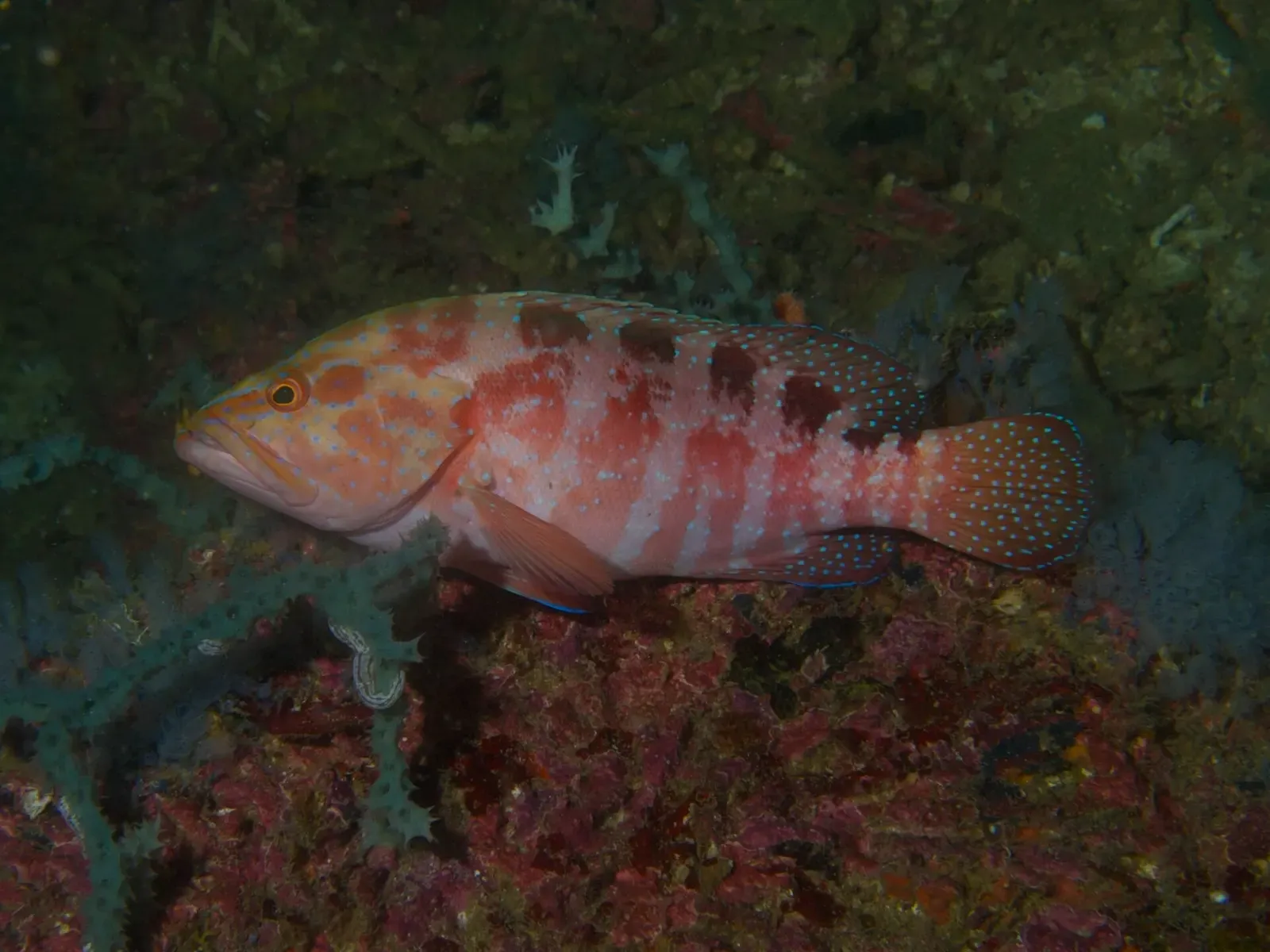
Frogfish and cuttlefish in the island's densest hard coral
A wall of overhangs and caverns with its foot at about 30 m
How to get to Apo Island
Day boats run from the dive resorts along the Dauin coast, or can be hired at the Malatapay landing in Zamboanguita for a crossing of roughly half an hour to forty-five minutes in an outrigger over open water. Staying on the island means a basic resort or homestay with limited power and water; most divers base in Dauin or Dumaguete and come across for the day.
Photos from Apo Island
Eric Crandall · CC BY 4.0
bortescristian · CC BY 2.0
Anna Varona · CC BY 4.0
Eric Crandall · CC BY 4.0
Questions divers ask
Can beginners dive Apo Island?+
Yes, on the right sites. Katipanan and the sheltered lee-side slopes keep their best reef above 18 m, and Open Water divers dive them routinely. Coconut Point and Mamsa Point are drift dives in current that can be strong enough to call a dive off, and are best left until a diver is at ease in moving water with a surface marker buoy.
How do divers get to Apo Island?+
By outrigger across about 7 km of open water. Day boats run from the dive resorts on the Dauin coast, a crossing of 35 to 40 minutes, or from the Malatapay landing in Zamboanguita, about 30 minutes. Dumaguete, 30 km north, is the usual gateway, and a few divers stay on the island in its two small resorts.
Is there a fee to dive at Apo Island?+
Yes. Every visitor pays to land and to snorkel or dive, and the rate inside the marine sanctuary is higher than outside it. The money goes towards keeping the sanctuary clean and in good condition. Rates change, so check the current figure with the dive centre and budget for it on top of the dive price.
Is Apo Island the same as Apo Reef?+
No. Apo Island is a small volcanic island off southern Negros in the Visayas; Apo Reef lies off Occidental Mindoro, about 500 km away, and is usually reached by liveaboard. Both are protected areas and both are well-known dives, which is why the names get mixed up.
What is the water temperature at Apo Island?+
About 25 to 30 °C through the year. The coolest weather comes with the north-east trade winds from December to February, January being the coolest month, and May is the hottest month of the year.
Sources
- Diving Apo Island, Dumaguete — Dive The World
- Apo Island — Wikipedia
- Apo Island — Wikivoyage
- Apo Island: The Philippines' Marine Conservation Success Story — Divernet
- Dauin Dive Sites and Day Trips — Sea Explorers
- Hope amid devastation in one of the world's best marine sanctuaries — Greenpeace Philippines
- Apo Island Marine Sanctuary: Steps to Recovery from Storm Damage — Coastal Conservation and Education Foundation
- Apo Island — Marine Conservation Philippines
- Philippines scuba diving: regions and seasons — Dive The World
Photo credits
- A green sea turtle rests on hard coral in the shallows of Apo Island, Negros Oriental. by Anna Varona, CC BY 4.0, via Wikimedia Commons
- A snorkeller floats above columns of Isopora pillar coral in clear shallow water at Apo Island. by Eric Crandall, CC BY 4.0, via Wikimedia Commons
- Apo Island seen across open sea from the Dauin beach, with an outrigger boat in the foreground. by bortescristian, CC BY 2.0, via Openverse
- Dense folds of hard coral cover the reef slope at Apo Island. by Anna Varona, CC BY 4.0, via Wikimedia Commons
- Branching pillar coral with small orange anthias sheltering between the columns at Apo Island. by Eric Crandall, CC BY 4.0, via Wikimedia Commons
Embed
Run a dive centre, club or blog? Embed this map of 12 dive sites near Apo Island on your own page.
In The Logbook
- Where to dive with sea turtlesBig animals · 15 min read
- Cheapest places to scuba dive, and the catchTrip planning · 15 min read
Similar destinations

Shore-accessible walls from 5 m into blue, dived one boat at a time

Black-sand shore muck with mandarinfish spawning at dusk

A permanent tornado of jacks and barracuda on a wall from 6 m


Banded sea kraits on Cervera Shoal, an hour out of Alona