
Coral Triangle · Philippines
Balicasag
A permanent tornado of jacks and barracuda on a wall from 6 m
Photo: Thomas Brown · CC BY 2.0
Balicasag is a tiny island about 6 km off Panglao, protected as a marine sanctuary and ringed by a reef that starts shallow enough to snorkel before breaking into a wall that drops past 40 m. It holds a permanent tornado of bigeye trevally and chevron barracuda that divers swim into, and green and hawksbill turtles habituated enough to ignore fins. There is a small resort on the island, but nearly everyone arrives on the 25–30 minute bangka run from Alona Beach for a two-tank morning.
About diving in Balicasag
Diving Balicasag is a morning: boats leave Alona Beach near first light for the calmest crossing and to be on the wall before the snorkelling traffic arrives, run two tanks with the surface interval taken ashore on the island, and are back for lunch on Panglao. A handful of rooms exist on the island for anyone who wants to stay, but the traffic is overwhelmingly day boats, and sanctuary rules mean a local guide and a fee rather than free rein over the reef.
Underwater the island has one shape and repeats it. The reef top is shallow enough to snorkel, then breaks into a face that drops away steeply — so nearly every dive here is the same move: drop onto the shallows, cross to the lip, and work along the drop with open water on one shoulder. What changes is the section. Black Forest carries the black corals it is named for on the deeper slope, Cathedral Wall is cut with fissures and overhangs, and the Royal Garden's plateau sits shallow and packed with fish.
The draw is the aggregation. Bigeye trevally and chevron barracuda hold in a slow-turning column off the sanctuary side that divers can swim into, and it is there most days rather than seasonally, which is unusual enough to have made the island's reputation. Green and hawksbill turtles are resident and largely indifferent to divers. Set against that, the reef has been heavily visited for decades and the coral shows it in places — the fish, not the hard coral, are why people cross.
Best time to dive Balicasag
| Jan | Feb | Mar | Apr | May | Jun | Jul | Aug | Sep | Oct | Nov | Dec | |
|---|---|---|---|---|---|---|---|---|---|---|---|---|
| Season | Prime | Prime | Prime | Prime | Prime | Good | Fair | Fair | Fair | Good | Prime | Prime |
| Sea surface | 28°C82°F | 27°C81°F | 28°C82°F | 28°C82°F | 29°C84°F | 30°C86°F | 29°C84°F | 29°C84°F | 29°C84°F | 29°C84°F | 29°C84°F | 29°C84°F |
| Daytime high | 29°C84°F | 29°C84°F | 30°C86°F | 31°C88°F | 31°C88°F | 31°C88°F | 30°C86°F | 30°C86°F | 30°C86°F | 30°C86°F | 30°C86°F | 29°C84°F |
| Rain | 177 mm7.0 in | 108 mm4.3 in | 91 mm3.6 in | 62 mm2.4 in | 117 mm4.6 in | 192 mm7.6 in | 217 mm8.5 in | 190 mm7.5 in | 182 mm7.2 in | 223 mm8.8 in | 191 mm7.5 in | 204 mm8.0 in |
| Jan | Feb | Mar | Apr | May | Jun |
|---|---|---|---|---|---|
| Prime | Prime | Prime | Prime | Prime | Good |
| Sea surface | |||||
| 28°C82°F | 27°C81°F | 28°C82°F | 28°C82°F | 29°C84°F | 30°C86°F |
| Daytime high | |||||
| 29°C84°F | 29°C84°F | 30°C86°F | 31°C88°F | 31°C88°F | 31°C88°F |
| Rain | |||||
| 177 mm7.0 in | 108 mm4.3 in | 91 mm3.6 in | 62 mm2.4 in | 117 mm4.6 in | 192 mm7.6 in |
| Jul | Aug | Sep | Oct | Nov | Dec |
|---|---|---|---|---|---|
| Fair | Fair | Fair | Good | Prime | Prime |
| Sea surface | |||||
| 29°C84°F | 29°C84°F | 29°C84°F | 29°C84°F | 29°C84°F | 29°C84°F |
| Daytime high | |||||
| 30°C86°F | 30°C86°F | 30°C86°F | 30°C86°F | 30°C86°F | 29°C84°F |
| Rain | |||||
| 217 mm8.5 in | 190 mm7.5 in | 182 mm7.2 in | 223 mm8.8 in | 191 mm7.5 in | 204 mm8.0 in |
2011–2025 averages. Sea surface: NOAA Coral Reef Watch, measured at the surface, so deeper water can run colder. Daytime high and rain: NASA POWER.
Nov–Jun gives the calmest crossings; the south-west monsoon and typhoons make Jul–Oct unreliable and can close the exposed sides.
Best months: January, February, March, April, May, November, December
Balicasag water temperature and weather by month
The sea surface runs from 27 °C (81 °F) in February to 30 °C (86 °F) in June. Most rain falls from June to January, peaking at about 220 mm (8.7 in) in October; March and April are the driest. Daytime highs sit around 30 °C (86 °F) all year. The coldest water here is about 27 °C (81 °F), so pack a 3 mm, or even a 2 mm, suit.
Dive types & marine life
The jack and barracuda schools and the turtles are resident, so little here is strictly seasonal. Pygmy seahorses sit on the sea fans along the drop and reef sharks turn up on the deeper sections. Titan triggerfish nest on the reef top in May, June and July and defend their nests aggressively — back off horizontally rather than swimming up and over one.
- Wall
- Reef
- Drift
- Coral garden
- Sea turtles
- Trevally & jacks
- Barracuda
- Reef fish swarms
- Pygmy seahorses
- Nudibranchs
- Frogfish
- Pristine corals
Best dive sites in Balicasag
The protected shallows where Balicasag's turtles are thickest
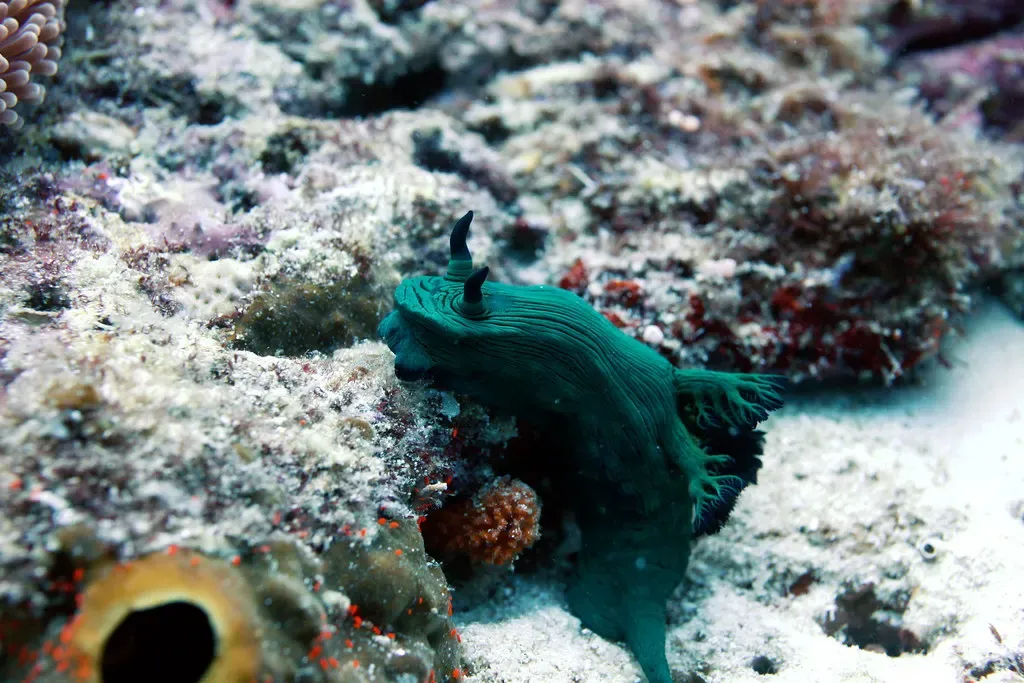
Black coral on the deeper reef, dived as a drift
Wall
Shafts of light in a cracked cavern on the north wall
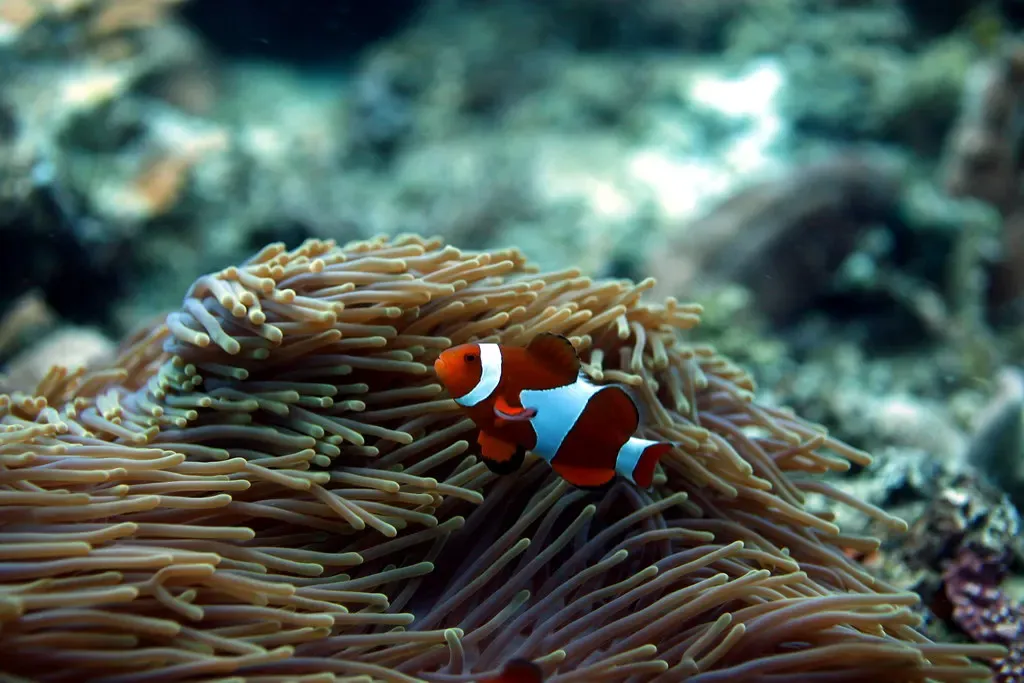
Gorgonians, overhangs, and turtles of both local species
Coral garden
A coral plateau at 18 m, swarmed by fish and turtles
Wall
The outcrop on the drop where the jacks and barracuda gather
How to get to Balicasag
There is no direct arrival: Balicasag is reached by outrigger from Alona Beach on Panglao, about 6 km and 25–30 minutes, booked through a dive shop. Trips leave early. The island is a marine sanctuary, so expect a guide, a fee and a limit on where you can go; day-trippers also come by the boatload to snorkel, which is another reason to be first on the wall.
Photos from Balicasag
Jan Hazevoet · CC BY 3.0
Marie Antoinette Calvez · CC BY-SA 4.0
Marie Antoinette Calvez · CC BY-SA 4.0
Qaalvin · CC BY 3.0
Dive videos
Diving Balicasag Bohol 2020 [4K] - The Iconic Jackfish Tornado · JayDyver on YouTube
Scuba Diving in Balicasag Island, Bohol, Philippines · Kevin's Philippine Adventures on YouTube
Photo credits
- Yellow damselfish hover over hard coral and crinoids on Balicasag's reef by Thomas Brown, CC BY 2.0, via Wikimedia Commons
- Sunset silhouettes Balicasag Island's treeline across the calm sea by Jan Hazevoet, CC BY 3.0, via Wikimedia Commons
- Outrigger boats float over the clear reef shallows of Balicasag Marine Sanctuary by Marie Antoinette Calvez, CC BY-SA 4.0, via Wikimedia Commons
- Dive boats moored over shallow reef water at Balicasag Marine Sanctuary by Marie Antoinette Calvez, CC BY-SA 4.0, via Wikimedia Commons
- Traditional outrigger dive boats beached on Balicasag Island's white sand by Qaalvin, CC BY 3.0, via Wikimedia Commons
Embed
Run a dive centre, club or blog? Embed this map of 12 dive sites near Balicasag on your own page.
In The Logbook
- Where to dive with sea turtlesBig animals · 15 min read
- What stings you underwater, and how to avoid itBody & health · 8 min read
Similar destinations
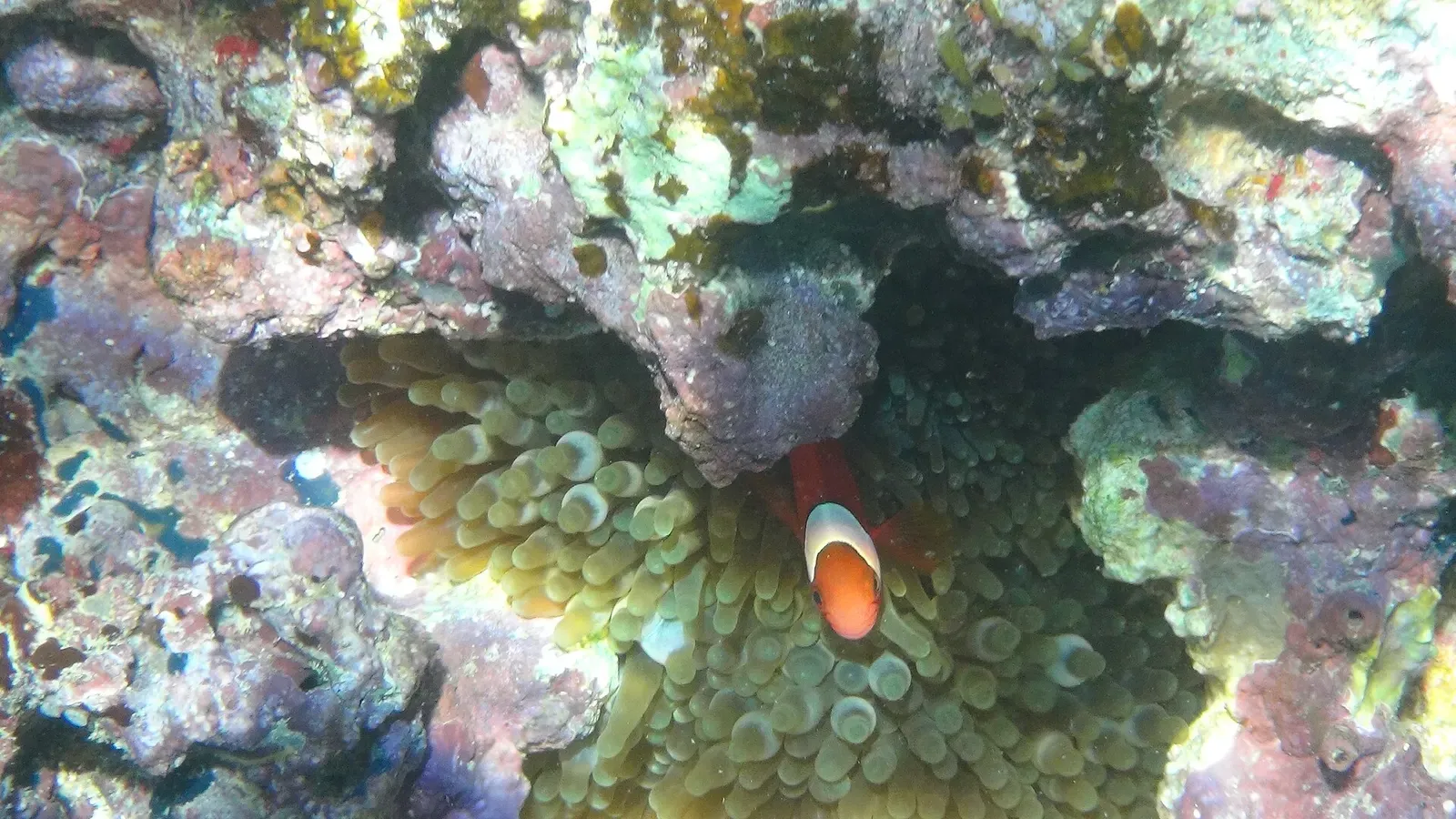
Walls from 5 m past 60, and a dive base of its own

Banded sea kraits on Cervera Shoal, an hour out of Alona

Napaling's resident sardine shoal, and the base for all of Bohol


Shore-accessible walls from 5 m into blue, dived one boat at a time