Price per dive, not price on the board
The number that matters is not what a dive costs. It is what a dive costs once you have added the flight, the bed, the boat, the park fee and the days you could not dive, and divided by the dives you actually did. On that arithmetic the famous bargains sort themselves out. Koh Tao sells an Open Water course for around 9,800 baht, and a 2026 price guide from one of its own schools puts the same course at 12,000 baht, about US$340, against US$600 to 900 at a Caribbean resort, AUD 700 and up in Australia and €450 to 600 in Egypt. Utila certifies for US$225 to 300. Dahab sells two shore dives for €45 to 47. Bonaire charges nothing per dive at all beyond the tank, and US$40 a year to use the sea.
Cheap places are cheap for a reason, and it is usually one of four: the diving is from shore, so there is no boat to pay for; the beds are cheap because the town is a backpacker town; there are enough dive centres that they compete on price; or nobody charges a park fee. The best budget destinations stack two or three of those. What you give up is just as predictable. Cheap boats are slower, smaller and further from the sites. Cheap towns are crowded in season and the reefs nearest them are worn. Cheap certification means big classes and a quick turnover of instructors. And some things never get cheaper: the flight, the insurance, a decent computer, and the marine-park fee that a well-run place charges precisely so that the reef survives being cheap to dive. This guide prices the places where the trade is worth it.
The obvious four
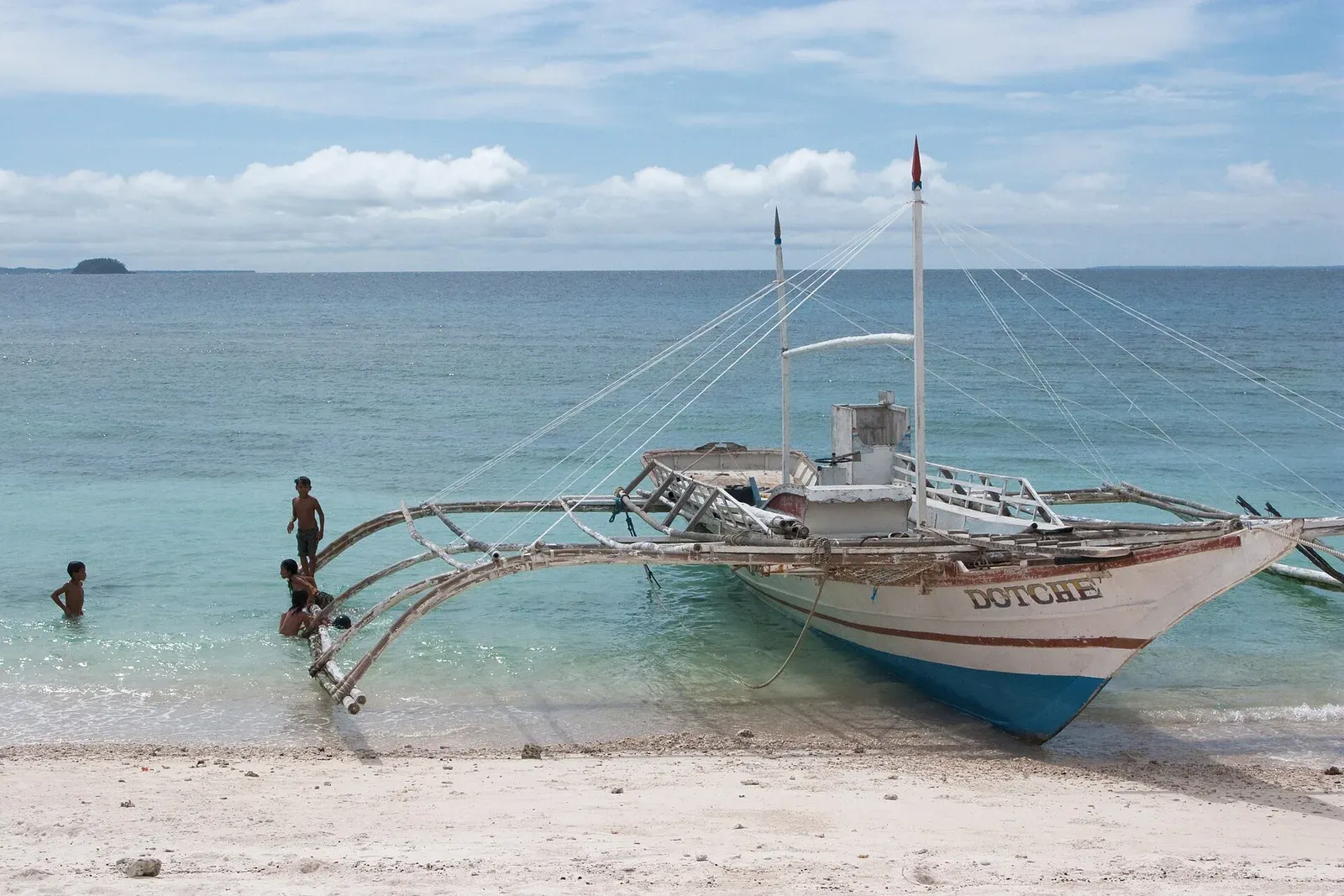
Koh Tao is one of the world’s busiest scuba-training hubs, and the reason is simple. Fifty-odd schools on a small island in the Gulf of Thailand compete for the same ferry-load of backpackers — the closest thing scuba has to a free market, as one of them puts it — so an Open Water course costs 9,000 to 12,000 baht with the kit and the boat dives included. The diving is sheltered granite boulder reefs close to shore, calm most of the year, with Twins and White Rock as the shallow training grounds and Chumphon Pinnacle and Sail Rock as the reward, where barracuda and trevally school and whale sharks pass through in spring and autumn. The HTMS Sattakut adds a purpose-sunk navy vessel between 18 and 30 m (100 ft). What you give up: crowds on every site, average visibility of 15 to 20 m, and October and November rain that turns the water green and cancels the ferry.
Utila in Honduras is the Caribbean’s answer: the cheapest Open Water courses in the region at US$225 to 300, on a small island whose dive shops line the harbour front with their own docks, so there is no marina to get to. The market is efficient enough that prices barely differ between shops, and the island certifies more new divers than anywhere else in the Caribbean. It sits on the edge of the Cayman Trench, whale sharks show up close to shore with some regularity, and the diving runs from Duppy Waters, the easy coral garden, to Black Hills, the blue-water seamount the whale sharks pass over. The trade: a ferry from La Ceiba to get there, October to January rain and reduced visibility, and reef that is pleasant rather than spectacular.
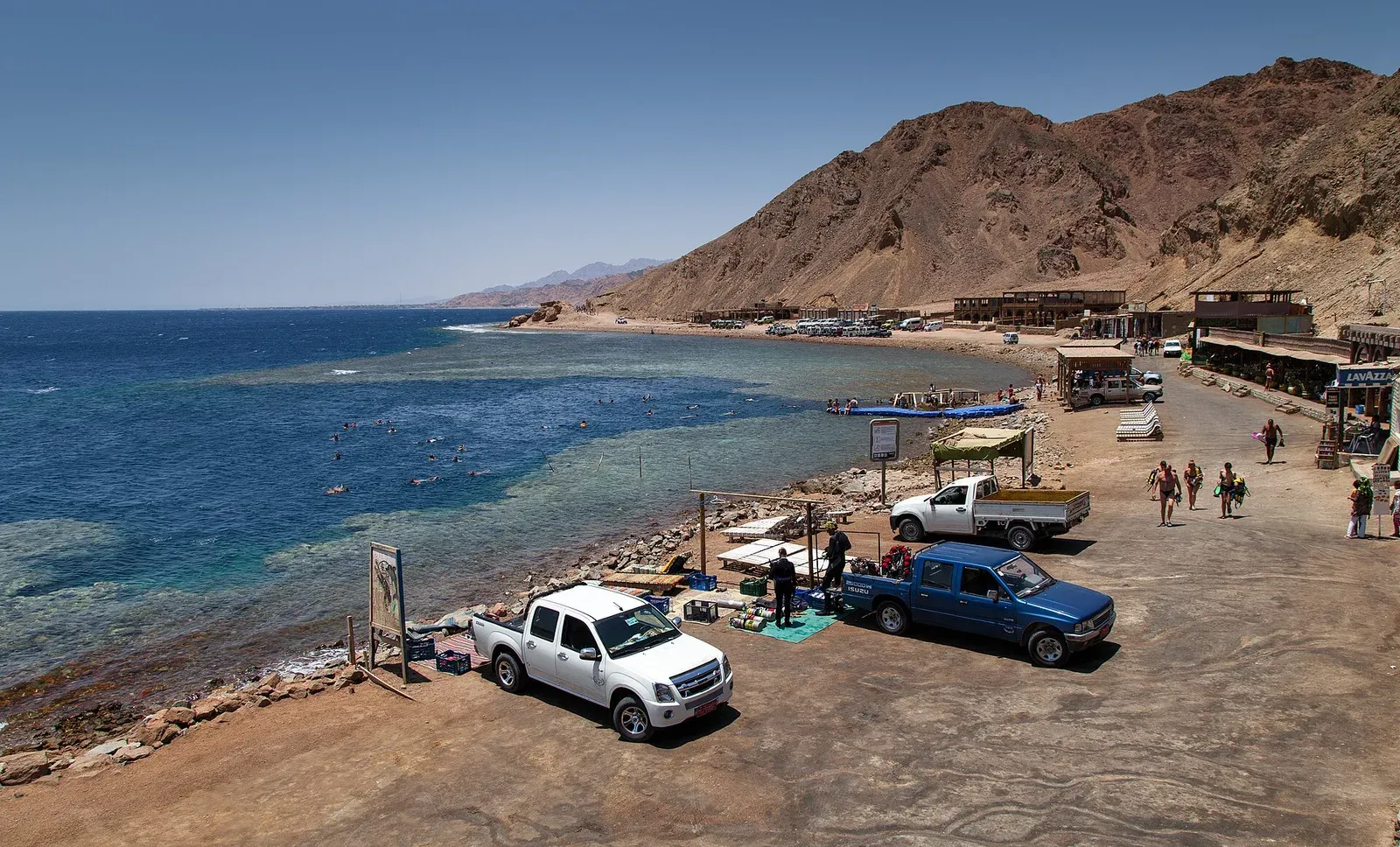
Dahab is the Red Sea’s shore-diving town. Divers walk straight off the beach into fringing reef on the Gulf of Aqaba, tanks arrive by pickup along the coast road rather than by boat, and that single fact makes it one of the cheapest places in the world to dive well: a single guided shore dive is about €30, two are €45 to 47 with €20 a day for kit, and a five-day Open Water course €260 to 302. Eel Garden and the Islands are the easy reefs, The Canyon is a fissure opening at 18 m onto a chamber floor at 30 m with no fee to reach it, and Blue Hole is a beautiful, easy dive around its rim and across the 6 m saddle, with a US$10 park fee and the Arch at 55 m left to the technical divers who have made it infamous. What you give up: a two-hour transfer from Sharm El Sheikh, camps rather than resorts, dozens of centres of which some are not properly licensed, and almost no boat diving.
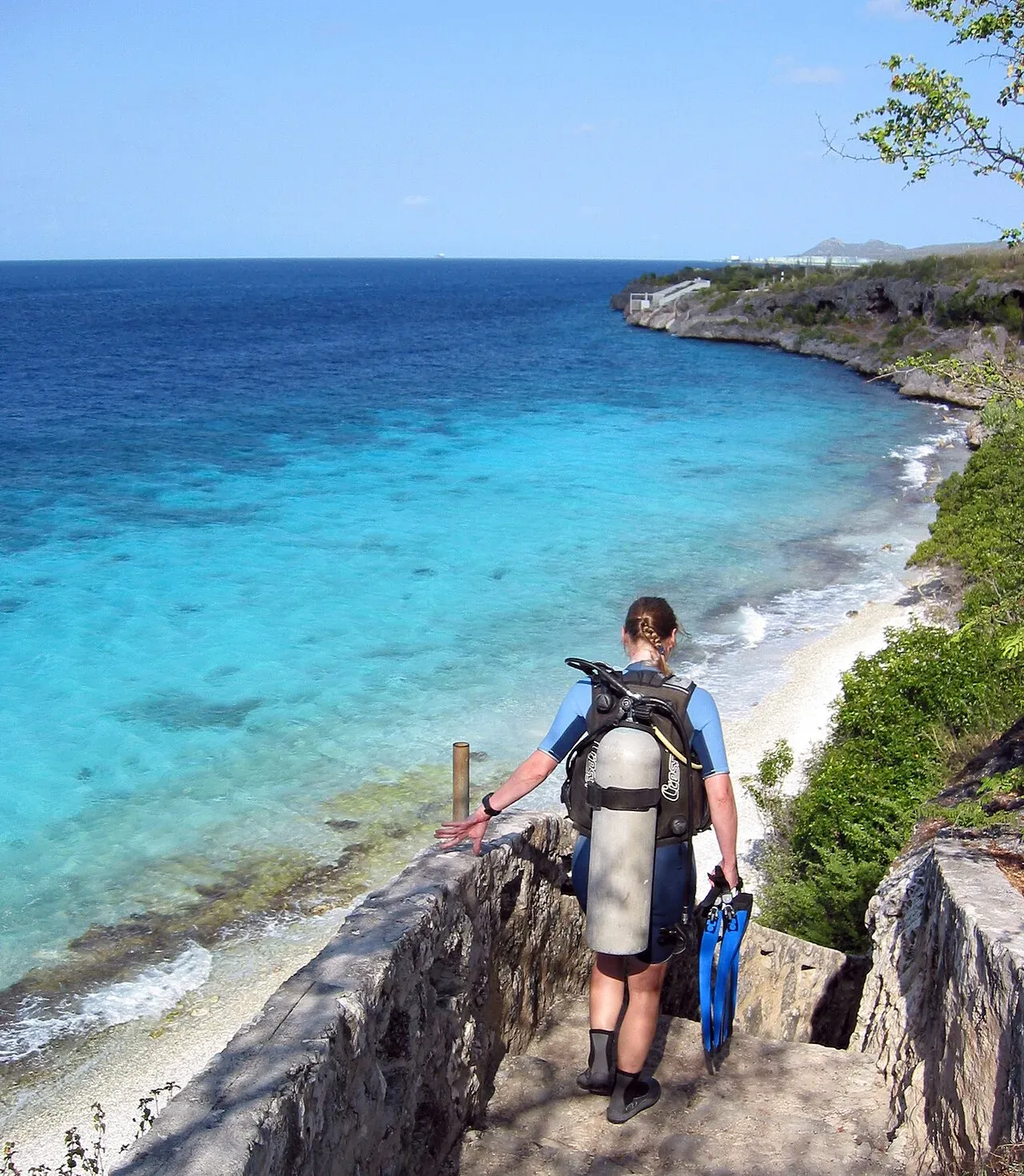
Bonaire is cheap in a different way. The whole leeward coast is a marine park with more than 60 shore sites marked by yellow-painted rocks, the reef is protected well enough that you wade in from the beach, and the routine is a rented truck, drive-through tank rentals and as many dives a day as you like. Per dive, the tank is the whole cost; per trip it is not cheap at all, because the flights, the truck and the beds are Dutch-Caribbean prices, and the US$40 nature fee, valid for a year, is compulsory before the first dive. Salt Pier is fish schooling in the shade under a working pier, Hilma Hooker a freighter on her side at 30 m reached from the road, and 1000 Steps a staircase down to a reef that tips over at 9 m. The trade is the sum, not the dive — and, the guidebooks warn, the valuables you leave in the truck.
| Site | Depth | Level | Best months |
|---|---|---|---|
| Twins Koh Tao · Thailand | 6–18 m | Beginner | Mar–May |
| Chumphon Pinnacle Koh Tao · Thailand | 14–26 m | Advanced | Mar–May |
| Duppy Waters Utila · Honduras | 6–24 m | Beginner | Mar–Aug |
| Black Hills Utila · Honduras | 10–40 m | Advanced | Mar–Aug |
| Eel Garden Dahab · Egypt | 9–18 m | Beginner | Apr–May |
| The Canyon Dahab · Egypt | 18–30 m | Advanced | Apr–May |
| Blue Hole Dahab · Egypt | 6–40 m | Advanced | Apr–May |
| Salt Pier Bonaire · Caribbean Netherlands | to 18 m | Beginner | Dec–Apr |
| Hilma Hooker Bonaire · Caribbean Netherlands | to 30 m | Advanced | Dec–Apr |
| 1000 Steps Bonaire · Caribbean Netherlands | to 40 m | Advanced | Dec–Apr |
Southeast Asia beyond Koh Tao
The Gulf of Thailand’s best dive is not on Koh Tao at all. Sail Rock Pinnacle is a limestone tooth in open water between Tao, Phangan and Samui, sold as a full-day boat trip from all three, with permanent barracuda schools, occasional whale sharks, and a vertical chimney through the rock that is dived as a site of its own. On the Andaman side, Phuket’s day boats out of Chalong run to the King Cruiser Wreck, an 85 m ferry upright with her captain’s cabin at 12 m and her hull on the sand at 32 m, and to the limestone walls of Koh Bida, at day-boat prices from a big, competitive town. The Similans are the budget liveaboard: Khao Lak’s boats sail from Tap Lamu pier, the national park closes from mid-May to mid-October and charges a fee on top, and the diving runs from Breakfast Bend, a coral garden anyone can dive, to the granite arches of the northern islands.
Cambodia is cheaper still and smaller. Inshore sites around Koh Rong are shallow and silty; the reason to go is Koh Tang, four hours offshore on an overnight boat, where visibility opens to 20 m and hard coral survives. Indonesia’s Pulau Weh off the tip of Sumatra has better big-fish diving than most of Thailand at bungalow prices: Batee Tokong is a current-swept pinnacle with a hundred morays in the rock and sharks on the 24 m plateau, dived from small wooden boats off Gapang and Iboih beaches, with no liveaboard scene and nothing to book but a bed. Malaysia’s Perhentians and Tioman are the gentle end: shallow, calm, monsoon-closed from November, and where divers based in Singapore and Kuala Lumpur learn; the Sugar Wreck is a 90 m sugar carrier the coral has not finished claiming. Vietnam’s Nha Trang is cheap to train in and honest about why: nobody comes for the coral, the draw is nudibranchs and frogfish on granite, and the sites are calm and shallow, Madonna Rock with its stonefish and octopus tucked into the rock among them.
| Site | Depth | Level | Best months |
|---|---|---|---|
| Sail Rock Pinnacle Sail Rock · Thailand | to 40 m | Intermediate | Mar–May |
| King Cruiser Wreck Phi Phi & the King Cruiser · Thailand | 12–32 m | Advanced | Nov–Apr |
| Breakfast Bend Similan Islands · Thailand | to 25 m | Beginner | Dec–Mar |
| Koh Tang Koh Rong & Koh Tang · Cambodia | 2–18 m | Intermediate | Nov–Apr |
| Batee Tokong Pulau Weh · Indonesia | to 24 m | Advanced | Oct–Apr |
| Sugar Wreck Redang & Perhentian Islands · Malaysia | 10–25 m | Advanced | Apr–Jul |
| Madonna Rock Nha Trang · Vietnam | 5–25 m | Intermediate | Feb–May |
The Philippines and Indonesia
The Philippines is where cheap and good overlap most. Moalboal was one of the first Philippine stops on the Banana Pancake Trail, and it still has a school of more than a million sardines holding in shallow water directly off Panagsama Beach: Panagsama House Reef (Sardine Run) is a walk-in dive from the shops on the shoreline, fun dives run about ₱1,500 with kit, or ₱1,100 to 1,200 at a few locally owned shops, and a beginners’ course ₱14,500 to 19,000. Malapascua is the one splurge worth making, thresher sharks cleaned at 12 to 22 m on Kimud Shoal from first light, with user fees for the island’s protected areas on top of the dive. Puerto Galera is a bus and a ferry from Manila with the Sabang Wrecks five minutes off the beach, and Dauin’s black-sand muck sites lie directly off the resorts, so Dauin Sur is a shore dive and the Apo Island Marine Sanctuary a day trip by outrigger. Panglao’s Danao Wall is minutes from Alona Beach’s row of shops, Paliton Wall drops past 40 m on an island where most sites are dived by one boat at a time, and in Sogod Bay several resorts have a house reef you walk into: Max Climax Wall goes to 40 m from the beach.
Indonesia’s cheap end is Bali and the Gilis. Tulamben is a shore-diving village where the USAT Liberty Wreck, a 125 m cargo ship torpedoed in 1942, lies 30 m off the beach in 5 to 30 m; there is no boat timetable and nothing to cross, and Coral Garden is a few hundred metres along the same cobbles. The Gilis have no cars, near-guaranteed turtles and Bio-Rock reefs recovering from blast fishing; The Nest is a ring of figures at 4 m you can reach from the beach. Further east the costs climb but the per-dive value holds. Bunaken’s Lekuan I is a wall with perhaps ten resident green turtles, dived from Manado with a park fee. Komodo runs as day boats from Labuan Bajo, where open-trip liveaboards start from around Rp2.8 million a person for three days and two nights and the park pass is US$15 a day on weekdays, and Batu Bolong is worth every rupiah. Raja Ampat, the most expensive-sounding name in diving, has homestays at about US$25 a night reached by public ferry to Waisai, and Manta Sandy is a beginner-rated dive in 8 to 15 m where reef mantas queue over the sand; the Rp1,000,000 marine-park tag, valid for a year, is compulsory, and everything else costs more than elsewhere in Indonesia because of the isolation.
| Site | Depth | Level | Best months |
|---|---|---|---|
| Panagsama House Reef (Sardine Run) Moalboal · Philippines | to 18 m | Beginner | Apr–Jun |
| Kimud Shoal Malapascua · Philippines | 12–22 m | Intermediate | Apr–May |
| Sabang Wrecks Puerto Galera · Philippines | to 20 m | Beginner | Jan–Apr |
| Dauin Sur Dauin · Philippines | to 18 m | Beginner | Apr–May |
| Apo Island Marine Sanctuary Apo Island · Philippines | 5–25 m | Beginner | Apr–May |
| Danao Wall Panglao · Philippines | 5–25 m | Beginner | Nov–May |
| Paliton Wall Siquijor · Philippines | to 40 m | Intermediate | Nov–May |
| Max Climax Wall Southern Leyte · Philippines | 15–40 m | Intermediate | Nov–Apr |
| USAT Liberty Wreck Tulamben · Indonesia | 5–30 m | Intermediate | May–Oct |
| Coral Garden Tulamben · Indonesia | 10–25 m | Beginner | May–Oct |
| The Nest Gili Islands · Indonesia | to 4 m | Beginner | Apr–Oct |
| Lekuan I Bunaken · Indonesia | 10–25 m | Intermediate | May–Oct |
| Batu Bolong Komodo · Indonesia | 10–25 m | Advanced | Jun–Oct |
| Manta Sandy Raja Ampat · Indonesia | 8–15 m | Beginner | Nov–Mar |
The Red Sea
Egypt’s diving is cheap because of volume: charter flights from most of Europe land at Hurghada & El Gouna, the town is Egypt’s most popular base for a first certification, and the boats on the northern wreck routes sail from the same two marinas, Hurghada’s and Abu Tig in El Gouna. A two-dive day from a budget hotel is about €50, and up to US$65 from the smarter ones, which is why the local advice is to step outside the hotel and ask around. The day boats run to Gota Abu Ramada and the Giftun Islands in sheltered, learner-friendly water, and the same ports reach Abu Nuhas, where four ships lie on one reef between 4 and 32 m: the Giannis D at a drunken angle and the 1869 Carnatic rotted back to her ribs.
Down the coast, Marsa Alam & Port Ghalib is largely dive camps rather than hotels, and Abu Dabbab Bay is a shore dive with resident dugongs in a seagrass bay. Safaga is a quieter working port with Tobia Arbaa’s coral pillars rising almost to the surface from 12 m. And across the gulf, Jordan’s Aqaba is dived almost entirely from shore: Japanese Garden is a slope you walk into from the beach with black coral below 20 m, and the Cedar Pride Wreck is an easy surface swim from the sand. Marine-park fees apply everywhere in Egypt and Jordan, and they are the part of the price you should be glad to pay.
| Site | Depth | Level | Best months |
|---|---|---|---|
| Gota Abu Ramada Hurghada & El Gouna · Egypt | 10–14 m | Beginner | Apr–May |
| Giannis D Hurghada & El Gouna · Egypt | 4–24 m | Intermediate | Apr–May |
| Carnatic Abu Nuhas & Gubal Strait · Egypt | 16–24 m | Intermediate | Apr–Jun |
| Abu Dabbab Bay Marsa Alam & Port Ghalib · Egypt | 4–24 m | Beginner | Mar–May |
| Tobia Arbaa Safaga · Egypt | 10–16 m | Beginner | Apr–Jun |
| Japanese Garden Aqaba · Jordan | 2–20 m | Beginner | May–Sep |
| Cedar Pride Wreck Aqaba · Jordan | 10–27 m | Advanced | May–Sep |
Central America and the Caribbean
The Caribbean is expensive, and its cheap corners are cheap because they are not resorts. Roatán next to Utila is the slightly dearer, slightly better-reefed sibling, with a wall beginning a few dozen metres off the beach and the Prince Albert Wreck reachable from shore. Bocas del Toro in Panama is the other backpacker certification hub of the Americas: a two-tank trip is about US$60 with all the kit, courses were advertised from US$199 as of 2019, and most operators run identical trips on similar boats at the same price. The diving is shallow and sheltered, and honest guidebooks say it is not adventurous enough for seasoned divers: Hospital Point is a 14 m wall below the site of an old banana-company hospital, used for night dives and first dives, and Buoy Line pairs a sponge garden with the Mystic Wind, a trimaran sunk in 2015 at 17 m. The exception is Tiger Rock, pinnacles 40 km out in open water with hammerheads and bull sharks, sold as a full day and only when the September–October calm allows.
Colombia’s Taganga, outside Santa Marta & Tayrona, is where a large share of South America learns to dive: Open Water courses start from about COP 580,000, with most shops charging 640,000 to 670,000, the diving is shallow, busy and better than its reputation, and a December-to-April upwelling turns the water green and 20 °C. It is also the one place in this guide with a documented dark side: travellers report paying for courses and never receiving a certificate, and some centres run old equipment and skip safety stops, so choose the shop on its record rather than its price. The diving itself is twenty minutes out inside Tayrona park: Isla Aguja is the headland where the courses run, sandy training patches with brain and staghorn coral on a shelf that carries current on some days, and Granate is a coral wall from 2 m down past 25 m with a small cave and a submerged statue, the regular night dive. Belize’s Caye Caulker is the cheap way at a rich reef: Hol Chan Marine Reserve is a 9 m reef cut with nurse sharks and stingrays, and the Great Blue Hole is the expensive long crossing you can skip.
Mexico’s cenotes are a bargain measured against what they are. Gran Cenote charges 300 pesos at the gate, cash only, and every cenote is a shore entry reached by van from Playa del Carmen or Tulum. Curaçao does Bonaire’s shore diving with a car and more flights, and its Tugboat sits in 5 m straight off the beach. And St. Croix has the strangest bargain in the region: Cane Bay Wall is a wall dropping past 975 m, reached by swimming out from a public beach car park.
| Site | Depth | Level | Best months |
|---|---|---|---|
| Prince Albert Wreck Roatán · Honduras | to 20 m | Intermediate | Mar–Aug |
| Hospital Point Bocas del Toro · Panama | to 14 m | Beginner | Feb–Mar |
| Buoy Line Bocas del Toro · Panama | to 17 m | Beginner | Feb–Mar |
| Tiger Rock Bocas del Toro · Panama | to 35 m | Advanced | Feb–Mar |
| Isla Aguja Santa Marta & Tayrona · Colombia | 2–20 m | Intermediate | Jun–Sep |
| Granate Santa Marta & Tayrona · Colombia | 5–30 m | Intermediate | Jun–Sep |
| Hol Chan Marine Reserve Belize Barrier Reef · Belize | 1.5–9 m | Beginner | Mar–Jun |
| Gran Cenote Riviera Maya Cenotes · Mexico | to 10 m | Intermediate | Nov–Apr |
| Cane Bay Wall St. Croix · U.S. Virgin Islands | 8–12 m | Beginner | Dec–May |
Africa
Lake Malawi is the cheapest diving in Africa and one of the strangest: warm fresh water, no current, no tide, and a thousand species of cichlid over granite boulders. At Nkhata Bay single dives start from US$50 and an Open Water course is US$400; at Cape Maclear everything is beach entry and short boat hops, and Otter Point is a walk-in 16 m dive over rock and sand where the Malawi butterfly cichlid lives. The catch is the altitude, the bilharzia precautions and the road from Lilongwe.
Mozambique’s Tofo is the budget big-animal destination: giant manta rays and whale sharks most of the year, dived from boats launched through the beach surf, with Manta Reef’s cleaning stations at 21 to 26 m the reason people stay a week. South Africa’s Sodwana Bay is a surf-launch onto the southernmost coral reefs in the world, priced in rand inside a park with a gate fee; Two-Mile Reef works in most weather. Zanzibar’s north coast is the tourist option, with Wattabomi a 20 m bommie slope reached by boat from Matemwe or Nungwi with a conservation fee added.
| Site | Depth | Level | Best months |
|---|---|---|---|
| Otter Point Lake Malawi · Malawi | to 16 m | Beginner | Sep–Nov |
| Manta Reef Tofo · Mozambique | 21–26 m | Advanced | Jun–Oct |
| Two-Mile Reef Sodwana Bay · South Africa | 9–18 m | Intermediate | Nov–Feb |
| Wattabomi Mnemba Atoll · Tanzania | to 20 m | Intermediate | Oct–Feb |
Europe and the Atlantic
Europe’s cheap diving is shore diving in warm-enough water within a budget flight of everywhere. Malta & Gozo is the model: the Blue Hole, the Inland Sea and a string of scuttled ships are entered on foot, so a day is a hire car, a tank and a walk to the rocks, and the P29 Patrol Boat has her superstructure 12 m down off Cirkewwa’s shore. Turkey’s Kaş has more than twenty sites inside a short boat ride from a compact harbour town, including a Douglas DC-3 sunk in 2009 at 22 m, the Sunken Aircraft. Cyprus sells the Zenobia Wreck as a half-day from Larnaca marina, one of the top wrecks in the world at day-boat prices.
The Canary Islands are the year-round option. Lanzarote’s Playa Chica is a drop-off dived from the beach at Puerto del Carmen, and Gran Canaria’s El Cabrón — Gran Canaria has no boat operation at all, just a scramble down a rocky beach to arches and tunnels between 5 and 30 m, with Punta de la Sal’s gorgonian field at the deep end. El Hierro’s El Bajón is the splurge: twin volcanic peaks over walls falling to 80 m, in some of the clearest and least crowded water in the islands, reached by a ferry or a short flight from Tenerife.
| Site | Depth | Level | Best months |
|---|---|---|---|
| P29 Patrol Boat Malta & Gozo · Malta | 12–35 m | Advanced | Jun–Sep |
| Sunken Aircraft Kaş · Turkey | to 22 m | Intermediate | Jun–Oct |
| Zenobia Wreck Larnaca · Cyprus | 16–42 m | Intermediate | Jun–Oct |
| Playa Chica Lanzarote & Museo Atlántico · Spain | 15–21 m | Intermediate | Jun–Oct |
| Punta de la Sal El Cabrón · Spain | to 30 m | Advanced | Jun–Oct |
| El Bajón El Hierro · Spain | 18–40 m | Advanced | Jun–Oct |
The Indian Ocean’s two bargains
Sri Lanka’s Trincomalee & Kalpitiya runs on the east-coast monsoon window, April to September, with Pigeon Island’s coral gardens and Swami Rock’s temple statues under the Koneswaram cliff, mixed shore entries and day boats. India’s Andaman Islands are further away and less dived than anything in Thailand: Havelock’s beach strip holds the dive centres, Dixon's Pinnacle is three soft-coral pinnacles that work as a cleaning station, and the reefs recovered well after the 2004 tsunami. Check the permit rules before booking; they have changed more than once.
| Site | Depth | Level | Best months |
|---|---|---|---|
| Swami Rock Trincomalee & Kalpitiya · Sri Lanka | 5–24 m | Intermediate | Apr–Aug |
| Dixon's Pinnacle Andaman Islands · India | to 35 m | Advanced | Dec–Mar |
When cheap is also good
| Site | Jan | Feb | Mar | Apr | May | Jun | Jul | Aug | Sep | Oct | Nov | Dec |
|---|---|---|---|---|---|---|---|---|---|---|---|---|
| TwinsKoh Tao | Good | Good | Prime | Prime | Prime | Good | Good | Good | Good | Fair | Fair | Good |
| Sail Rock PinnacleSail Rock | Good | Good | Prime | Prime | Prime | Good | Good | Prime | Prime | Fair | Off-season | Off-season |
| Breakfast BendSimilan Islands | Prime | Prime | Prime | Good | Off-season | Off-season | Off-season | Off-season | Off-season | Off-season | Good | Prime |
| Batee TokongPulau Weh | Prime | Prime | Prime | Prime | Good | Fair | Fair | Fair | Good | Prime | Prime | Prime |
| Panagsama House Reef (Sardine Run)Moalboal | Fair | Fair | Good | Prime | Prime | Prime | Good | Good | Good | Good | Good | Fair |
| Kimud ShoalMalapascua | Fair | Fair | Good | Prime | Prime | Good | Good | Good | Good | Good | Fair | Fair |
| USAT Liberty WreckTulamben | Good | Good | Good | Good | Prime | Prime | Prime | Prime | Prime | Prime | Good | Good |
| Batu BolongKomodo | Good | Good | Good | Good | Good | Prime | Prime | Prime | Prime | Prime | Good | Good |
| Manta SandyRaja Ampat | Prime | Prime | Prime | Good | Fair | Fair | Fair | Fair | Good | Good | Prime | Prime |
| Giannis DHurghada & El Gouna | Fair | Fair | Good | Prime | Prime | Good | Good | Good | Prime | Prime | Good | Fair |
| The CanyonDahab | Good | Good | Good | Prime | Prime | Good | Good | Good | Prime | Prime | Good | Good |
| Cedar Pride WreckAqaba | Fair | Fair | Good | Good | Prime | Prime | Prime | Prime | Prime | Good | Good | Fair |
| Duppy WatersUtila | Good | Good | Prime | Prime | Prime | Prime | Prime | Prime | Fair | Fair | Good | Good |
| Tiger RockBocas del Toro | Good | Prime | Prime | Good | Fair | Fair | Fair | Fair | Prime | Prime | Fair | Good |
| Salt PierBonaire | Prime | Prime | Prime | Prime | Good | Good | Good | Good | Good | Good | Good | Prime |
| Otter PointLake Malawi | Fair | Fair | Good | Good | Good | Good | Good | Good | Prime | Prime | Prime | Good |
| Manta ReefTofo | Good | Good | Good | Good | Good | Prime | Prime | Prime | Prime | Prime | Good | Good |
| P29 Patrol BoatMalta & Gozo | Fair | Fair | Fair | Good | Good | Prime | Prime | Prime | Prime | Good | Good | Fair |
| Sunken AircraftKaş | Off-season | Off-season | Fair | Good | Good | Prime | Prime | Prime | Prime | Prime | Good | Off-season |
| Swami RockTrincomalee & Kalpitiya | Good | Good | Good | Prime | Prime | Prime | Prime | Prime | Good | Fair | Good | Good |
Cheap and good rarely line up in the same month by accident. The Gulf of Thailand and the Andaman coast run on opposite monsoons, so one of Koh Tao and the Similans is always in season; the Red Sea, Bonaire and Malta are year-round; Tofo, Komodo and Malapascua have a season for the animals you came for and a cheaper one without them. The shoulder months either side of high season are where the prices drop before the diving does, and the matrix above shows where those months fall.
Doing the sums
Take the published figures and do the division. Ten shore dives in Dahab cost €225 to 235 in two-dive days plus €100 of kit hire over five days, or about €33 a dive before the bed and the bus from Sharm. Ten dives in Moalboal at ₱1,500 are ₱15,000, roughly the price of a Koh Tao course, and the sardines are free from the beach. Ten dives on Bonaire are ten tanks, a US$40 fee and a week of truck hire, which is cheap per dive and dear per week. A Komodo open-trip liveaboard from Rp2.8 million a person for three days and two nights puts you on the best sites in Indonesia, against Rp12 to 25 million and more for the luxury boats in the same harbour, plus the US$15 daily park pass either way. And a Raja Ampat homestay at US$25 a night with a Rp1,000,000 park tag is the cheapest way there is to sleep next to the richest reefs on earth, until you add the flights to Sorong, which is where the real price lives.
How to keep it cheap
Buy dives in bulk. Ten-dive packages and unlimited shore-tank deals cut the per-dive price hardest; single-dive pricing is for people who are not sure they like diving.
Dive from shore where the shore is good. Dahab, Bonaire, Tulamben, Malta, the Canaries and Aqaba all put their best diving within a walk of the road. No boat, no schedule, no surcharge.
Go in the shoulder. The month before and after high season is when beds and boats discount and the water has barely changed.
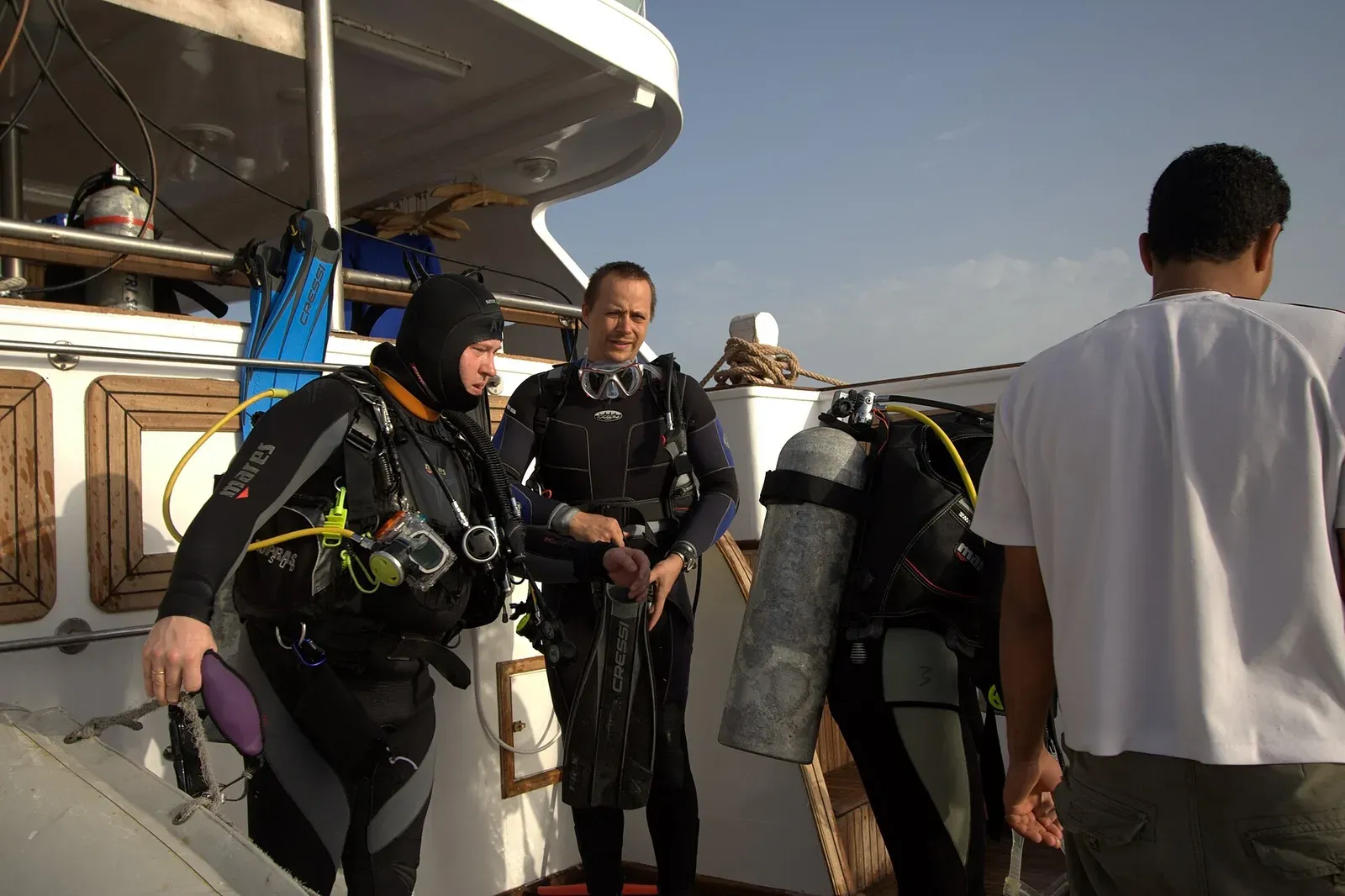
Bring your own mask, computer and fins. Rental adds up over a fortnight, and a computer is the one thing you should never economise on.
Pay the park. Marine-park and conservation fees in Komodo, Raja Ampat, Bonaire, Malapascua, Sodwana and the Red Sea are what keep the cheap reef worth diving. Insurance is the other line that never gets cut.
Cheap is not the same as careless. Ask to see the compressor room and the boat’s oxygen kit, count the divers per guide, and walk away from any centre where the answer to the first question is a shrug. Taganga’s cautionary tales are the reason this line is here.


