Addresses, not seasons
Mantas, whale sharks and hammerheads come with a calendar, and most of the work of planning a trip for them is getting the month right. Turtles do not. Go through the places where divers meet them most reliably and the notes say the same thing in different words. At Sipadan green and hawksbill turtles are reported on most dives, in every month. At Bunaken their presence barely shifts across the year. At Apo Island, Balicasag, Kerama Islands, Maui, Molokini & Lānaʻi and Cayman Brac they are on the reef in any month. There is no turtle season to sell.
What the site records carry instead is numbers, and every number describes animals that live in one place. Perhaps ten green turtles live on Lekuan I, one wall of Bunaken, alone. On a good day at Hanging Gardens divers count dozens on a single dive. Black Rock on Maui gives five to ten greens a dive, off the beach, in 11 m. A colony of 20 to 40 lives on a very small stretch of reef at Paradise Gardens in Anda. At La Caye in Guadeloupe the greens gather on the bottom after dark and are counted in the tens.
Those are residents, and a resident turtle is predictable because its day is. It goes to be cleaned at the same coral head, grazes the same meadow, sleeps under the same ledge. The other thing the best sites share is protection. Apo’s sanctuary was closed to fishing by the island’s community in 1982, and Watamu’s marine park was gazetted in 1968. At Balicasag, decades of protection have left the turtles indifferent to divers, and that changes the dive from a glimpse of a shell leaving to an animal that carries on with its day while you watch.
So this guide sorts the world’s turtle dives by what the turtle is doing there: being cleaned, feeding, resting or nesting. Species come second, but they matter, because what a turtle eats decides where you find it.
The three turtles you will meet, and the four you will not
Seven species of sea turtle are alive today. Three of them are the turtles on the reef dives in this guide, and telling them apart is mostly a matter of looking at the head.
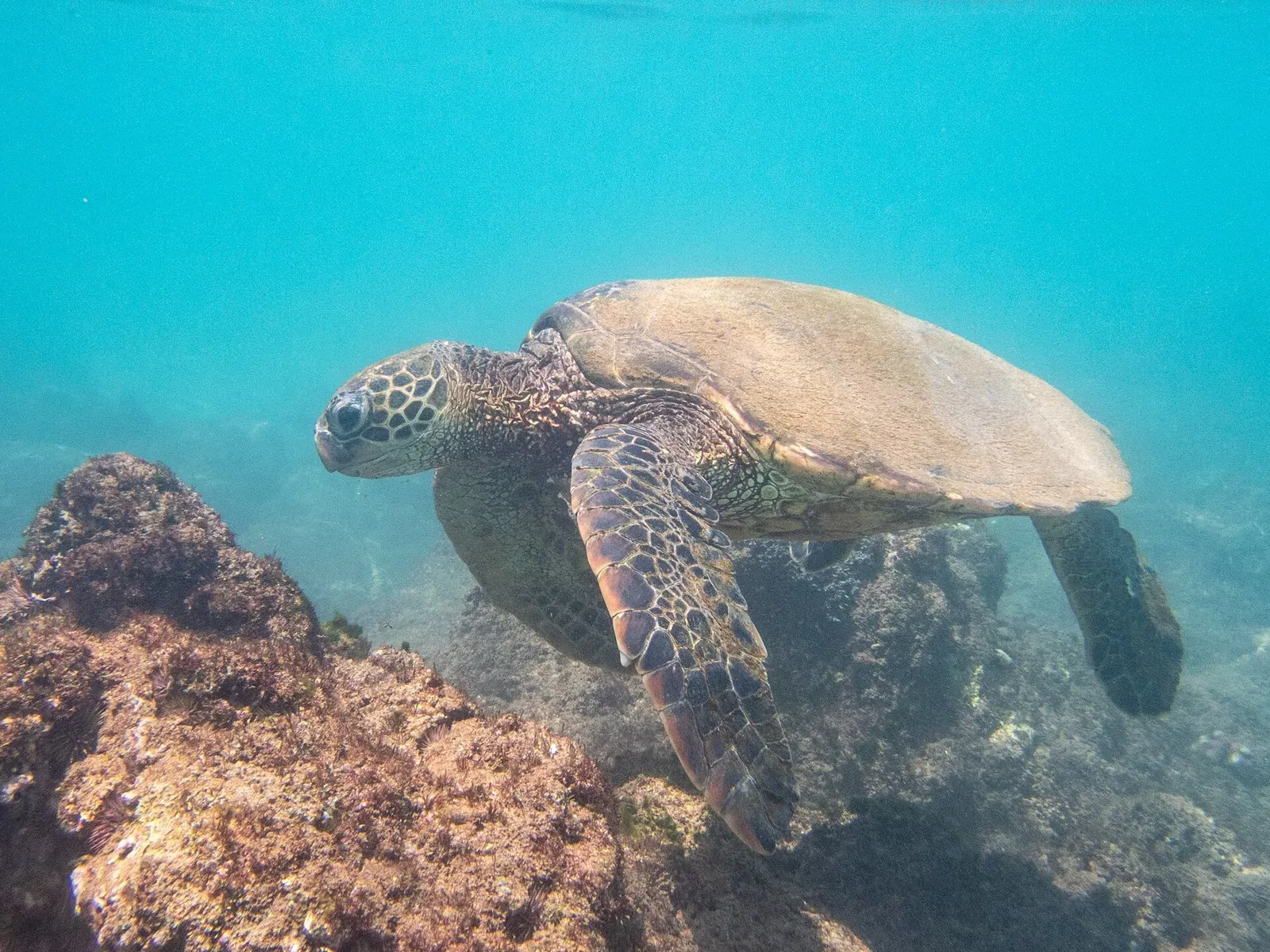
Green turtle (Chelonia mydas). The one on most of the dives in this guide. Its snout is short and its beak unhooked, the top of the head carries a single pair of large scales between the eyes, and the shell has four plates, or scutes, along each side. Adult greens are the only sea turtles that live mostly on plants: their diet is mainly algae and seagrass, which is why they are the turtle of shallow meadows and reef tops. In October 2025 the IUCN moved the green turtle from Endangered to Least Concern worldwide, though some regional populations remain at risk, and Hawaii’s greens are still listed as threatened under the US Endangered Species Act.
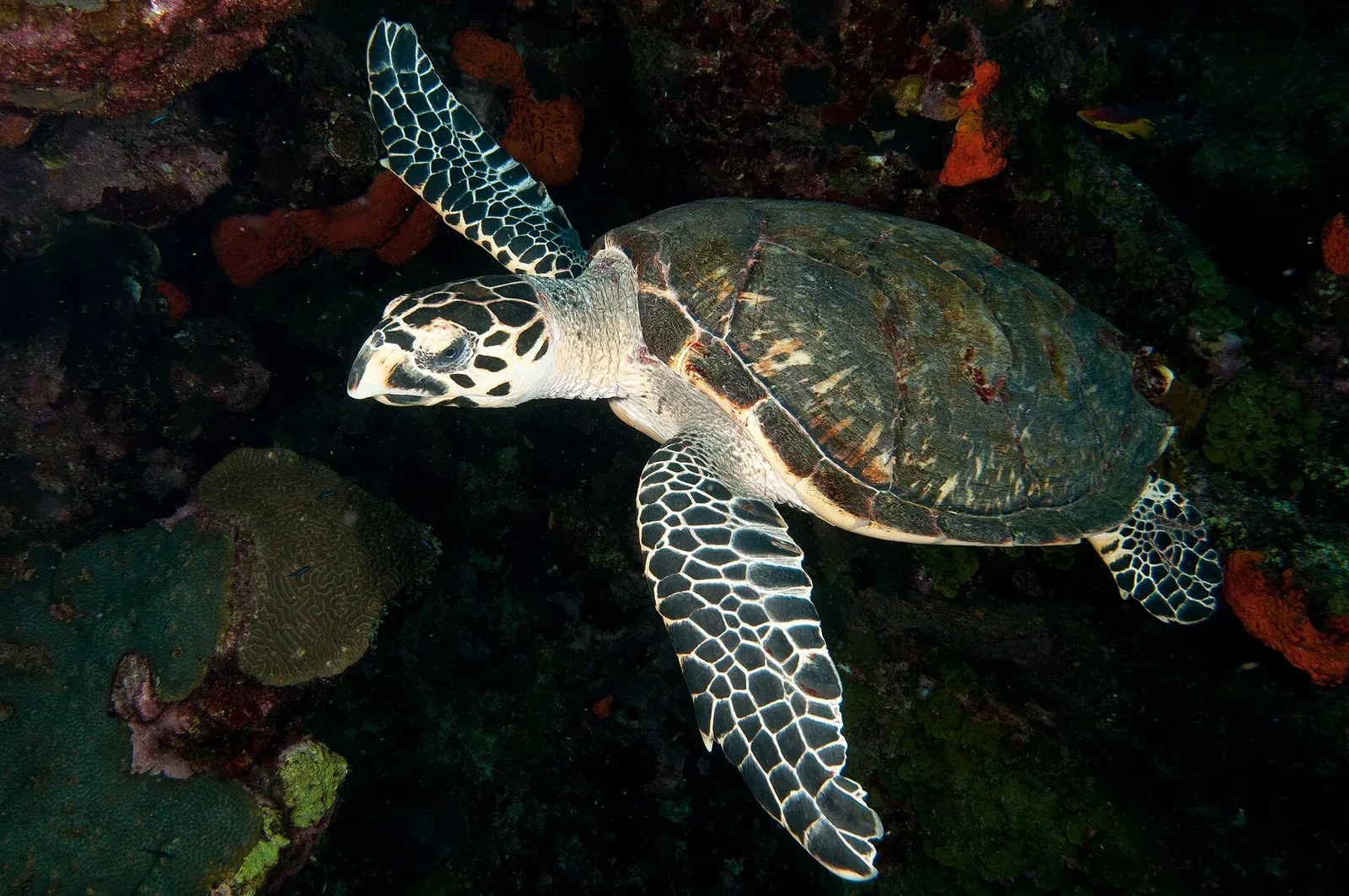
Hawksbill (Eretmochelys imbricata). The head tapers to a point and the lower jaw is V-shaped, which gives it the hawk-like look the name comes from. There are two pairs of scales between the eyes, and the shell plates overlap, with the shell’s edges typically serrated. Its preferred food in many areas is sponges, and its sharp beak is built for reaching into holes and crevices in the reef to get at them, so the hawksbill is the turtle of coral walls and ledges, which also give it shelter to rest by day and night. It is listed as Critically Endangered, on an assessment last made in 2008. Young greens are often mistaken for hawksbills; count the scales between the eyes.
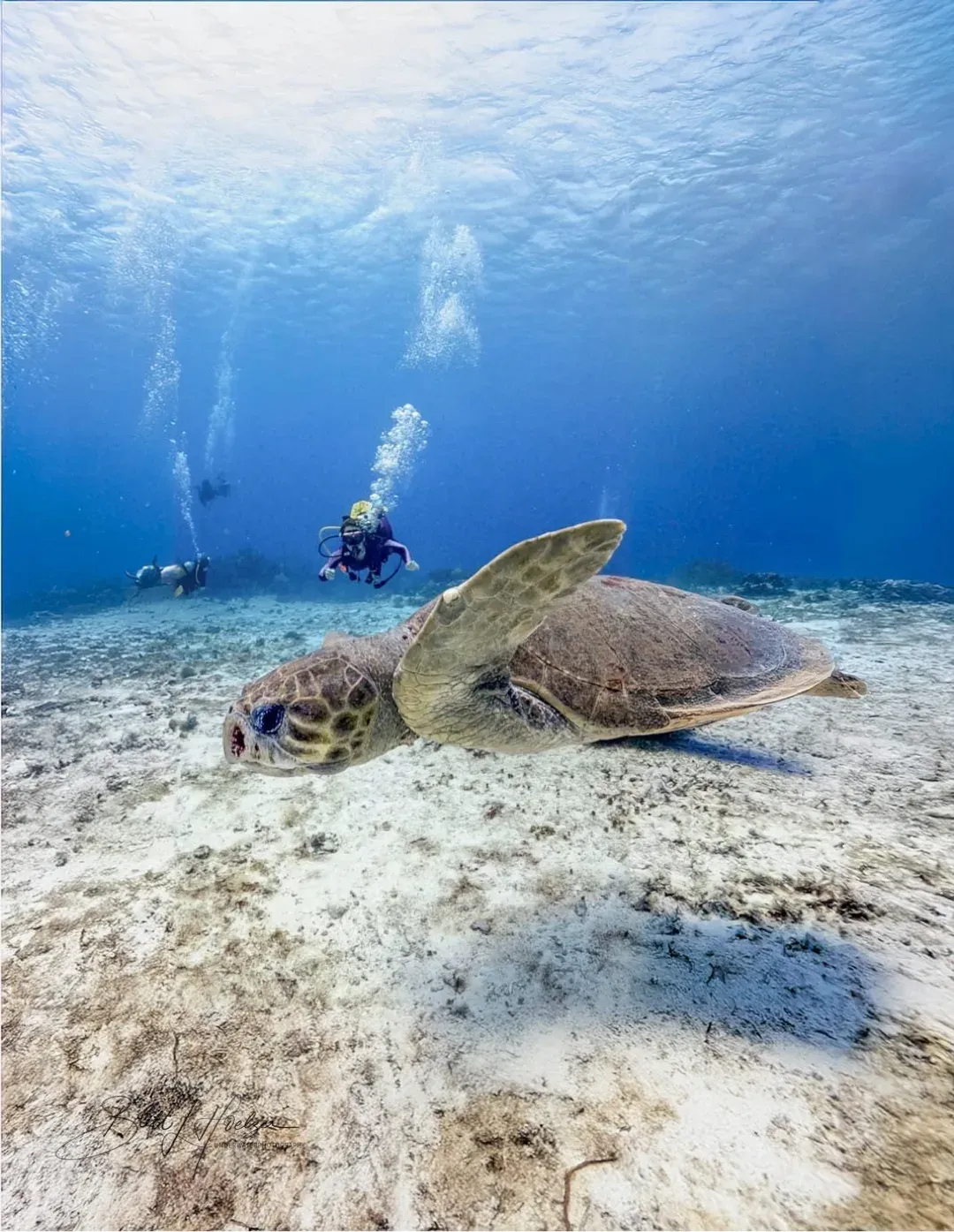
Loggerhead (Caretta caretta). Named for its head, which is large, with powerful jaws for crushing hard-shelled prey such as whelks and conch. The shell is slightly heart-shaped and reddish-brown in adults. Adults in coastal water eat mostly animals that live on the bottom, molluscs and crustaceans among them, and the dives in this guide meet them over seagrass and around wrecks as well as on reefs. At Zakynthos, in the Mediterranean, it is the turtle divers meet. It is listed as Vulnerable.
| Green | Hawksbill | Loggerhead | |
|---|---|---|---|
| Head and beak | Short snout, unhooked beak | Tapered head, sharp beak, V-shaped lower jaw | Large head, powerful jaws |
| Shell | Four plates each side; brown, grey or olive | Overlapping plates, serrated edges; mottled amber and brown | Slightly heart-shaped; reddish-brown |
| Eats | Mainly algae and seagrass | Mainly sponges | Crabs, molluscs and other hard-shelled prey |
| Where divers meet it | Seagrass bays, reef tops, cleaning stations | Coral walls and ledges | Seagrass, wrecks and reefs |
| IUCN Red List | Least Concern (since 2025) | Critically Endangered | Vulnerable |
The other four rarely come near a reef dive. The leatherback, the largest sea turtle at 1.4 to more than 1.8 m (4.6 to 5.9 ft), feeds on soft-bodied open-ocean prey such as jellyfish. The olive ridley is mainly an open-ocean turtle. Kemp’s ridley, the smallest, is found only in the Gulf of Mexico and along the US East Coast, and the flatback only in the seas around northern Australia. Kemp’s ridley is Critically Endangered, the leatherback and olive ridley are Vulnerable, and the flatback is listed as Data Deficient. If you meet one on a dive, it is a story; nobody can send you to a site for one.
Cleaning stations: where the turtle comes to you
A cleaning station is a spot on the reef where small fish graze algae and debris off larger animals, and turtles use them the way mantas do. A turtle swims in, settles over a particular coral head and holds still while the fish work. For a diver that is the best turtle encounter there is, because the turtle has chosen to stop, and it keeps stopping at the same place.
Turtle Pinnacle off Kona’s northwest coast is built around exactly that. Green turtles settle on the reef at the base of the pinnacle, at up to 18 m, and kole, a surgeonfish, graze the algae off their shells. The dive is run for watching: settle a few metres off, keep your hands to yourself, and let the turtles decide how close the encounter gets. Open Water covers the site, but 18 m is the limit of that certification, so plan gas and no-decompression time accordingly.
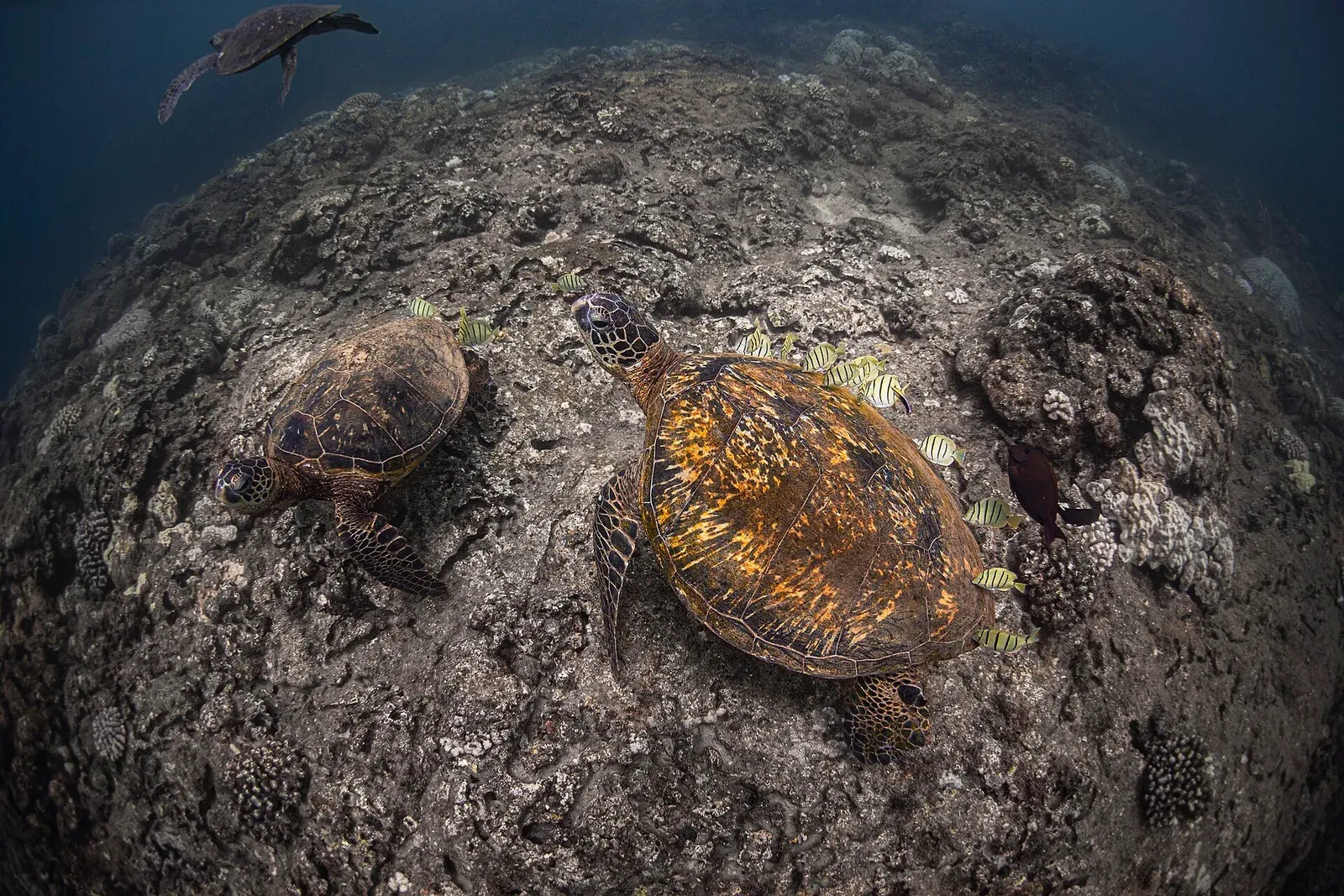
On Oʻahu, Turtle Canyon works the same way in less water. Nothing there is deeper than about 11 m. Green turtles are the constant and hawksbills come in as well, and small wrasses work across their shells and flippers. A diver who stops a couple of metres short and stays still is usually tolerated for as long as the gas lasts, and at 11 m that is a long time.
The Philippine version is a house reef. In front of Anda Scuba Diving in Bohol, the house reef, which divers call Turtle City, is a walk-in wall that starts at 5 m, slopes to about 12 and then drops to 30. Cleaner fish work one stretch of it and turtles come in to them, mostly greens with some hawksbills.
One cleaning station that used to belong on this list is out of reach. Wrasse Strip at Layang-Layang, where turtles, whitetips and eagle rays came in to be cleaned, has been closed to divers since January 2025, when the atoll’s only resort had its operating licence revoked.
2015-05-13 - Kona - Dive 1 - Turtle Pinnacle · dreymers on YouTube
Seagrass, sand and the night gathering
Adult green turtles graze seagrass and algae, so a healthy meadow is a feeding address, and the shallow bays that hold one are some of the gentlest dives in this guide.
In Egypt, Abu Dabbab Bay north of Marsa Alam is waded into from the beach. The meadows on the sand are where green turtles feed almost every day, on the same beds as the bay’s two semi-permanent dugongs. Visibility is the trade-off, four to ten metres on an average day, so you find animals close in rather than across the bay. Further south, the Lahami Bay House Reef at Hamata is walked in from the resort; on its south side a rope leads out to Banana Reef and a large seagrass meadow where turtles feed regularly, along with rays of several kinds.
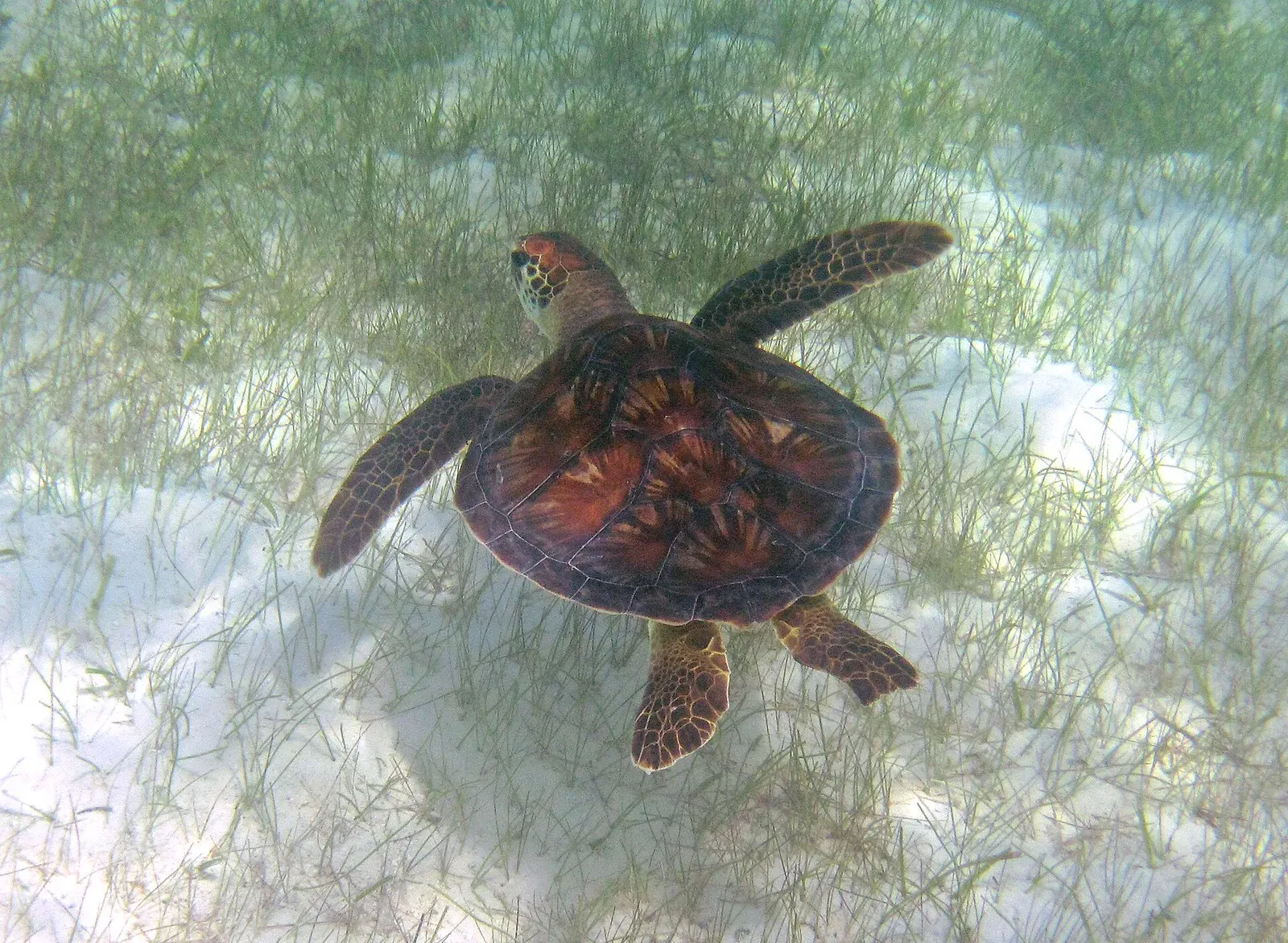
The same pattern holds elsewhere. Turtle Reef off Anse Chastanet in St Lucia is a crescent of reef beside turtle-grass beds, with its plateau at about 12 m; hawksbill and green turtles are both likely there because of the grass, and the reef drops past 46 m below the plateau, so the turtles are the reason to stay shallow. In Kenya, Turtle Reef is the inner reef at Watamu, 8 to 10 m deep and suitable for every level, and green and hawksbill turtles are the reason divers ask for it by name.
Loggerheads eat crabs, conch and other shelled animals. The clearest example of a loggerhead address is the Hesperus, a small wreck on the bank east of Bimini in 7 m of water with nothing but seagrass around it. The water there can be green and murky, not the blue of the western drop-offs, but a large population of loggerheads uses the wreck and the grass, and they are the reason boats come out to a small wreck on the bank at all.
Then there is the gathering after dark. La Caye in the Cousteau Reserve is the shallow rubble left when the Malendure rock collapsed into the sea, 4 to 18 m deep. By day it is unremarkable. At night it is where the green turtles rendezvous, one, then two, then ten of them settled on the bottom, and spotted morays hunt the same rubble. It is an easy site by profile, and the only thing it asks for is a night dive.
Resident populations on protected walls
Most of the famous turtle dives are walls and slopes where a population simply lives, protected for long enough that the animals ignore divers.
Sipadan. The island’s turtles are on the wall rather than passing it. Hanging Gardens is the calm side: a swim from 25 m up to 10 m along soft coral in pastel lemon, lavender and antique rose, with current usually none or light, and turtles numerous enough that divers count dozens on one dive. West Ridge covers the same band on a black-coral face, with turtles and resident groupers as the constants. Turtle Patch is deeper, a reef of big table corals dived between 25 and 40 m. All three are graded for advanced divers. Every dive on Sipadan needs a permit from Sabah Parks, issued under a daily quota; published figures for it disagree, from 176 to 252 a day, so the practical rule is to book through a resort or dive centre that holds them.
Wall Dive at Hanging Gardens in Sipadan 🌊⛰️🐢 · Diving around the World on YouTube
Bunaken and the Gilis. On the south side of Bunaken Island, Lekuan I is a steep wall worked between 10 and 25 m in a medium current, and perhaps ten green turtles live on it, some of the males very large. Muka Kampung, off the main village, is nicknamed turtle city for its greens and hawksbills. In Lombok’s Gili Islands, Turtle Heaven is a coral pinnacle off Gili Meno standing from 9 m to 30 m, home ground for turtles that live on it rather than pass through; the top is a comfortable depth for a newly qualified diver and the base is not. Meno Wall on the island’s west side is entered from the beach, with turtles in large numbers along a wall that meets sand at 22 m.
Negros and Bohol. Two sanctuaries and a house-reef colony show what protection does. The Apo Island sanctuary, off Negros, is the no-fishing stretch of reef the island set aside in 1982, 450 m of shoreline by 500 m out; it slopes from 5 to 25 m, turtles appear on nearly every dive, and divers pay a conservation fee to enter. The Balicasag sanctuary off Panglao is where that island’s greens and hawksbills are thickest, habituated enough to keep grazing while a group hangs over them; a local guide, a fee and a daily cap on divers come with it. And Paradise Gardens in Anda is a soft-coral garden in 2 to 5 m over a wall to 20 m, with a resident colony of 20 to 40 turtles feeding on seagrass on a small rocky outcrop opposite the resort.
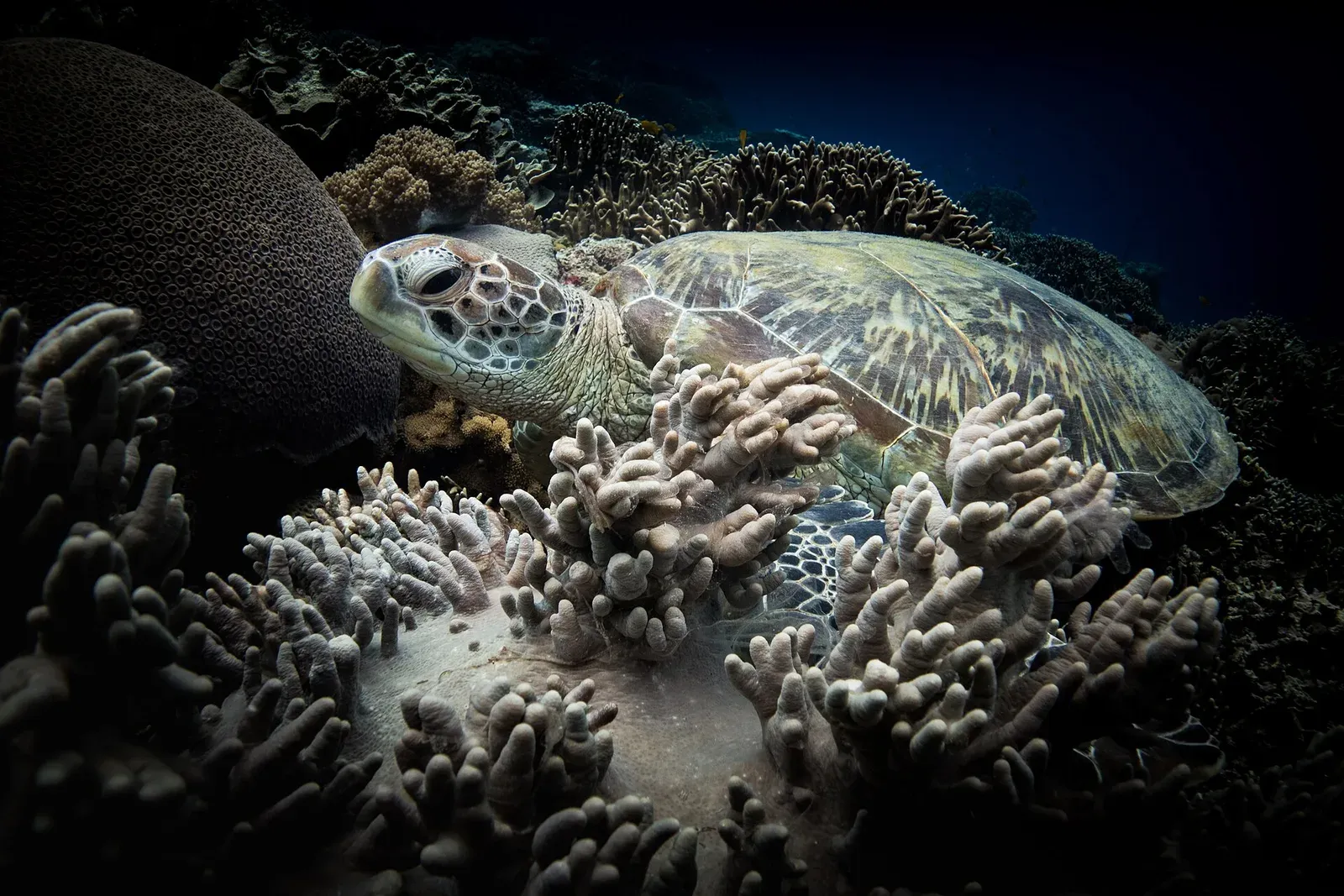
Elsewhere in the Philippines, Mantigue Turtle Point off Camiguin drops from 5 m to 50, but the green turtles that live there year-round are on the upper slope, so the dive rarely needs to go deep. Tongo Point is Moalboal’s sanctuary wall, with hawksbills and greens seen along a face broken by small caves. San Pedro Sanctuary on Romblon is known for the large numbers of turtles living there. Kapalai, off Sabah, has a site called Cleaning Station with resident turtles round an old wooden boat wreck on a slope to about 16 m; despite the name, the dive is about the turtles and the wreck, not a cleaning station.
Japan and eastern Australia. In the Kerama Islands, Gina off Aka Island is a set of coral shelves to 18 m with green turtles as the constant, and Uru no Sachi on Zamami is an 11 m coral garden known for a high turtle hit rate. On the New South Wales and Queensland coast, two shallow reefs hold all three common species. The Nursery at Byron Bay runs 5 to 12 m and has resident green, hawksbill and loggerhead turtles sheltering and feeding on it. Second Reef at Lady Elliot Island is branching coral in the same 5 to 12 m band, with the same three species. Bait Reef, a reef the size of two tennis courts off Trial Bay Gaol, has resident green turtles, often in numbers.
Hawaii and the Caribbean. Black Rock on Maui is entered from the beach and bottoms out around 11 m, with five to ten greens on a dive: shallow, easy and close to the car. On the Big Island, Two Step at Honaunau Bay is entered down two lava steps, with green turtles along the small lava canyons on the south side of the bay. Turtle Alley on Cayman Brac is a mini wall from 9 m with hawksbills and greens most often and loggerheads at the right time of year. The Bight is a shallow stretch of Roatán’s barrier reef where turtles and grouper are reported as common. In Cozumel, the drift over Palancar Gardens runs 15 to 34 m through coral swim-throughs, with turtles among the reef’s regulars. And in Guadeloupe, hawksbills graze the protected coral of Jardin de Corail, a shallow garden whose edge leads down to the bust of Cousteau at 12 m.
Ledges and overhangs: where turtles sleep
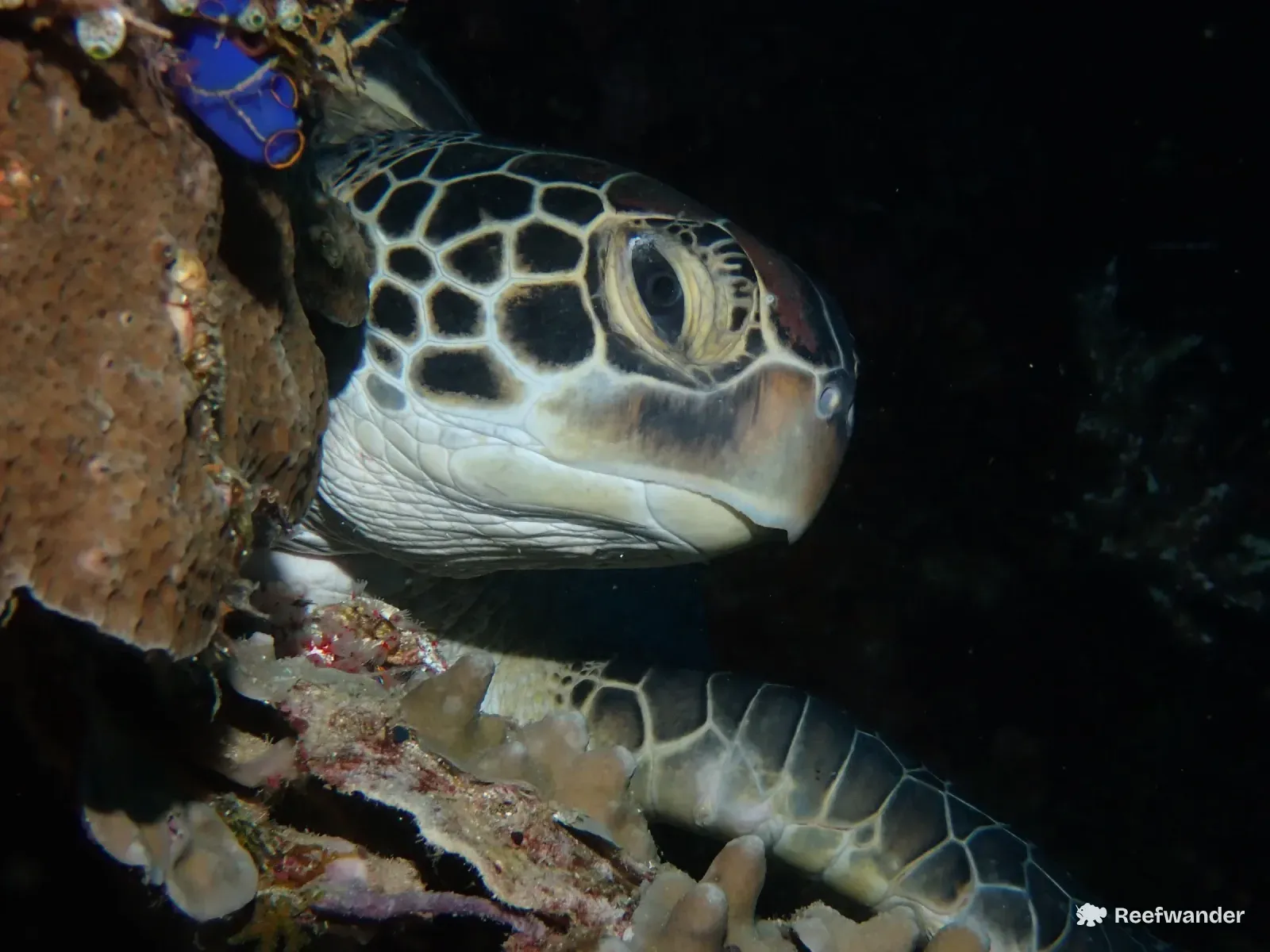
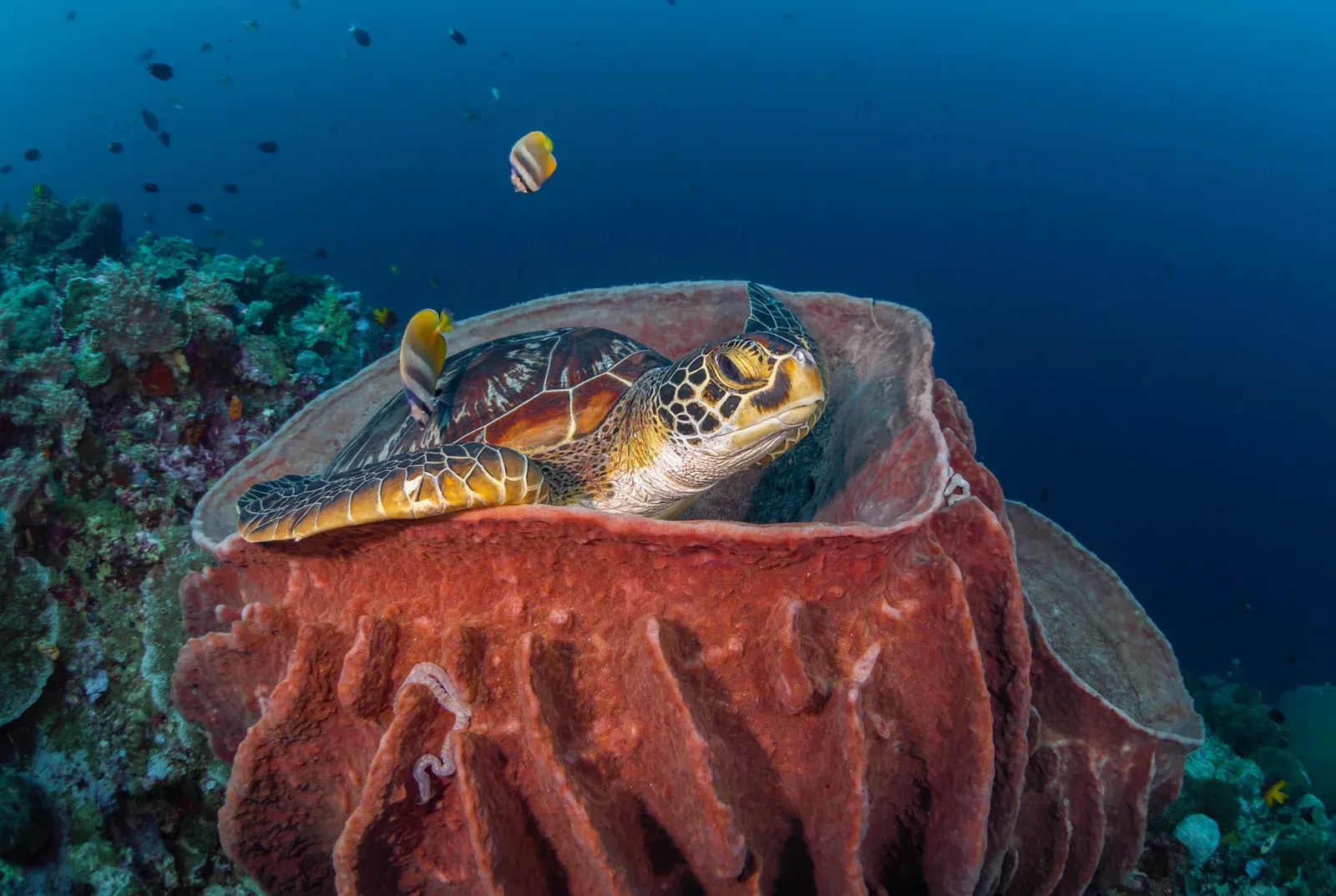
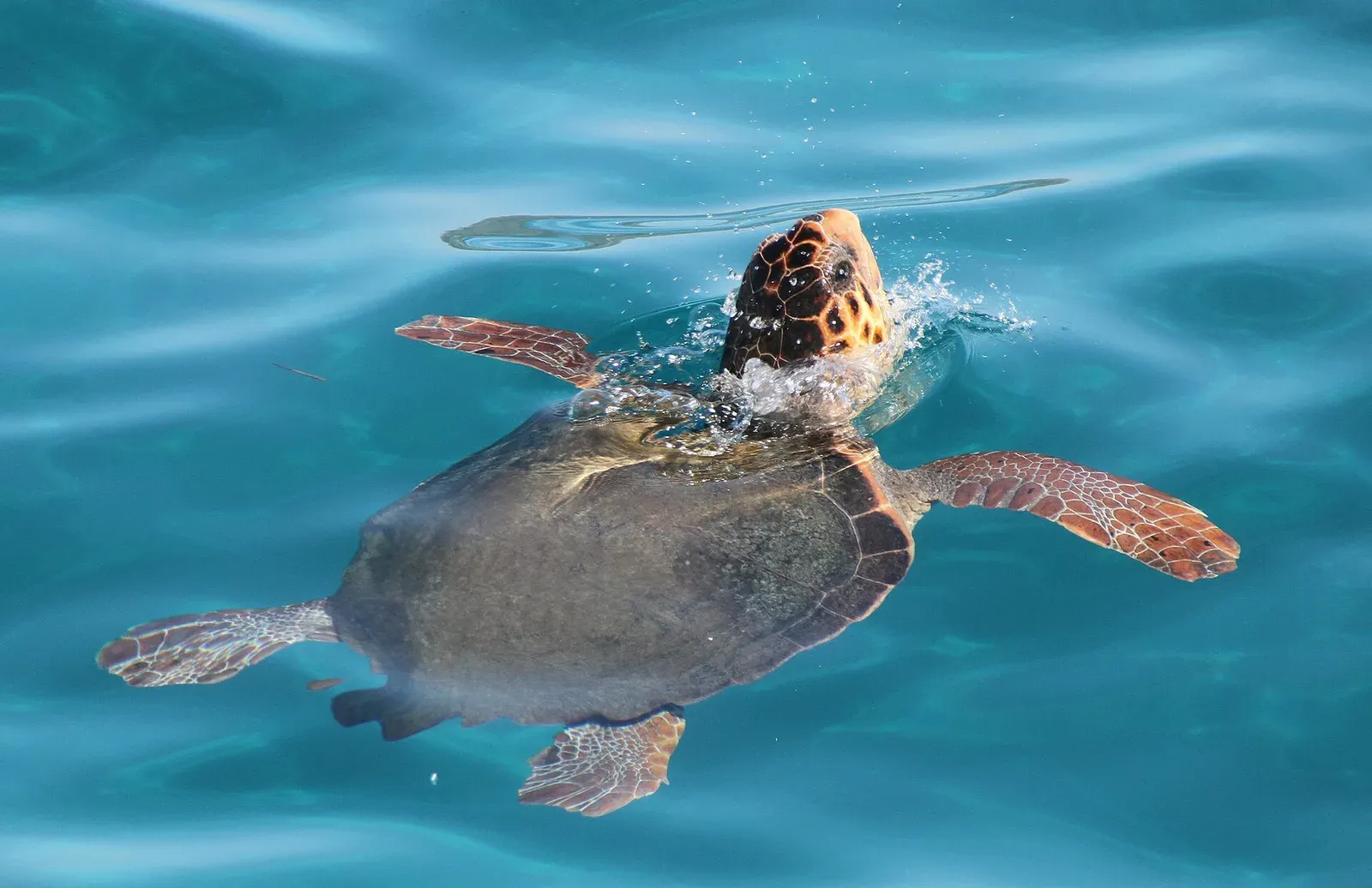
A resting turtle wedges itself under something and stays there, and a few site records name the spot. That is the scene in the photograph at the top of this page: a green turtle under a ledge, going nowhere.
In the Red Sea, Royal Azur Makadi Bay is an easy drift over a coral garden at about 20 m in Makadi Bay, and it is listed for the good chance of finding turtles asleep on the coral during the day. In the Maldives, the overhangs along the wall at Alidhoo Caves in Haa Alif are where stingrays and turtles sleep, and at Dharavandhoo Thila in Baa the turtles rest under the ledges of a quiet pinnacle while whitetips lie in its small caves. On Panglao, Brothers House Reef has a turtle point about 10 m below the lip of a shallow reef cliff, where turtles are sometimes found asleep. And far out in the Indian Ocean, Le Sec des Tortues off Rodrigues is a coral seamount to 31 m cut with caves and tunnels, where green turtles and loggerheads shelter.
Hawksbills are the exception to the meadow rule: they feed on the reef itself. In Thailand, Sail Rock off Koh Lipe is a coral ridge from 5 to 18 m where hawksbills occasionally come in to feed, and at Ao Khai on Koh Chan, off Samaesan, hawksbills are the regular sighting on a reef from 3 m to about 15, under the coral heads or working the reef top.
Two more reefs round out the list. Off Tioman, Renggis Island is a shallow rock island where green turtles and blacktip reef sharks are seen very often. And in Brazil, Boca da Baleia at Laje de Santos is a rock to 18 m where turtles gather, dived only when the sea is settled because the backwash over the formation can be violent.
Nesting islands and what they mean underwater
Turtles nest on beaches, and a few of the best turtle dives sit off nesting islands. Nesting does not make the diving seasonal, because the resident turtles are on the reef all year, and it does not put divers on the nest. You dive next to nesting, never on it.
Sipadan is one: the green and hawksbill turtles seen around the island mate and nest there. In Derawan & Sangalaki, the resident green turtles nest on Derawan’s beaches, and on Maratua’s west coast Turtle Trafic is dived at low tide, when the turtles are sleeping on the slope and can be watched rather than followed.
Lady Elliot Island is a coral cay where green and loggerhead turtles are on the reef all year and nest on the island from November to March, and Second Reef adds hawksbills to the same shallow gardens.
In the Mediterranean, the best-known loggerhead nesting beaches are on Zakynthos. The National Marine Park of Zakynthos was founded in 1999 around Laganas Bay, where females come ashore at night to lay from May to August, and the park hosts 900 to 2,000 nests a year. Marathonisi, the islet in Laganas Bay whose beach is a loggerhead nesting ground, is also the south coast’s easy protected dive: a circle of a single rock to 21 m with no current, inside the marine park. Off Tuscany, Morcone Bay on Elba is a walk-in bay of 2 to 10 m where turtles have been seen since 2021, a small, new Mediterranean address.
One site on this list is here as a warning. Turtle Tomb is the cave system inside Sipadan’s limestone, and its chambers hold the skeletons of turtles that went in and never found the way out. The mouth opens at around 18 m, and for anyone without cave training the mouth is the whole dive. Beyond it is a labyrinth of tunnels running up to 200 m from the entrance, with no direct way up and a floor of silt that one careless fin stroke turns to no visibility. Going further takes cave certification, cave equipment and a guide who knows the system. Our cenotes and caverns guide covers why a look from the entrance is the right call.
How to dive with one
Every operator briefs a version of the same rules, and they are what keeps these sites working.
Hold position and let the turtle choose. Settle two to three metres off, low and still, and let it decide how close the encounter gets. A turtle that is being cleaned, feeding or resting will usually carry on. One that is followed leaves, and the rest of the group loses it too. In Hawaii, the federal guidance is to stay at least 10 ft (3 m) from a sea turtle, in the water and on land.
Never block the way up. A sea turtle breathes air. A sleeping turtle can stay down for several hours, but a foraging one dives for 20 to 40 minutes at a time, and stress shortens it further. Keep yourself to the side of a turtle, never above it or between it and the surface, and never crowd one that is rising.
No touching, no riding, no feeding. Hawaii’s rule is never touch, chase or feed; turtles there are protected under state and federal law, and every sea turtle population in US waters is listed as threatened or endangered under the Endangered Species Act. Elsewhere the law varies. The rule does not.
Pay for the protection. The fees are part of what made these dives. Apo charges a conservation fee to dive its sanctuary, and more to dive inside the boundary than outside it. Balicasag’s sanctuary requires a local guide and a fee, and limits how many divers are on the island in a day. Sipadan caps the number of divers through its permit quota.
The sites
Depth, level and access come from each site’s record, and the tables sort the addresses by what the turtles are doing there. The Best months column is each area’s diving season, rating sea state, access and the area’s headline animals. It is not a turtle calendar: the turtles on these reefs are residents, and the only turtle months any of these areas carries are the nesting seasons at Lady Elliot and Zakynthos.
| Site | Depth | Level | Best months |
|---|---|---|---|
| Turtle Pinnacle Kona · United States | to 18 m | Intermediate | Dec–Apr |
| Turtle Canyon Oʻahu · United States | to 11 m | Intermediate | May–Oct |
| Anda Scuba Diving House Reef Anda · Philippines | 5–30 m | Intermediate | Nov–May |
| Site | Depth | Level | Best months |
|---|---|---|---|
| Abu Dabbab Bay Marsa Alam & Port Ghalib · Egypt | 4–24 m | Beginner | Mar–May |
| Lahami Bay House Reef Hamata & Wadi Lahami · Egypt | to 12 m | Beginner | May–Oct |
| Turtle Reef St. Lucia · St. Lucia | 12–46 m | Intermediate | Dec–Apr |
| Turtle Reef Watamu & Malindi · Kenya | to 10 m | Beginner | Nov–Feb |
| Hesperus Bimini · Bahamas | to 7 m | Beginner | Jan–Mar |
| La Caye Guadeloupe · Guadeloupe | 4–18 m | Beginner | Dec–Apr |
| Site | Depth | Level | Best months |
|---|---|---|---|
| Hanging Gardens Sipadan · Malaysia | 10–25 m | Advanced | Mar–Sep |
| West Ridge Sipadan · Malaysia | 10–25 m | Advanced | Mar–Sep |
| Turtle Patch Sipadan · Malaysia | 25–40 m | Advanced | Mar–Sep |
| Lekuan I Bunaken · Indonesia | 10–25 m | Intermediate | May–Oct |
| Muka Kampung Bunaken · Indonesia | to 30 m | Intermediate | May–Oct |
| Turtle Heaven Gili Islands · Indonesia | 9–30 m | Intermediate | Apr–Oct |
| Meno Wall Gili Islands · Indonesia | 10–25 m | Advanced | Apr–Oct |
| Apo Island Marine Sanctuary Apo Island · Philippines | 5–25 m | Beginner | Apr–May |
| Balicasag Marine Sanctuary Balicasag · Philippines | 5–25 m | Intermediate | Nov–May |
| Paradise Gardens Anda · Philippines | 2–20 m | Beginner | Nov–May |
| Mantigue Turtle Point Camiguin · Philippines | 5–50 m | Intermediate | Nov–Apr |
| Tongo Point Moalboal · Philippines | 5–55 m | Intermediate | Apr–Jun |
| San Pedro Sanctuary Romblon · Philippines | to 40 m | Intermediate | Nov–Apr |
| Cleaning Station Mabul & Kapalai · Malaysia | 5–16 m | Beginner | Mar–Oct |
| Site | Depth | Level | Best months |
|---|---|---|---|
| Gina Kerama Islands · Japan | to 18 m | Beginner | Apr–Aug |
| Uru no Sachi Kerama Islands · Japan | to 11 m | Beginner | Apr–Aug |
| The Nursery Julian Rocks · Australia | 5–12 m | Beginner | Jun–Sep |
| Second Reef Lady Elliot Island · Australia | 5–12 m | Beginner | May–Sep |
| Bait Reef South West Rocks · Australia | 5–10 m | Intermediate | Jun–Oct |
| Black Rock Maui, Molokini & Lānaʻi · United States | to 10.7 m | Beginner | Dec–Mar |
| Two Step (Honaunau Bay) Kona · United States | 3–12 m | Intermediate | Dec–Apr |
| Turtle Alley Cayman Brac · Cayman Islands | 9–20 m | Beginner | Dec–May |
| The Bight Roatán · Honduras | to 20 m | Beginner | Mar–Aug |
| Palancar Gardens Cozumel · Mexico | 15–34 m | Intermediate | Jan–Apr |
| Jardin de Corail Guadeloupe · Guadeloupe | to 12 m | Beginner | Dec–Apr |
| Site | Depth | Level | Best months |
|---|---|---|---|
| Royal Azur Makadi Bay Hurghada & El Gouna · Egypt | to 20 m | Beginner | Apr–May |
| Alidhoo Caves Haa Alif & Haa Dhaalu Atolls · Maldives | 5–30 m | Intermediate | Jan–Apr |
| Dharavandhoo Thila Baa Atoll & Hanifaru Bay · Maldives | 10–30 m | Intermediate | May–Oct |
| Brothers House Reef Panglao · Philippines | 3–7 m | Beginner | Nov–May |
| Le Sec des Tortues Rodrigues · Mauritius | to 31 m | Advanced | May–Jul |
| Sail Rock (Ko Batong) Koh Lipe & Tarutao · Thailand | 5–18 m | Beginner | Feb–Apr |
| Ao Khai, Koh Chan Pattaya & the Sattahip Wrecks · Thailand | 3–15 m | Beginner | May–Jul |
| Renggis Island Tioman · Malaysia | 0–16 m | Beginner | May–Jul |
| Boca da Baleia Laje de Santos · Brazil | to 18 m | Intermediate | Apr–Jul |
| Site | Depth | Level | Best months |
|---|---|---|---|
| Turtle Trafic (Payung Payung) Derawan & Sangalaki · Indonesia | to 30 m | Intermediate | Apr–Jul |
| Marathonisi Zakynthos · Greece | 5–21 m | Beginner | Jun–Sep |
| Morcone Bay Elba & the Tuscan Archipelago · Italy | 2–10 m | Beginner | Jun–Sep |
| Turtle Tomb Sipadan · Malaysia | 18–40 m | Advanced | Mar–Sep |
Where this connects in the Logbook
Several of these addresses are walk-ins, Black Rock, Meno Wall and the Hamata house reef among them, and Two Step at Honaunau is one of the entries in our guide to the best shore dives. If La Caye’s gathering is the dive that appeals, our night diving guide covers the other reefs that change after dark. And Lady Elliot’s mantas, there in every month, are in our manta rays month by month.