Apo Island · Philippines · Reef · Coral garden
Apo Island Marine Sanctuary
A no-take reef since 1982, with turtles on nearly every dive
Photo: Anna Varona · CC BY 4.0
The sanctuary is the stretch of reef the Apo Island community closed to fishing in 1982, and divers pay a conservation fee to dive it. The dive itself is a gentle slope from 5 to 25 metres under hard coral and anemones, with the fish life stacked on top of it: dense schools of anthias, damselfish and surgeonfish, clownfish in every anemone, and turtles that turn up on nearly every dive.
Also known as Marine Sanctuary, Apo Island Sanctuary.
Where it is and how deep
9.0667° N, 123.2667° EApproximate position — the dashed circle shows where the site lies; your operator's briefing has the mooring.
The dive
Boats drop divers straight onto the slope, which starts shallow enough for snorkellers to work the same coral from the surface and runs down to about 25 metres. The face is hard coral and anemones rather than sand, so the descent is short and the dive is spent following the contour rather than hunting for structure.
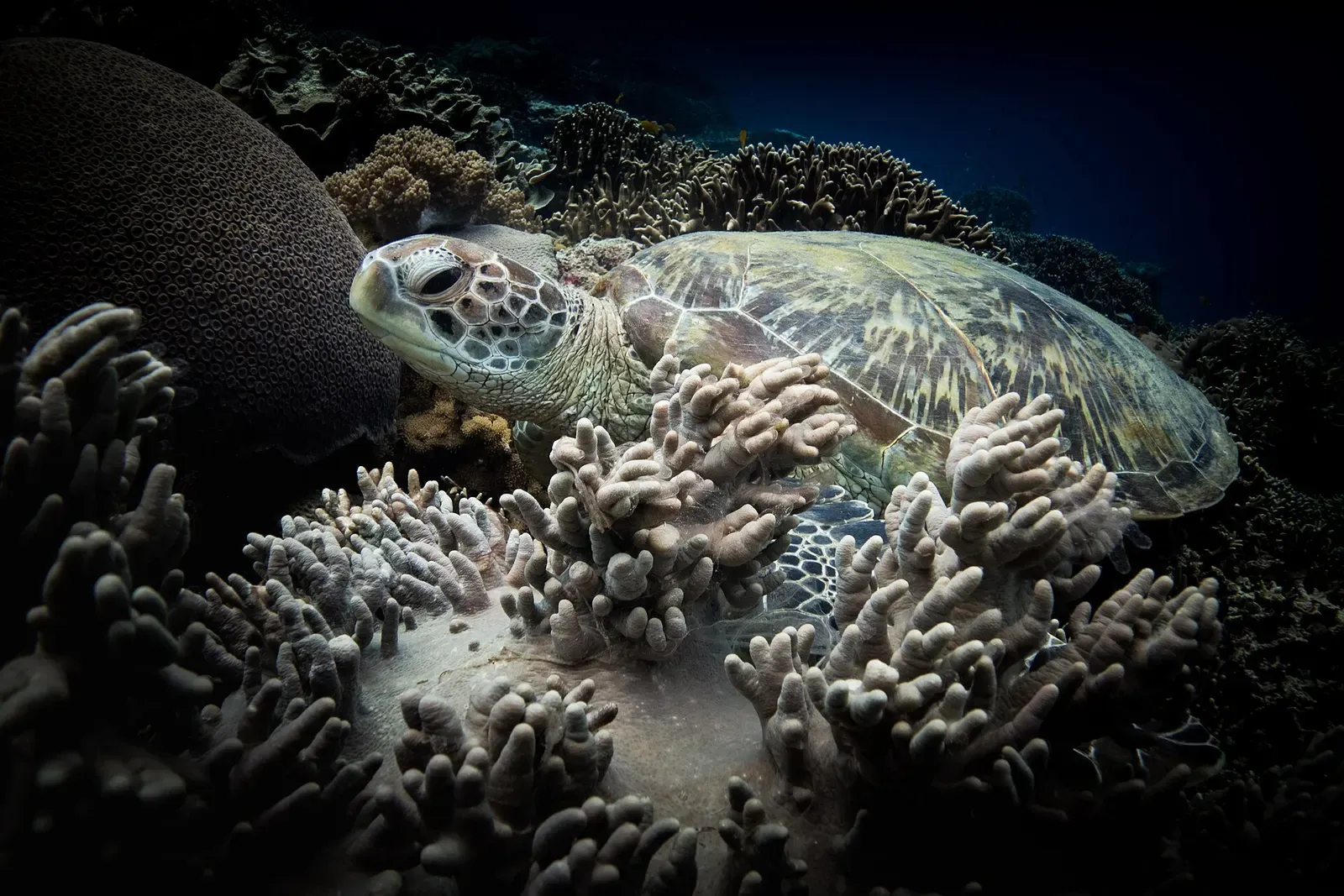
The fish are the point. Anthias, damselfish and surgeonfish school in dense clouds over the coral, and clownfish occupy every available anemone on the slope. Turtles, green and hawksbill, appear on nearly every dive at Apo, and the abundance here is such that you rarely swim more than a few metres without seeing one, a banded sea krait working the reef, or a school of jacks passing overhead.
The sanctuary covers 450 metres of shoreline and extends 500 metres out from it, and the dive stays inside that boundary. It is a no-fishing zone, closed so the marine life of the island as a whole can regenerate, and it is credited with replenishing fish populations around the rest of Apo. Visitors pay to enter the island and to dive or snorkel in the sanctuary, with diving inside the boundary charged at a higher rate than diving outside it.
Background
The sanctuary began with Dr. Angel Alcala of the Silliman University Marine Laboratory, who spent three years in dialogue with the island community before convincing it to close part of the reef to fishing. Assisted by the SU Marine Laboratory staff in 1982, local fishermen themselves selected the site: 450 metres of shoreline extending 500 metres out from shore. It is now protected under the National Integrated Protected Area Act and managed by a Protected Area Management Board, and visitors pay a fee to enter the island and to snorkel or dive in the sanctuary.
Marine life and season
- Sea turtles
- Sea snakes
- Trevally & jacks
- Reef fish swarms
- Pristine corals
| Jan | Feb | Mar | Apr | May | Jun | Jul | Aug | Sep | Oct | Nov | Dec |
|---|---|---|---|---|---|---|---|---|---|---|---|
| Fair | Fair | Good | Prime | Prime | Good | Good | Good | Good | Good | Good | Fair |
Season follows Apo Island: Dived year-round; April and May give the calmest crossings, and the December–February trade winds can chop up the open crossing and the exposed points.
Know before you go
- The crossing is made in an outrigger over open water and the swell can run large; the boat trip, more than the dive, is the part to check conditions for.
- Currents around Apo run anywhere from gentle to strong depending on the site and the state of the tide, so take the boatman's read before entry rather than assuming this slope will be slack.
Photos from Apo Island Marine Sanctuary
Anna Varona · CC BY 4.0
Anna Varona · CC BY 4.0
Elias Levy · CC BY 2.0
Dive videos
Apo Island Diving 7 May 2016 · Granada Beach Resort on YouTube
Questions divers ask
How deep is the Apo Island Marine Sanctuary dive?+
It is a gentle slope from 5 to 25 metres, so the coral starts in snorkelling depth and the deep end of the dive is well inside recreational limits.
Do you have to pay a fee to dive Apo Island?+
Yes. Visitors pay to enter the island and to snorkel or dive in the marine sanctuary, and diving inside the sanctuary boundary is charged at a higher rate than diving outside it. Rates change, so confirm the current amounts with your operator.
Can beginners dive the sanctuary?+
The slope is gentle and the shallow half sits in snorkelling depth, so it is ordinary beginner diving as long as the profile is agreed in advance. The harder part is the crossing: several miles by outrigger over open water, where the swells can be large.
Are turtles reliable at Apo Island?+
Green and hawksbill turtles appear on nearly every dive at Apo, and on the sanctuary slope you rarely swim more than a few metres without seeing one, a banded sea krait, or a school of jacks passing overhead.
Sources
- Apo Island — Wikipedia
- Apo Island — Wikivoyage
- Diving Dumaguete & Apo Island, Philippines — Dive The World
Photo credits
- A green sea turtle rests on a coral head at Apo Island, its shell dusted with algae. by Anna Varona, CC BY 4.0, via Wikimedia Commons
- A cluster of lettuce and cauliflower coral colonies covers the reef at Apo Island. by Anna Varona, CC BY 4.0, via Wikimedia Commons
- A second green sea turtle grazes low over the coral reef at Apo Island. by Anna Varona, CC BY 4.0, via Wikimedia Commons
- Macro view of a coral colony's polyps forming a dense radial pattern. by Elias Levy, CC BY 2.0, via Wikimedia Commons
In The Logbook
- Where to dive with sea turtlesBig animals · 15 min read
- Cheapest places to scuba dive, and the catchTrip planning · 15 min read
More dive sites in Apo Island
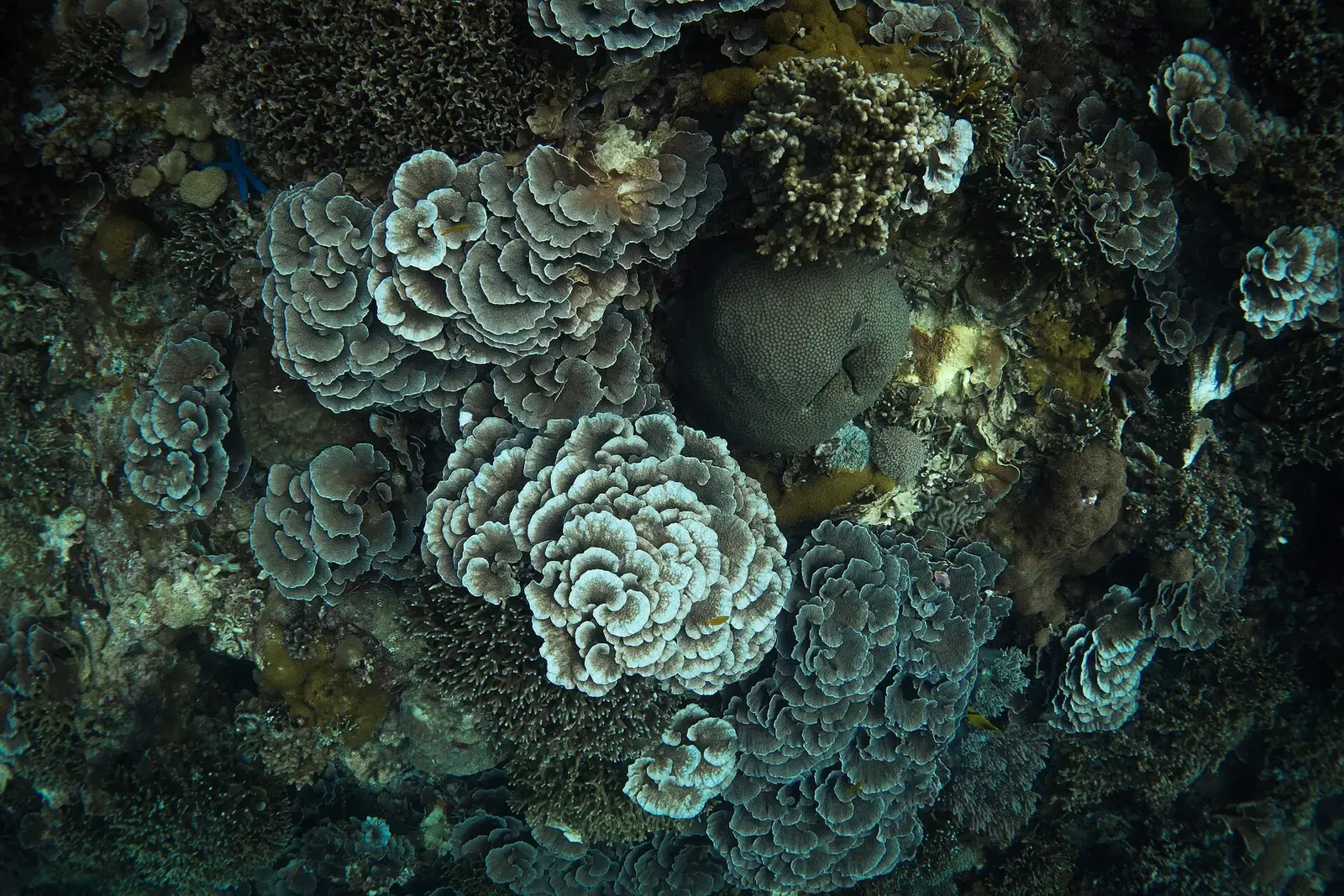
Coral gardens on a gentle slope, with the best of the reef above 18 m
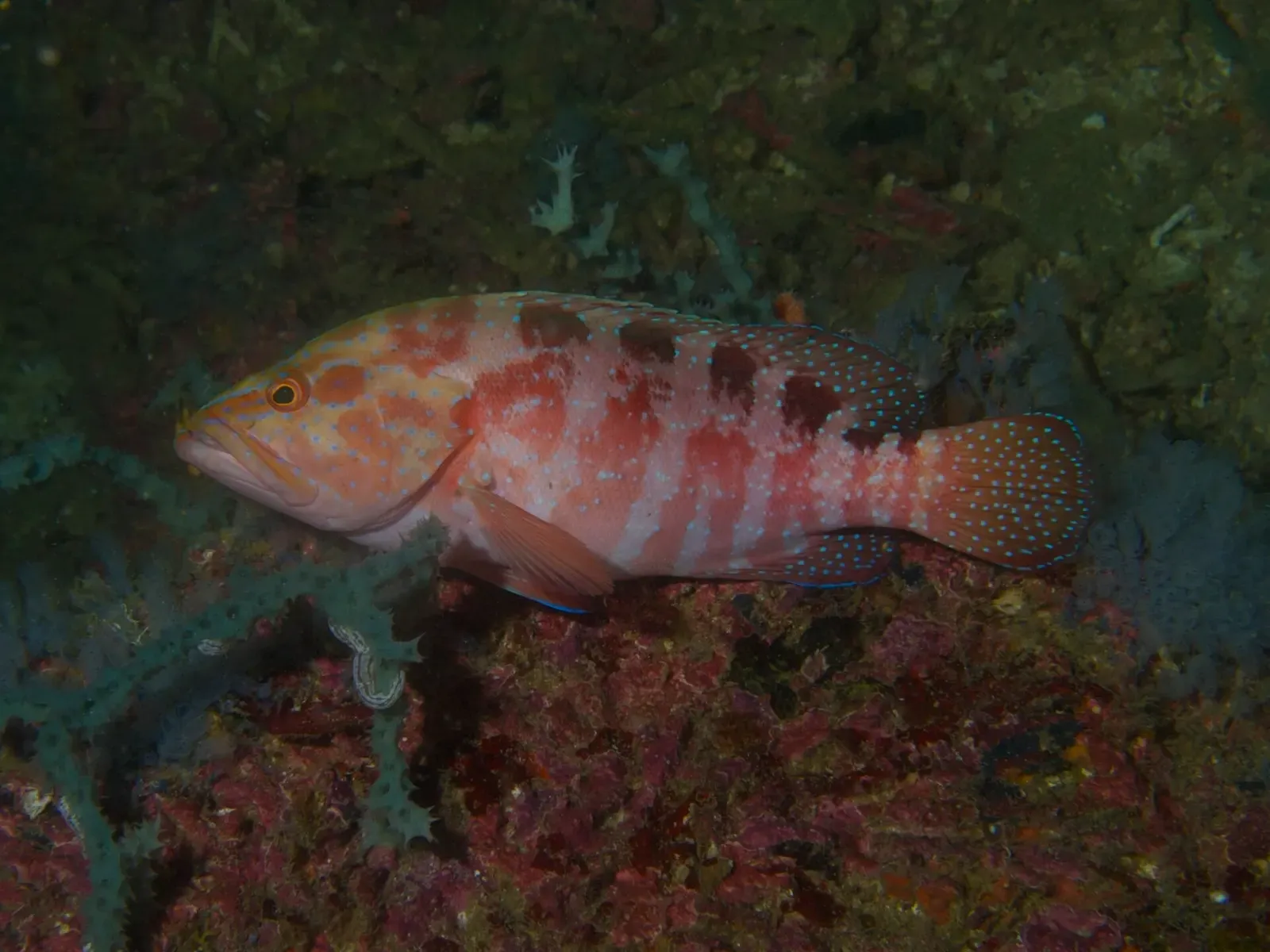
A reef finger on the island's southeast corner, fed by the prevailing current
Frogfish and cuttlefish in the island's densest hard coral
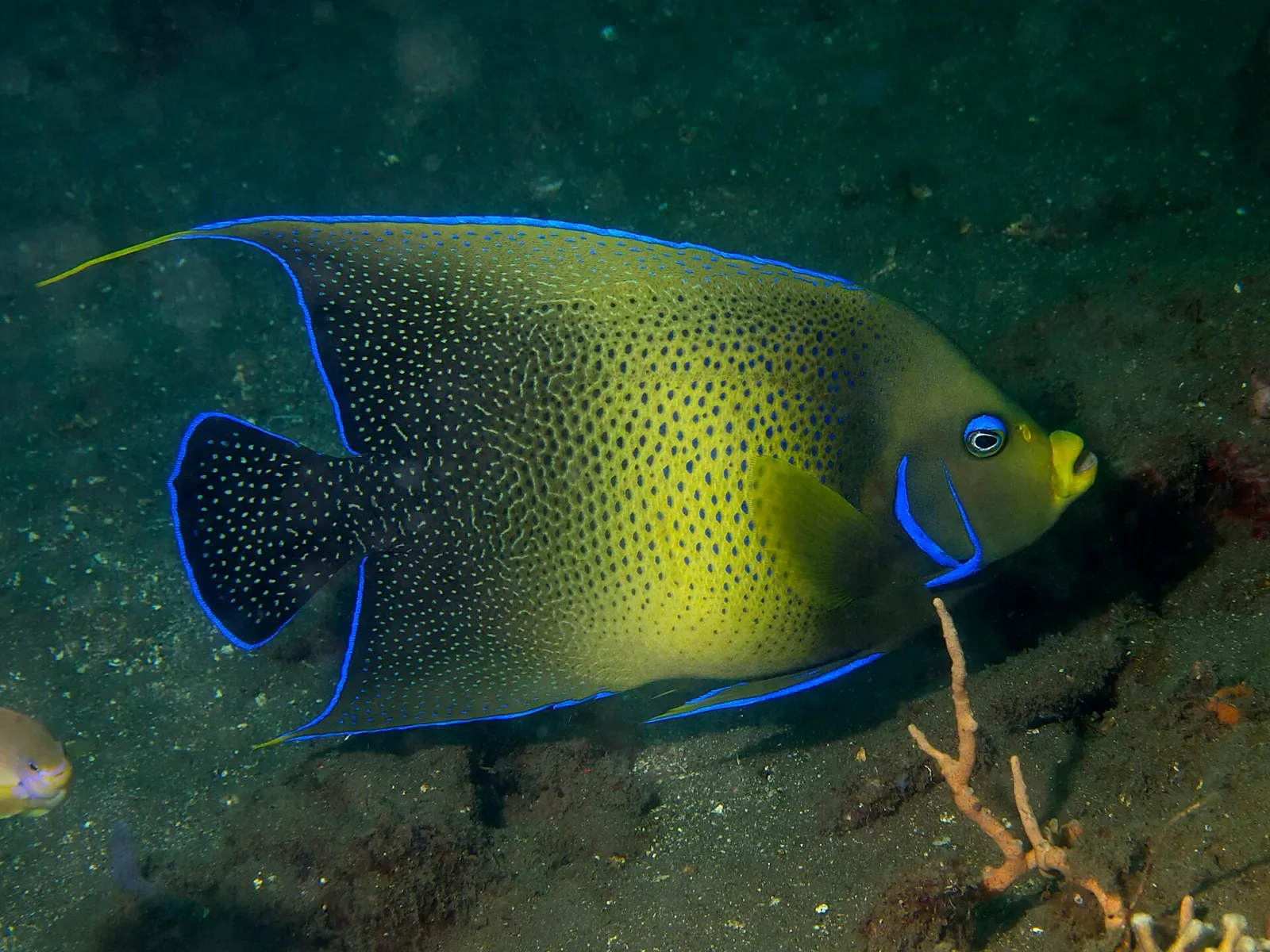
A wall of overhangs and caverns with its foot at about 30 m
Similar dives elsewhere

The protected shallows where Balicasag's turtles are thickest

Banded sea kraits crawling openly over a sunken plateau

An easy north-coast reef on the Napaling and Doljo road trip


.jpg)
A jukung-only reef of bommies and soft coral away from the crowds