
Banda Islands · Indonesia · Pinnacle · Pelagic & blue water
Batu Kapal
Big pelagics turn up on the pinnacles when the current runs.
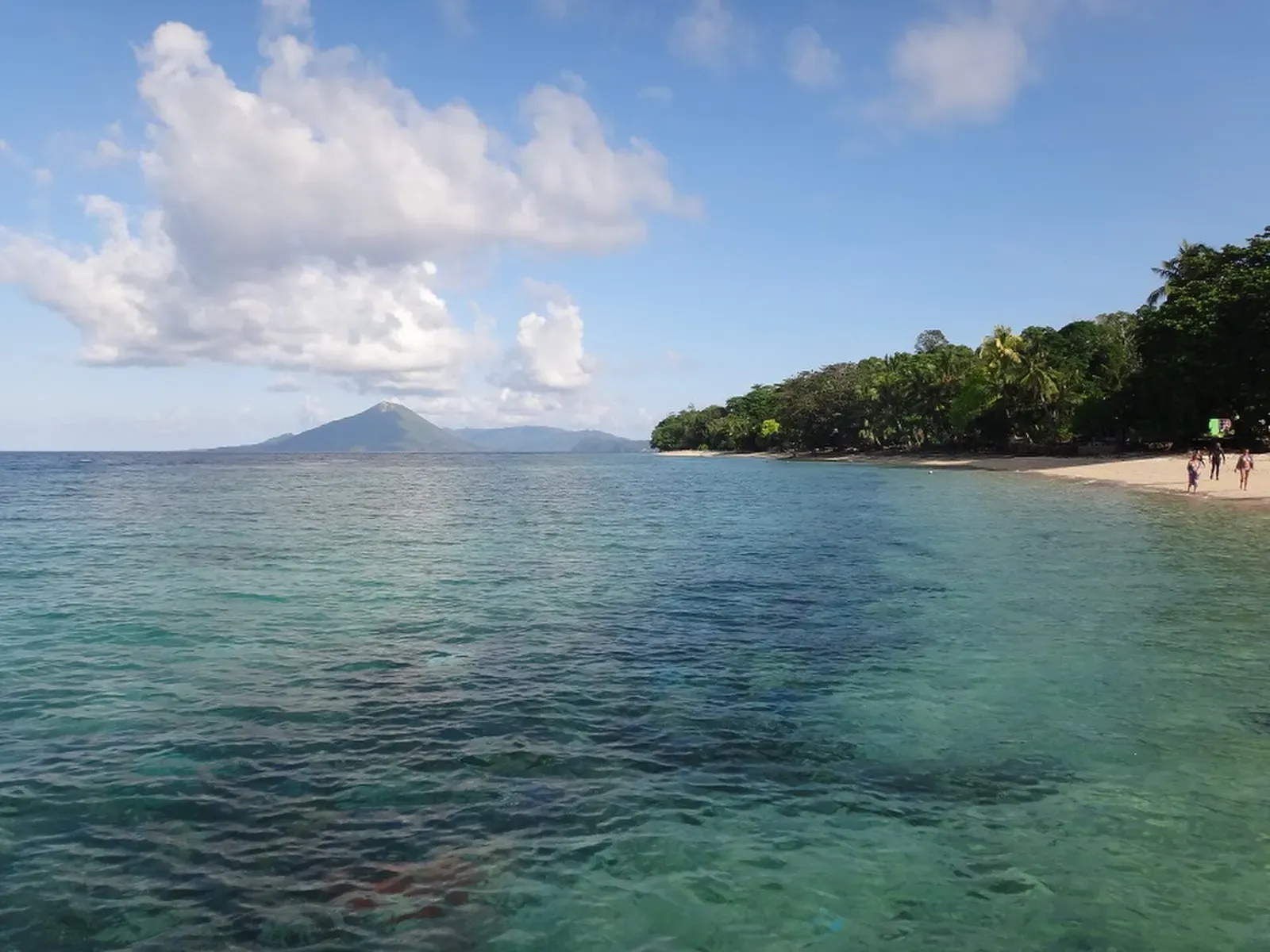
Area photo: WiDi · CC BY-SA 4.0
Batu Kapal, or Ship Rock, is a group of pinnacles northwest of Pulau Pisang and the only site of its kind in the Banda Islands. One tower breaks the surface and slopes to 22 metres, with three more pinnacles and a large boulder submerged around it, the deepest running to 40 metres. It is dived for the fish that hold on the structure, and for the bigger animals that arrive when the current is running.
Also known as Ship Rock.
Where it is and how deep
4.4870° S, 129.9310° EApproximate position — the dashed circle shows where the site lies; your operator's briefing has the mooring.
The dive
The central pinnacle breaks the surface and looks enough like a ship to have given the site its name, so it is easy to find and easy to descend on. From the bottom of it you are free to work outwards to the submerged pinnacles: one off to the southeast, one to the east, one to the northwest, and a large boulder to the northeast. The southeast pinnacle rises to 26 metres and drops to 34 on its outside face. The northwest one is more cylindrical, rising from 40 metres to 10, though it carries less coral growth than the rest.
Fish life is the reason to linger. Large schools of midnight snappers and bigeye bream hang off the structure, giant and honeycomb morays sit in the cracks, and masses of redtooth triggerfish and blacklip butterflyfish work the water above the coral. Large banded sea kraits come down from the surface to hunt across the reef. When the current is running the site acts as a magnet for bigger fish, and potato cod, rainbow runners, longnose emperors, grey reef sharks and yellowtail barracuda are all seen here, though none of them is a certainty.
Marine life and season
- Reef sharks
- Barracuda
- Groupers
- Trevally & jacks
- Reef fish swarms
- Sea snakes
| Jan | Feb | Mar | Apr | May | Jun | Jul | Aug | Sep | Oct | Nov | Dec |
|---|---|---|---|---|---|---|---|---|---|---|---|
| Fair | Fair | Good | Good | Good | Fair | Fair | Fair | Good | Prime | Prime | Fair |
Season follows Banda Islands: October–April is the main liveaboard transit season; hammerhead and mobula sightings at seamounts are seasonal, not guaranteed.
Dive videos
Bulles à Batu Kapal HD 1080p · Mr.Bubbles on YouTube
Round Ribbontail Rays in Batu Kapal, Banda, Indonesia · Banda Sea Hobbits on YouTube
Questions divers ask
How deep is Batu Kapal?+
The central pinnacle breaks the surface, and the satellites around it sit deeper. The southeast pinnacle rises to 26 metres and drops to 34 on its outside, and the northwest pinnacle runs from 40 metres up to 10. Most of the dive is spent between those figures.
What will I see at Batu Kapal?+
Schools of midnight snappers and bigeye bream, giant and honeycomb morays, redtooth triggerfish, blacklip butterflyfish and banded sea kraits are the residents. When the current runs, potato cod, grey reef sharks, rainbow runners, longnose emperors and yellowtail barracuda come in.
Sources
- Banda Islands Dive Sites — Dive The World
- Batu Kapal, Kepulauan Banda — OpenStreetMap
More dive sites in Banda Islands
Wall
Scorpionfish, blackspotted morays and orang-utan crabs on the face.
Wall
A wide step at 30 m before the wall falls away again.
Seamount
Fusiliers roll down the slope thick enough to block the view.
Hard coral grown over lava that reached the sea in 1988.
Wall
A gorgonian-hung wall off the island that nutmeg made famous.
Wall
A 6 m almond-shaped swim-through at 26-30 metres.
Mobula rays pass in formations up to 25 strong.
Wall
Giant, honeycomb and snowflake morays in one small islet's wall.
Similar dives elsewhere
Pinnacle
Gili Sarang
Belongas Bay & South Lombok · Indonesia
Giant trevally working the current lines over open-sea pinnacles
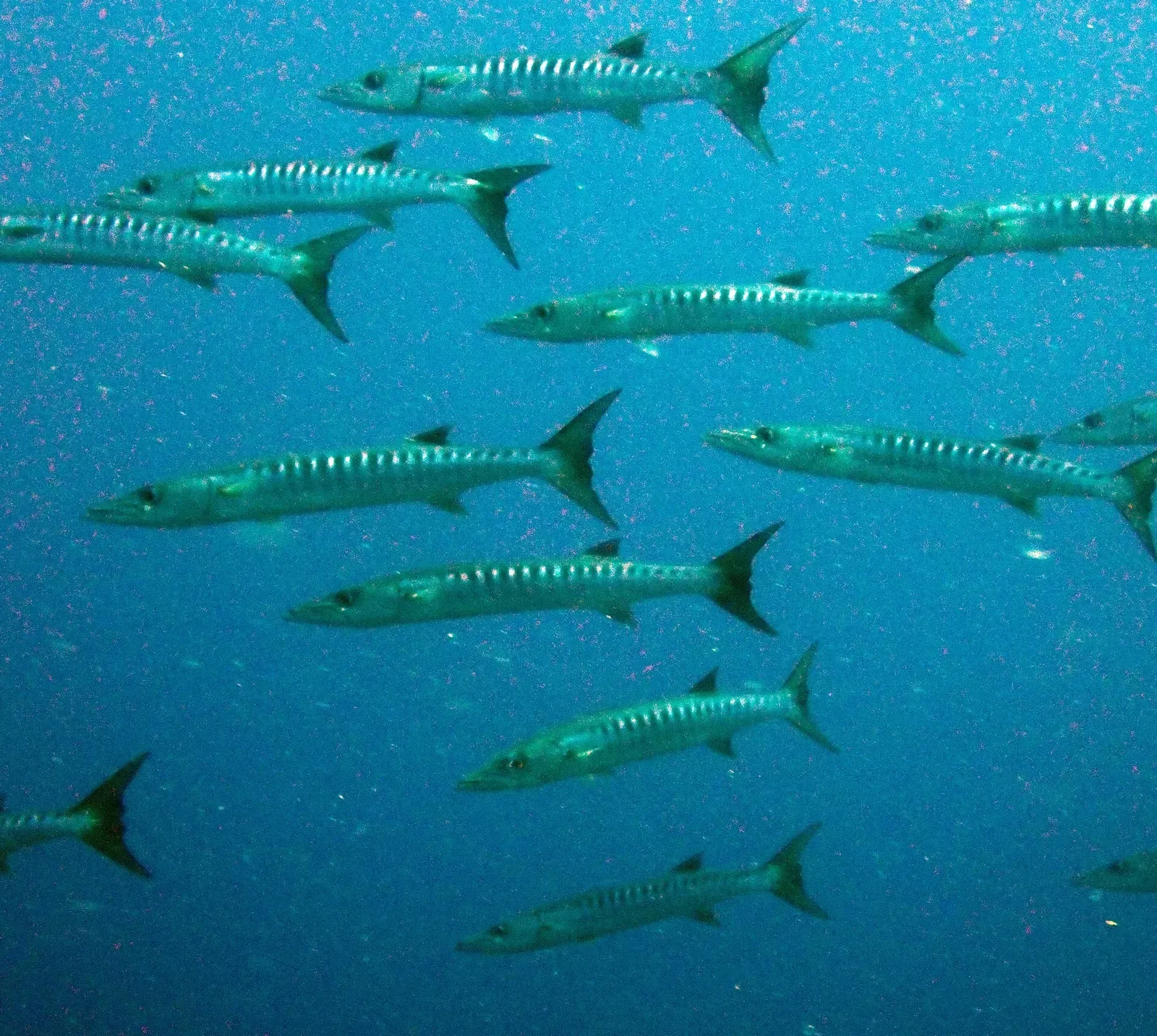

An isolated ocean ridge whose point pulls in barracuda and jacks
Pinnacle
Rayners Rock
Pulau Aur & Pulau Dayang · Malaysia
Schools of jacks and barracuda just off a lone boulder in open water
Pinnacle
The Magnet
Belongas Bay & South Lombok · Indonesia
Hammerhead schools around a surge-washed rock in the open sea