
Banda Islands · Indonesia · Wall · Cave & cavern
Batu Belanda
Scorpionfish, blackspotted morays and orang-utan crabs on the face.
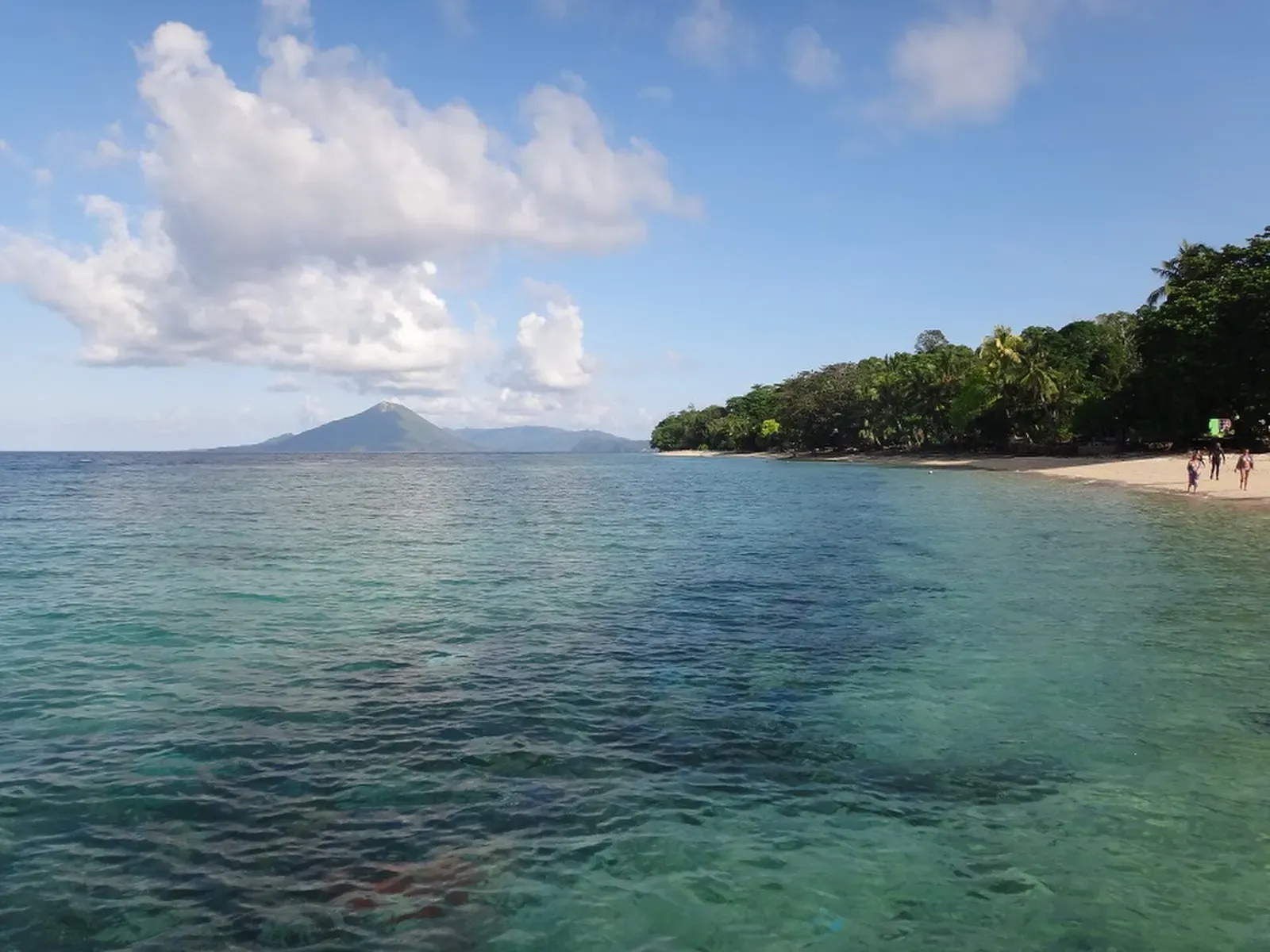
Area photo: WiDi · CC BY-SA 4.0
Batu Belanda - Dutch Rock - is a wall on the western coast of Banda Besar, named for the supposed first landing spot of the Dutch sailing boats that reached the Bandas. The coral here is thin for want of sunlight, so it is dived as a hunt rather than a swim: for the Lembeh sea dragon, and for the cavern at 13 m that a shaft in the ceiling lights from above.
Also known as Dutch Rock.
Where it is and how deep
4.5450° S, 129.9000° EApproximate position — the dashed circle shows where the site lies; your operator's briefing has the mooring.
The dive
You drop in beside the rock that juts out from the coastal wall on Banda Besar's western shore, and the dive starts as a slow search rather than a swim. The wall drops to 24 m and, without regular sunlight, the coral growth is thin — the reason to be here is the Lembeh sea dragon, one of the rare creatures of the Moluccas, which takes an unhurried, close-in hunt along the face to turn up.
Once the search is done, follow the wall and the current in a northerly direction. At 13 m there is a good sized cavern: the ledge penetrates quite deep and a shaft in the ceiling throws sun rays into the space. Along the way several Napoleon wrasse work the area alongside bullethead parrotfish, and the wall itself is reliable for scorpionfish, blackspotted morays and orang-utan crabs tucked into the growth.
Background
The name is a piece of Banda history rather than geology. Batu Belanda, 'Dutch Rock', is the supposed first landing spot for the Dutch sailing boats when they first arrived in the Bandas. The rock still marks the entry to the dive, jutting out from the coastal wall on the western side of Banda Besar.
Marine life and season
- Napoleon wrasse
- Macro critters
| Jan | Feb | Mar | Apr | May | Jun | Jul | Aug | Sep | Oct | Nov | Dec |
|---|---|---|---|---|---|---|---|---|---|---|---|
| Fair | Fair | Good | Good | Good | Fair | Fair | Fair | Good | Prime | Prime | Fair |
Season follows Banda Islands: October–April is the main liveaboard transit season; hammerhead and mobula sightings at seamounts are seasonal, not guaranteed.
Questions divers ask
How deep is Batu Belanda?+
The wall drops to 24 m. The cavern that is the second feature of the site is much shallower, at 13 m, so a dive here can be run deep first and finished slowly along the shallower wall.
What can you see at Batu Belanda?+
It is dived for the chance of a Lembeh sea dragon. Napoleon wrasse and bullethead parrotfish work the area, and scorpionfish, blackspotted morays and orang-utan crabs are common on the wall.
Sources
- Banda Islands Dive Sites — Dive The World
More dive sites in Banda Islands
Pinnacle
Big pelagics turn up on the pinnacles when the current runs.
Wall
A wide step at 30 m before the wall falls away again.
Seamount
Fusiliers roll down the slope thick enough to block the view.
Hard coral grown over lava that reached the sea in 1988.
Wall
A gorgonian-hung wall off the island that nutmeg made famous.
Wall
A 6 m almond-shaped swim-through at 26-30 metres.
Mobula rays pass in formations up to 25 strong.
Wall
Giant, honeycomb and snowflake morays in one small islet's wall.
Similar dives elsewhere

A chimney through the wall, 18 m in and 8 m out


A hundred metres of coral wall from 5 m to 60
Stacked table corals over a wall dropping to 50 m
Giant gorgonian fans on a wall from 5 m to 60