
Banda Islands · Indonesia · Seamount · Wall · Reef
Karang Hatta
Fusiliers roll down the slope thick enough to block the view.
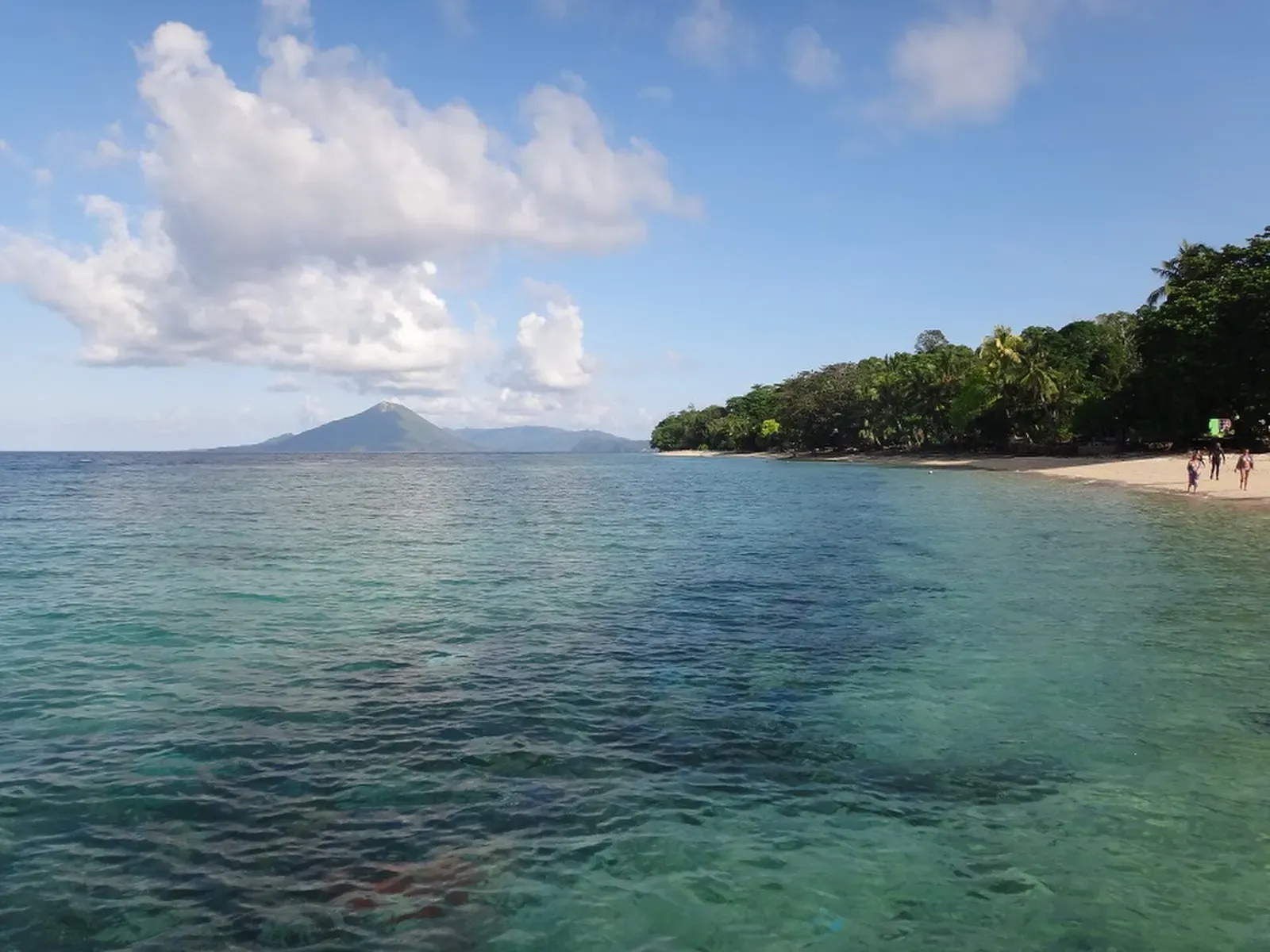
Area photo: WiDi · CC BY-SA 4.0
Karang Hatta, known locally as Sekaru or 'shallow area', is a submerged reef 500 metres across lying a couple of kilometres off the south coast of Hatta Island. The slope lets you dive it at almost any depth, but 25 metres is where the fish stack up, and the reef draws enough pelagic traffic that hammerheads turn up on it.
Also known as Sekaru.
Where it is and how deep
4.6159° S, 130.0391° EApproximate position — the dashed circle shows where the site lies; your operator's briefing has the mooring.
The dive
The southeast corner is the usual place to begin, because it generally carries a southerly current and that is what brings the fish in by the thousand. The sloping reef will let you dive at almost any depth, but 25 metres is where most of the action seems to take place. Endless cascades of neon fusiliers mixed with blue and yellow fusiliers roll down the slope like mercury, thick enough in places that you cannot see past them.
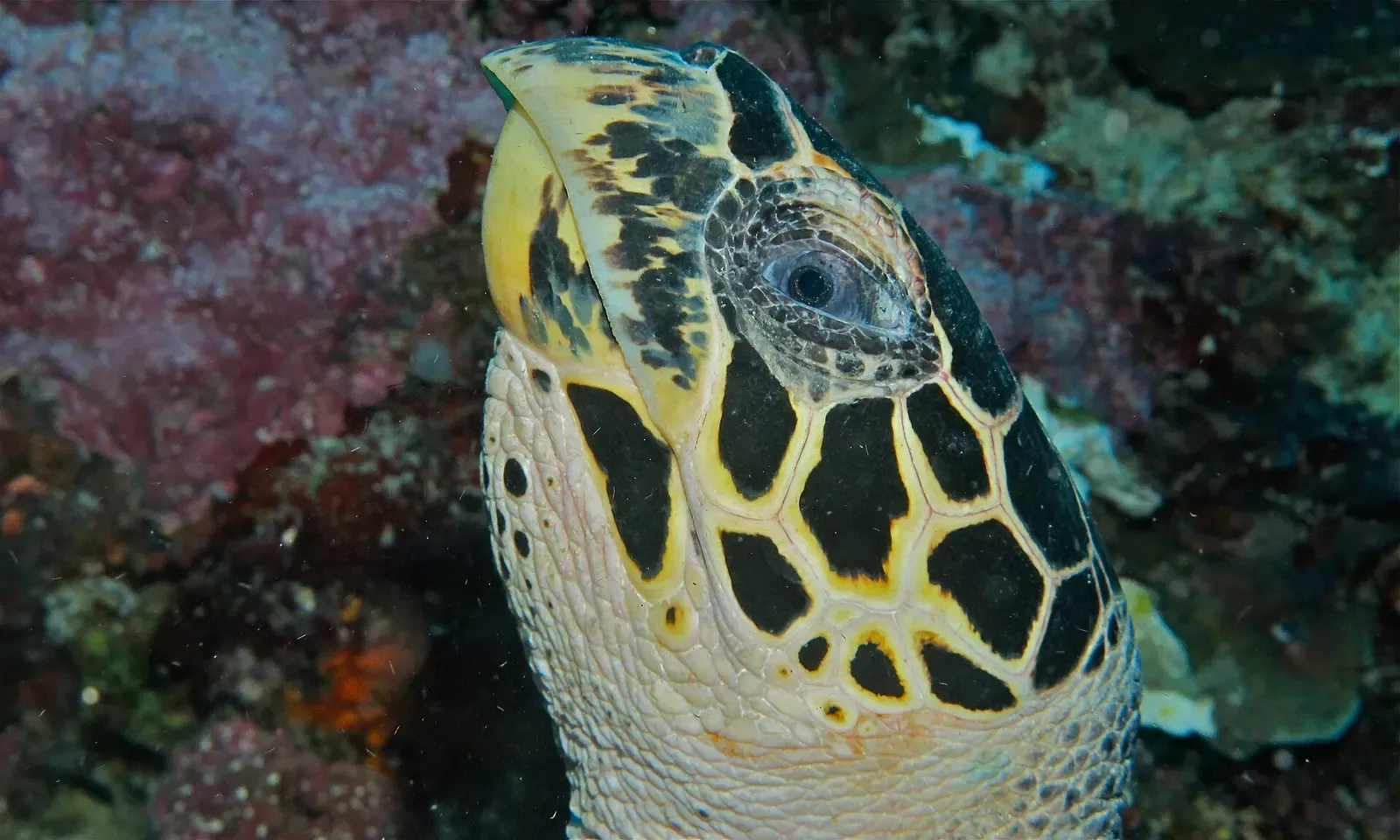
Working across the slope you find large numbers of bigeye trevally and whitemargin unicornfish prowling the fields of golden brown soft corals after bluedash fusiliers, redtooth triggerfish, pyramid butterflyfish and juvenile yellow snappers. White tip reef sharks sleep on the slope bed, green turtles feed on the sponges, and mobula rays come through in search of plankton. With that much food in the water there is a good chance of dogtooth tuna, eagle rays, great barracuda and both great and scalloped hammerhead sharks.
The west side of the site is a different dive. There the slope is replaced by a vertical wall starting at around 14 metres, hung with some of the largest sponges you are ever likely to see, and in the depths below it black tip sharks and red snappers circle. It is worth planning to take in one side or the other rather than trying to cover both in a single dive.
Background
The reef takes its name from Hatta Island beside it, which is named after Mohammad Hatta, the first vice president of Indonesia and one of the two prime intellectuals behind the country's campaign for independence. Bandanese divers also call the reef Sekaru, meaning 'shallow area', a plain description of a 500-metre-wide patch of reef that never reaches the surface.
Marine life and season
- Hammerheads
- Reef sharks
- Eagle rays
- Mobula rays
- Sea turtles
- Barracuda
- Trevally & jacks
- Tuna
- Reef fish swarms
| Jan | Feb | Mar | Apr | May | Jun | Jul | Aug | Sep | Oct | Nov | Dec |
|---|---|---|---|---|---|---|---|---|---|---|---|
| Fair | Fair | Good | Good | Good | Fair | Fair | Fair | Good | Prime | Prime | Fair |
Season follows Banda Islands: October–April is the main liveaboard transit season; hammerhead and mobula sightings at seamounts are seasonal, not guaranteed.
Know before you go
- Titan triggerfish are common residents and no less bad-tempered here than anywhere else. Give any fish guarding a patch of bottom a wide berth rather than swimming over the top of it.
Dive videos
HDR Karang Hatta, Banda Sea by Steve Evans · Stephen Evans on YouTube
Questions divers ask
Can you see hammerheads at Karang Hatta?+
Great and scalloped hammerhead sharks are among the pelagics that come in to feed at the reef, along with dogtooth tuna, eagle rays and great barracuda. None of it is guaranteed on any given dive, and the sightings follow the fish and the current.
How deep is Karang Hatta?+
The sloping reef can be dived at almost any depth, but most of the action is around 25 metres. On the west side a vertical wall starts at about 14 metres and drops away below that.
Sources
- Banda Islands Dive Sites — Dive The World
- Pulau Hatta, Kepulauan Banda — OpenStreetMap
In The Logbook
- Where to dive in every month of the yearTrip planning · 14 min read
More dive sites in Banda Islands
Wall
Scorpionfish, blackspotted morays and orang-utan crabs on the face.
Pinnacle
Big pelagics turn up on the pinnacles when the current runs.
Wall
A wide step at 30 m before the wall falls away again.
Hard coral grown over lava that reached the sea in 1988.
Wall
A gorgonian-hung wall off the island that nutmeg made famous.
Wall
A 6 m almond-shaped swim-through at 26-30 metres.
Mobula rays pass in formations up to 25 strong.
Wall
Giant, honeycomb and snowflake morays in one small islet's wall.
Similar dives elsewhere

An isolated seamount that pulls in barracuda and trevally schools

A submerged mountain from 55 m to 3 m, four hulls on its flanks
Hundreds of batfish and jacks holding in the current


Vertical seamount wall dived at 25–30 m in swirling current