
Banda Islands · Indonesia · Wall
Batu Wali
A wide step at 30 m before the wall falls away again.
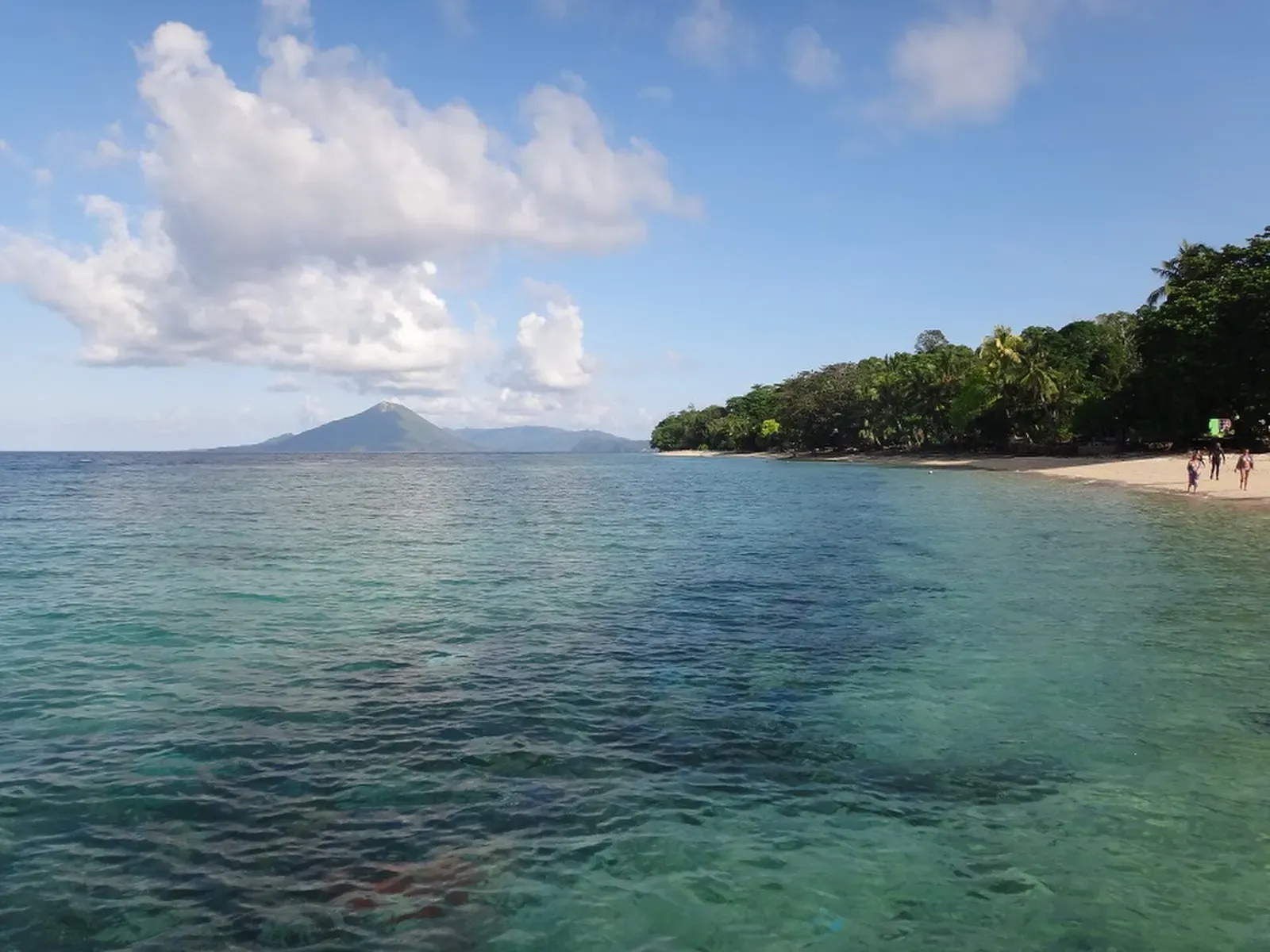
Area photo: WiDi · CC BY-SA 4.0
Batu Wali is a vertical wall off the northern tip of Banda Besar, inside the core zone of the Banda marine protected area, which was declared in part because the area is a spawning ground for plectropomus grouper. Big fish work the 5-10 m reef top - bumphead parrotfish, groupers, emperors, Napoleons and barracuda - and the currents that feed them run strong.
Where it is and how deep
4.5050° S, 129.9200° EApproximate position — the dashed circle shows where the site lies; your operator's briefing has the mooring.
The dive
The dive begins the way most Banda dives do, descending a vertical wall, but the feature that differentiates Batu Wali from its neighbours arrives at around 30 m: a wide step cut into the face, where massive barrel sponges and green vase sponges sit. From that shelf the reef plunges steeply down again, well beyond recreational diving limits, so the step is both the turning point of the dive and the reason to watch your computer on the way down.
Working back up the wall, the growth is fans, whips and featherstars, and the reef top at 5-10 m holds the best of the marine life. It is a good place to watch large bumphead parrotfish, groupers, emperors, Napoleons and barracuda, and schools of batfish often pass by, seemingly curious of divers. Look out for the unusual blood red bulb-tentacle anemone and its host deep red anemonefish.
Background
Batu Wali lies in the core zone of the islands' marine protected area, which encompasses Pisang, Banda Besar, Banda Neira and Gunung Api. The zone achieved that status primarily for its coral reef and because it is a spawning area for an important fishery species, the pelagic plectropomus grouper.
Marine life and season
- Groupers
- Napoleon wrasse
- Barracuda
| Jan | Feb | Mar | Apr | May | Jun | Jul | Aug | Sep | Oct | Nov | Dec |
|---|---|---|---|---|---|---|---|---|---|---|---|
| Fair | Fair | Good | Good | Good | Fair | Fair | Fair | Good | Prime | Prime | Fair |
Season follows Banda Islands: October–April is the main liveaboard transit season; hammerhead and mobula sightings at seamounts are seasonal, not guaranteed.
Know before you go
- Currents can be strong and unpredictable, including counter- and up-currents, so stay close to the wall and within sight of the guide.
- Chilly thermoclines are a distraction on the deep half of the dive; exposure protection matters more here than the surface temperature suggests.
Questions divers ask
How deep is Batu Wali?+
The wall's step lies at around 30 m and the reef top is at 5-10 m, so a standard dive goes deep first and finishes shallow. Below the step the reef continues well past recreational diving limits.
Is Batu Wali suitable for less experienced divers?+
Not really. Currents can be strong and unpredictable, including counter- and up-currents, and chilly thermoclines add to the workload, which makes it a challenging site when conditions are not favourable.
Sources
- Banda Islands Dive Sites — Dive The World
In The Logbook
- When the reef spawns: the moon's other calendarBig animals · 10 min read
- The layered sea: thermoclines and haloclinesOcean science · 8 min read
More dive sites in Banda Islands
Wall
Scorpionfish, blackspotted morays and orang-utan crabs on the face.
Pinnacle
Big pelagics turn up on the pinnacles when the current runs.
Seamount
Fusiliers roll down the slope thick enough to block the view.
Hard coral grown over lava that reached the sea in 1988.
Wall
A gorgonian-hung wall off the island that nutmeg made famous.
Wall
A 6 m almond-shaped swim-through at 26-30 metres.
Mobula rays pass in formations up to 25 strong.
Wall
Giant, honeycomb and snowflake morays in one small islet's wall.
Similar dives elsewhere

The sheltered Lekuan site, and Bunaken's night dive
Whip corals along a drifted wall, with bumpheads passing
Hundreds of batfish and jacks holding in the current


Reef top at 3-5 m over a wall that bottoms out at 20-25 m