
Banda Islands · Indonesia · Reef · Coral garden
Lava Flow (Gunung Api)
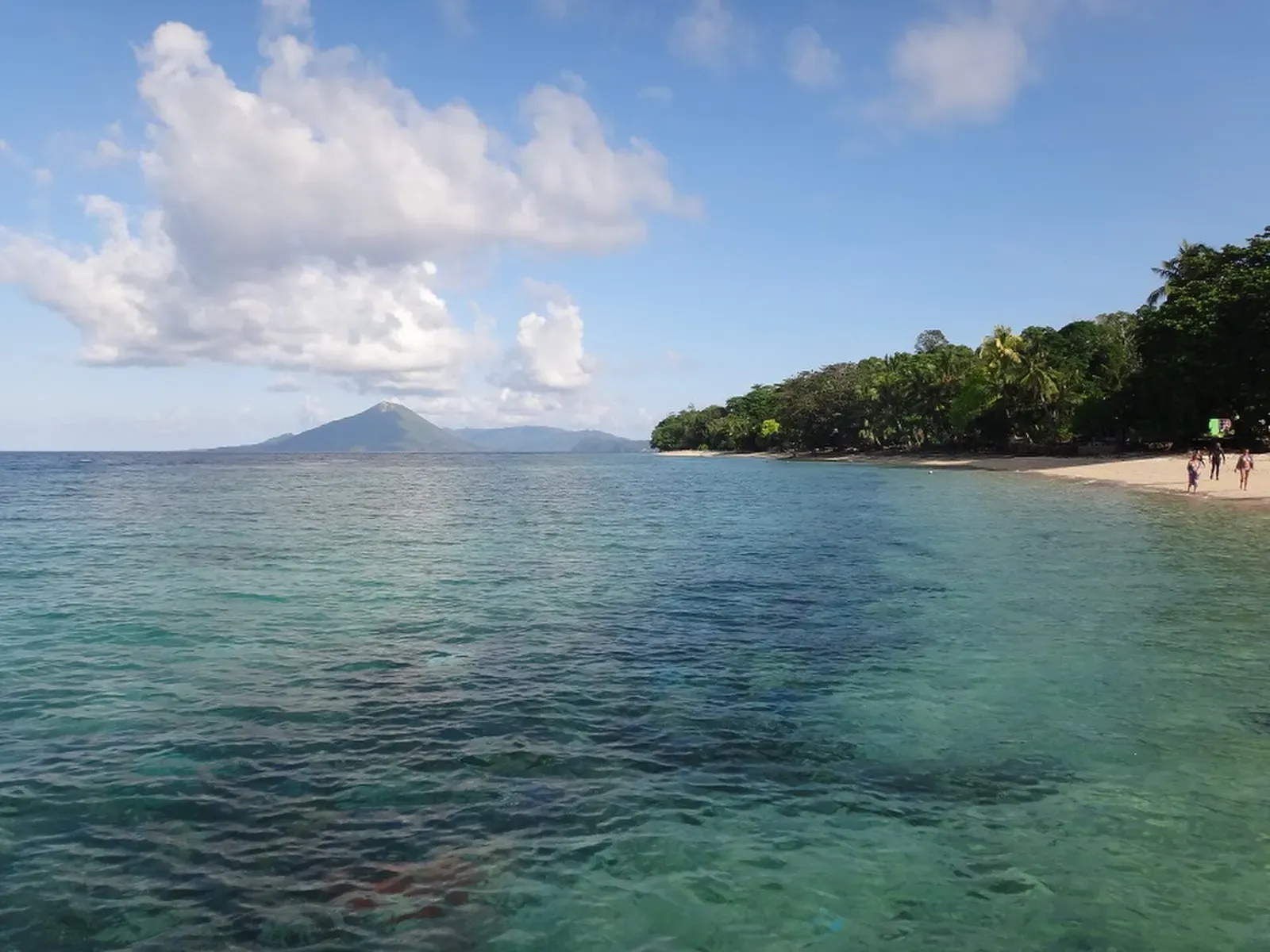
Hard coral grown over lava that reached the sea in 1988.
Area photo: WiDi · CC BY-SA 4.0
In 1988 lava from Gunung Api ran down the volcano's northern and northeastern slopes into the Banda Sea and destroyed the reef it covered. Hard coral has since grown back over the cooled rock at a rate that overturned what marine biologists thought they knew about coral growth in the wild, and the slope under the volcano is now one of the dives the archipelago is known for.
Also known as Gunung Api.
Where it is and how deep
4.5226° S, 129.8798° EApproximate position — the dashed circle shows where the site lies; your operator's briefing has the mooring.
The dive
The best place to drop in is on the northernmost of the lava flows, on the northeast coast of the island. The shallows are covered in tiered table corals, warty finger corals, bottlebrush corals and acropora, all of it standing on rock that was bare after the eruption. From 20 metres down to 35, cabbage leaf corals take over and the character of the slope changes with them.
Slender fusiliers, greensnout parrotfish, slingjaw wrasse and cuttlefish are the regulars, along with triggerfish. Black triggerfish are far more abundant at Gunung Api than elsewhere in the group and are easy to identify by the white band at the base of the dorsal and anal fins. Deeper along the slope there is a good chance of large Napoleon wrasse and schools of round and pinnate batfish. When plankton is thick in the water, mobula rays feed on it while dogtooth tuna and blue trevally hunt at the edge of your vision.
Background
Gunung Api last erupted in 1988, when hot molten lava streamed down its northeastern and northern slopes into the Banda Sea, destroying the reef system in its path. The local village was permanently evacuated. The coral that has grown back on the cooled flow did so fast enough to dumbfound marine biologists and to shatter established assumptions about how quickly hard corals grow in nature. The volcano now sits inside the core zone of the islands' marine protected area, along with Pisang, Banda Besar and Banda Neira.
Marine life and season
- Pristine corals
- Napoleon wrasse
- Mobula rays
- Tuna
- Trevally & jacks
- Octopus & cuttlefish
- Reef fish swarms
| Jan | Feb | Mar | Apr | May | Jun | Jul | Aug | Sep | Oct | Nov | Dec |
|---|---|---|---|---|---|---|---|---|---|---|---|
| Fair | Fair | Good | Good | Good | Fair | Fair | Fair | Good | Prime | Prime | Fair |
Season follows Banda Islands: October–April is the main liveaboard transit season; hammerhead and mobula sightings at seamounts are seasonal, not guaranteed.
Dive videos
Gunung Api Lava Flow Dive Spot - Banda Islands, Indonesia · Luke M on YouTube
Anomalops & Photoblepharon - Gunung Api Lava Flow Nightdive - Banda Islands, Indonesia · Luke M on YouTube
Questions divers ask
What is the Lava Flow dive site?+
It is the underwater slope on the northeast coast of Gunung Api, where lava from the 1988 eruption ran into the Banda Sea and wiped out the reef. Hard coral has recolonised the cooled rock, and the dive follows that regrowth from the shallows down to 35 metres.
How deep is the Lava Flow dive?+
The reef starts in the shallows and runs down to 35 metres. Table, warty finger, bottlebrush and acropora corals dominate the top of the slope, and cabbage leaf corals take over from 20 metres down.
Sources
- Banda Islands Dive Sites — Dive The World
- Gunung Api (Banda) — OpenStreetMap
More dive sites in Banda Islands
Wall
Scorpionfish, blackspotted morays and orang-utan crabs on the face.
Pinnacle
Big pelagics turn up on the pinnacles when the current runs.
Wall
A wide step at 30 m before the wall falls away again.
Seamount
Fusiliers roll down the slope thick enough to block the view.
Wall
A gorgonian-hung wall off the island that nutmeg made famous.
Wall
A 6 m almond-shaped swim-through at 26-30 metres.
Mobula rays pass in formations up to 25 strong.
Wall
Giant, honeycomb and snowflake morays in one small islet's wall.
Similar dives elsewhere
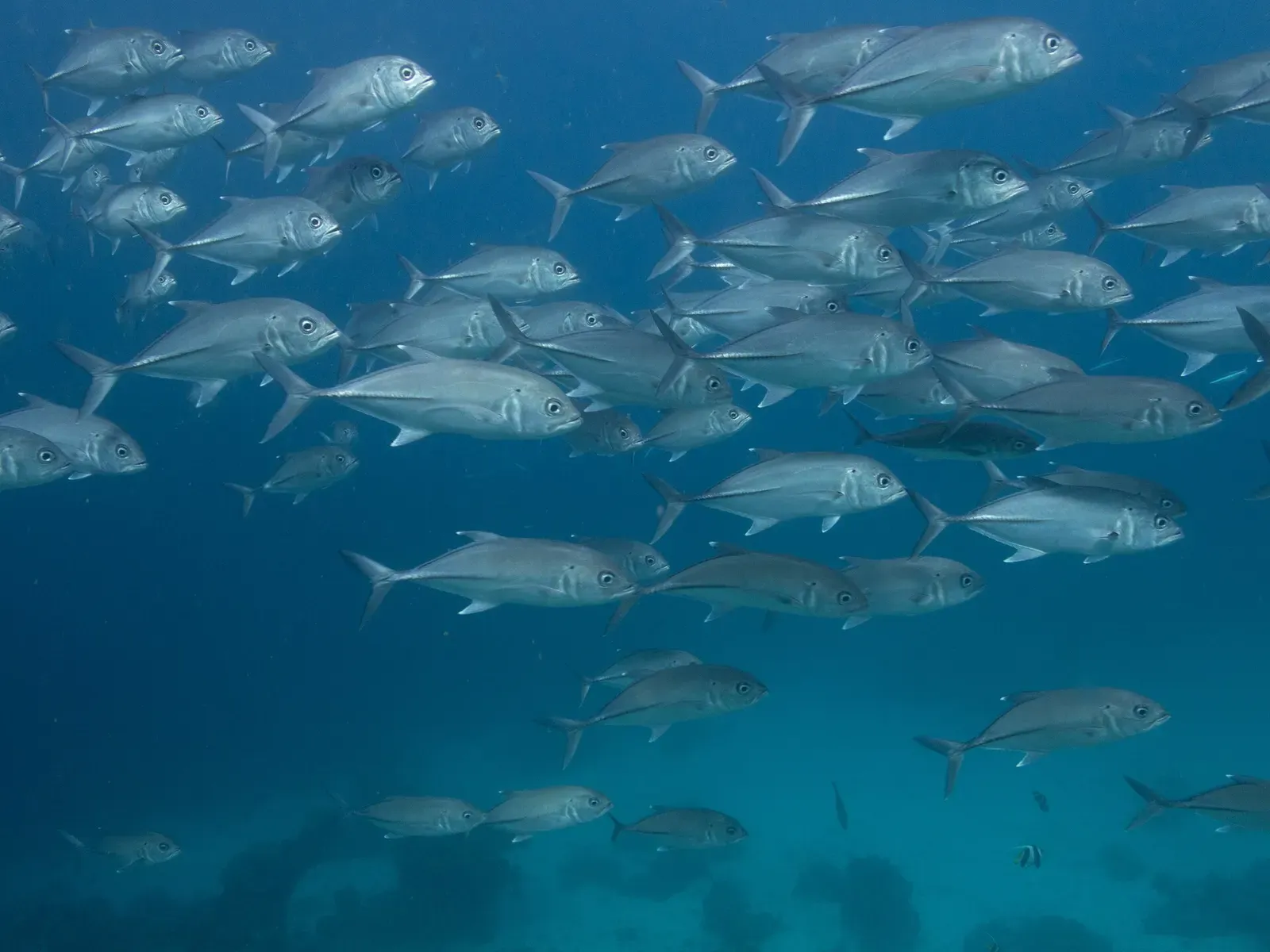
Fish fill the water before your BCD is finished deflating
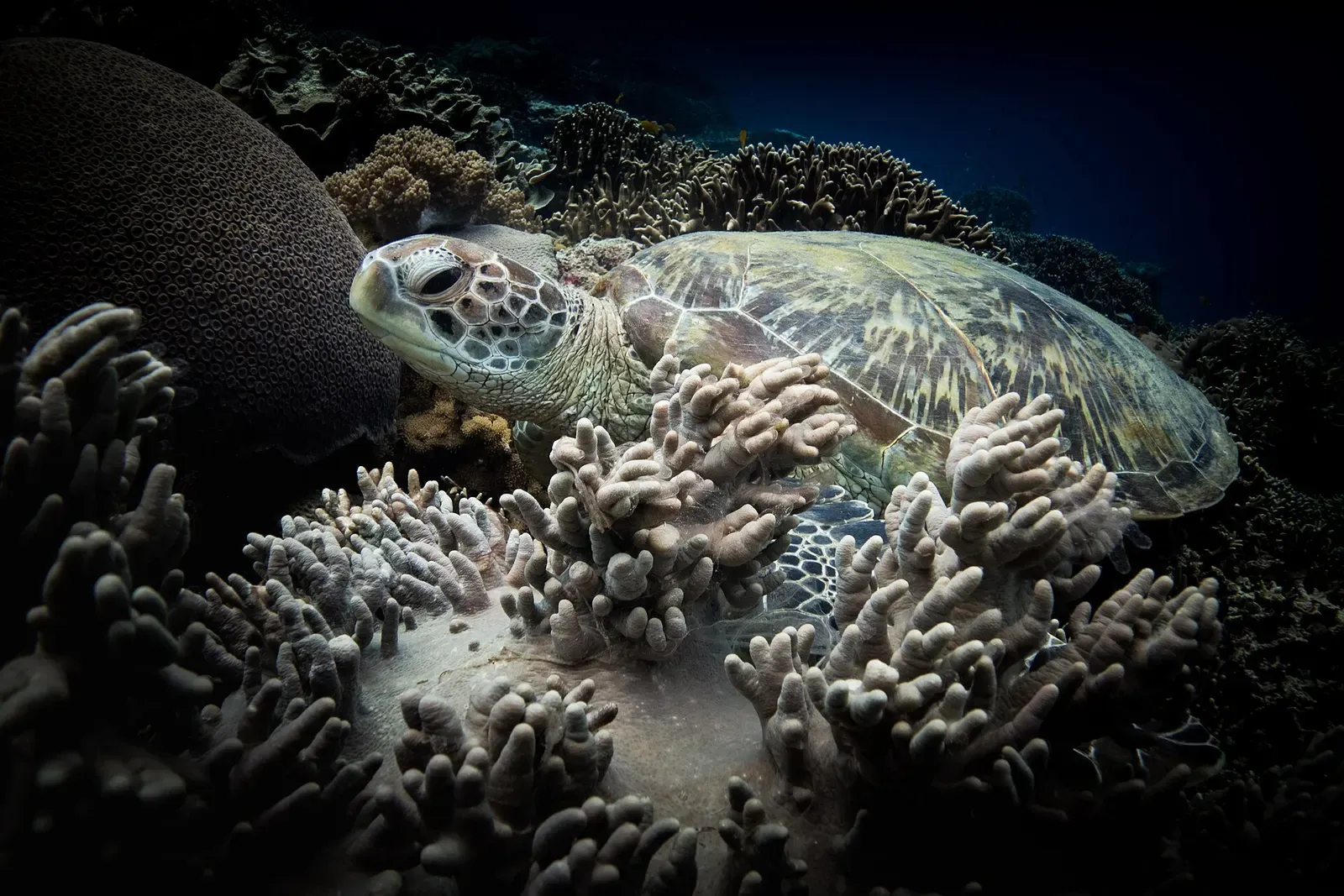
A no-take reef since 1982, with turtles on nearly every dive

The protected shallows where Balicasag's turtles are thickest


Fields of big gorgonians at the 35-metre end of the slope