Cold Water · France
Chausey Islands & Granville
Century-old wrecks and kelp walls in Europe's biggest tides
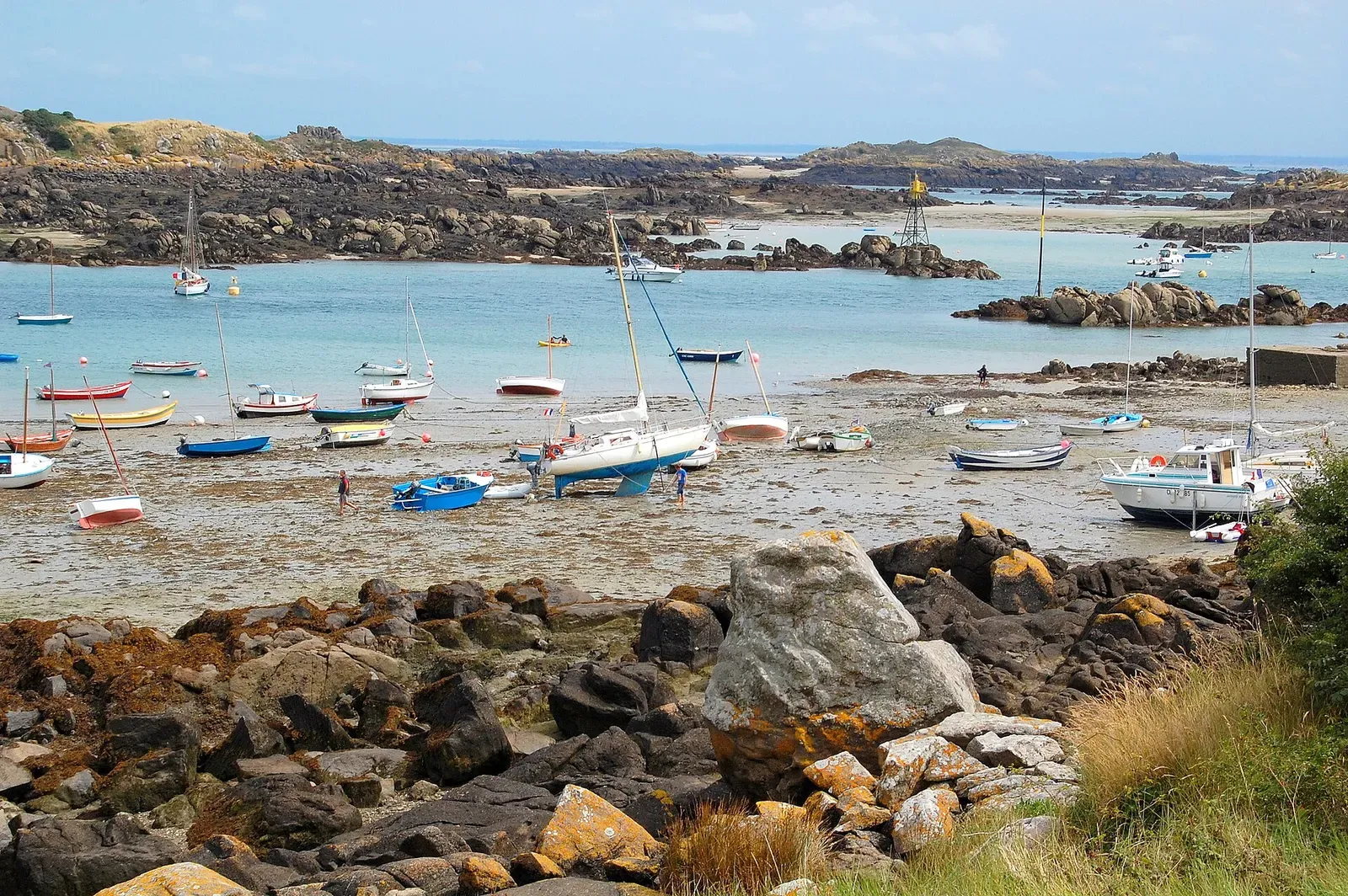
Photo: Pline · CC BY-SA 3.0
Chausey is a scatter of small islands, islets and rocks off the Normandy coast, dived by fast RIB out of Granville. The Granville boats work around thirty sites along this stretch of the Channel, from kelp-hung drop-offs to wrecks, some a century old: the Anvers to the east of the islands, open to French Level 1 divers, the Voilier on sand at 38 m south of the Sound, and, out near the Minquiers, the Fetlar between 20 and 30 m. Tides here reach 14 m on the equinoxes, the largest range in Europe, and strong currents run through the islands.
About diving in Chausey Islands & Granville
Diving at Chausey is boat diving from the port of Granville. Plongée Chausey Loisirs runs fast RIBs out to the archipelago and works a pool of around thirty sites, and the Club Subaquatique Hippocampe, a members' club based at Granville, keeps its own site list, from Le Founet and Videcoq to the Anvers wreck. The same stretch of the Emerald Coast runs on from the Bay of Saint-Malo past Chausey to Jersey, with the Minquiers reef at its heart. Night dives are offered as well as day trips. The tide governs the day: the range reaches 14 m at the equinox springs, and currents sweep the islands continuously.
Underwater the archipelago is granite and steel. Drop-offs are hung with laminaria kelp, and wrecks, some of them a century old, lie out in open water. The Anvers sits to the east of the islands and the Voilier rests on sand at 38 m south of the Sound, beside a drop-off; the Fetlar, between 20 and 30 m, lies out near the Minquiers. The fish are pollack, bass, ballan and cuckoo wrasse, mackerel and bream, with cuttlefish, octopus, lobster, spider crabs and crawfish among them. The water is cold, from about 9 °C in February to 19 °C in late August.
The area suits divers already comfortable in cold, moving water and keen on wrecks. French Level 1 divers have the Anvers, while the Fetlar and the Voilier lie between 20 and 38 m. For a British take on Channel wreck diving, with a training shore site in Chesil Cove, Weymouth & Portland lies across the water on the Dorset coast.
Best time to dive Chausey Islands & Granville
| Jan | Feb | Mar | Apr | May | Jun | Jul | Aug | Sep | Oct | Nov | Dec |
|---|---|---|---|---|---|---|---|---|---|---|---|
| Fair | Fair | Fair | Fair | Fair | Good | Good | Prime | Prime | Good | Good | Fair |
The ratings follow the sea temperature, warmest in August and September (about 18 °C) and coldest in February (about 9 °C); no month is singled out for diving.
Dive types & marine life
Fish life is the draw: pollack, bass, ballan and cuckoo wrasse, mackerel and bream, with cuttlefish, octopus, lobster, spider crabs and crawfish. The strong, constant currents that feed the lobster fishery keep the water well mixed. The archipelago has been a bird protection zone since May 1988.
- Wreck
- Wall
- Night
- Octopus & cuttlefish
Best dive sites in Chausey Islands & Granville
- 1
Anvers
Wreck to the east of the islands, open to divers from French Level 1.
- 2
Voilier
Wreck on a sand bottom at 38 m south of the Sound, close to a drop-off.
- 3
Heinrich Hey
Torpedoed patrol boat of 1944 lying between 18 and 35 m.
- 4
Fetlar
A quiet wreck near the Minquiers reef, lying between 20 and 30 m.
- 5
Walter Darré
Wreck between 25 and 35 m west of the archipelago, dived from Granville.
Site guides
Wreck
A century-old cargo wreck open to French Level 1 divers
Artificial reef
A quiet wreck between 20 and 30 m out near the Minquiers
Wreck
A wartime patrol boat torpedoed on 3 July 1944
Artificial reef
A wreck on sand at 38 m beside a Chausey drop-off
Artificial reef
A boat-dived wreck between 25 and 35 m
How to get to Chausey Islands & Granville
Granville is the base: the dive boats leave from there, and between two and four daily shuttles, depending on season, link Chausey to the mainland port. There is no scheduled link to the other Channel Islands. Caen-Carpiquet airport handles regional flights, and Granville's aerodrome takes light aircraft.
Photos from Chausey Islands & Granville
Karl Forterre · CC BY-SA 4.0
Pline · CC BY-SA 3.0
Pline · CC BY-SA 3.0
Nikater · Public domain
Dive videos
15 juillet 2021 Chausey / l'Etat · fcmovie on YouTube
Questions divers ask
What certification do the Chausey wrecks need?+
The Anvers wreck is open from French Level 1. The Fetlar and the Voilier lie deeper, between 20 and 38 m, in an area where strong currents run through the islands.
How big are the tides at Chausey?+
The range reaches 14 m at the equinox springs, the largest in Europe, and currents sweep the islands continuously, so the tide governs the dive day.
How do divers reach the Chausey wrecks from Granville?+
Fast RIBs run out to the archipelago from the port of Granville and work a pool of around thirty sites. Night dives are offered as well as day trips.
Sources
- Plongée Sous-Marine à Chausey | Tous Niveaux — Plongée Chausey Loisirs
- Plongée Chausey Loisirs — Plongée Chausey Loisirs
- CSH Granville-Chausey (Wayback) — Club Subaquatique Hippocampe Granville-Chausey
- Nos Sites de Plongée (Wayback) — Club Subaquatique Hippocampe Granville-Chausey
- Chausey — Wikipedia
- Îles Chausey — Wikipédia
- Granville — Wikipédia
- Granville Sea Temperature — Sea Temperatures
Photo credits
- Moored boats sit on sand and seaweed at low tide in a sound ringed by granite rocks and islets by Pline, CC BY-SA 3.0, via Wikimedia Commons
- Chausey lighthouse above a rocky, wooded headland of Grande-Île, seen from the water by Karl Forterre, CC BY-SA 4.0, via Wikimedia Commons
- Sailing yachts stranded on rock and sand at low tide, with low islets on the horizon by Pline, CC BY-SA 3.0, via Wikimedia Commons
- Blue and white fishing boat resting on the seabed at low tide, cottages on the shore behind by Pline, CC BY-SA 3.0, via Wikimedia Commons
- Passenger ferry bow in calm water with boats and low islands beyond by Nikater, Public domain, via Wikimedia Commons
Embed
Run a dive centre, club or blog? Embed this map of 2 dive sites near Chausey Islands & Granville on your own page.
Similar destinations

Sweden's only cold-water coral reefs, inside its first marine national park


Slack-water walls of giant tube worms in the strong currents of Discovery Passage
Cold Water
Anemone-draped fjord walls and a sunk destroyer, an hour from Vancouver
Cold Water
Isle of Skye
United Kingdom
Pinnacle walls at the Macleod Maidens and wrecks from Neist Point to Loch Alsh