Costa Blanca · Spain · Reef
Cabo de San Antonio
Passages of light between enormous boulders, white gorgonians throughout
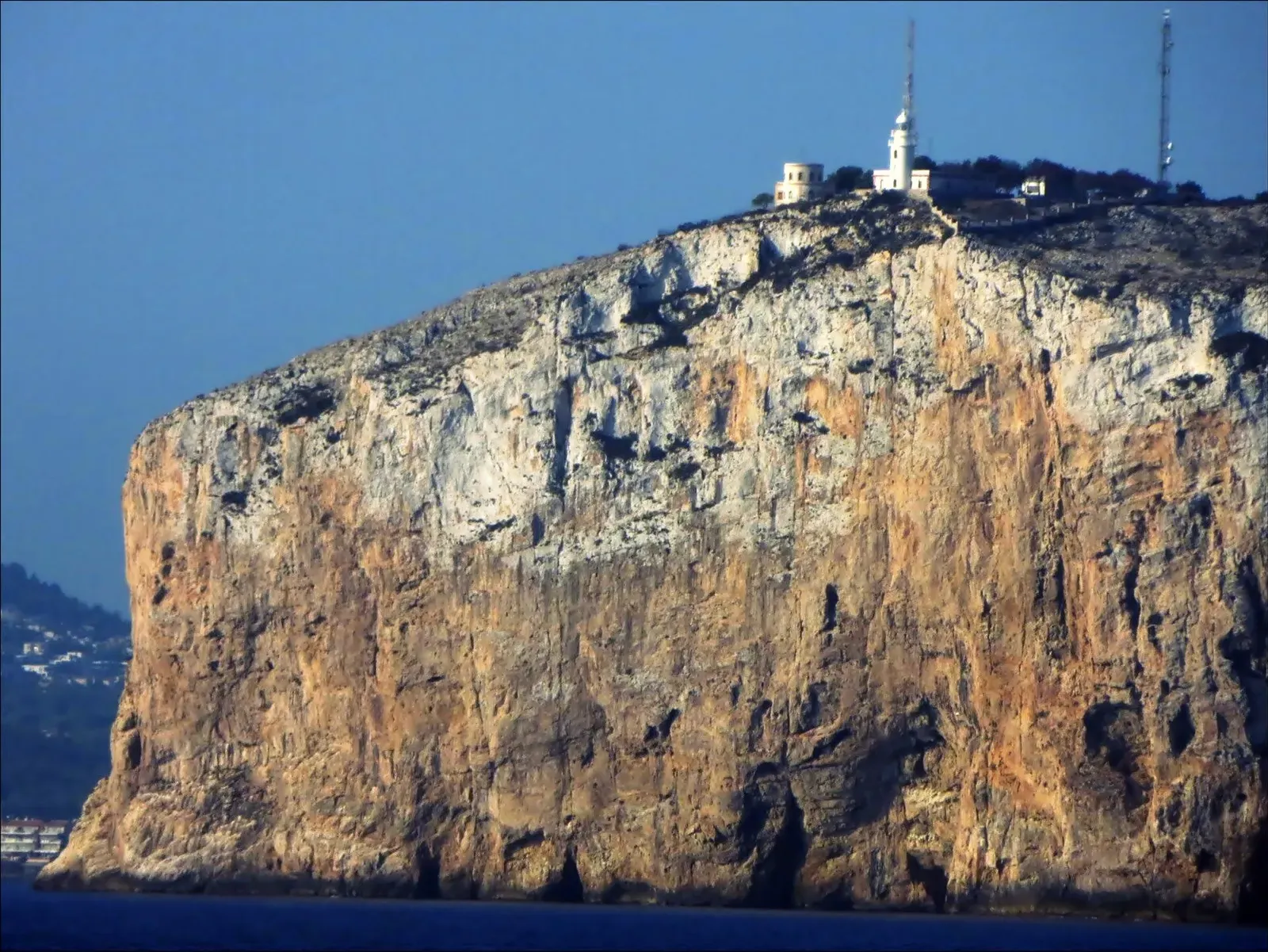
Photo: Samu alicante · CC BY-SA 4.0
The headland dive off Jávea, where enormous stones on the bottom form passages and a play of light that photographers come for. The route runs along the rock wall and then out over the boulders, where the depth settles between 12 and 19 m, with white gorgonians the whole way along.
Where it is and how deep
38.7955° N, 0.1979° EPublished position for this site.
The dive
The dive starts against the rock wall of the cape, and the shallowest part of the dive is along the foot of the cliff. What sets Cabo de San Antonio apart is on the bottom: enormous stones whose odd shapes create passages between them and a play of light as the sun comes through the gaps. The route threads through these, and the openings are the pictures underwater photographers come here for.
As you move away from the rock wall the ground drops and the dive settles between 12 and 19 m over the boulder field. White gorgonians grow throughout the entire route, so there is something to look at between the passages, and the gaps between the stones are where the light does its work for the camera. With nothing deeper than 19 m the profile is easy and the dive can be spent working slowly through the stones.
Marine life and season
The sources we used don't single out particular species here.
| Jan | Feb | Mar | Apr | May | Jun | Jul | Aug | Sep | Oct | Nov | Dec |
|---|---|---|---|---|---|---|---|---|---|---|---|
| Fair | Fair | Fair | Good | Good | Prime | Prime | Prime | Prime | Good | Fair | Fair |
Season follows Costa Blanca: Dived all year, but the water sits near 14 °C from January to March and the season is treated as starting in spring; peak-season boat traffic closes some cave surfacing.
Photos from Cabo de San Antonio
Aureliano from Castellón, España · CC BY-SA 2.0
Questions divers ask
How deep is the Cabo de San Antonio dive?+
The dive follows the rock wall and then, moving away from it, descends over the boulders to between 12 and 19 m.
Sources
- Cabo San Antonio - Scubago — Scubago
Photo credits
- Sheer limestone cliff of Cabo de San Antonio rising straight from the sea by Samu alicante, CC BY-SA 4.0, via Wikimedia Commons
- Lighthouse on top of Cabo de San Antonio between Jávea and Dénia by Aureliano from Castellón, España, CC BY-SA 2.0, via Wikimedia Commons
More dive sites in Costa Blanca
Cave & cavern
A 50 m training cavern at 17 m, 15 minutes from Moraira port
Cave & cavern
Barracuda at the cave corner and an open chamber to surface in, off-season
Reef
Swim-throughs between boulders and three kinds of ray on the sand
Wall
One-way along the Peñón to 27 m, ending in the arches of Los Arcos
Reef
A varied 10–20 m reef with everything from lobsters to barracuda
Wall
A sea-cut bowl in the Peñón to 35 m where amberjack and barracuda gather
Two faces of a rocky islet: boulders to 26 m, Posidonia shallows and barracuda shoals
Reef
A maze of fallen-boulder arches at 15 m, crusted with sponges and anemones
Similar dives elsewhere
Try-dive shallows at 3-5 m, groupers on the way to 16 m

One of the area's dive highlights, and an ideal night dive
A seabed installation of lost boat anchors, 18 m maximum

.jpg)
White gorgonians, nudibranchs and lobsters in the faults at 18 to 20 m