Banyuls-sur-Mer & the Côte Vermeille · France · Reef
Anse de la Mauresque
White gorgonians, nudibranchs and lobsters in the faults at 18 to 20 m
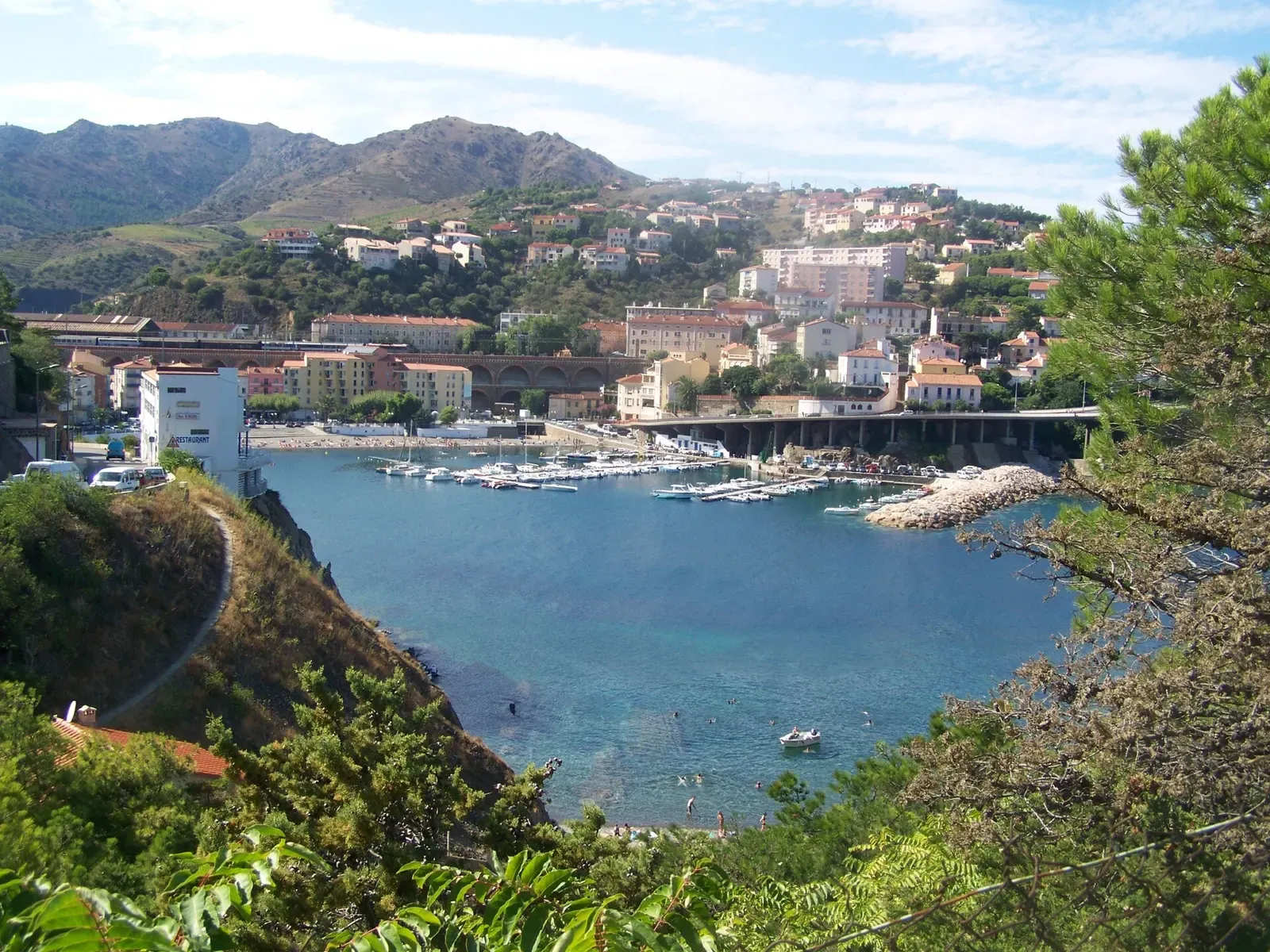
Area photo: Florian Pépellin · CC BY-SA 3.0
A sheltered bay just north of Port-Vendres, out of both the south wind and the Tramontane, and open to all levels. The interest is in the faults and coralligenous rock at 18 to 20 m, where white gorgonians, nudibranchs and lobsters live, with damselfish, saddled bream, salema and sars over the rock and the occasional dentex or barracuda passing through on the hunt.
Where it is and how deep
42.5233° N, 3.1088° EPublished position for this site.
The dive
The boat drops you in the bay and you descend over the rock to the faults and coralligenous crust at 18 to 20 m. This is where the dive is: the white gorgonians grow on the fault walls and under the overhangs, and the plan is simply to work along the faults slowly, torch on the shaded sides where the colour is.
The small life is in the same cracks. Nudibranchs sit on the coralligenous growth and lobsters back into the deeper recesses of the faults, so a diver who likes to search a wall a metre at a time is well served. Over the open rock the fish are damselfish, saddled bream, salema and sars, and it is not unusual for a dentex or a barracuda to come through on the hunt. With the interesting ground at 18 to 20 m in sheltered water, time is generous. The dive ends by rising back over the rock toward the boat, with the shallower rock of the bay serving as the safety stop.
Marine life and season
- Nudibranchs
- Macro critters
- Barracuda
| Jan | Feb | Mar | Apr | May | Jun | Jul | Aug | Sep | Oct | Nov | Dec |
|---|---|---|---|---|---|---|---|---|---|---|---|
| Fair | Fair | Fair | Fair | Good | Prime | Prime | Prime | Prime | Good | Fair | Fair |
Season follows Banyuls-sur-Mer & the Côte Vermeille: The Banyuls centres open year-round, but the sea averages 12 °C in February against 23 °C in August, the reserve's snorkel trail runs June to September, and the Tramontane can stop boats in any month.
Questions divers ask
How deep is the Anse de la Mauresque dive?+
The faults and coralligenous rock where the white gorgonians, nudibranchs and lobsters live are at 18 to 20 m, and the site is described as accessible to all levels.
Is Anse de la Mauresque sheltered?+
Yes. The bay lies north of Port-Vendres and is sheltered from both the south wind and the Tramontane, which is why it can be dived when those winds are blowing.
Sources
- Anse de la Mauresque - Scubago — Scubago
- Anse de la Mauresque - OpenStreetMap — OpenStreetMap
More dive sites in Banyuls-sur-Mer & the Côte Vermeille
A 95 m WWII escort cut in two by a torpedo, mast top at 25 m, bow at 50 m
The sheltered fallback dive when the Tramontane blows
Reef
Faults and small caves between 5 and 30 m, with groupers and congers in the holes
Reef
Beach entry into a marine reserve, with a signposted underwater trail
Wreck
Broken collier at 44 m; follow the wreckage to a bow with its anchors still in place
Wreck
A 99 m collier on her keel at 45 m, stern broken off, emergency propeller still visible
Wall
Drop-offs, rocks and caves between 15 and 30 m off Banyuls
Reef
Groupers, dentex, brown meagre and barracuda in 5 to 20 m of reserve water
Similar dives elsewhere
A protected cove at 5–20 m with passages to swim
A whitewater reef to 21 m that has taken ships for centuries
A reef grown over 2,000-year-old amphorae at 13-18 m
.JPG)
Shore-entry islet at 0–16 m with a short, easy tunnel