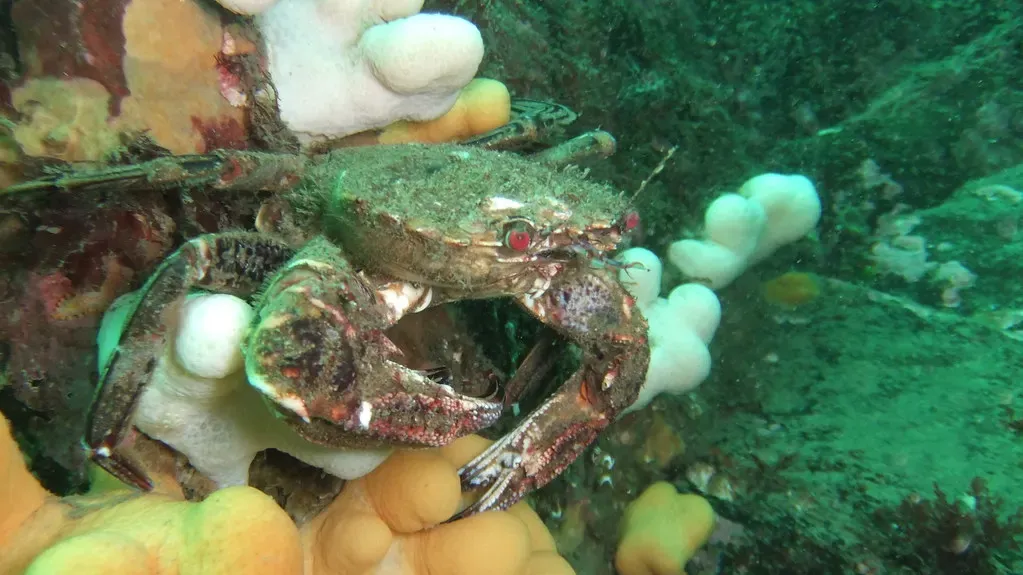
Farne Islands · United Kingdom · Wreck · Reef
Knivestone
Two upright boilers with a triangular swim-through between them
Area photo: gordon.milligan · CC BY 2.0
The Knivestone, at the outer edge of the Farnes, is an underwater graveyard: more than 60 ships have been lost on the reef. The rocks dry to 3 m only on low-water spring tides, when a large colony of seals sprawls across them. Divers are dropped on a shallow kelp plateau and work down the slope to propellers, boilers and a steam engine scattered along the rock face.
Also known as Knifestone, Knavestone, Knivestone Rocks.
Where it is and how deep
55.6483° N, 1.6020° WApproximate position — the dashed circle shows where the site lies; your operator's briefing has the mooring.
Site maps published elsewhere
The dive
The boat comes in close to the rocks and drops you on a shallow kelpy plateau in just 3-5 m, which is where the seals are. From there the route runs directly out from the rocks and down the slope. The kelp grows thinner and more sporadic as you go but never clears completely, and the slope ends in a gully at about 16 m that runs along the face of the rock, with scattered steel wreckage in it.
The gully opens into a saddle at 14 m holding a large four-bladed propeller, and beyond it a triple-expansion steam engine at 16 m and two boilers standing upright at about 20 m, one propped against the other to leave a triangular swim-through between them. The sides and tops of the boilers are covered in white and yellow dead men's fingers. Propeller, engine and boilers are most likely all from the Belgian steamer Jan Van Ryswyck.
Further along the face of the reef lie a second propeller, a single boiler and two anchors, and the way back up from them leads to the 5 m kelpy plateau where the dive started. Much of the wreckage on the western side of the reef belongs to the Abessinia, the largest ship ever wrecked in the Farnes, and she is much broken. Watch the clock on the way back: strong tide runs at each end of the reef.
The wreck
- Vessel
- Abessinia
- Type
- German steamship
- Length
- 135 m (443 ft)
- Sunk
- 1921
- Cause
- Ran onto the reef on passage from Chile to Germany, 3 September 1921
- Lies
- Much broken on the western side of the reef, wreckage between about 9 and 20 m
More than 60 ships lie in one underwater graveyard here, all of them put there by a reef that older usage called the Knavestone, probably for its treacherous nature. The largest was the 5,753-ton steamship Abessinia, which ran onto the rocks on 3 September 1921 on her way from Chile to Germany. What the main area of wreckage actually is has never been settled: the likeliest candidate is the 2,135-ton Belgian steamship Jan Van Ryswyck, whose course from Antwerp to Grangemouth fits the line of propeller, engine and boilers.
Marine life and season
- Seals & sea lions
| Jan | Feb | Mar | Apr | May | Jun | Jul | Aug | Sep | Oct | Nov | Dec |
|---|---|---|---|---|---|---|---|---|---|---|---|
| Off-season | Off-season | Off-season | Fair | Good | Prime | Prime | Prime | Prime | Good | Fair | Off-season |
Season follows Farne Islands: Summer and early autumn combine workable North Sea weather with playful, non-breeding seals; late-autumn pupping season brings huge seal numbers but rougher seas and some beach access restrictions.
Know before you go
- Strong tidal currents run at each end of the reef, so either retrace your route back to the shallows or plan the dive as a drift.
- The site is very exposed. Even starting the dive on slack water, poor navigation can leave divers in dangerous currents by the time they ascend.
Dive videos
Farne Islands .The Knifestone Reef Dive · Stu Mclaren. North Sea Diver on YouTube
Diving Knivestone Reef ,Following the wreckage and boilers. · Stu Mclaren. North Sea Diver on YouTube
Questions divers ask
How deep is the Knivestone?+
The drop-in is on a kelp plateau in 3-5 m and the route works down a slope to a gully at about 16 m. The two upright boilers, the deepest point of the tour, sit at around 20 m.
When can you dive the Knivestone?+
At low-water slack, an hour and a half after low water at Seahouses. The rocks are covered at high water, and they are fully exposed only on low-water spring tides.
Sources
- Wreck Tour 57: The Knivestone Wrecks — Divernet
- Farnes area Dive Site Info and Dive conditions — Divesiteinfo.co.uk (archived)
In The Logbook
- Kelp forest diving, and where it still growsCold water · 13 min read
- Where to dive with seals and sea lionsBig animals · 17 min read
- Wetsuit thickness by water temperatureGear & kit · 11 min read
- When is slack water? Tides for diversOcean science · 7 min read
- Cold-water diving: is it worth the drysuit?Cold water · 8 min read
More dive sites in Farne Islands
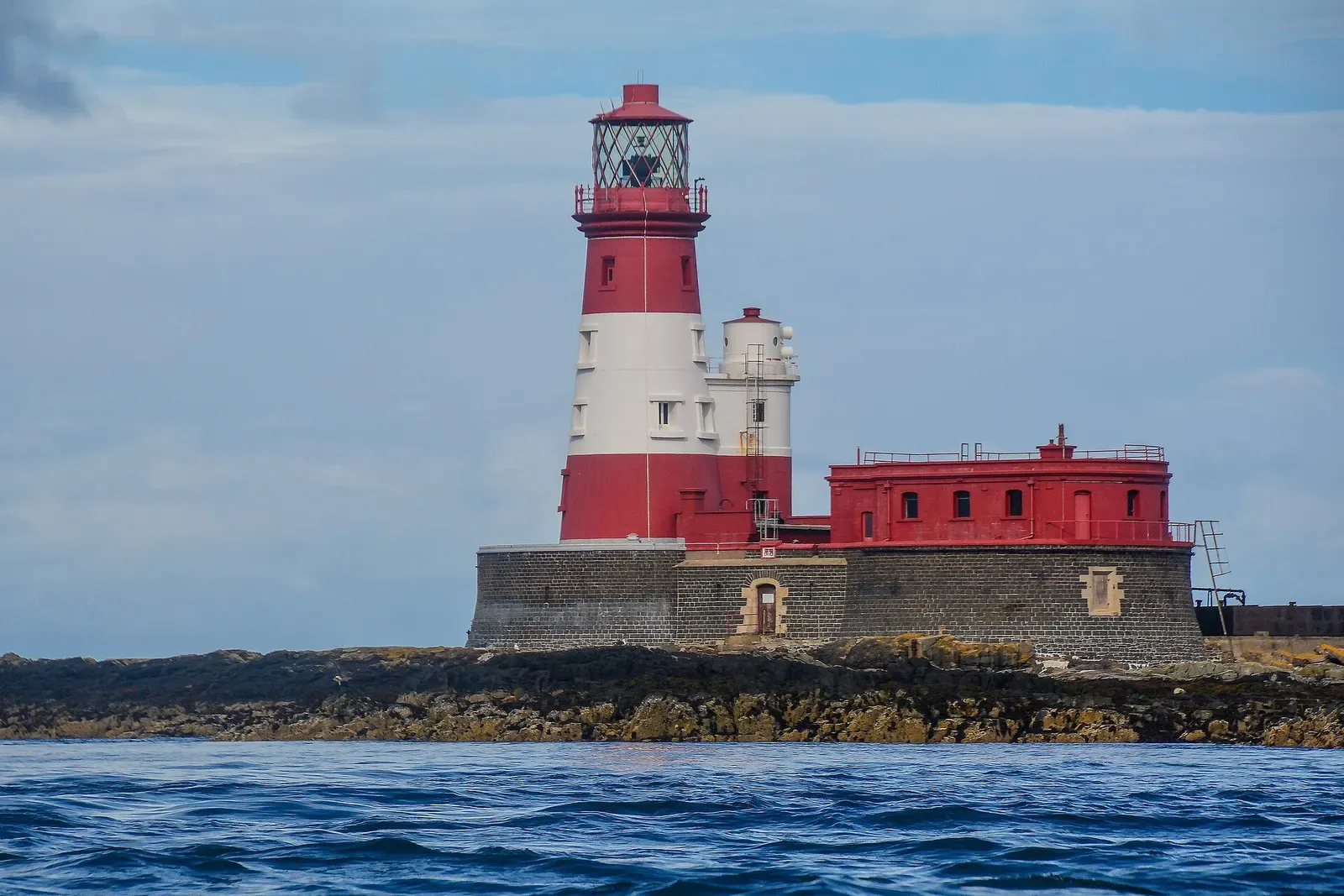
A Danish steamer at 33 m below Grace Darling's lighthouse
Wreck
A steamship lost in fog in 1915, spread from 8 to 30 m
Similar dives elsewhere
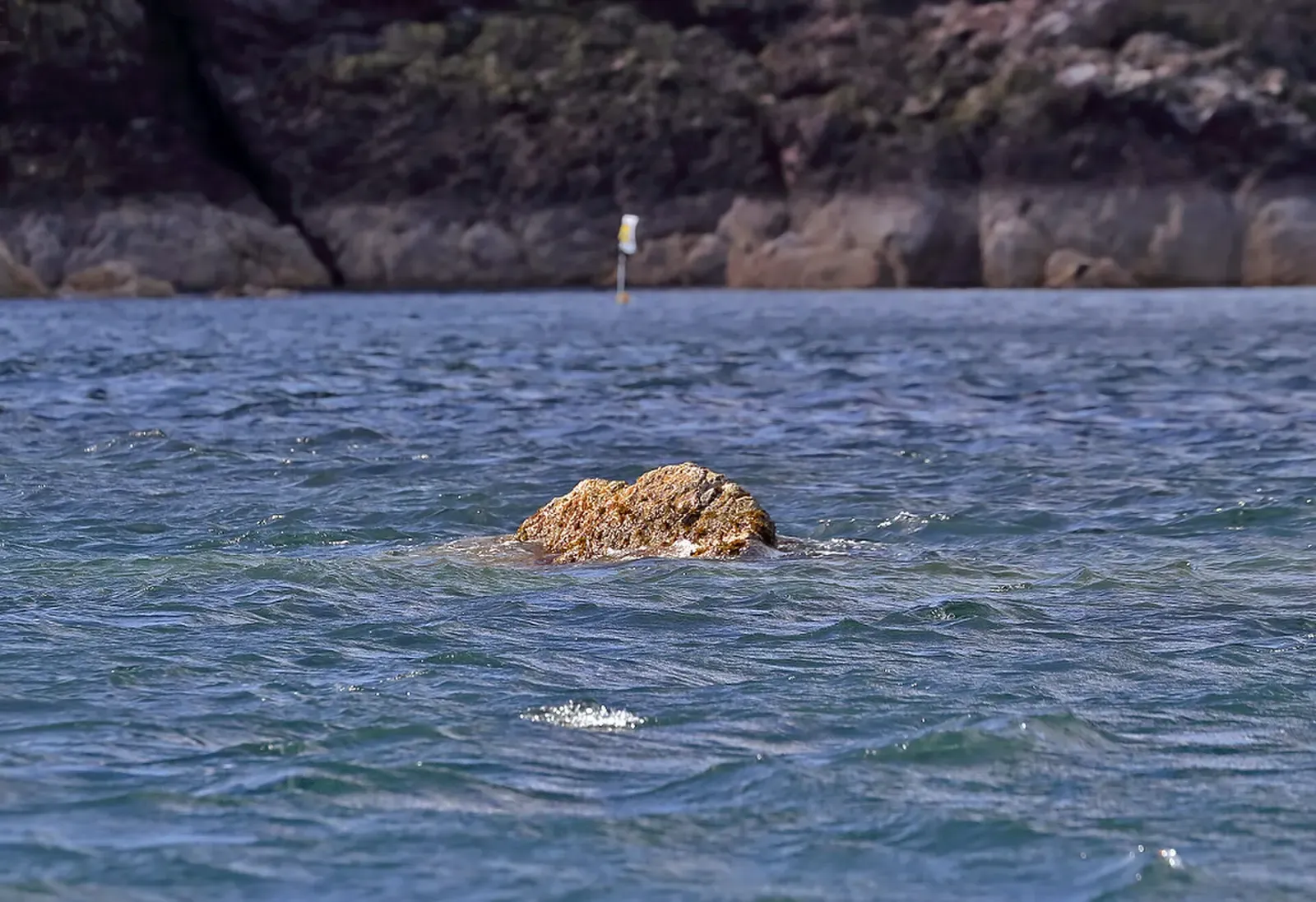
Boilers in 7 m on the rocks that took a 1907 steamer
Wreck
Anna Katrina Fritzen
Klaipėda & Curonian Spit · Lithuania
A torpedoed steam freighter, pieced together from scattered wreckage
Wreck
Anna Maria
Stockholm Archipelago & Dalarö · Sweden
An Amsterdam-built fluit that caught fire and sank at the Dalarö quay
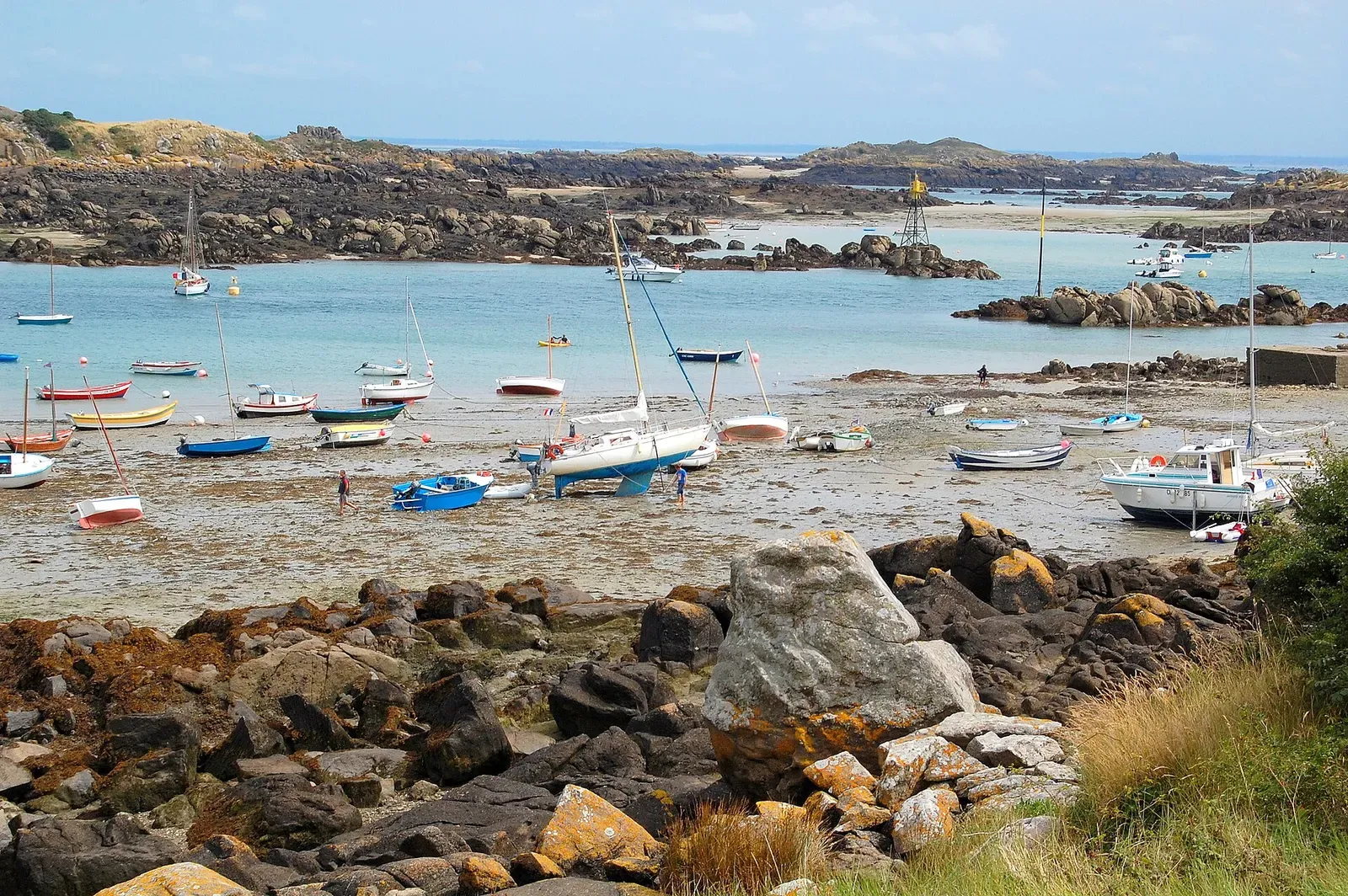
A century-old cargo wreck open to French Level 1 divers