Cold Water · United Kingdom
Farne Islands
Curious grey seals routinely approach and play with divers
Photo: gordon.milligan · CC BY 2.0
The Farne Islands off Northumberland host one of England's largest Atlantic grey seal colonies, and the resident seals are famously curious underwater, approaching divers to nibble fins and gear or mirror their movements. Diving takes place around a scatter of rocky skerries and gullies in the cold North Sea, with kelp-fringed shallows giving way to deeper reef and occasional wreckage. Encounters are largely unscripted: seals choose whether and how closely to interact on any given dive.
About diving in Farne Islands
Boats leave Seahouses on the tide, since the harbour dries at low water, and are among the skerries in twenty minutes or so. Two dives is the norm, with the surface interval spent under the cliffs while terns and, into July, puffins work the water around the boat. Operators mostly run small hard boats and RIBs and drop divers straight into the gullies. The outer rocks carry real tide and are dived near slack, so departure times move from day to day and skippers rearrange the plan when swell builds.
The islands are the seaward end of the Great Whin Sill, and the quartz-dolerite that makes the cliffs carries on underwater as blocky, straight-sided gullies and columnar faces. Kelp covers the tops; below it the rock is upholstered in dead man's fingers and anemones. Inner sites are sheltered and forgiving, while the outer reefs sit in more water movement and hold plating, boilers and framing from ships that struck them, the same rocks that took the Forfarshire in 1838 and sent Grace Darling out from the Longstone light.
How you behave decides how the seals behave. Chasing one ends the encounter; settling on the bottom, staying low and letting the animal make the first move is what produces the long sessions people come back for, which usually begin with a shape over your shoulder that declines to leave. Depths run to about 20 m, so gas is rarely the limiting factor and cold tends to end the dive instead. It rewards photographers, and it works as an introduction to British boat diving for anyone already settled in a drysuit.
Best time to dive Farne Islands
| Jan | Feb | Mar | Apr | May | Jun | Jul | Aug | Sep | Oct | Nov | Dec | |
|---|---|---|---|---|---|---|---|---|---|---|---|---|
| Season | Off-season | Off-season | Off-season | Fair | Good | Prime | Prime | Prime | Prime | Good | Fair | Off-season |
| Sea surface | 7°C45°F | 6°C43°F | 6°C43°F | 7°C45°F | 9°C48°F | 12°C54°F | 14°C57°F | 14°C57°F | 13°C55°F | 12°C54°F | 11°C52°F | 9°C48°F |
| Daytime high | 10°C50°F | 11°C52°F | 12°C54°F | 15°C59°F | 18°C64°F | 21°C70°F | 22°C72°F | 21°C70°F | 20°C68°F | 16°C61°F | 13°C55°F | 11°C52°F |
| Rain | 73 mm2.9 in | 65 mm2.6 in | 60 mm2.4 in | 53 mm2.1 in | 60 mm2.4 in | 72 mm2.8 in | 88 mm3.5 in | 89 mm3.5 in | 69 mm2.7 in | 97 mm3.8 in | 90 mm3.5 in | 92 mm3.6 in |
| Jan | Feb | Mar | Apr | May | Jun |
|---|---|---|---|---|---|
| Off-season | Off-season | Off-season | Fair | Good | Prime |
| Sea surface | |||||
| 7°C45°F | 6°C43°F | 6°C43°F | 7°C45°F | 9°C48°F | 12°C54°F |
| Daytime high | |||||
| 10°C50°F | 11°C52°F | 12°C54°F | 15°C59°F | 18°C64°F | 21°C70°F |
| Rain | |||||
| 73 mm2.9 in | 65 mm2.6 in | 60 mm2.4 in | 53 mm2.1 in | 60 mm2.4 in | 72 mm2.8 in |
| Jul | Aug | Sep | Oct | Nov | Dec |
|---|---|---|---|---|---|
| Prime | Prime | Prime | Good | Fair | Off-season |
| Sea surface | |||||
| 14°C57°F | 14°C57°F | 13°C55°F | 12°C54°F | 11°C52°F | 9°C48°F |
| Daytime high | |||||
| 22°C72°F | 21°C70°F | 20°C68°F | 16°C61°F | 13°C55°F | 11°C52°F |
| Rain | |||||
| 88 mm3.5 in | 89 mm3.5 in | 69 mm2.7 in | 97 mm3.8 in | 90 mm3.5 in | 92 mm3.6 in |
2011–2025 averages. Sea surface: NOAA Coral Reef Watch, measured at the surface, so deeper water can run colder. Daytime high and rain: NASA POWER.
Summer and early autumn combine workable North Sea weather with playful, non-breeding seals; late-autumn pupping season brings huge seal numbers but rougher seas and some beach access restrictions.
Best months: June, July, August, September
Farne Islands water temperature and weather by month
The sea surface runs from 6 °C (43 °F) in March to 14 °C (57 °F) in August. Rain falls through the year, about 80 mm (3.1 in) a month on average, with October the wettest. Daytime highs reach 22 °C (72 °F) in July and drop to 10 °C (50 °F) in January. The coldest water here is about 6 °C (43 °F), so pack a drysuit.
Dive types & marine life
Grey seals are resident and in the water in every month the boats run, April to November. Beyond them, look for nudibranchs on kelp stipes and hydroid turf from late spring onward, ballan wrasse over the reef tops, butterfish and squat lobsters in the cracks, and edible crab and lobster set back in the gullies. Pupping ashore from autumn puts more animals in the water as the season closes.
- Reef
- Kelp forest
- Drift
- Seals & sea lions
- Macro critters
- Nudibranchs
Best dive sites in Farne Islands
Wreck
Two upright boilers with a triangular swim-through between them
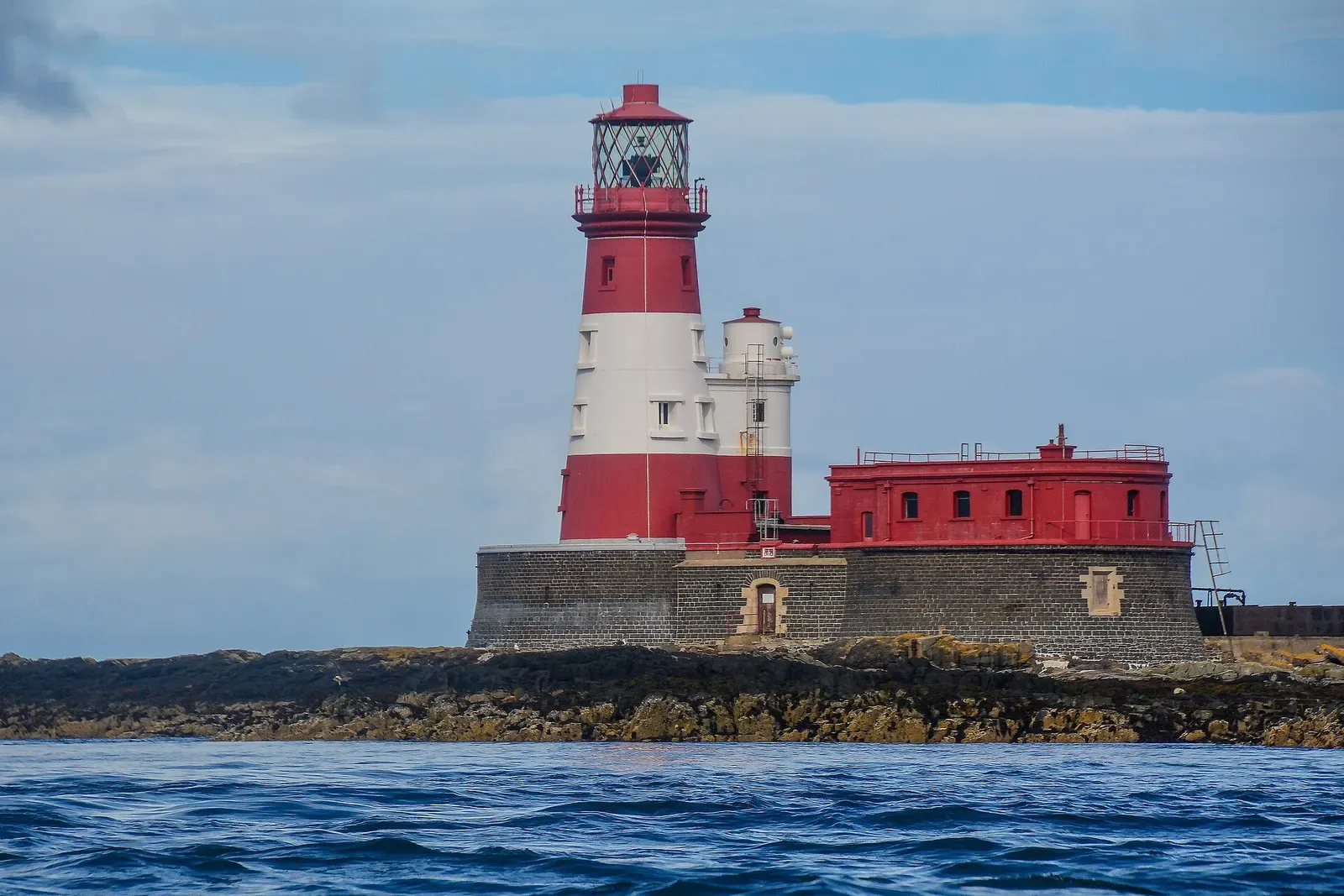
A Danish steamer at 33 m below Grace Darling's lighthouse
Wreck
A steamship lost in fog in 1915, spread from 8 to 30 m
Megstone
Small skerry with a resident seal haul-out just offshore.
The Hopper
A noted spot for close, playful encounters with juvenile seals.
How to get to Farne Islands
Newcastle is the nearest airport; Berwick-upon-Tweed and Alnmouth are the nearest East Coast Main Line stations, each roughly half an hour away by road. The A1 runs a few miles inland with B-roads down to Seahouses, where the dive boats sail from. Bamburgh and Beadnell are the usual alternatives for beds, and the islands themselves are boat-access only.
Photos from Farne Islands
Des Blenkinsopp · CC BY-SA 2.0
gordon.milligan · CC BY 2.0
gordon.milligan · CC BY 2.0
gordon.milligan · CC BY 2.0
Dive videos
Diving with Seals - Farne Islands · Kevin Booth on YouTube
Diving with Seals - Farne Islands | UKDiver · UKDiver on YouTube
Photo credits
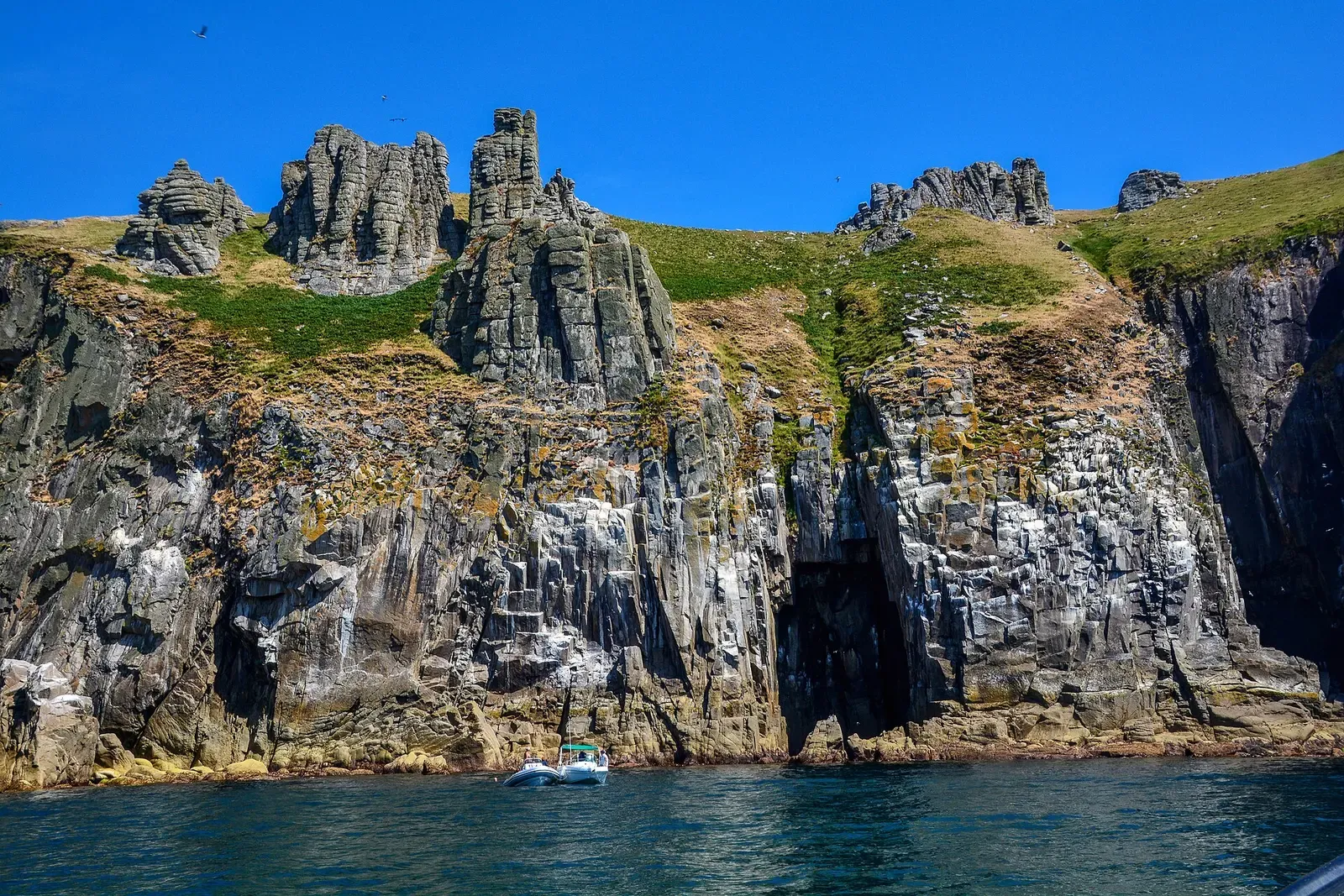
- Tall columnar dolerite pinnacles rise from the sea off Staple Island in the Farne Islands by Des Blenkinsopp, CC BY-SA 2.0, via Wikimedia Commons
- A common lobster faces the camera from a rocky crevice, red antennae extended by gordon.milligan, CC BY 2.0, via Openverse
- A pale, long-spined sea urchin sits on green-tinted rock underwater by gordon.milligan, CC BY 2.0, via Openverse
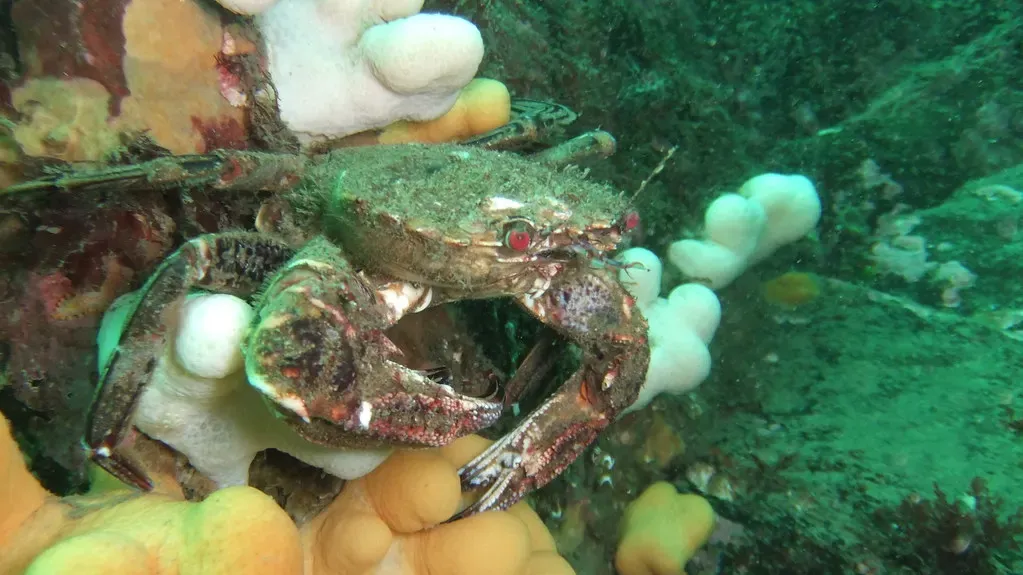
- A velvet swimming crab with red eyes grips a rock ledge among dead man's fingers soft coral by gordon.milligan, CC BY 2.0, via Openverse
- An orange common starfish rests on pink coralline-algae-covered rock underwater by gordon.milligan, CC BY 2.0, via Openverse
Embed
Run a dive centre, club or blog? Embed this map of 7 dive sites near Farne Islands on your own page.
In The Logbook
- Kelp forest diving, and where it still growsCold water · 13 min read
- Where to dive in every month of the yearTrip planning · 14 min read
- Where to dive with seals and sea lionsBig animals · 17 min read
- Wetsuit thickness by water temperatureGear & kit · 11 min read
- When is slack water? Tides for diversOcean science · 7 min read
- Cold-water diving: is it worth the drysuit?Cold water · 8 min read
Similar destinations

Jewel anemones and grey seals on a Berwickshire volcanic coast

Basalt cliffs continuing underwater into surprisingly clear Atlantic water
England's first marine reserve, and its grey seals follow divers around


The Rondo stands almost vertical, stern at 15 m and bow at 50