
Cold Water · United Kingdom
St Abbs & Eyemouth
Jewel anemones and grey seals on a Berwickshire volcanic coast
Photo: Bob Jones · CC BY-SA 2.0
The St Abbs and Eyemouth Voluntary Marine Reserve was set up in 1984, among the first of its kind in Britain, and the volcanic rock along this stretch of the Berwickshire coast is covered in dead man's fingers and jewel anemones to a density that surprises people expecting murky British diving. Visibility off the headland regularly reaches 15 m. Grey seals follow divers through the gullies, and wolffish sit in crevices on the deeper offshore carrs.
About diving in St Abbs & Eyemouth
Most people dive this coast from the shore. You park above St Abbs harbour, kit up beside the car, walk down and enter off the slipway, then swim out and drop into the gullies with no boat involved at all. Parking and access arrangements at the harbour have changed more than once, so it is worth checking locally before you load the car. Boat days are usually half-days: a hard boat or RIB out of Eyemouth runs two dives on the offshore reefs, with the skipper picking the ground by wind direction as much as by anything else.
The terrain is unusually well defined. Narrow gullies run seaward from the shore, cut with undercut walls, boulder chokes and the odd swim-through arch, and kelp covers every surface shallow enough to hold it. Inshore that makes navigation simple: follow a gully out and reverse it on the way back. The offshore carrs are a different dive — isolated reefs standing off the seabed, more exposed, with enough water movement across them to keep the growth thick and the fish holding on the up-current side.
The reserve rests on a code of conduct rather than a bylaw. Divers, skippers and local boats have worked to it since the 1980s, and the effect shows in how many large, slow-growing animals are still sitting where you find them, unbothered by the traffic. Spring brings lumpsuckers inshore, the males settling onto a clutch of eggs and guarding it for weeks. The shallow gullies stay worth diving after dark, so club groups run night dives straight off the harbour.
It suits UK club divers, photographers and anyone building cold-water hours, because shore access makes the diving cheap and repeatable and the sheltered gullies forgive a rusty first dive of the year. What it is not is dependable. This coast faces north and east, and swell from those quarters shuts it outright, so trips get planned on a forecast and abandoned on one. Arriving with flexible dates matters more than picking any particular week between April and October.
Best time to dive St Abbs & Eyemouth
| Jan | Feb | Mar | Apr | May | Jun | Jul | Aug | Sep | Oct | Nov | Dec | |
|---|---|---|---|---|---|---|---|---|---|---|---|---|
| Season | Off-season | Off-season | Fair | Good | Good | Prime | Prime | Prime | Prime | Good | Fair | Off-season |
| Sea surface | 7°C45°F | 6°C43°F | 6°C43°F | 7°C45°F | 9°C48°F | 12°C54°F | 14°C57°F | 14°C57°F | 13°C55°F | 12°C54°F | 11°C52°F | 9°C48°F |
| Daytime high | 11°C52°F | 10°C50°F | 11°C52°F | 12°C54°F | 15°C59°F | 18°C64°F | 19°C66°F | 19°C66°F | 18°C64°F | 15°C59°F | 13°C55°F | 12°C54°F |
| Rain | 73 mm2.9 in | 66 mm2.6 in | 56 mm2.2 in | 52 mm2.0 in | 53 mm2.1 in | 63 mm2.5 in | 73 mm2.9 in | 83 mm3.3 in | 61 mm2.4 in | 96 mm3.8 in | 94 mm3.7 in | 93 mm3.7 in |
| Jan | Feb | Mar | Apr | May | Jun |
|---|---|---|---|---|---|
| Off-season | Off-season | Fair | Good | Good | Prime |
| Sea surface | |||||
| 7°C45°F | 6°C43°F | 6°C43°F | 7°C45°F | 9°C48°F | 12°C54°F |
| Daytime high | |||||
| 11°C52°F | 10°C50°F | 11°C52°F | 12°C54°F | 15°C59°F | 18°C64°F |
| Rain | |||||
| 73 mm2.9 in | 66 mm2.6 in | 56 mm2.2 in | 52 mm2.0 in | 53 mm2.1 in | 63 mm2.5 in |
| Jul | Aug | Sep | Oct | Nov | Dec |
|---|---|---|---|---|---|
| Prime | Prime | Prime | Good | Fair | Off-season |
| Sea surface | |||||
| 14°C57°F | 14°C57°F | 13°C55°F | 12°C54°F | 11°C52°F | 9°C48°F |
| Daytime high | |||||
| 19°C66°F | 19°C66°F | 18°C64°F | 15°C59°F | 13°C55°F | 12°C54°F |
| Rain | |||||
| 73 mm2.9 in | 83 mm3.3 in | 61 mm2.4 in | 96 mm3.8 in | 94 mm3.7 in | 93 mm3.7 in |
2011–2025 averages. Sea surface: NOAA Coral Reef Watch, measured at the surface, so deeper water can run colder. Daytime high and rain: NASA POWER.
Apr–Oct is the season, with Jun–Sep giving the warmest water and calmest seas; winter northerlies make the coast unworkable.
Best months: June, July, August, September
St Abbs & Eyemouth water temperature and weather by month
The sea surface runs from 6 °C (43 °F) in March to 14 °C (57 °F) in August. Rain falls through the year, about 70 mm (2.8 in) a month on average, with October the wettest. Daytime highs reach 19 °C (66 °F) in July and drop to 10 °C (50 °F) in February. The coldest water here is about 6 °C (43 °F), so pack a drysuit.
Dive types & marine life
Grey seals are resident rather than seasonal, so the Apr–Oct rating is about sea state, not whether the animals are there. March to May is the lumpsucker window inshore. Expect ballan wrasse and shoals of pollack over the reefs, the occasional curled octopus in a boulder hole, and nudibranchs on kelp stipes and rock right through the season.
- Reef
- Wall
- Cave & cavern
- Kelp forest
- Night
- Seals & sea lions
- Macro critters
- Nudibranchs
- Octopus & cuttlefish
- Reef fish swarms
Best dive sites in St Abbs & Eyemouth
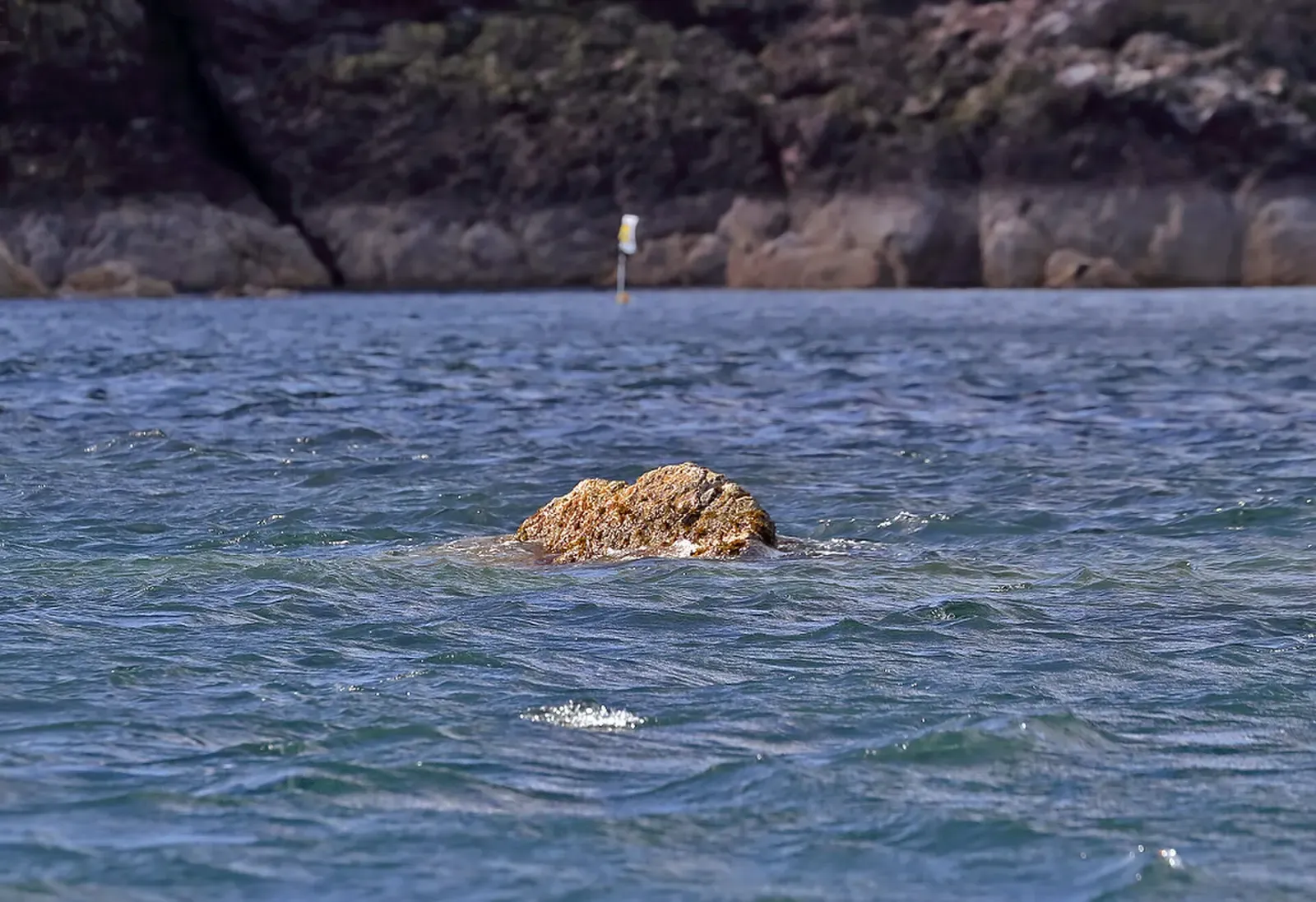
Boilers in 7 m on the rocks that took a 1907 steamer
Reef
A rock you can swim right around, with a resident wolf-fish
Cave & cavern
A double archway 50 metres out from the shore
Wreck
A 1912 steamer at 30 m, propeller still standing
Anemone Gullies
Shallow rock channels at 8 m, walls solid with jewel anemones.
Black Carrs
Exposed rock pinnacles with current, kelp and passing seals.
How to get to St Abbs & Eyemouth
Edinburgh is the usual airport, an hour or so down the A1, and Berwick-upon-Tweed on the East Coast main line is the nearest station for anyone arriving by train. Eyemouth, Coldingham and St Abbs itself are the bases. Shore diving centres on St Abbs harbour, while hard boats and RIBs run half-day trips out of Eyemouth.
Photos from St Abbs & Eyemouth
Calum McLennan · CC BY 4.0
Jennifer Petrie · CC BY-SA 2.0
Iain Lees · CC BY-SA 2.0
Jennifer Petrie · CC BY-SA 2.0
Dive videos
Diving in St Abbs – Like Another Planet! | UK Scuba Adventure in 4K · lone diver on YouTube
Scuba Diving NEW ASGARD (St Abbs) in SCOTLAND - Scottish Scuba Diving · Blue Horizon Diving on YouTube
Photo credits
- Waves break over a rocky sea stack along the volcanic St Abbs coastline by Bob Jones, CC BY-SA 2.0, via Wikimedia Commons
- Common hermit crab tucked into a rock crevice near St Abbs by Calum McLennan, CC BY 4.0, via Wikimedia Commons
- Weathered sea stack rising from the water near the St Abbs harbour entrance by Jennifer Petrie, CC BY-SA 2.0, via Wikimedia Commons
- North Sea swell breaking against rocks at the St Abbs harbour mouth by Iain Lees, CC BY-SA 2.0, via Wikimedia Commons
- Fishing boats moored in St Abbs harbour below the village on the hillside by Jennifer Petrie, CC BY-SA 2.0, via Wikimedia Commons
Embed
Run a dive centre, club or blog? Embed this map of 7 dive sites near St Abbs & Eyemouth on your own page.
In The Logbook
- When is slack water? Tides for diversOcean science · 7 min read
- What is surge in diving, and how deep it goesOcean science · 8 min read
- Cold-water diving: is it worth the drysuit?Cold water · 8 min read
- The best shore dives in the worldShore diving · 8 min read
Similar destinations
Curious grey seals routinely approach and play with divers

Sweden's only cold-water coral reefs, inside its first marine national park

Basalt cliffs continuing underwater into surprisingly clear Atlantic water


England's first marine reserve, and its grey seals follow divers around