Eastern Pacific · Costa Rica
Islas Catalinas
Oceanic manta rays pass the volcanic rocks from November to April
The Islas Catalinas are a chain of about twenty volcanic rocks and islets roughly 30 km south of Playas del Coco, reached by dive boat in under an hour. Every dive is an unanchored drift along steep walls in open-ocean current. La Punta runs from 12 to 34 m past adult whitetip reef sharks, and La Pared threads a shark channel before crossing a coral garden. Oceanic manta rays arrive from November into spring, alongside eagle rays and schools of cow-nose rays.
About diving in Islas Catalinas
A Catalinas day starts early. The Playas del Coco shops sell the islands as a separate advanced excursion, about 30 km south of Coco and under an hour by dive boat, and Tamarindo Diving meets its group at 6:40 am to fit equipment before boarding on Tamarindo beach. Boats do not anchor: every dive is a drift, and at La Punta that means a free descent on the shallow side of the island, then a run south with the current into deeper water. Expect surge, stronger currents and open-ocean swell, and a day trip rather than a base.
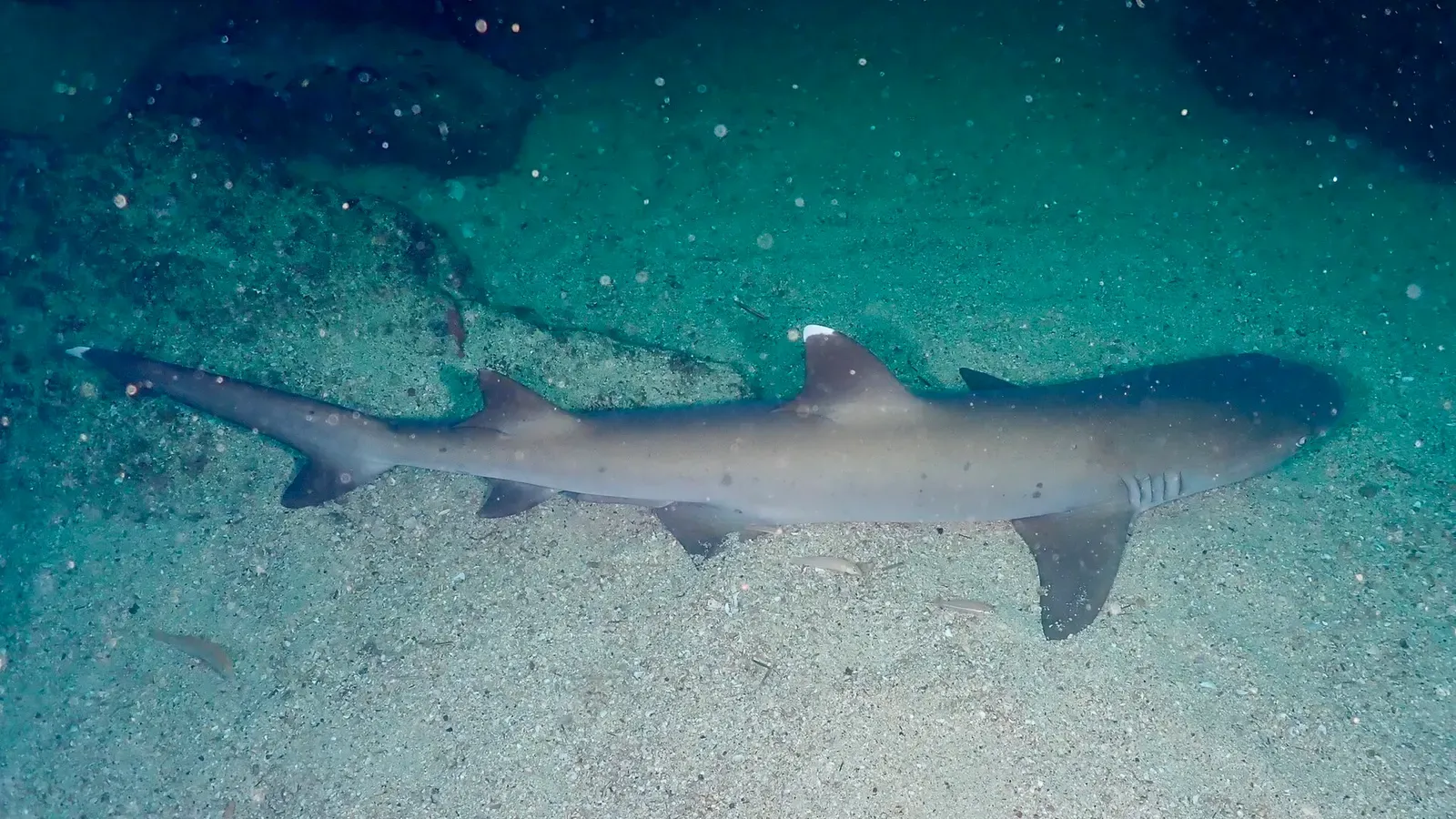
The islands are volcanic pinnacles, with steep walls that drop past 30 m, and La Pared ends over a coral garden. The draw is the open water beside the walls: oceanic manta rays four to seven metres across, schools of cow-nose rays, eagle rays and other pelagic fish that come in to hunt or to visit a cleaning station. Whitetip reef sharks live in the channel at La Pared and patrol the deeper water at La Punta, and turtles turn up too. Visibility of 12 to 30 m is often better than close to shore.
The Catalinas suit divers already comfortable with drift dives, deeper profiles and changing conditions. The sheltered north side and the shallow sandy patch between the rocks at Cuatro Piedras are rated for beginners, though current can make it hard to stay on the sand. Divers who want calmer water and shorter boat rides have the local sites closer to Coco. The Bat Islands further north are the other offshore day from the same shops.
Water averages about 28 °C, but a thermocline can drop it to 18 °C, and Summer Salt's rental kit is a 3 mm full wetsuit. November to April is the window built around the mantas, with sightings reported into May; outside it the islands still run as a drift and big-fish trip, but without the animal most divers book for.
Best time to dive Islas Catalinas
| Jan | Feb | Mar | Apr | May | Jun | Jul | Aug | Sep | Oct | Nov | Dec |
|---|---|---|---|---|---|---|---|---|---|---|---|
| Prime | Prime | Prime | Prime | Good | Fair | Fair | Fair | Fair | Fair | Prime | Prime |
Manta trips run November to April, with mantas reported into May; the rest of the year the islands dive for sharks, rays and fish schools.
Best months: January, February, March, April, November, December
Dive types & marine life
Oceanic manta rays are the main draw; manta trips run November to April, with sightings reported into May. Whitetip reef sharks live in the channel at La Pared and along La Punta, while eagle rays, schools of cow-nose rays and turtles work the walls.
- Drift
- Pelagic & blue water
- Coral garden
- Manta rays
- Reef sharks
- Eagle rays
- Sea turtles
Best dive sites in Islas Catalinas
- 1
La Pared
Shark channel at 12-21 m (40-70 ft) opening onto a coral garden crossed by mantas and eagle rays.
- 2
La Punta
Easy drift from 12 to 34 m (40-110 ft), heading south into deeper water with adult whitetip reef sharks.
- 3
Cuatro Piedras
Rocks around a shallow sandy patch, with depths from 7 to 28 m.
- 4
Catalinas Island, North
Sheltered from the main currents on the island's east side, and suited to beginners.
Site guides
Drift
A south-to-north drift along the western side of the islands
Drift
A channel that is home to whitetip reef sharks, then a coral garden
Drift
Adult whitetip reef sharks in the deeper water where the drift heads south
Pelagic & blue water
The main site for oceanic manta rays in the winter months
How to get to Islas Catalinas
Liberia International Airport (LIR) is 30 minutes by taxi from Playas del Coco, where Deep Blue Diving, Rich Coast Diving and Summer Salt run day boats to the islands. Tamarindo Diving runs its own boats from Tamarindo beach.
Dive videos
Buceo en Islas Catalinas • Tamarindo • Costa Rica · Rodrigo Bermeo on YouTube
Islas Catalinas, Costa Rica Scuba Diving, Nov. 27, '21 w/ Be Water Diving! Sharks, Eels, and More!! · HackVenture Life on YouTube
Questions divers ask
When are manta rays at Islas Catalinas?+
Manta trips run November to April, with sightings reported into May. Outside that window the islands still run as a drift trip for sharks, rays and fish schools.
What certification do the Islas Catalinas dives need?+
Every dive is an unanchored drift in surge and current, reserved for experienced divers, and La Punta reaches 34 m (110 ft). The sheltered north side and Cuatro Piedras are rated for beginners.
How far are the Islas Catalinas from Playas del Coco?+
The islands lie about 30 km south of Playas del Coco, under an hour by dive boat. They are sold as a separate advanced excursion and are a day trip rather than a base.
Sources
- Dive Sites Islas Catalinas - Deep Blue Diving — Deep Blue Diving
- Catalinas Island | Summer-Salt — Summer Salt Dive Center
- Diving with Manta Rays in Costa Rica | Rich Coast Diving — Rich Coast Diving
- Diving Tours | Tamarindo Diving — Tamarindo Diving
- Catalinas Island, North - Scubago — Scubago
- Cuatro piedras, Catalina Islands - Scubago — Scubago
- Playas del Coco - Wikivoyage — Wikivoyage
Embed
Run a dive centre, club or blog? Embed this map of 10 dive sites near Islas Catalinas on your own page.
Similar destinations
Eastern Pacific
Bat Islands
Costa Rica
Bull sharks cruise past divers settled on the bottom at the Big Scare
Whitetip reef sharks nap in rock caves 10 to 20 minutes from the beach
Humpback whale song carries underwater during the mid-year migration season

Hundreds of scalloped hammerheads overhead on the Bajo Alcyone seamount