Eastern Pacific · Costa Rica
Bat Islands
Bull sharks cruise past divers settled on the bottom at the Big Scare
The Bat Islands (Islas Murciélago) sit inside Santa Rosa National Park, reached by a roughly 1.5 hour boat ride across the Gulf of Papagayo from Playas del Coco. Divers settle on the bottom at Big Scare to watch large, blunt-nosed bull sharks cruise past in the current, while the calmer pinnacle at Black Rock holds schooling jacks, eagle rays and whitetip reef sharks. Seasonal Papagayo upwelling cools and greens the water from December to April, when bull shark sightings become far less reliable.
About diving in Bat Islands
A Bat Islands trip is a full day out and operators sell it that way. Boats leave Playas del Coco early, run north along the dry Santa Elena coast and normally fit two dives in before turning for home, so nobody is back for an afternoon reef dive. The islands sit inside a national park sector, so there are park fees to cover, and most shops need a minimum number of divers to launch, which is why trips run on set days rather than on demand. A hard blow can still cancel one at the dock.
Above water the islands are dry, sun-baked rock carrying thin tropical dry forest, and the diving underneath matches. Expect volcanic boulder slopes, ledges, cracks and sand channels rather than a coral reef. Growth on the rock is low and encrusting, so what holds attention is the shape of the terrain and whatever swims past it. Site choice is made on the morning by how much water is moving, and the same rock can be an easy drift one day and a hard push the next.
Briefings here are more specific than most divers are used to: a quick negative entry, a tight group, no chasing, no fanning out, everyone up together. Cold layers arrive with little warning under a surface that can sit close to 29°C, which is why regulars carry a hood and more neoprene than Guanacaste sunshine suggests. Between the chill, the depth and the surge, dives here tend to end early rather than on a low tank, so plan the day around two rather than three.
It suits divers already comfortable working in current who are basing themselves in Guanacaste for a week, with the shorter runs out to the Catalina Islands as a warm-up and this as the one big day. May through October is the stretch worth planning a trip around, and July and August are the most reliable weeks inside it. The windy first months of the year still dive when the sea allows, but the odds tilt away from the encounter most people booked for.
Best time to dive Bat Islands
| Jan | Feb | Mar | Apr | May | Jun | Jul | Aug | Sep | Oct | Nov | Dec | |
|---|---|---|---|---|---|---|---|---|---|---|---|---|
| Season | Fair | Fair | Fair | Fair | Good | Good | Prime | Prime | Good | Good | Fair | Fair |
| Sea surface | 26°C79°F | 26°C79°F | 26°C79°F | 28°C82°F | 29°C84°F | 29°C84°F | 28°C82°F | 29°C84°F | 29°C84°F | 29°C84°F | 28°C82°F | 27°C81°F |
| Daytime high | 31°C88°F | 33°C91°F | 34°C93°F | 35°C95°F | 34°C93°F | 31°C88°F | 30°C86°F | 31°C88°F | 30°C86°F | 29°C84°F | 29°C84°F | 30°C86°F |
| Rain | 4 mm0.2 in | 3 mm0.1 in | 9 mm0.4 in | 35 mm1.4 in | 258 mm10.2 in | 278 mm10.9 in | 167 mm6.6 in | 213 mm8.4 in | 297 mm11.7 in | 381 mm15.0 in | 286 mm11.3 in | 18 mm0.7 in |
| Jan | Feb | Mar | Apr | May | Jun |
|---|---|---|---|---|---|
| Fair | Fair | Fair | Fair | Good | Good |
| Sea surface | |||||
| 26°C79°F | 26°C79°F | 26°C79°F | 28°C82°F | 29°C84°F | 29°C84°F |
| Daytime high | |||||
| 31°C88°F | 33°C91°F | 34°C93°F | 35°C95°F | 34°C93°F | 31°C88°F |
| Rain | |||||
| 4 mm0.2 in | 3 mm0.1 in | 9 mm0.4 in | 35 mm1.4 in | 258 mm10.2 in | 278 mm10.9 in |
| Jul | Aug | Sep | Oct | Nov | Dec |
|---|---|---|---|---|---|
| Prime | Prime | Good | Good | Fair | Fair |
| Sea surface | |||||
| 28°C82°F | 29°C84°F | 29°C84°F | 29°C84°F | 28°C82°F | 27°C81°F |
| Daytime high | |||||
| 30°C86°F | 31°C88°F | 30°C86°F | 29°C84°F | 29°C84°F | 30°C86°F |
| Rain | |||||
| 167 mm6.6 in | 213 mm8.4 in | 297 mm11.7 in | 381 mm15.0 in | 286 mm11.3 in | 18 mm0.7 in |
2011–2025 averages. Sea surface: NOAA Coral Reef Watch, measured at the surface, so deeper water can run colder. Daytime high and rain: NASA POWER.
Bull sharks are most reliable May-Oct, peaking Jul-Aug; Dec-Apr's cooler Papagayo upwelling brings clearer but colder water and far fewer sightings.
Bat Islands water temperature and weather by month
The sea surface runs from 26 °C (79 °F) in February to 29 °C (84 °F) in September. Most rain falls from May to November, peaking at about 380 mm (15 in) in October; it stays largely dry from December to April. Daytime highs reach 35 °C (95 °F) in April and drop to 29 °C (84 °F) in November. Below the surface the water can drop to about 19 °C (66 °F), so pack a 5 mm suit.
Dive types & marine life
Bull sharks set the calendar: reliable from May into October, thin through the windy first months of the year. The rest is steadier, with turtles and grouper on the shallower rock and eagle rays, whitetips and jack schools working the exposed pinnacles most of the year. Mantas are more of a cool-season animal, likeliest during the December-to-April upwelling.
- Reef
- Drift
- Pelagic & blue water
- Seamount
- Bull sharks
- Manta rays
- Eagle rays
- Reef sharks
- Sea turtles
- Groupers
- Trevally & jacks
Best dive sites in Bat Islands
Pelagic & blue water
Giant Pacific mantas turn up on the bull shark dive
Pinnacle
A pinnacle rising from 24 m a kilometre offshore
Punta Oeste
Shallower site with bull sharks, manta rays, turtles and groupers
How to get to Bat Islands
Liberia (LIR) is the arrival airport, with Playas del Coco and Ocotal the usual bases a short drive away. Every trip is a day boat from there; nothing is shore accessible and there is nowhere to stay on the islands. Departures run on fixed days and fill up in season, so book the boat before locking in dates.
Dive videos
Bull Sharks Diving at Big Scare Bat Islands Costa Rica · Diving with Rolbin in Costa Rica on YouTube
Embed
Run a dive centre, club or blog? Embed this map of 10 dive sites near Bat Islands on your own page.
In The Logbook
- Where to dive with tiger, bull and white sharksBig animals · 14 min read
- Where to dive with manta rays, month by monthBig animals · 8 min read
Similar destinations
Eastern Pacific
Islas Catalinas
Costa Rica
Oceanic manta rays pass the volcanic rocks from November to April
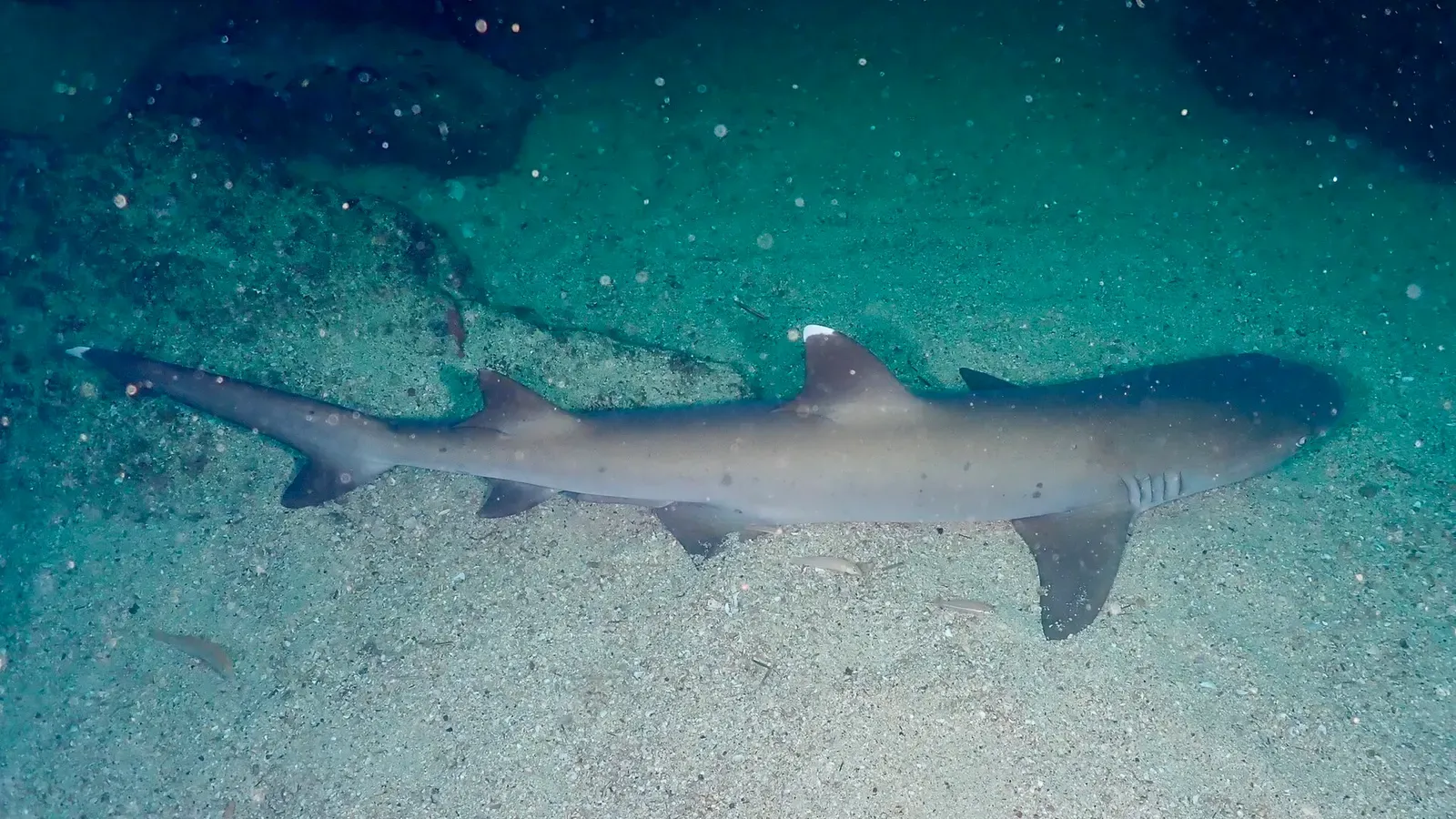
Whitetip reef sharks nap in rock caves 10 to 20 minutes from the beach

Hundreds of scalloped hammerheads overhead on the Bajo Alcyone seamount

Hannibal Bank rises from 400 m and pulls in billfish and tuna