Kozushima is a volcanic island in the Izu chain, about 170 km south of Tokyo, washed by the warm Kuroshio Current. Diving is mostly by boat, 5 to 20 minutes from the harbour, to white sand, caves, holes and rock walls, with three or four beach sites on the calmer west coast. Dives run from about 4 m on the beaches to 30 m at the boat sites. The draw is dense schools of fish over dramatic volcanic terrain within reach of the capital.
About diving in Kozushima
Most diving is by boat, with runs of 5 to 20 minutes from the harbour. Boats leave from Maehama on the west coast through summer; when a west wind blows outside summer, they switch to Miura Port on Tako Bay on the east side, so the weather picks the coast. Fifteen to eighteen boat sites ring the island, against only three or four beach entries on the west shore. Boat dives are run as drift dives, and the boat can pitch hard on the way out and during entries and exits.
Underwater, the island is volcanic terrain: white sand floors, caves, holes and sheer rock walls. The boat sites carry dense schools of fish, with bullseyes and spiny lobsters in the caves, and yellowstriped butterfish and anthias along the walls. The warm Kuroshio Current sets the water temperature, and when a cold water mass pushes in, the temperature can drop sharply within a short time.
The boat diving suits intermediate and advanced divers who can handle current, a lively deck and a descent without a line; seasickness and kit preparation at sea are part of the day. The calmer west side, with its white-sand beach sites, gives newer divers somewhere to start, while the currents and reefscapes on the other sides of the island are for advanced divers. The island lies within Fuji-Hakone-Izu National Park.
Best time to dive Kozushima
| Jan | Feb | Mar | Apr | May | Jun | Jul | Aug | Sep | Oct | Nov | Dec |
|---|---|---|---|---|---|---|---|---|---|---|---|
| Fair | Fair | Fair | Good | Good | Good | Prime | Prime | Prime | Good | Good | Fair |
January to March brings strong west winds and an unsettled sea, with the water averaging about 17°C. The sea settles from around April, and the water averages about 22°C through late spring. July to September is the top season, when boats mostly leave from Maehama on the calmer west side and the Hiradan Hole in the Tadanae islets can be dived on the few calm days a year that allow it. From May to November the water averages about 25°C with around 20 m of visibility. The sea stays diveable until about mid-November.
Dive types & marine life
Sea turtles are met often on the reef at the mouth of Miura Bay on the east side. Amberjack, rainbow runners and schools of striped boarfish also turn up around the island, and the cave and wall sites hold schools of bullseyes and yellowstriped butterfish.
- Reef
- Wall
- Cave & cavern
- Drift
- Sea turtles
- Trevally & jacks
- Reef fish swarms
- Macro critters
Best dive sites in Kozushima
- 1
Urasakune
Advanced boat site where yellowstriped butterfish swarm thickly and anthias cover a sheer rock wall.
- 2
Booboo Cave
A comparatively easy cave in the Tadanae islets, filled with bullseyes and a colony of spiny lobsters.
- 3
Nagahama Sakune
Boat site of rocky pinnacles and mini arches, known for very dense fish life.
- 4
Hiradan Arch
A huge cave-like structure that opens out at about 17 m (56 ft).
- 5
Akasaki
Easy shore dive over a rocky floor with light coral growth, mixed reef fish and good macro.
- 6
Arima
Shallow rocks at 8 m (26 ft) awash with life and dotted with Christmas tree worms.
Site guides
Reef
Rocky carpet with light coral growth and crabs peering from the nooks
Reef
Goatfish that let divers settle on the sand beside them
A huge cave-like arch dotted with yellow sponges and nudibranchs
How to get to Kozushima
Small planes fly from Chofu Airport in Tokyo three times a day, taking 45 minutes. A night ferry leaves Takeshiba Pier in Tokyo at 22:00 and arrives the next morning; a jet ferry runs only in Golden Week and the summer peak. A car ferry sails daily from Shimoda on the Izu Peninsula, except Wednesdays.
Photos from Kozushima
Mkill · CC BY 2.5
Dive videos
神津島の「つまり」でダイビングしてきた Diving at "Tsumari" on Kozushima Island. Scuba Diving in Japan · オバダイバーちゃんねる Obadiver Channel on YouTube
Questions divers ask
What skills do the boat dives at Kozushima need?+
Boat diving here calls for intermediate to advanced skills: free descents, ascents and safety stops without a line, plus coping with a rolling boat. Beginners can use the white-sand beach sites on the calmer west side.
When is the best time to dive Kozushima?+
July to September is the top season. The sea settles from around April and stays diveable until about mid-November; strong west winds make January to March unsettled.
How do divers get to Kozushima?+
By small plane from Chofu Airport in Tokyo (45 minutes, three flights a day), by night ferry from Takeshiba Pier, or by car ferry from Shimoda, which runs daily except Wednesdays. The jet ferry runs only in Golden Week and the summer peak.
Sources
- aquamate.jp/access/ — aquamate.jp
- aquamate.jp/fundiving/ — aquamate.jp
- aquamate.jp/point_map/ — aquamate.jp
- blog.padi.com/diving-in-tokyo-izu-islands/ — blog.padi.com
- en.wikivoyage.org/wiki/Kozushima — en.wikivoyage.org
- scubadiverlife.com/dive-site-kozushima-japan/ — scubadiverlife.com
- www.kozu-nangoku.com/divingpoint — www.kozu-nangoku.com
- www.kozu-nangoku.com/english — www.kozu-nangoku.com
- www.kozu-nangoku.com/kozushima — www.kozu-nangoku.com
Photo credits
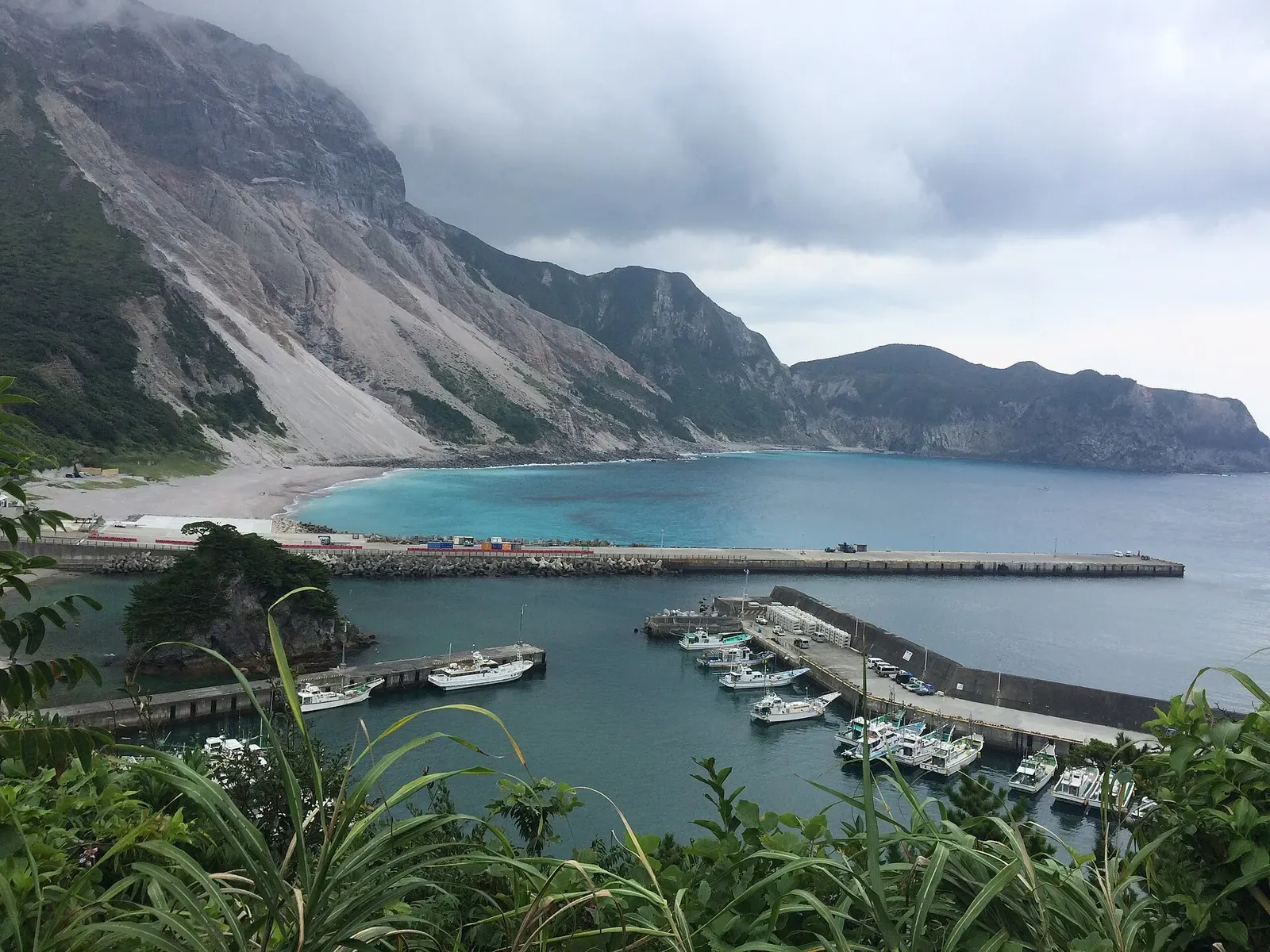
- Hazy aerial view of a breakwater harbour and pale blue water below forested green hillsides by Mkill, CC BY 2.5, via Wikimedia Commons
Embed
Run a dive centre, club or blog? Embed this map of 11 dive sites near Kozushima on your own page.
Similar destinations

Mainland Japan's only reliable schooling hammerhead dive
East Asia
Miyakejima
Japan
Lava arches and Kuroshio-fed corals a short flight from Tokyo

Limestone arches and chambers with light shafts through the roof


Korea's clearest water over black volcanic arches and caves