
Nassau & New Providence · Bahamas · Blue hole · Reef
Lost Blue Hole
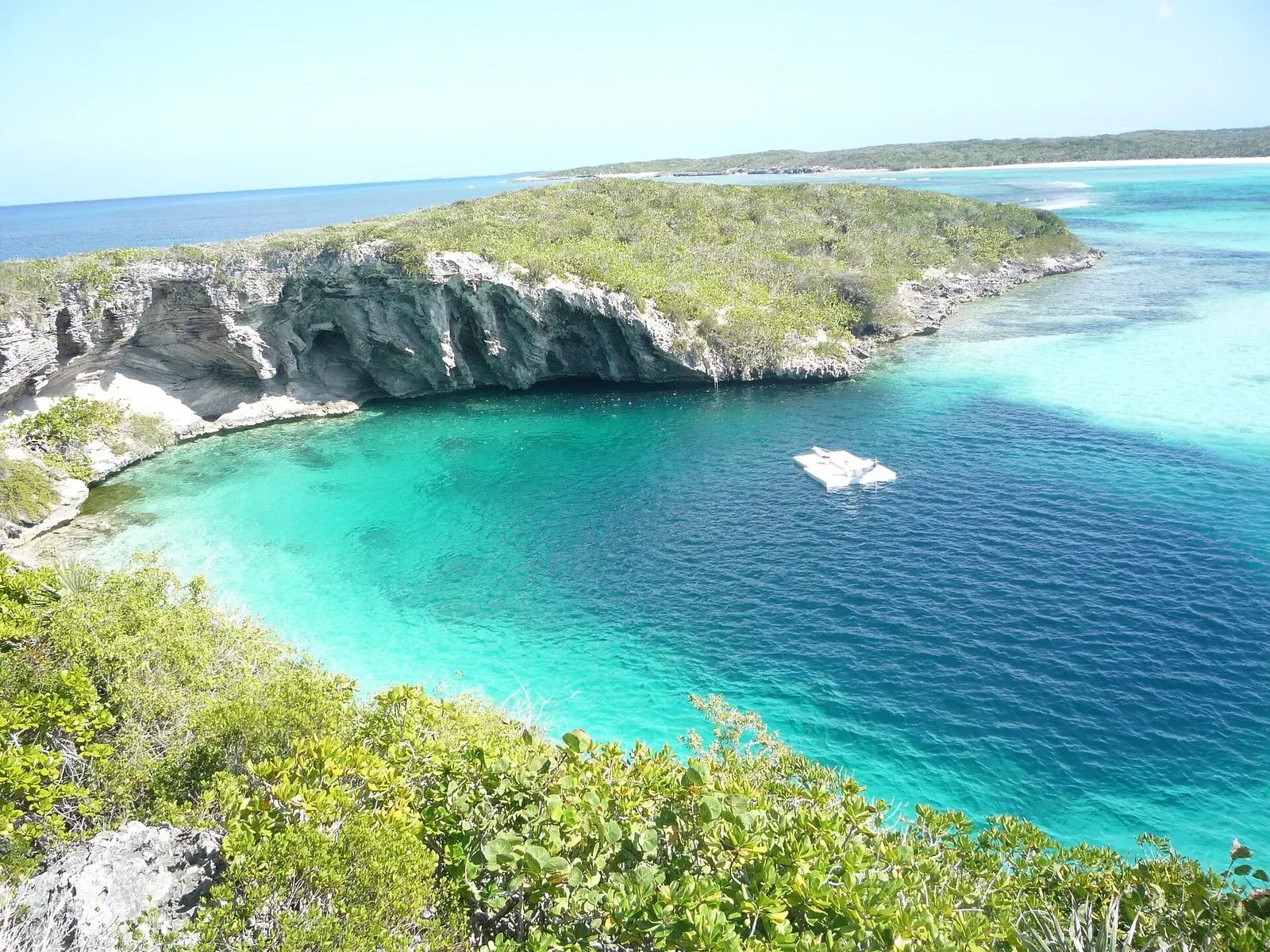
A 30 m-wide hole rimmed with coral at 12 m, dropping to 60 m
Area photo: Rüdiger Stehn · CC BY-SA 2.0
A sapphire-blue crater in the sea floor off New Providence, 100 ft (30 m) wide and 200 ft (60 m) deep, with a rim packed with hard corals starting at 40 ft (12 m). The rim itself is easy diving; the shaft runs well past recreational depth. Jawfish, gobies and blennies work the sand, nurse sharks and rays the hole, and blacknose sharks gather in early summer.
Also known as El Arrecife del Bluehole.
Where it is and how deep
25.0267° N, 77.1422° WPublished position for this site.
The dive
The hole opens in the sea floor as a circle about 100 ft (30 m) across with its perimeter rim at 40 ft (12 m). Boats put divers onto that rim, which is packed with hard corals, and the first part of the dive is a lap of the edge — jawfish, gobies, blennies and tobacco fish in the sand and rubble around it, with the blue of the shaft opening below.
Below the rim the hole falls to 200 ft (60 m), well past recreational limits, so any descent into it is a partial one against a turn depth agreed on the boat. Goatfish, snappers and sweetlips hold along the upper walls, nurse sharks and rays are regular inside the hole, and turtles pass through. Lobsters and soldierfish sit back in the shade, which is where a torch earns its place even in the middle of the day.
From May to early August blacknose sharks gather here to mate, and that is the one seasonal reason to time a visit rather than take the weather as it comes. Dives end back on the rim in 12 m, working the coral edge on the gas that is left, which makes the safety stop a shallow reef dive rather than a hang in open blue. Most of the interest is in the first half of the profile, so plan the deep part first.
Marine life and season
- Reef sharks
- Sea turtles
- Stingrays
- Macro critters
| Jan | Feb | Mar | Apr | May | Jun | Jul | Aug | Sep | Oct | Nov | Dec |
|---|---|---|---|---|---|---|---|---|---|---|---|
| Prime | Prime | Prime | Prime | Prime | Good | Good | Fair | Fair | Good | Prime | Prime |
Season follows Nassau & New Providence: Diving is year-round; Nov–May is calmest and clearest, and Aug–Oct hurricane season brings the most cancelled days.
Know before you go
- The rim sits at 12 m but the hole runs to 60 m: agree a turn depth on the boat and set a computer alarm, because the open blue of the shaft gives no visual cue that the profile is running deep.
- No-decompression time shrinks fast inside the hole and the exit is a long way up. Plan gas and ascent for the deepest part of the dive rather than for the rim you finish on.
Dive videos
The Lost Blue Hole, Nassau Bahamas · Dmitriy on YouTube
Questions divers ask
How deep is the Lost Blue Hole?+
The hole is about 100 ft (30 m) wide and 200 ft (60 m) deep, with the coral-packed rim starting at 40 ft (12 m). The bottom is well past recreational limits, so dives circle the rim and descend only part-way into the shaft.
When can you see blacknose sharks at the Lost Blue Hole?+
They gather here to mate from May to early August. Outside that window the regulars are nurse sharks, rays and turtles, plus the jawfish, gobies, blennies and tobacco fish that live in the sand around the rim.
Sources
- Nassau/New Providence Dive Sites — Dive The World
- Diving in the Bahamas — Wikivoyage
In The Logbook
- What is a blue hole, and what's down there?Caves & caverns · 13 min read
More dive sites in Nassau & New Providence
Wreck
A film-prop Cessna 310 at 18 m beside the Clifton Wall
Artificial reef
A 60-ton, five-metre sculpture standing in five metres of water
Reef
Sea fans and sponge-covered coral heads in 8 m of water
Wreck
A 60 m freighter sunk upright in 2003, bow at 12 m
Reef
Dozens of Caribbean reef sharks at 12 m, on a baited feed
Artificial reef
Connery's escape freighter, 30 m of hull in 12 m of water
Artificial reef
A Thunderball film prop under coral and sponges at 12 m
Similar dives elsewhere

A 26-metre tunnel at 55 metres links the sinkhole to open water

Nineteenth-century anchors lie along a wall that drops past 975 m
A 202 m blue hole off a beach, home of the Vertical Blue freediving contest
Ice-age stalactites hanging from 30 m inside a 124-metre shaft