
Dahab · Egypt · Blue hole · Reef · Wall
Blue Hole
A 26-metre tunnel at 55 metres links the sinkhole to open water
Photo: Petar Milošević · CC BY-SA 4.0
A submarine sinkhole about 100 metres across, cut into the fringing reef 7 km north of Dahab and entered by walking in from the beach. The floor inside sits at just over 100 metres, and a shallow saddle at about 6 metres joins the hole to the open sea. The Arch, a 26-metre tunnel with its ceiling at 55 metres, is what made the site famous and what gave it its fatality record.
Also known as Dahab Blue Hole, Blue Hole Dahab.
Where it is and how deep
28.5722° N, 34.5374° EPublished position for this site.
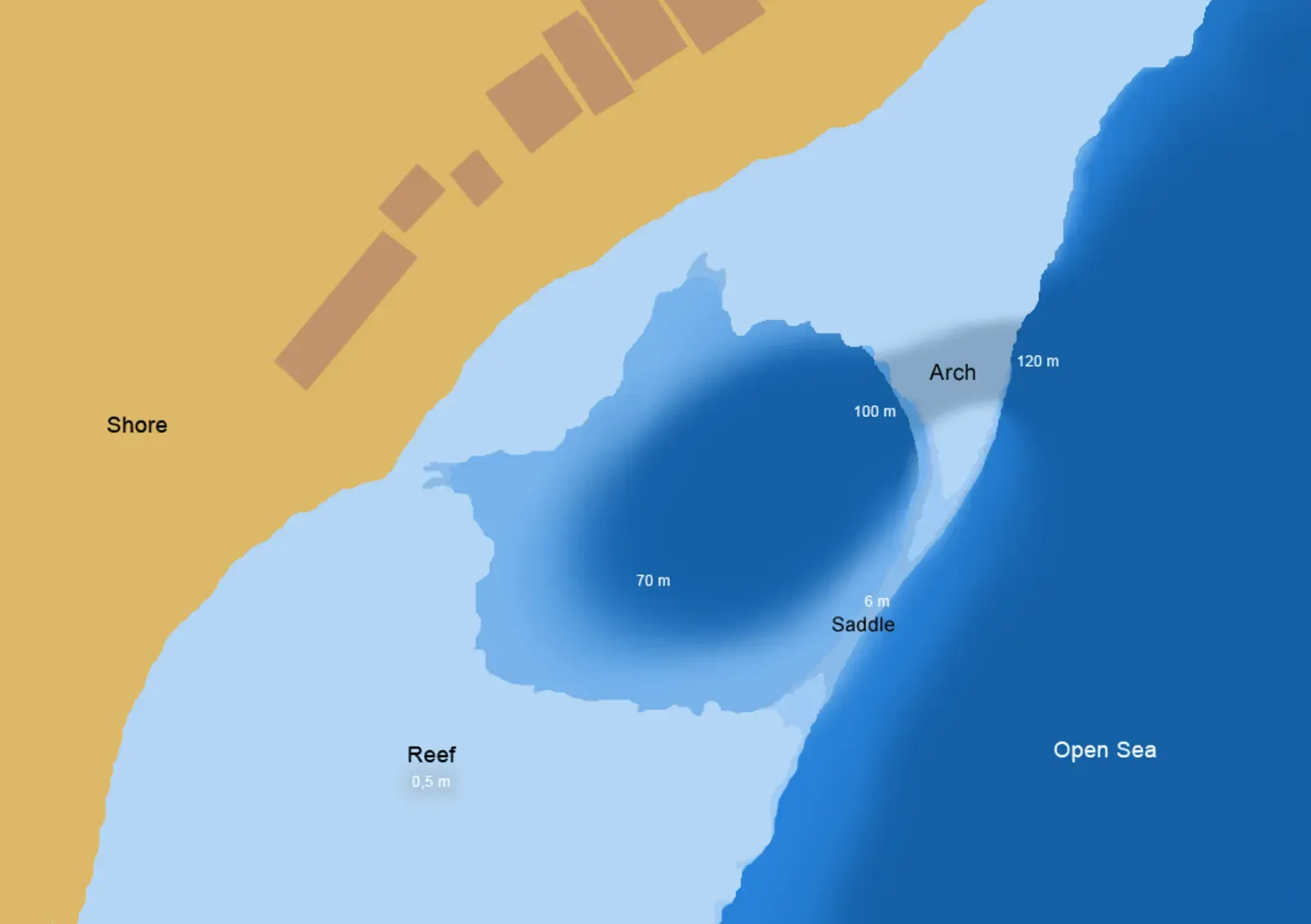
Site maps published elsewhere
The dive
The entry is straight off the shore into the hole. There is no current inside, so the simplest dive is a slow crossing at whatever depth you agreed before getting in, with the Arch glimmering far below. There is not much coral within the hole itself, which is why most dives cross it and go out over the saddle, 6 to 7 metres deep, to the better reef outside, where the floor drops steeply to over 1,000 metres.
The standard deeper dive does not start at the hole at all. Divers walk in at the Bells, further along the shore, drop down a narrow chimney in the reef to a small arch at about 26 metres, not to be confused with the Arch, then follow the wall back to the Blue Hole and finish by crossing the saddle at 7 metres. Local centres run this route to 30 metres for Advanced Open Water or CMAS two-star divers, and it never passes the Arch.
The Arch itself sits under the seaward side of the hole: a 26-metre tunnel whose ceiling is at 55 metres and whose floor falls away to about 120 metres as it reaches open water. Passing through needs a technical plan, with a stage cylinder or more than a single tank of gas, decompression stops on the way up and a gas reserve for all of it. Local operations require Tech 60 certification, or enrolment on that course with them, before anyone goes near it.
The deep, sheltered water straight off the shore and the lack of current also make the hole a freediving training site, and on windy days, when other sites are too rough, it is often still good for snorkelling. Harmless reef sharks and turtles are sometimes seen, so the walls are worth watching whichever route you take.
Background
The Bedouin who lived along this coast historically avoided the hole. In 1968, during the Israeli occupation of Sinai, divers led by Alex Shell made the first dive here with modern scuba equipment and noticed the Arch on that dive, and the site built an international reputation before Sinai returned to Egypt in 1979. Since 1982 it has been dived almost every day. Most of its deaths have been at the Arch, and the Egyptian Chamber for Diving and Watersports now stations a police officer at the site to check that divers go in with a certified guide.
Marine life and season
- Reef sharks
- Sea turtles
- Reef fish swarms
| Jan | Feb | Mar | Apr | May | Jun | Jul | Aug | Sep | Oct | Nov | Dec |
|---|---|---|---|---|---|---|---|---|---|---|---|
| Good | Good | Good | Prime | Prime | Good | Good | Good | Prime | Prime | Good | Good |
Season follows Dahab: Conditions stay calm and shore-diveable year-round; visibility peaks in spring and autumn shoulder months.
Know before you go
- The Arch's ceiling is at 55 metres, well past the 40 metres generally treated as the recreational limit; going under it needs technical training and equipment.
- The Arch entrance is hard to find on the indirect line from the hole. Divers who miss it keep descending with no floor to judge depth by until well past 100 metres.
- The tunnel looks under 10 metres long in the clear water but measures 26, and a current often flows inward through it, adding time and gas at 55 metres.
- Deaths are not reliably counted: one estimate is more than 130 in the 15 years to 2012, another as many as 200, including snorkellers at the surface.
- Instructor Yuri Lipski died here on 28 April 2000 after an uncontrolled descent to 115 metres on a single tank, assumed to be air.
Photos from Blue Hole
Tim Sheerman-Chase · CC BY 2.0
AlexeiAVA · CC BY 4.0
mattk1979 · CC BY-SA 2.0
Dive videos
Diving the Blue Hole, Dahab, Egypt · Igor Travels The World on YouTube
BLUE HOLE ARCH 2023 CHRIS CRAIG · craig / chris on YouTube
Questions divers ask
How deep is the Blue Hole in Dahab?+
The floor inside the hole is at just over 100 metres. The recreational dive stays far above that: the saddle that opens to the sea is at about 6 metres, the Bells route runs to 30 metres, and the ceiling of the Arch tunnel is at 55 metres.
Is the Blue Hole in Dahab dangerous?+
The hole is safe to dive within recreational depth limits. The danger is the Arch, a 26-metre tunnel with its ceiling at 55 metres. Deaths there are not reliably counted, with one estimate of more than 130 between 1997 and 2012, and local centres require Tech 60 certification before anyone attempts it.
Can recreational divers dive the Blue Hole?+
Yes. The usual dive enters at the Bells, drops down a chimney to about 26 metres, follows the wall back to the Blue Hole and crosses the saddle at 7 metres. Local centres run it to 30 metres for Advanced Open Water divers, and the route never goes near the Arch.
Can you snorkel or freedive the Blue Hole?+
Yes. It is a shore entry with no current inside the hole, so the deep water is directly reachable from the beach, which is why freedivers train here. It is often still good for snorkelling on windy days when other Dahab sites are too rough.
Sources
- Blue Hole (Red Sea) — Wikipedia
- Blue Hole Dive Site – Map & Review of Blue Hole in Dahab, Red Sea — Divezone
- Dahab — Dive sites — Wikivoyage
Photo credits
- Aerial view of the Blue Hole sinkhole and its reef rim from the clifftop above the shore entry by Petar Milošević, CC BY-SA 4.0, via Wikimedia Commons
- Diagram of the Blue Hole labelling the reef, saddle, Arch tunnel and open sea by Usellermann, CC BY-SA 3.0, via Wikimedia Commons
- Two freedivers descending through open blue water above the reef at the Blue Hole by Tim Sheerman-Chase, CC BY 2.0, via Wikimedia Commons
- Close-up of ridged hard coral photographed at the Blue Hole by AlexeiAVA, CC BY 4.0, via Wikimedia Commons
- Coral reef and reef fish along the saddle that connects the Blue Hole to open sea by mattk1979, CC BY-SA 2.0, via Openverse
In The Logbook
- How deep can you scuba dive?Body & health · 13 min read
- What is a blue hole, and what's down there?Caves & caverns · 13 min read
- Cheapest places to scuba dive, and the catchTrip planning · 15 min read
- DPV diving: what an underwater scooter changesGear & kit · 10 min read
- Cavern and cenote diving without cave trainingCaves & caverns · 8 min read
- Liveaboard vs resort diving: which suits you?Trip planning · 6 min read
- The best shore dives in the worldShore diving · 8 min read
More dive sites in Dahab
Lagoon
A cave-like canyon with swim-throughs beyond the shallow lagoon
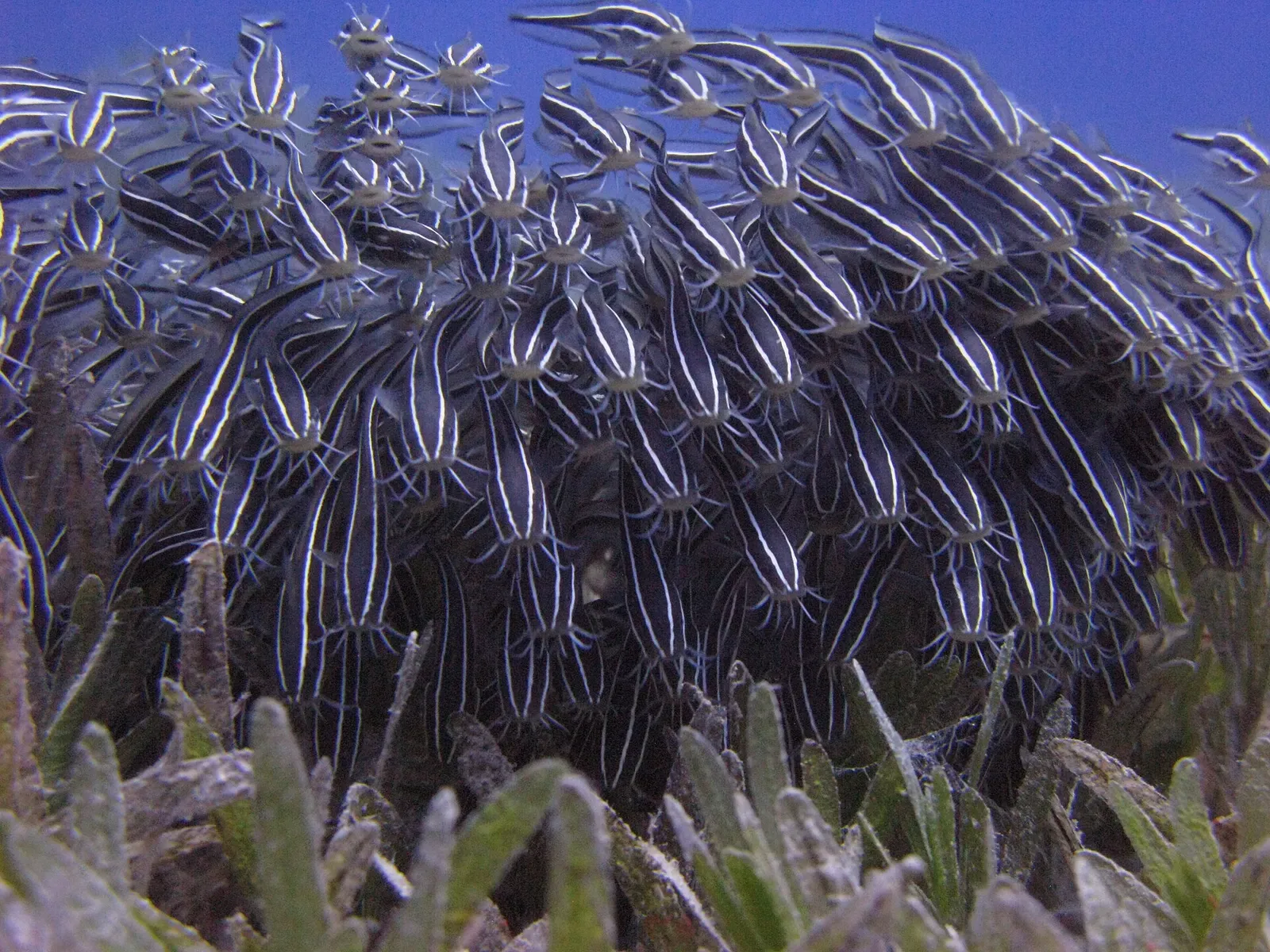
A small reef filled to the brim with schooling bannerfish
Coral garden
Shared entrance with the Canyon, then a slow run south
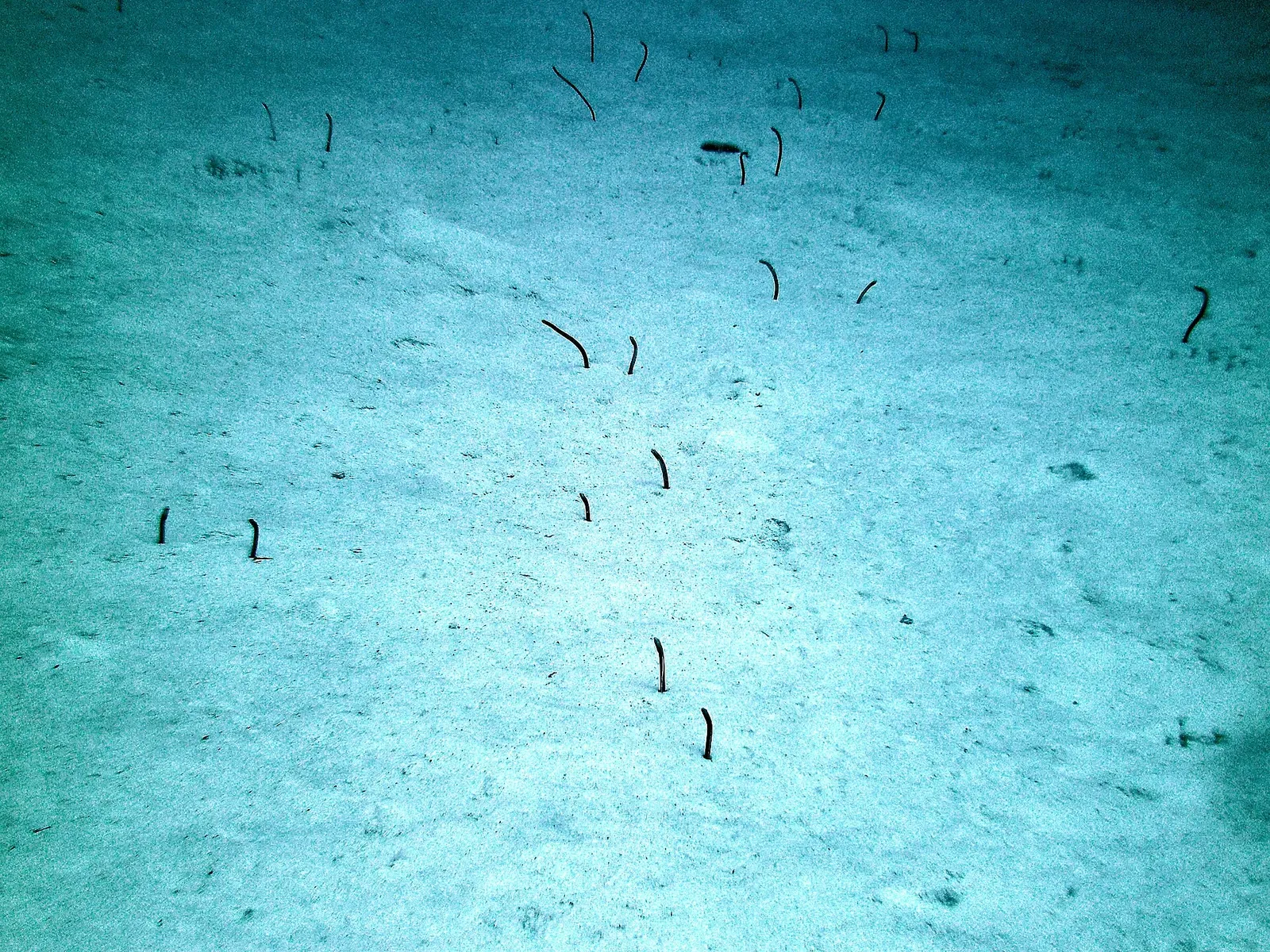
Garden eels standing in the sand a few fin-kicks from the entry
Sand slope
A single large block at 14 metres, loaded with small life
Drift
A canyon from 20 to 50 metres and a forest of giant gorgonians
Reef
A town house reef: seagrass, then coral blocks to 22 metres
Wall
No road in — a 50-minute boat ride to a fan-coral drop-off
Similar dives elsewhere
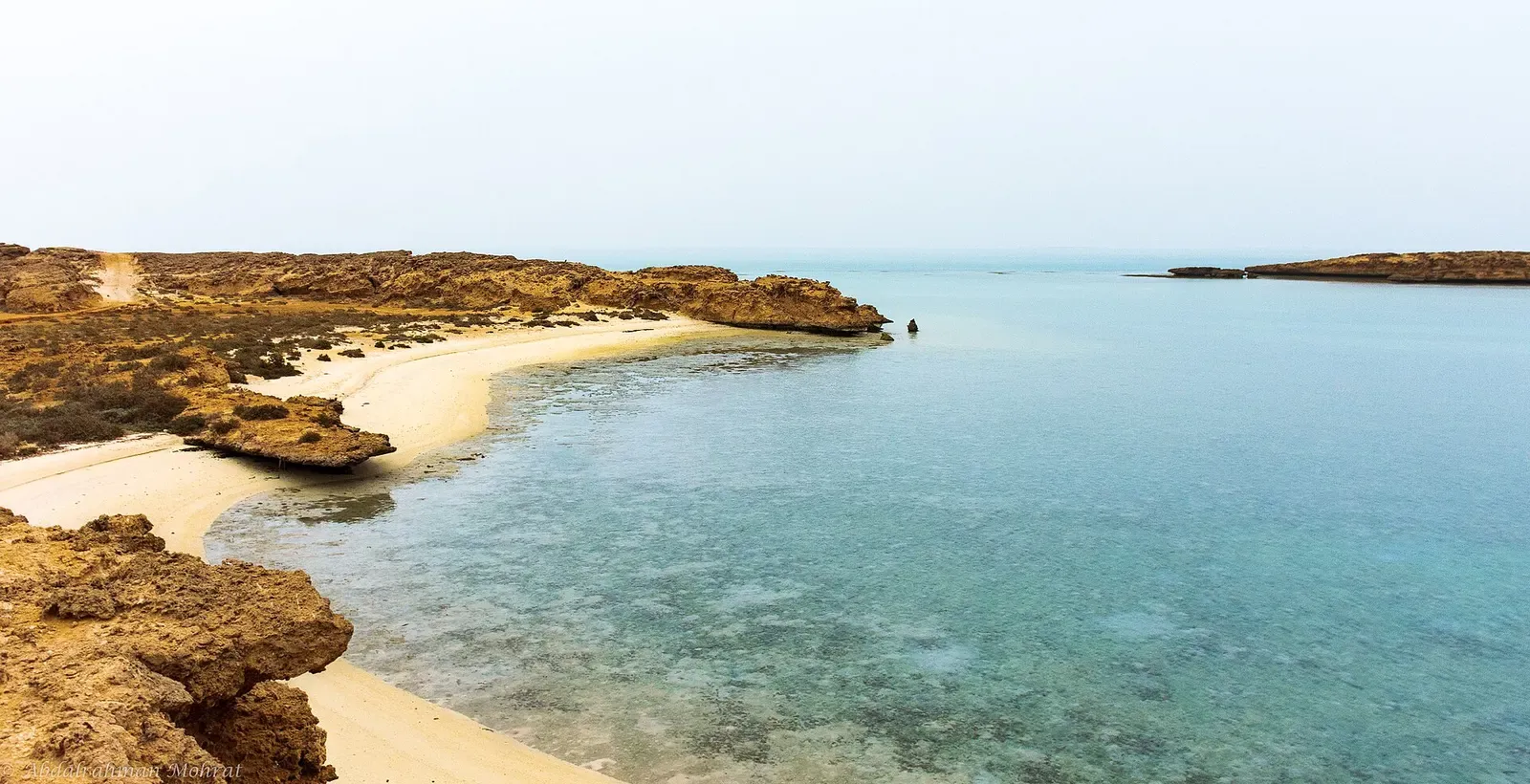
Wall diving where the drop runs to 500 m in places
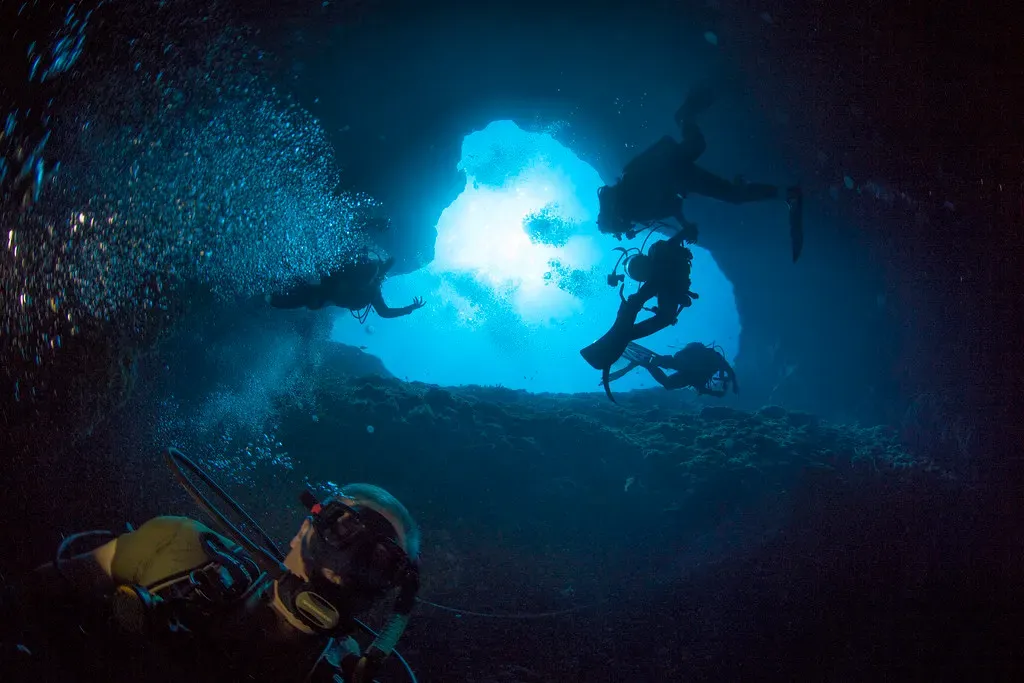
A reef sinkhole with a window at 40 m opening onto the outer wall
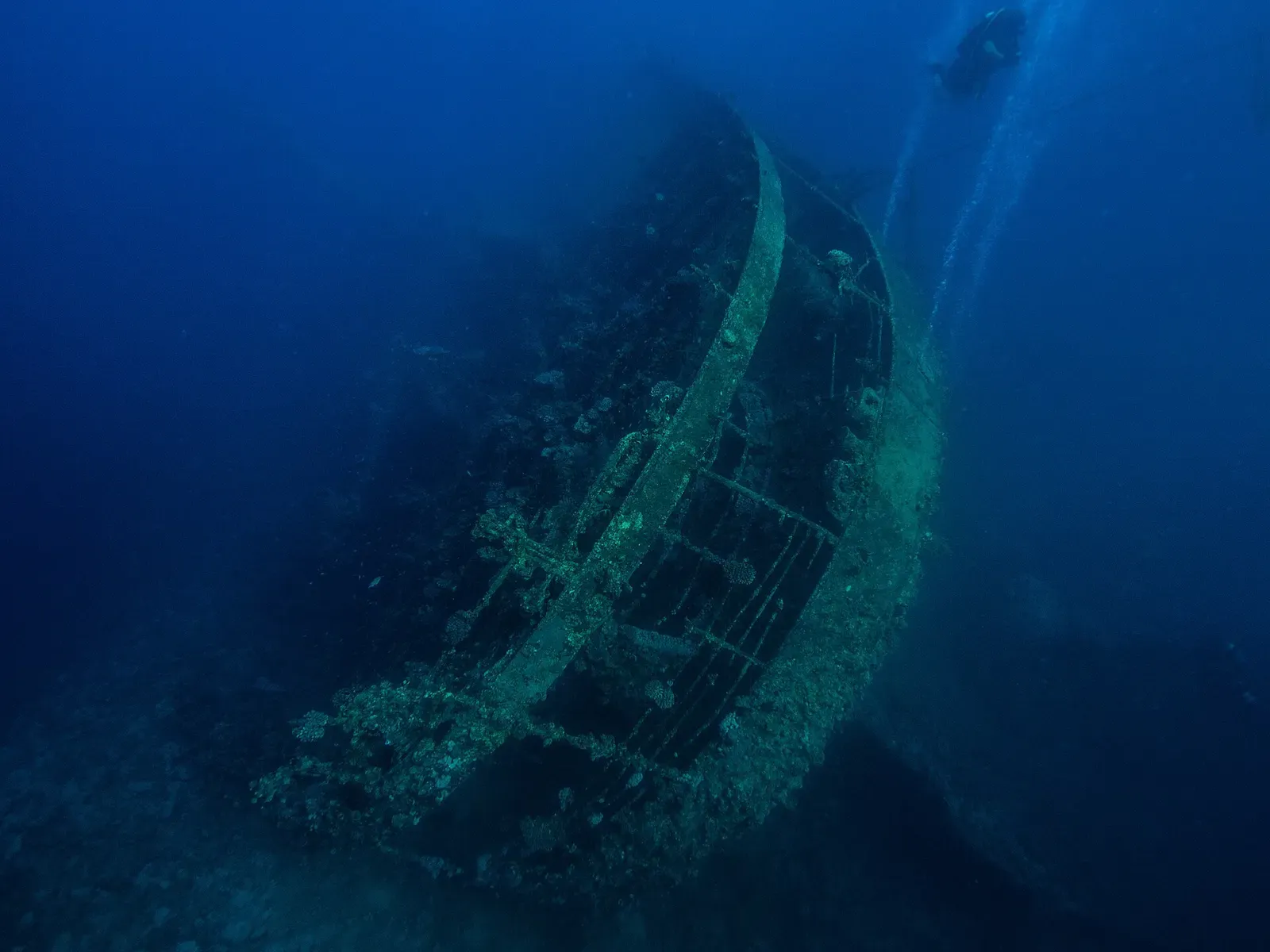
Two plateaus on the Red Sea's only atoll, hammerheads at 45 m


.jpg)
Jetty-entry wall to 40 m dived for tuna, dolphins and passing whale sharks