Caribbean · Mexico
Playa del Carmen
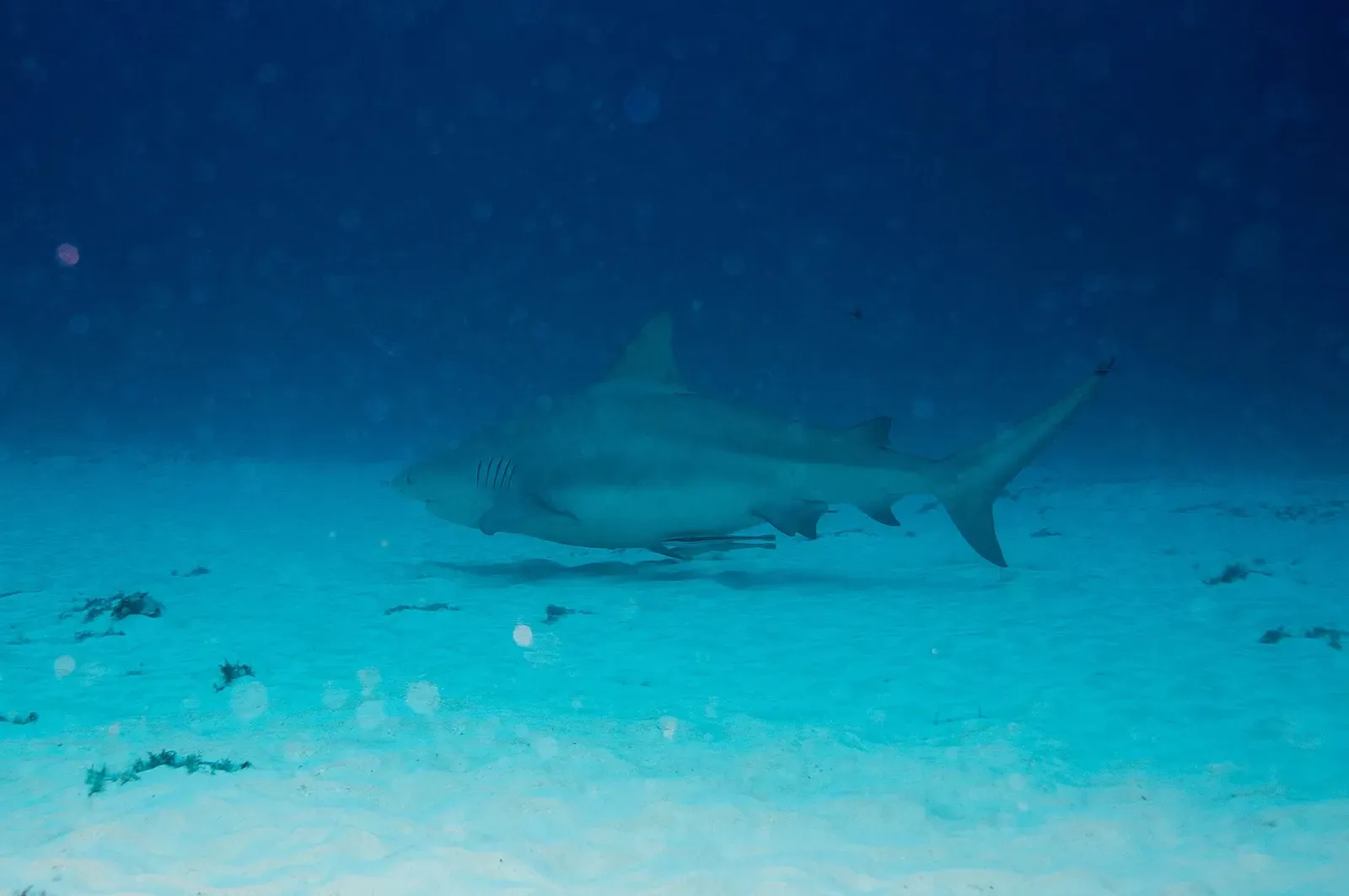
Pregnant bull sharks gather on open sand minutes off the beach each winter
Photo: Ratha Grimes · CC BY 2.0
Playa del Carmen sits on Mexico's Riviera Maya coast, its stretch of the Mesoamerican Barrier Reef reached only by boat from dive shops along Fifth Avenue. The reef diving here plays second fiddle to nearby Cozumel across the channel, but the town has its own specialty: from November to March, pregnant female bull sharks gather on open sand a few minutes offshore, and a network of local dive centres runs both a baited encounter dive and an unbaited observation drift to see them.
About diving in Playa del Carmen
Diving from Playa del Carmen means climbing onto a boat, not walking off a beach: the reef sits offshore, and every hotel and dive shop along Fifth Avenue runs day trips out to it. It's the same Mesoamerican Barrier Reef system that wraps Cozumel, but the current on this side runs harder and the coral cover is patchier, which is why divers focused purely on reef quality are usually pointed across the channel instead. Sites like Barracuda and Los Arcos run as walls and swim-throughs worked as drift dives, with strong current a defining feature rather than an occasional complication, and Nitrox is a common recommendation for the deeper corners.
The shark dive is what actually built Playa's reputation. Two formats run side by side: a baited 'encounter' held at roughly 24 m, where divers hold an assigned position while an operator uses fish scraps to bring bull sharks in close, and an unbaited 45-minute drift at around 18 m over the same sandy ground, watching the same animals without the feed. Both ask for an Advanced Open Water certification or at least 20 logged dives, with a check-out dive offered to anyone short of that. Sightings are close to guaranteed in season and rare outside it — one operator's own logged-dive figures show trips collapsing from several hundred a month in December and January to single digits by August.
Mexico has no dedicated rule governing baited bull shark dives, so the practice is self-policed. Since 2010 the NGO Saving Our Sharks has worked with a coalition of more than 40 Playa del Carmen dive centres to standardize how the encounter is briefed and to fund a community program built around the sharks; a parallel partnership with Isla Mujeres fishermen has cut shark-directed fishing gear by 80% since 2016. It's a voluntary industry framework rather than a legal one, and for now it covers only two local species, bull and silky sharks.
When to dive Playa del Carmen
| Jan | Feb | Mar | Apr | May | Jun | Jul | Aug | Sep | Oct | Nov | Dec |
|---|---|---|---|---|---|---|---|---|---|---|---|
| Good | Prime | Prime | Prime | Good | Fair | Fair | Fair | Off-season | Off-season | Good | Good |
Dry season (Dec–Apr) brings the calmest seas; June–November is Atlantic hurricane season, wettest and roughest around September–October.
Dive types & marine life
Pregnant female bull sharks gather on the sand flat off Playa from November through March, tapering fast once April arrives; by summer the dive is barely run. The rest of the reef holds green and hawksbill turtles and nudibranch trails across the brain-coral heads at Cerebros, but nothing else here draws divers the way the sharks do.
- Pelagic & blue water
- Reef
- Wall
- Drift
- Bull sharks
- Sea turtles
- Nudibranchs
Notable dive sites in Playa del Carmen
Reef
Three reef plateaus split by sand dunes, drifted at 26 m
Wreck
A small ferry-style vessel at 28 m, toured in one dive
Reef
A long run of coral formations at 26–28 m in strong current
Pelagic & blue water
Pregnant bull sharks gather on open sand through the winter pupping season
Barracuda
Shallow wall with a strong current and dense, varied coral formations.
Shangri-La
Reef running parallel to shore, worked north or south depending on the current.
Los Arcos
Strong-current site for advanced divers; Nitrox helps make the most of it.
Cerebros
Dense brain- and mountain-coral formations, hence 'the brains'.
Getting there
Fly into Cancún International Airport, about 70 km north, then bus or transfer down the coastal highway to Playa's dive shops on Fifth Avenue. The passenger ferry to Cozumel leaves from the same waterfront if you want reef days there too. Shark dive operators run one boat trip a day in season, usually early afternoon, and it's worth booking a day or two ahead.
Photos from Playa del Carmen
Nicholas Hartmann · CC BY-SA 4.0
Laszlo Ilyes · CC BY 2.0
Photo credits
- A bull shark cruises low over a white sand bottom in blue water off Playa del Carmen, its stocky grey body clearly visible by Ratha Grimes, CC BY 2.0, via Wikimedia Commons
- A thatched palapa umbrella shades empty beach loungers on the white sand of Playa del Carmen, with turquoise Caribbean water beyond by Nicholas Hartmann, CC BY-SA 4.0, via Wikimedia Commons
- A yellow whitespot filefish with dark fringed fins hovers beside pink sponge growth on a reef off Playa del Carmen by Laszlo Ilyes, CC BY 2.0, via Wikimedia Commons
In The Logbook
- Tiger, bull and white: the big shark divesBig animals · 14 min read
Similar destinations

Drift along sponge-covered walls with 20–40 m visibility on the sheltered leeward coast

Dive through a field of warm volcanic bubbles at Champagne Reef, named for the effect
One of the few reliable places on earth to dive with oceanic whitetips


.jpg)
Snorkel with American crocodiles, then dive reefs thick with unwary reef sharks