Port Phillip · Australia · Muck & macro · Artificial reef
Rye Pier
Spider crabs in late May and June, wrecks either side
Photo: Katieleeosborne · CC BY-SA 4.0
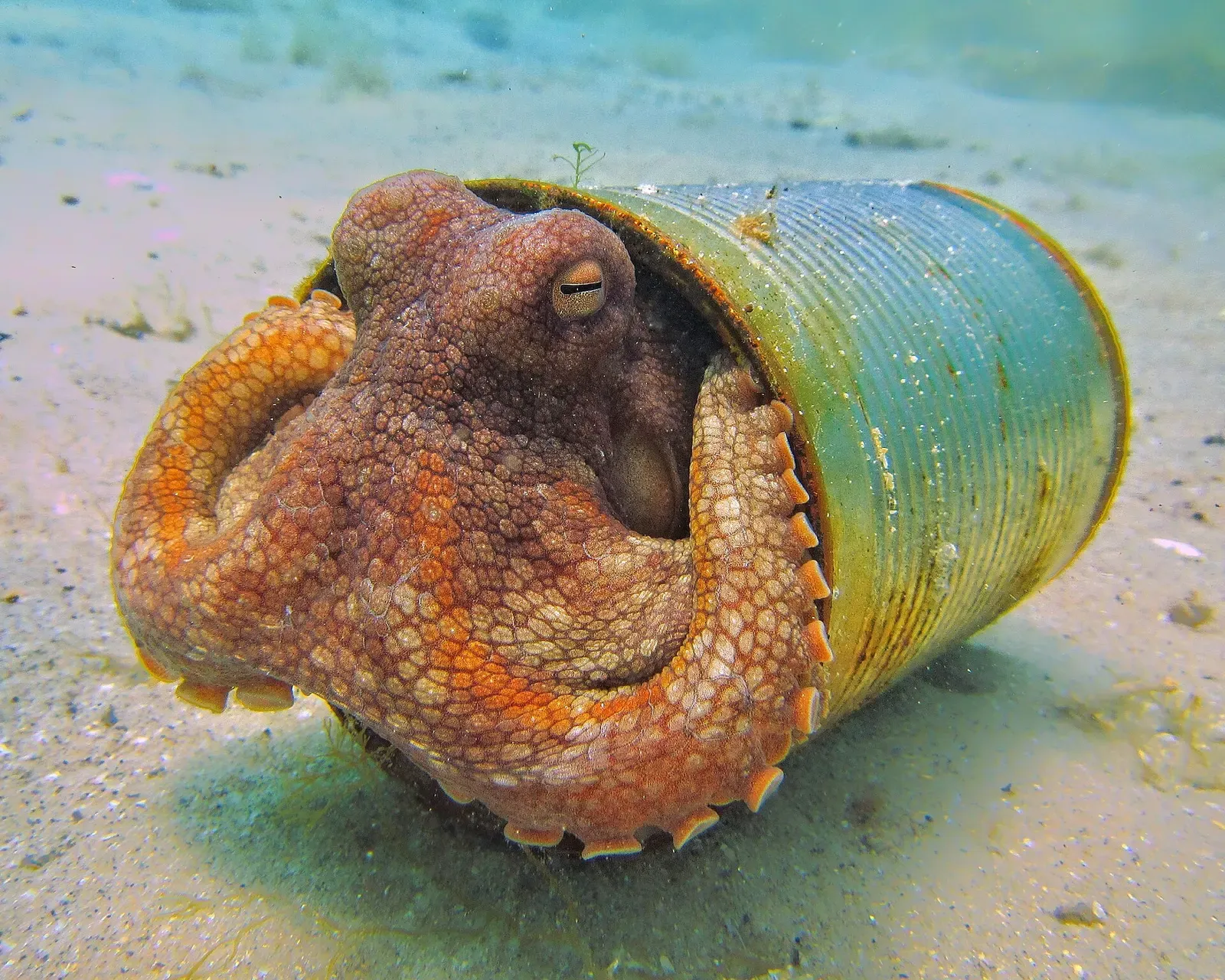
Rye Pier is a popular recreational shore dive on the inside of Port Phillip, worked the way the other Mornington Peninsula piers are: slowly, over the pylons and the sand around them. Seahorses, stingrays, squid, scallops and octopus live under the boards, Australian fur seals pass through, and two wooden sailing wrecks lie within a few hundred metres.
Where it is and how deep
38.3670° S, 144.8228° EApproximate position — the dashed circle shows where the site lies; your operator's briefing has the mooring.
The dive
Rye Pier is a shore dive: in from the beach, then out along the pylons in 2 to 6 metres of water, searching rather than swimming. Seahorses, stingrays, spider crabs, squid, scallops and octopuses all use the pier and the sand around it, and Australian fur seals come through often enough to be worth watching for. As at the other bay piers, the dive runs as long as your air and your patience allow.
Two wooden wrecks sit close by. The ketch Eivion lies 115 metres to the east of the pier and the schooner Barbara 240 metres to the west, so reaching either means leaving the structure and navigating out and back over open ground. Most divers treat them as their own outing rather than tacking them onto a slow crawl along the pylons.
In late May and June the giant spider crabs migrate through the area in a mass aggregation, and for those weeks the sand around the pier is the whole dive rather than a backdrop to the structure. The exact timing shifts from year to year, so it is worth checking what is actually happening in the bay before making the drive down.
Marine life and season
- Stingrays
- Squid
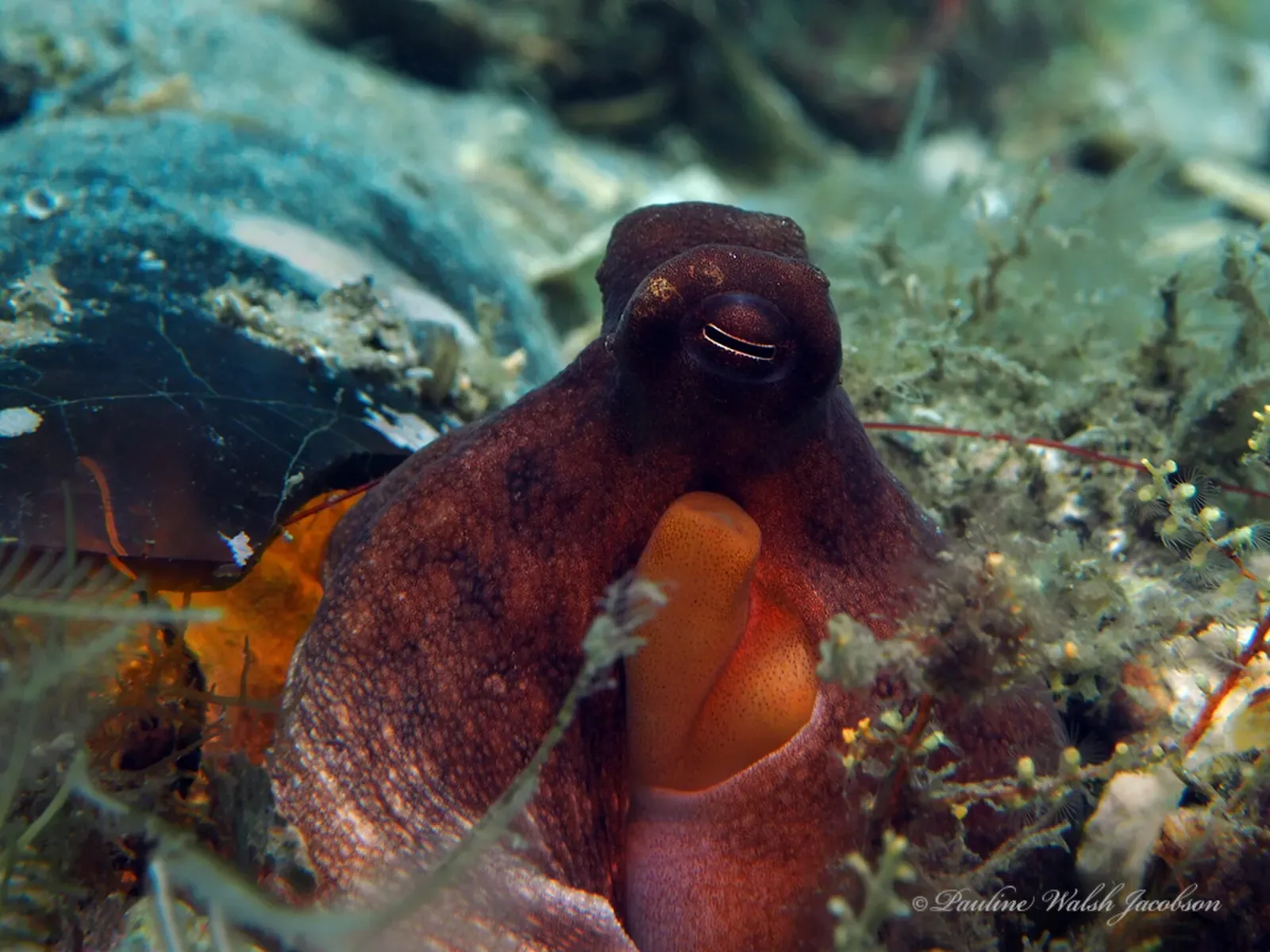
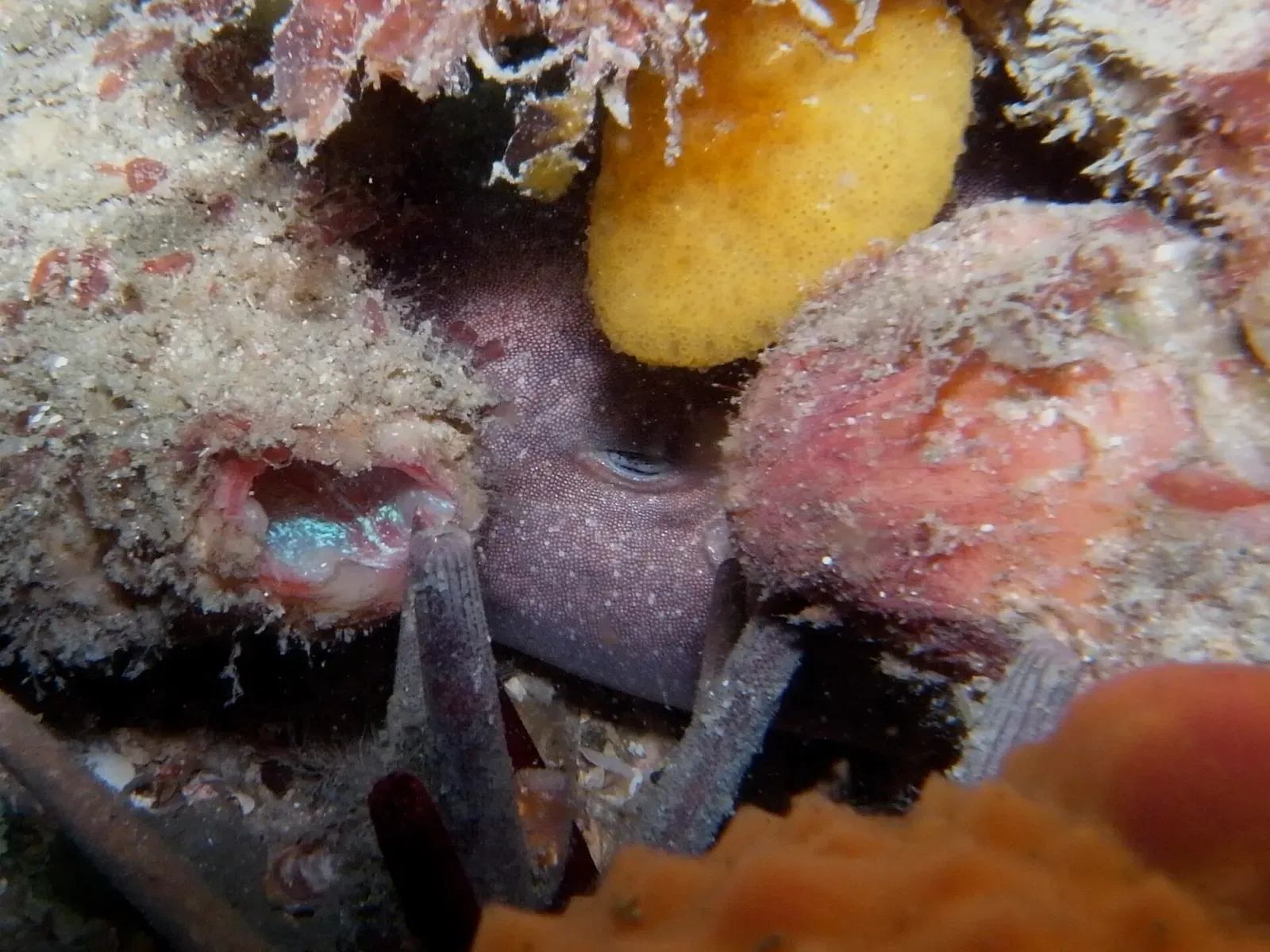
- Octopus & cuttlefish
- Macro critters
- Seals & sea lions
| Jan | Feb | Mar | Apr | May | Jun | Jul | Aug | Sep | Oct | Nov | Dec |
|---|---|---|---|---|---|---|---|---|---|---|---|
| Good | Good | Good | Good | Prime | Prime | Prime | Good | Good | Good | Good | Good |
Season follows Port Phillip: The spider crab aggregation runs May–Jul; winter also brings the clearest water, while summer is warmest but greener.
Know before you go
- The two wrecks lie 115 m and 240 m from the pier over open ground, so both need a compass or a surface reference - it is an easy way to overrun your gas well away from the exit.
Photos from Rye Pier
Katieleeosborne · CC BY-SA 4.0
Lek Khauv · CC BY 4.0
Dive videos
Rye Pier - Octopus Garden · Colin Grant on YouTube
Questions divers ask
When do spider crabs gather at Rye Pier?+
In late May and June, when the giant spider crabs migrate through the area in a mass aggregation. The exact timing and the numbers vary from one year to the next.
Are there wrecks near Rye Pier?+
Yes, two wooden sailing vessels. The ketch Eivion lies 115 m to the east of the pier and the schooner Barbara 240 m to the west, both reachable from the same shore entry.
Sources
- Rye, Victoria — Wikipedia
- Rye Pier (OpenStreetMap) — OpenStreetMap
- Rye Pier dive site — PADI
Photo credits
- Pale octopus peering out from inside a discarded tin can on the seabed by Katieleeosborne, CC BY-SA 4.0, via Wikimedia Commons
- Small juvenile seahorse clinging to weed on a pylon in green-tinted water by Katieleeosborne, CC BY-SA 4.0, via Wikimedia Commons
- A giant spider crab clinging to a timber pier beam by Lek Khauv, CC BY 4.0, via Wikimedia Commons
In The Logbook
- Where to dive with seals and sea lionsBig animals · 17 min read
- The best muck diving in the worldMacro & muck · 6 min read
More dive sites in Port Phillip
More than a hundred nudibranch species under one pier
Reef
A 10-22 m reef of overhangs and swim-throughs
Walls stepping down past 60 m, strewn with house-sized boulders
Pinnacle
A 200 m rock circled in one dive, 18 m sand to 12 m top
Ledges and swim-throughs in 6-9 m, straight off the car park
Wall
A broken wall from 12 m to 30 m, cut with overhangs
A 138 m guided missile frigate sunk at 30 m
Wall
The shallow 8 m top of the Lonsdale wall system
Similar dives elsewhere
A resident leafy seadragon population lives under the old jetty.
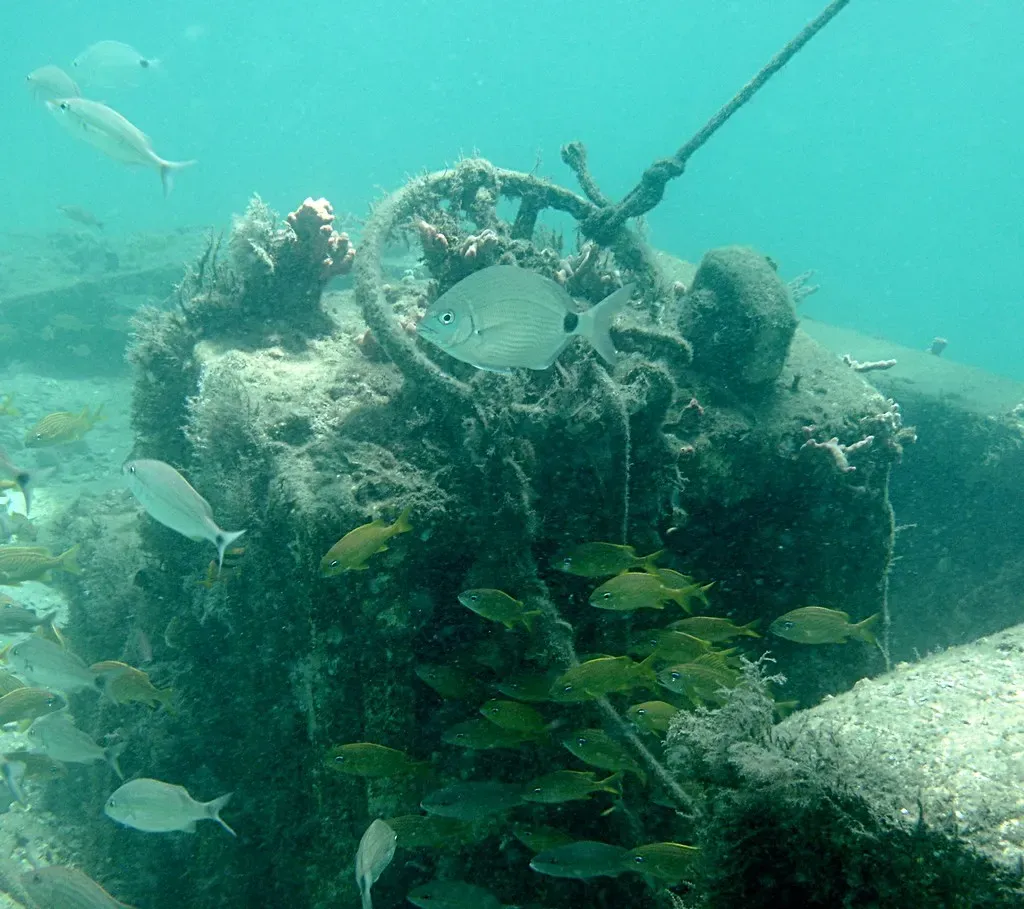
A submerged sailboat and a resident school of spadefish
Blue-lined octopus and pyjama squid along a submerged pipe


The Red Wall: the last column before the channel, thick with sponges