Port Phillip · Australia · Muck & macro · Artificial reef
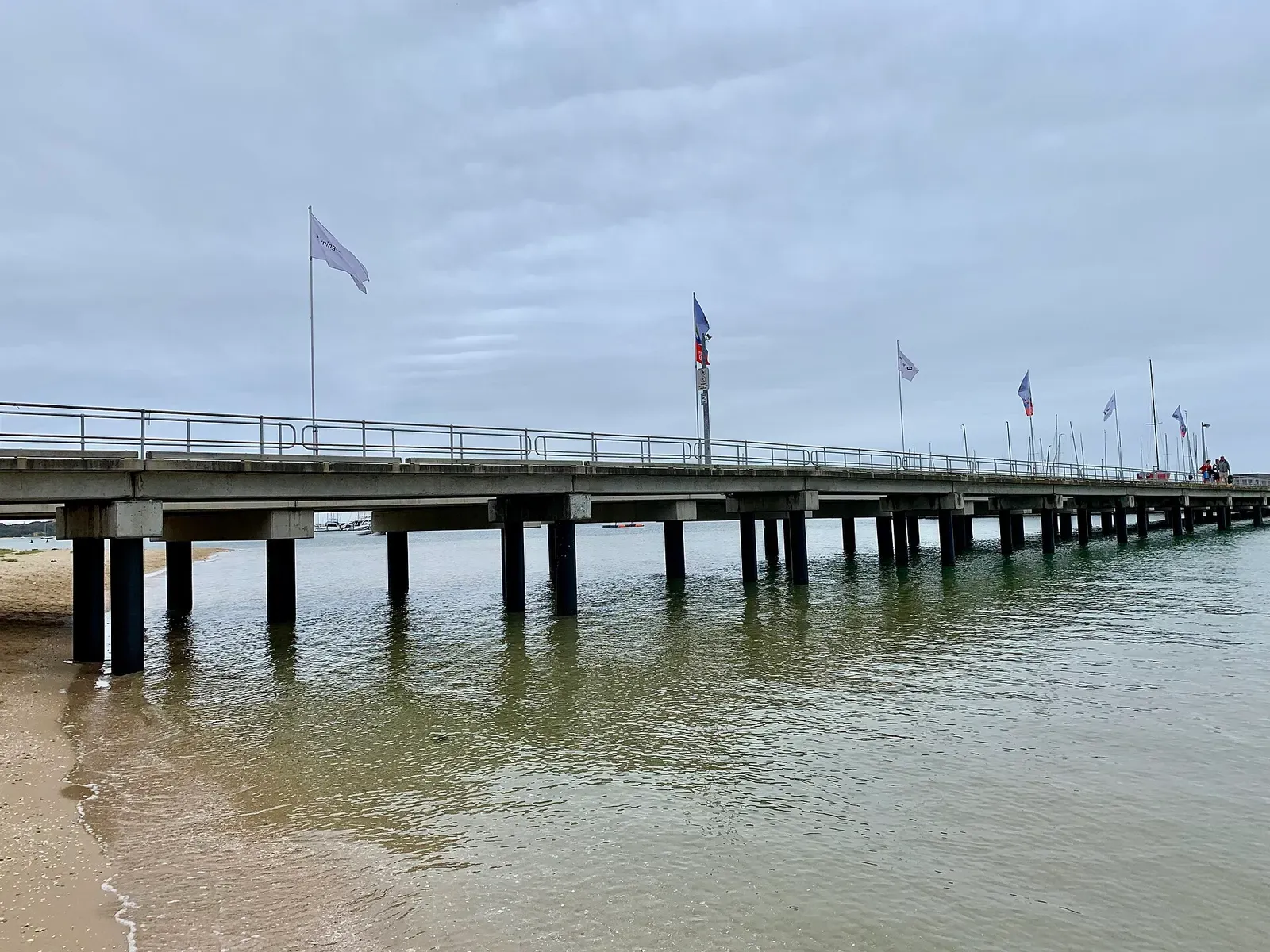
Blairgowrie Pier
More than a hundred nudibranch species under one pier
Photo: Kgbo · CC BY-SA 4.0
Blairgowrie Pier is the most popular shore dive site for recreational diving inside Port Phillip, a boat harbour whose pylons and surrounding sand hold an unusual density of small animals. More than a hundred species of nudibranch have been identified here, and each year between May and July thousands of spider crabs migrate into the shallows around it.
Where it is and how deep
38.3553° S, 144.7727° EApproximate position — the dashed circle shows where the site lies; your operator's briefing has the mooring.
The dive
This is a shore dive: you walk in from the beach beside the pier and work your way out along the pylons in no more than about 7 metres of water, searching the structure and the sand between the piles rather than covering distance. The pier was built as a safe boat harbour and marina by the Blairgowrie Yacht Squadron, so there is a lot of built material to go over, and it is the searching that fills the dive rather than the ground you cover.
What you find is mostly small and mostly sitting still. More than a hundred different species of nudibranch have been identified at the pier, which is what most photographers come for. Octopus and cuttlefish, seahorses, boxfish, decorator crabs, stargazers, goatfish and blennies all use the piles and the sand around them, and large stingrays cross the open ground between them.
From May through July the dive changes character entirely. Thousands of spider crabs migrate along the ocean floor into the cool, shallow water around Blairgowrie Pier, gathering in the shallows to moult, and for those weeks they are what divers come for. It is the one time of year the site is about a single animal rather than about how carefully you search.
Marine life and season
- Nudibranchs
- Octopus & cuttlefish
- Stingrays
- Macro critters
| Jan | Feb | Mar | Apr | May | Jun | Jul | Aug | Sep | Oct | Nov | Dec |
|---|---|---|---|---|---|---|---|---|---|---|---|
| Good | Good | Good | Good | Prime | Prime | Prime | Good | Good | Good | Good | Good |
Season follows Port Phillip: The spider crab aggregation runs May–Jul; winter also brings the clearest water, while summer is warmest but greener.
Know before you go
- The pier is a working boat harbour and marina, so surface traffic is part of the site: stay near the pylons and surface beside the structure rather than out in open water.
Photos from Blairgowrie Pier
Christopher Hurwood · CC BY 4.0
Christopher Hurwood · CC BY 4.0
Christopher Hurwood · CC BY 4.0
Christopher Hurwood · CC BY 4.0
Dive videos
Scuba Diving Under Blairgowrie Pier , Port Phillip Bay Victoria Australia · SurfnPics on YouTube
Questions divers ask
When do the spider crabs gather at Blairgowrie Pier?+
Each year from May through July, when thousands of spider crabs migrate along the ocean floor into the cool, shallow water around the pier. Numbers and exact timing vary from year to year.
Is Blairgowrie Pier a shore dive?+
Yes. It is the most popular shore dive site for recreational scuba diving inside Port Phillip, entered from the beach beside a pier that was built as a boat harbour and marina.
Sources
- Blairgowrie, Victoria — Wikipedia
- Blairgowrie Pier (OpenStreetMap) — OpenStreetMap
- Blairgowrie Pier dive site — PADI
Photo credits
- Low pier on wooden pylons stretching out over the shallow water at Blairgowrie, Port Phillip Bay by Kgbo, CC BY-SA 4.0, via Wikimedia Commons
- Southern bottletail squid half-buried in sand, eyes and mantle visible by Christopher Hurwood, CC BY 4.0, via Wikimedia Commons
- Cream and yellow nudibranch with two feathery rhinophores raised on its head by Christopher Hurwood, CC BY 4.0, via Wikimedia Commons
- Orange and purple-edged nudibranch crawling across a dark mussel shell by Christopher Hurwood, CC BY 4.0, via Wikimedia Commons
- An olive-green Tambja dracomus nudibranch with orange gills crawling over sand by Christopher Hurwood, CC BY 4.0, via Wikimedia Commons
In The Logbook
- Nudibranchs: species, habits and where to diveMacro & muck · 13 min read
- Frogfish: species, behaviour and where to diveMacro & muck · 12 min read
- The best muck diving in the worldMacro & muck · 6 min read
More dive sites in Port Phillip
Reef
A 10-22 m reef of overhangs and swim-throughs
Walls stepping down past 60 m, strewn with house-sized boulders
Pinnacle
A 200 m rock circled in one dive, 18 m sand to 12 m top
Ledges and swim-throughs in 6-9 m, straight off the car park
Wall
A broken wall from 12 m to 30 m, cut with overhangs
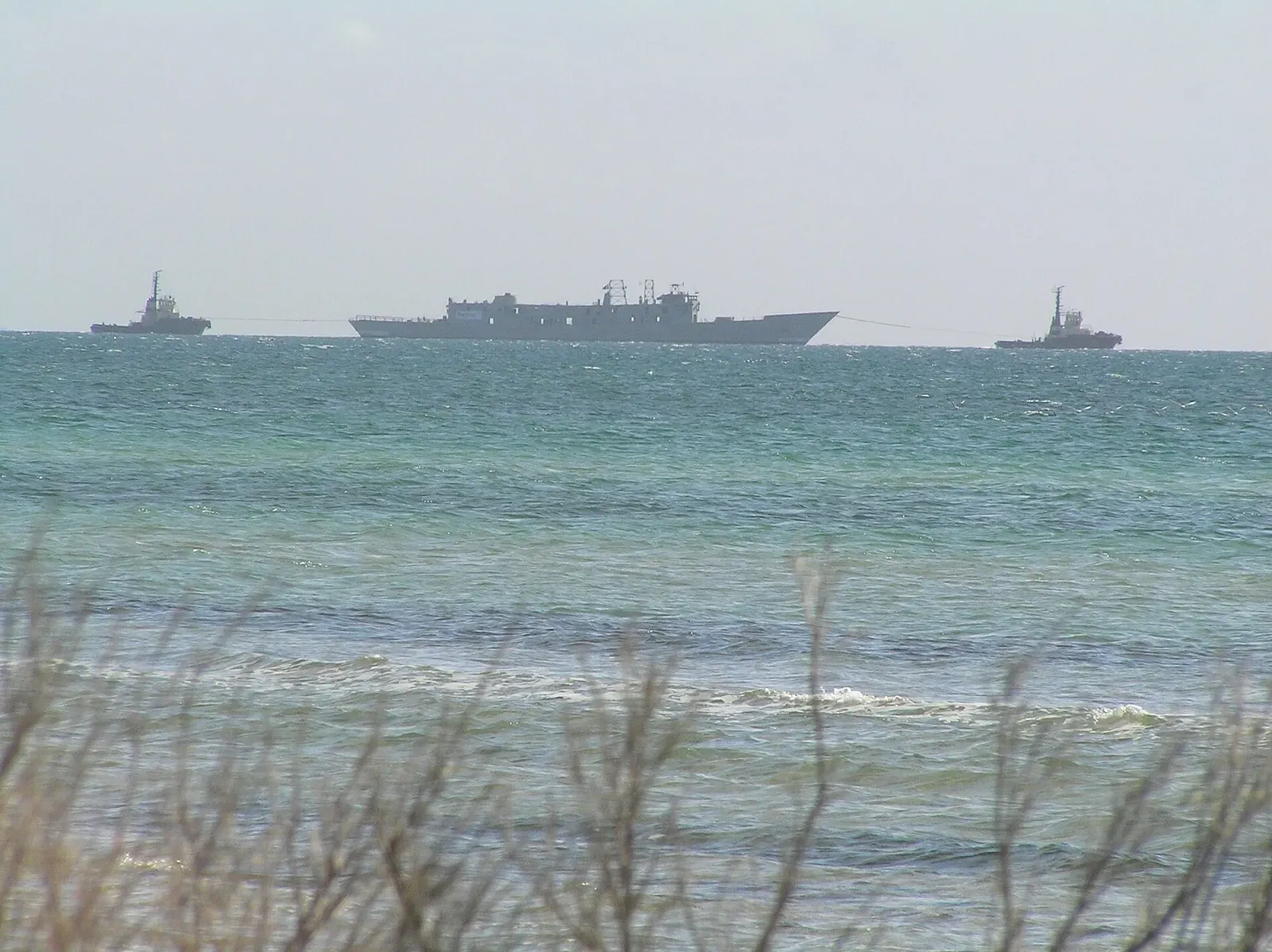
A 138 m guided missile frigate sunk at 30 m
Wall
The shallow 8 m top of the Lonsdale wall system
Wreck
A WWI submarine at 27 m, silt-free inside on the right day
Similar dives elsewhere
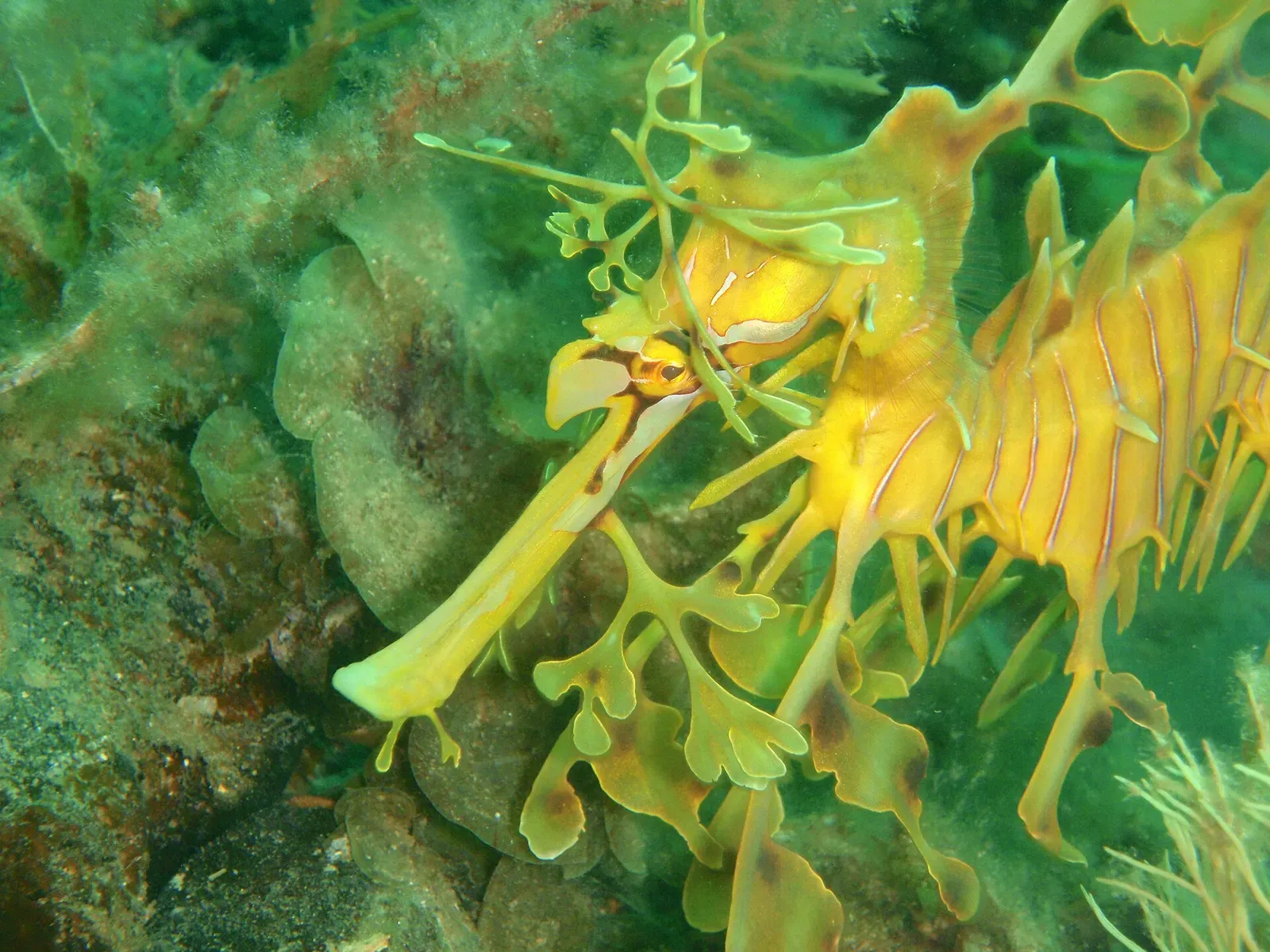
A resident leafy seadragon population lives under the old jetty.
A submerged sailboat and a resident school of spadefish
The Red Wall: the last column before the channel, thick with sponges


Wobbegongs and grey nurse under a working navy jetty