Rapid Bay · Australia · Artificial reef · Muck & macro
Old Rapid Bay Jetty
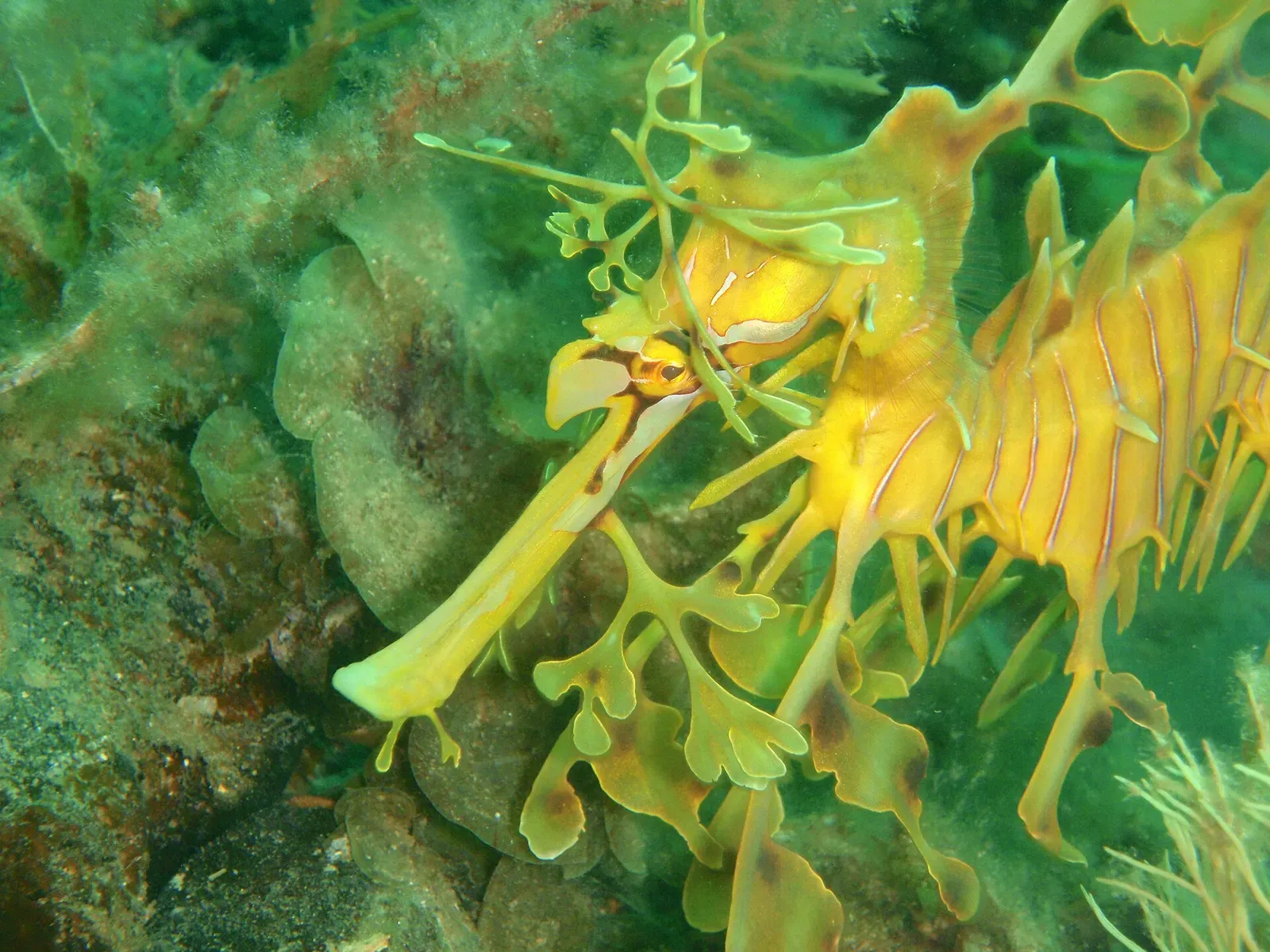
A resident leafy seadragon population lives under the old jetty.
Photo: Peter Southwood · CC BY-SA 3.0
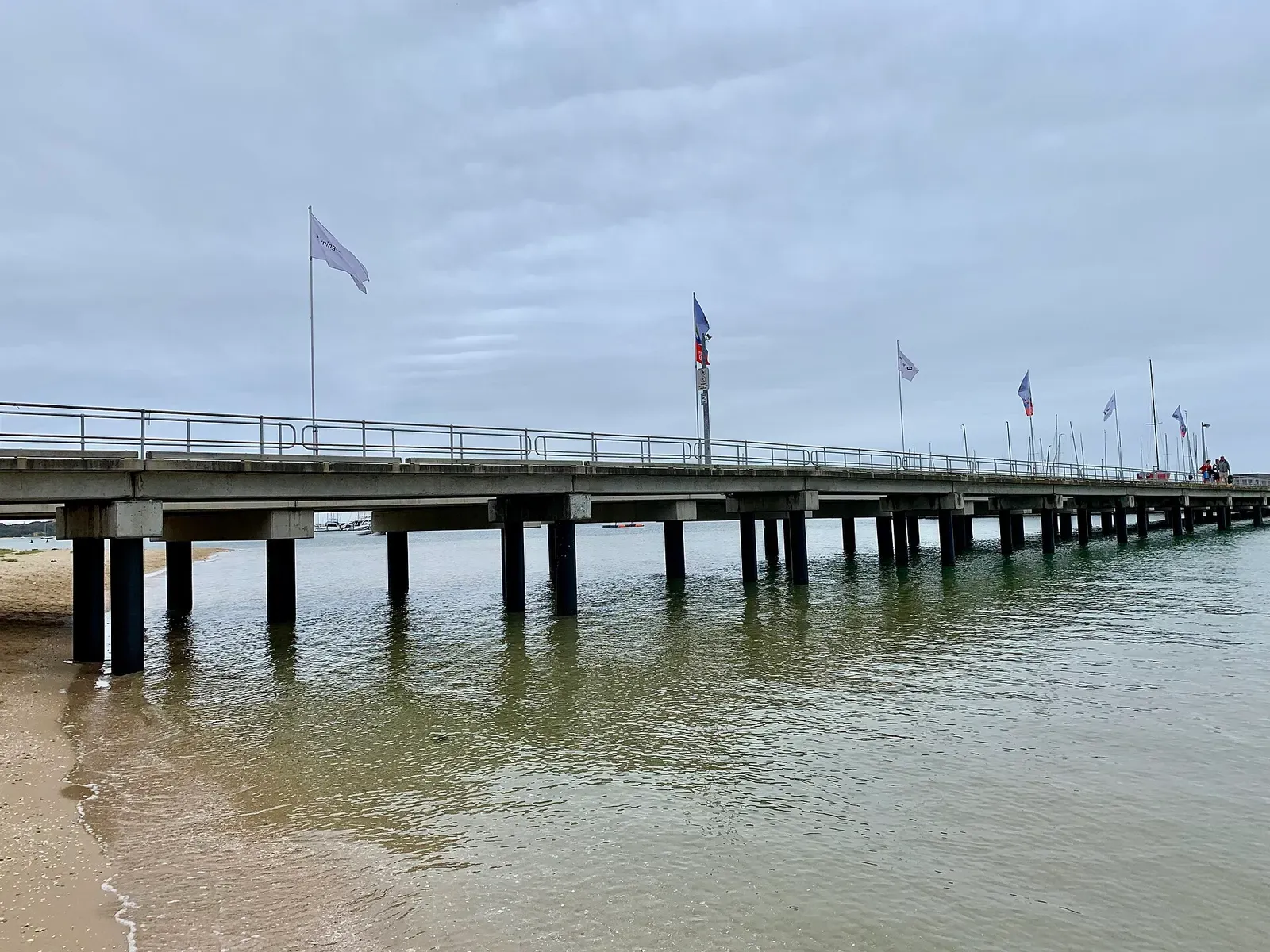
The pylons of the old BHP loading jetty are the reason divers drive down the Fleurieu Peninsula: a resident leafy seadragon population lives among them, in water under 10 m for most of the structure's length. The deck above is off-limits and has been collapsing for years, so the dive starts at the new jetty and crosses underwater to the old pylons and their T-section.
Also known as BHP Jetty, Rapid Bay Jetty.
Where it is and how deep
35.5214° S, 138.1854° EApproximate position — the dashed circle shows where the site lies; your operator's briefing has the mooring.
The dive
Kit up on the beach and enter from the staircase at the outer end of the new jetty, then swim across to the old structure — that crossing is the dive's only real effort, and the old jetty is where the leafy seadragons live. Depth holds under 10 m along most of the pylon line, with 10 to 12 m at the far end on a high tide, so a tank lasts a long time and there is nothing about the profile to hurry the search.
Work the pylons slowly. The piles carry well-established growth and the animals sit tight against it: leafy seadragons among the weed, weedy seadragons occasionally, and blue-ringed octopus, Australian giant cuttlefish and nudibranchs on the piles and among the debris on the seafloor. Anglerfish turn up on the structure too.
Out at the T-section the shape of the jetty changes and big schools gather — Old Wives and Zebra Fish among the seventy-plus fish species recorded in Rapid Bay — and the bull rays that cruise through are large, friendly and usually curious about divers. Eagle rays and stingrays pass through as well. Return the way you came, following the pylon line back towards the new jetty rather than trusting a compass.
Background
The BHP Jetty was built for ship-loading and ran 490 metres out from the beach, with a 200-metre T-section at its end. Originally built by BHP and later operated by Adelaide Brighton Cement, it ceased commercial operations in 1991. Storm damage in 2004 brought progressive closure in stages for public safety, and the structure finally collapsed in January 2022. It is considered among the best scuba diving sites in South Australia and Australia, and SportDiver has listed it as one of the world's top nine dives.
Marine life and season
- Leafy seadragons
- Weedy seadragons
- Nudibranchs
- Octopus & cuttlefish
- Frogfish
- Stingrays
- Eagle rays
- Reef fish swarms
- Macro critters
- Dolphins
- Seals & sea lions
| Jan | Feb | Mar | Apr | May | Jun | Jul | Aug | Sep | Oct | Nov | Dec |
|---|---|---|---|---|---|---|---|---|---|---|---|
| Prime | Prime | Prime | Good | Good | Fair | Fair | Fair | Good | Good | Good | Prime |
Season follows Rapid Bay: Seadragons are resident year-round; summer (Dec–Mar) brings the calmest seas and best visibility, while winter swell and cold make access harder.
Know before you go
- Compasses do not read properly under the metal structure and the T-section's shape is disorienting, so navigate on the pylon lines and count your way back rather than steering a bearing.
- The old jetty is collapsing gradually and fresh evidence of collapse is not unusual, so look the structure over from the surface before you enter and stay clear of unstable wreckage.
Photos from Old Rapid Bay Jetty
Peter Southwood · CC BY-SA 3.0
Peter Southwood · CC BY-SA 3.0
Peter Southwood · CC BY-SA 3.0
Dive videos
Diving the old Rapid Bay Jetty · AusOcean on YouTube
Questions divers ask
How deep is the Old Rapid Bay Jetty dive?+
Shallow. The old jetty terminated in 9.1 m of water at lowest tide and the end reaches 10 to 12 m at high tide, while most of the pylon line sits under 10 m — which is why divers get such long bottom times here.
How do you reach the old jetty pylons?+
The old jetty is off-limits above water. Divers enter from the staircase at the end of the new jetty and swim across underwater to the old structure, which is where the leafy seadragons live.
What will I see at the old jetty?+
Leafy seadragons are resident and weedy seadragons are seen occasionally. The pylons also hold nudibranchs, blue-ringed octopus, Australian giant cuttlefish and anglerfish, while bull rays, eagle rays and schools of Old Wives and Zebra Fish work the T-section. Dolphins and sea lions turn up if you are lucky.
Sources
- Rapid Bay, South Australia — Wikipedia
- Rapid Bay Jetty (Shore Diving) — Diving Adelaide
- Diving in South Australia/Rapid Bay Jetty — Wikivoyage
- OpenStreetMap: Rapid bay jetty dive entrance — OpenStreetMap
Photo credits
- A leafy seadragon drifts among yellow-green kelp fronds against a pylon. by Peter Southwood, CC BY-SA 3.0, via Wikimedia Commons
- A dusky morwong swims past a jetty pylon thickly encrusted with sponges and weed. by Peter Southwood, CC BY-SA 3.0, via Wikimedia Commons
- A small southern bobtail squid hovers in open green water over the sand. by Peter Southwood, CC BY-SA 3.0, via Wikimedia Commons
- Two magpie perch, black and white banded, hover over rubble near the jetty. by Peter Southwood, CC BY-SA 3.0, via Wikimedia Commons
In The Logbook
- Where to dive in DecemberTrip planning · 10 min read
- Frogfish: species, behaviour and where to diveMacro & muck · 12 min read
- How much weight do you need to dive?Gear & kit · 8 min read
- The best muck diving in the worldMacro & muck · 6 min read
- The best shore dives in the worldShore diving · 8 min read
More dive sites in Rapid Bay
Reef
A 50 m limestone patch on sand, honeycombed with holes and crevices
Artificial reef
Stairs at the jetty end put you straight onto shallow pylons.
Folded, weed-covered rock sloping off the point to sand at 9 m
Caves, overhangs and seagrass channels in 10 m of water.
Similar dives elsewhere

Wobbegongs and grey nurse under a working navy jetty
Wobbegongs, grey nurse and whitetips under a working navy jetty
An unfinished 1880s fort ring with a gannet colony on top


More than a hundred nudibranch species under one pier