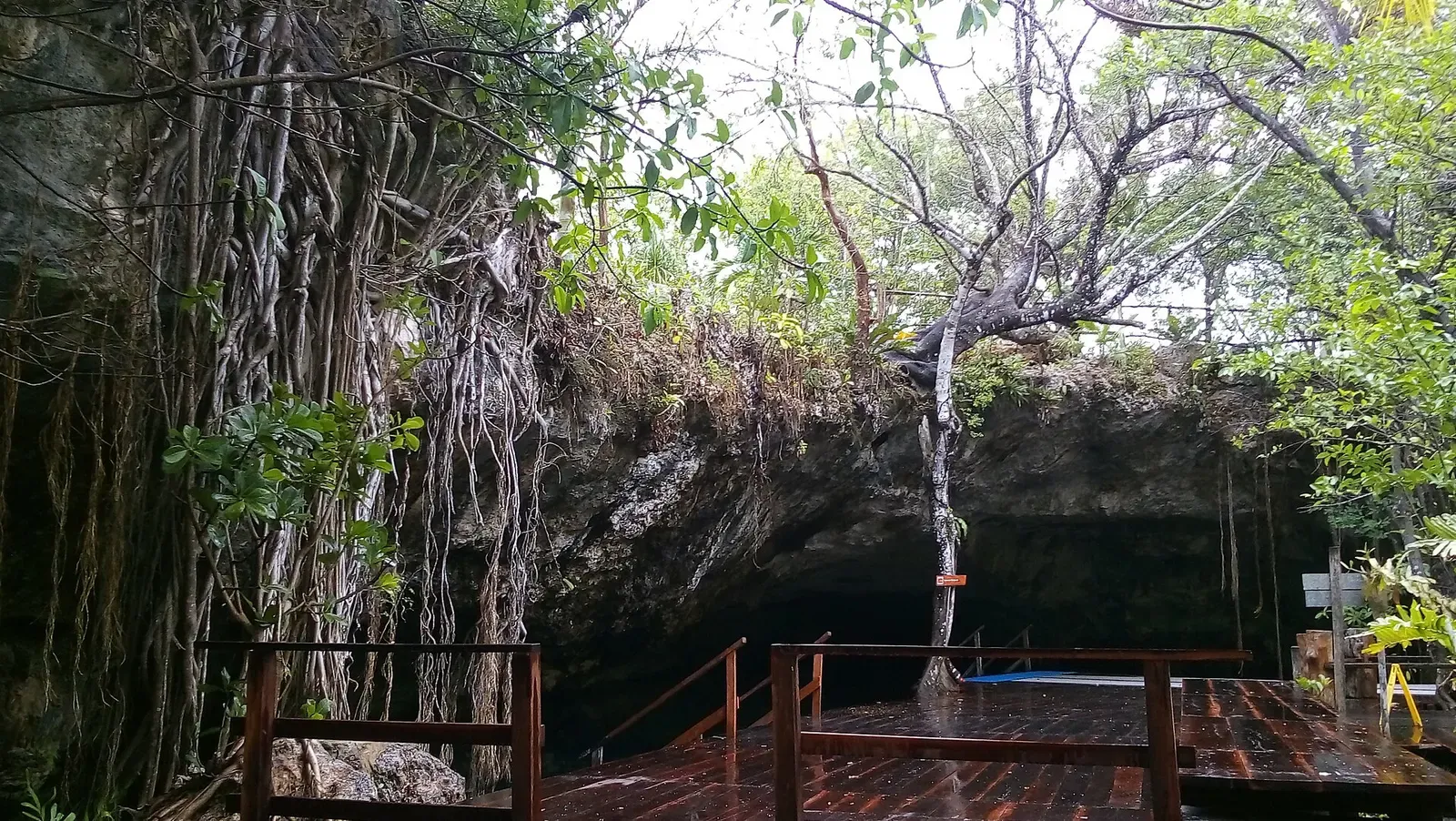
Riviera Maya Cenotes · Mexico · Cenote · Cave & cavern
Cenote Nohoch Nah Chich
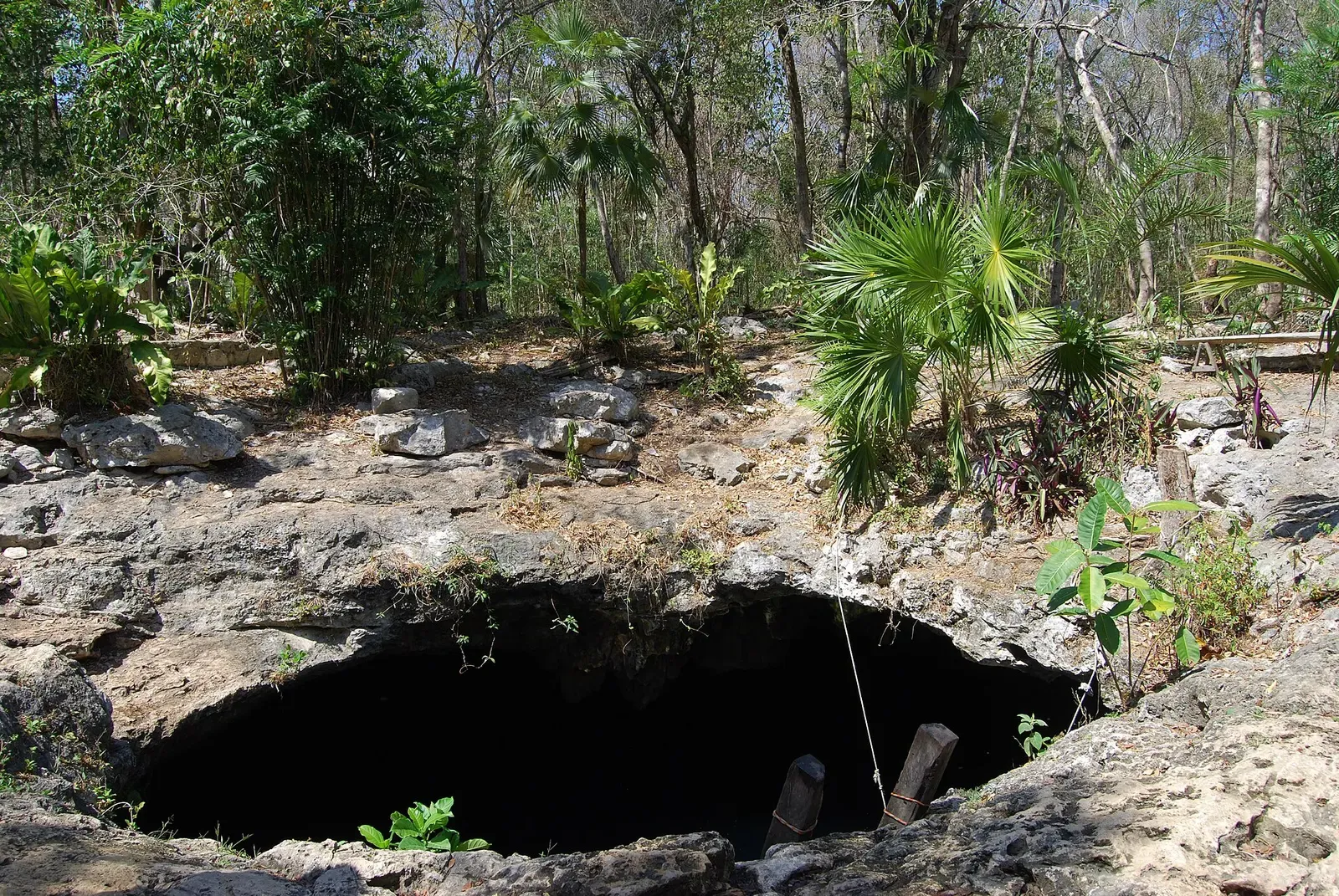
The cenote door into Sistema Sac Actun
Photo: Offthebeatonpath · CC BY-SA 4.0
Nohoch Nah Chich, "Giant Bird House" in Maya, is the cenote entrance to a cave surveyed to 67 km of passage on its own before it was connected into Sistema Sac Actun in early 2007. Cavern diving stays in the daylight zone near the entrance; the system's 71.6 m maximum, at a point called the Blue Abyss, sits far beyond it in passages that belong to cave teams.
Where it is and how deep
20.2990° N, 87.4035° WPublished position for this site.
The dive
The entrance sits 16.5 km south of Akumal, in Tulum Municipality, so getting here is a drive inland and a walk to the water rather than a boat ride. Kit goes down to the water's edge and the dive starts from the surface of the cenote, in fresh water well back from the sea. A guided cavern dive stays inside the daylight zone near the entrance rather than covering ground, and the profile is long and slow.
Past the daylight the passage becomes Sistema Nohoch Nah Chich proper, explored by the CEDAM cave diving team that Mike Madden set up in 1987 and surveyed to 67 km across 36 cenotes by early 2007, when it was connected into Sistema Sac Actun and made the combined system the longest surveyed underwater cave in the world. That is cave diving rather than cavern work, and the system's 71.6 m maximum, reached at a point called the Blue Abyss, sits far below anything a guided dive here approaches.
Background
In 1987 Mike Madden of CEDAM International established the CEDAM Cave Diving Team, which surveyed Nohoch Nah Chich to a recorded length of 67 km across 36 cenotes by early 2007. That year the system was connected into and subsumed into Sistema Sac Actun, making that the longest surveyed underwater cave system in the world. The deepest point recorded in it, the Blue Abyss, is 71.6 m.
Marine life and season
The sources we used don't single out particular species here.
| Jan | Feb | Mar | Apr | May | Jun | Jul | Aug | Sep | Oct | Nov | Dec |
|---|---|---|---|---|---|---|---|---|---|---|---|
| Prime | Prime | Prime | Prime | Good | Good | Good | Good | Good | Good | Prime | Prime |
Season follows Riviera Maya Cenotes: Divable year-round at a constant 25°C; the Nov–Apr dry season is clearest, while summer downpours can cloud shallow cenotes for a day or two.
Know before you go
- The cave continues well beyond the daylight zone; everything past the cavern line is full cave territory and needs cave certification, not a guide's briefing.
- The system's deepest point is 71.6 m, so depth discipline matters: the recreational dive stays shallow and inside the light.
Questions divers ask
How deep is Nohoch Nah Chich?+
The maximum depth recorded in the cave system is 71.6 m, at a point called the Blue Abyss, but that is deep cave passage. Guided cavern diving at the cenote stays shallow and inside the daylight zone.
Where is Cenote Nohoch Nah Chich?+
In Tulum Municipality, Quintana Roo, 16.5 km south of Akumal, reached by road inland from the coast.
Sources
- Cenote Nohoch Nah Chich - Scubago — Scubago
- Sistema Nohoch Nah Chich — Wikipedia
Photo credits
- Wooden decking and steps leading down into a cenote overhung by roots and trees by Offthebeatonpath, CC BY-SA 4.0, via Wikimedia Commons
In The Logbook
- How a rebreather works, and what it buys youGear & kit · 6 min read
More dive sites in Riviera Maya Cenotes
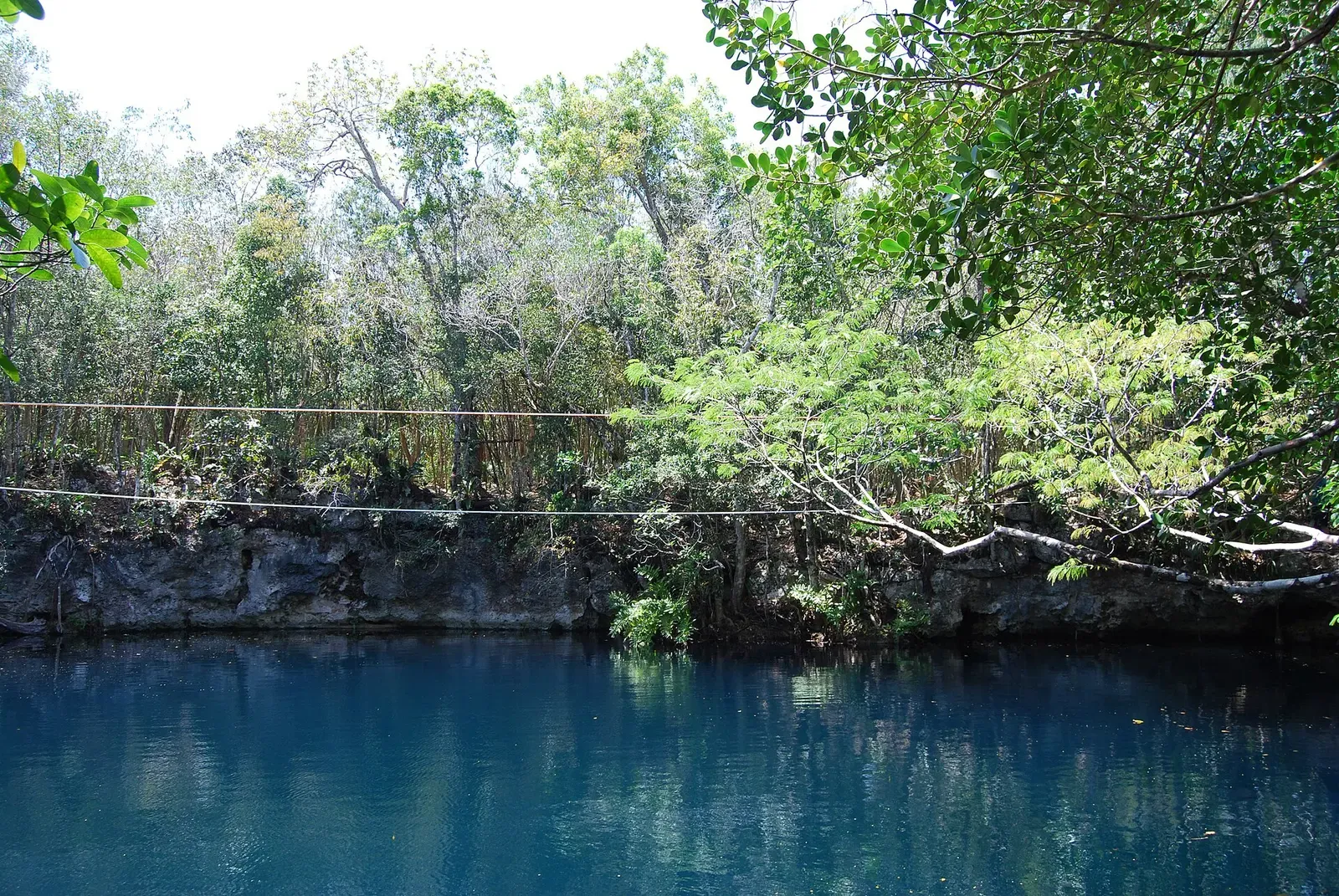
A sulphide cloud you can put a hand through, at 27 m
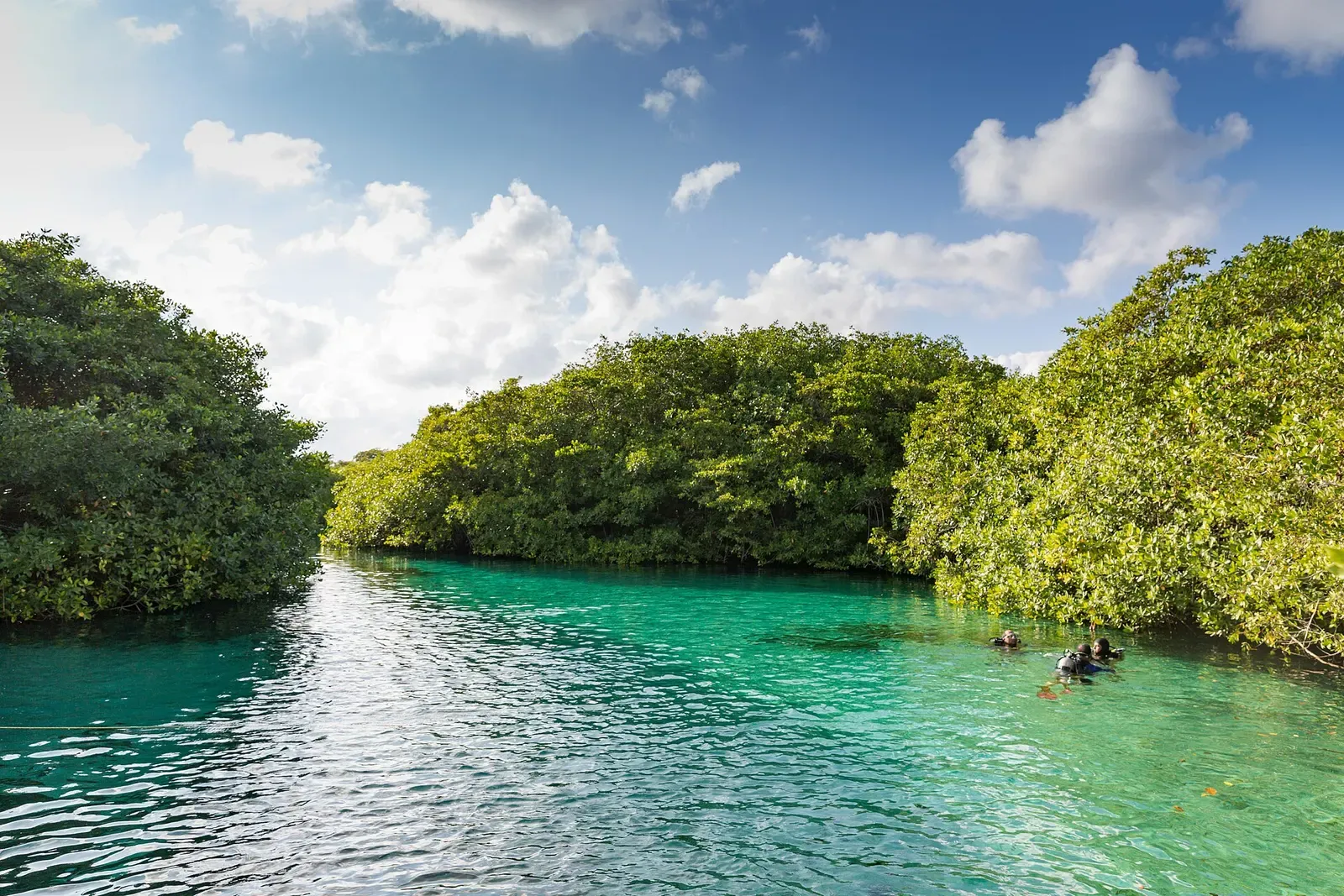
A mangrove channel dive with no overhead at all
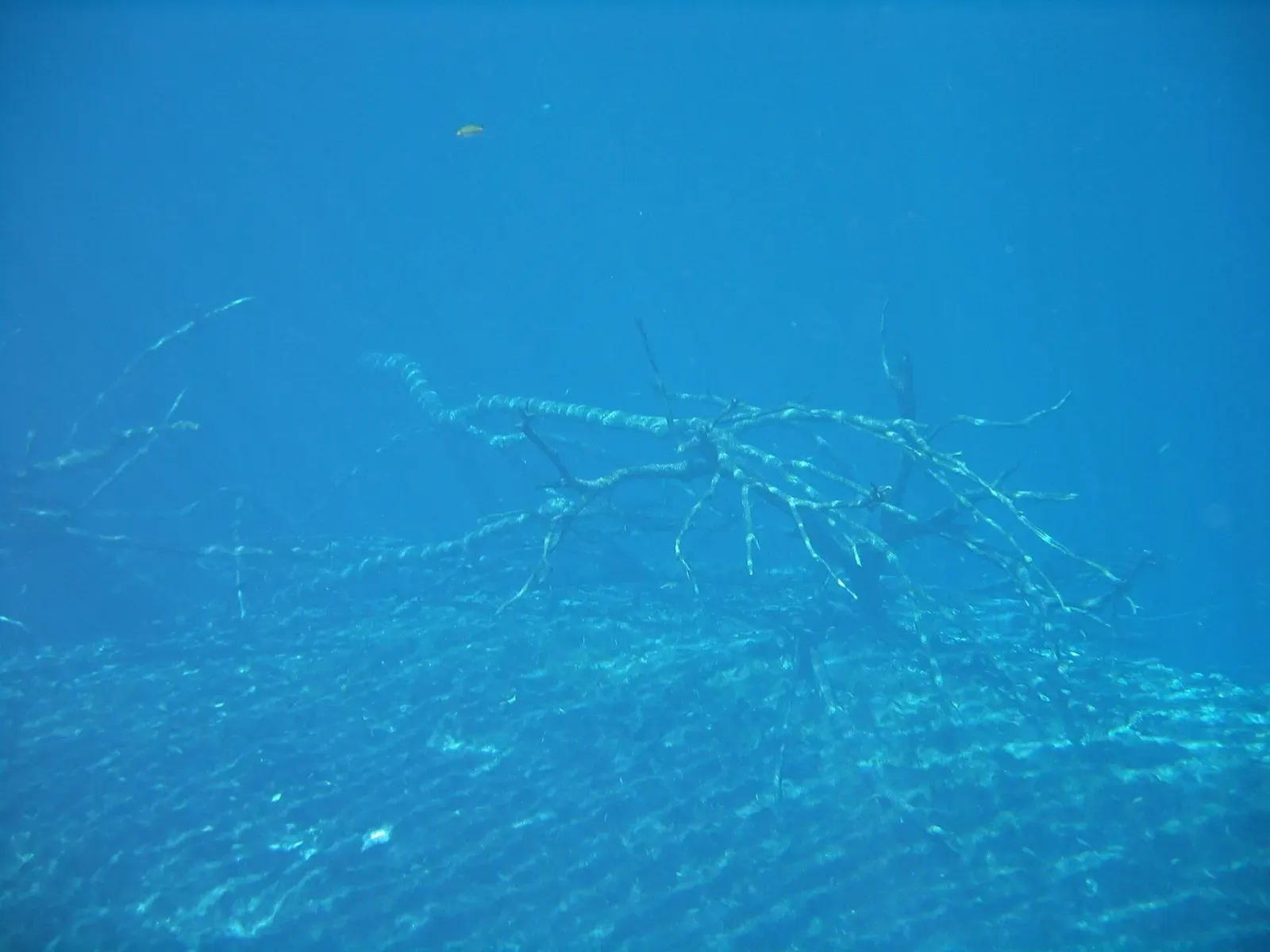
Lily pads on the surface, decorated cavern underneath
Jump through the roof or take the ladder beside it
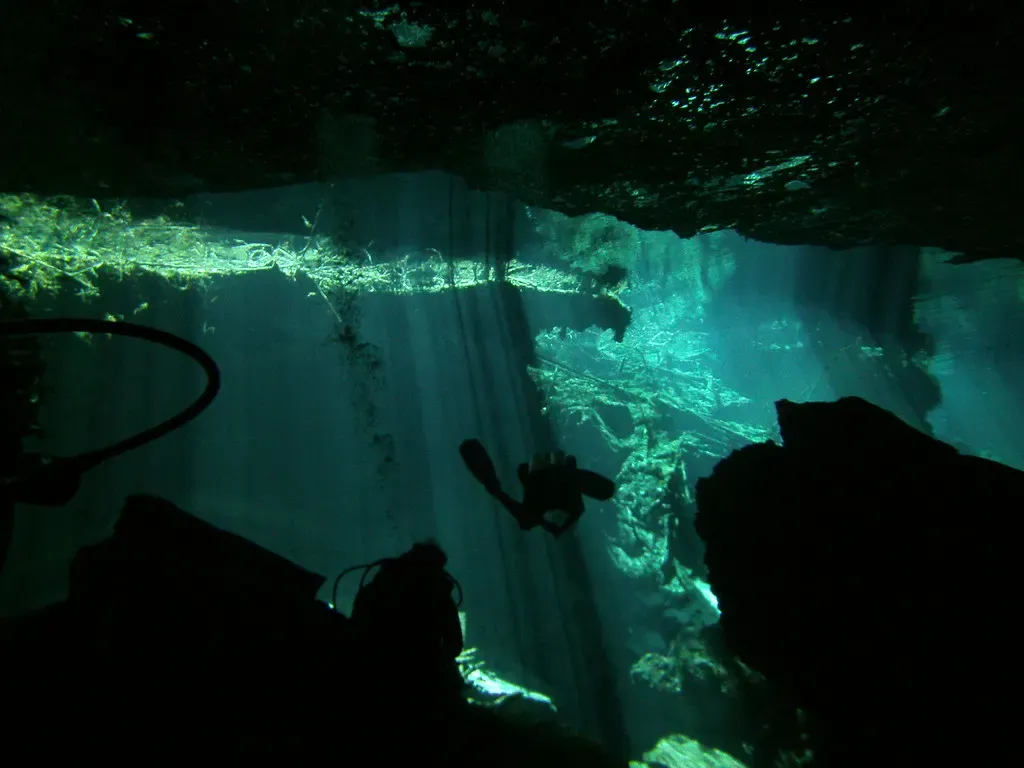
An air dome you can surface in, under two levels of stalactites
Cenote
Where cave divers found three prehistoric skeletons
Cenote
A crossing to the neighbouring Rainbow Cenote
Cenote
Nine metres of clear water used for course skills
Similar dives elsewhere

A vertical shaft with side caverns at its 18 m base

A shallow air-filled cavern next to Mushroom Forest

A coral arch on the wall, named for a Cayman photographer
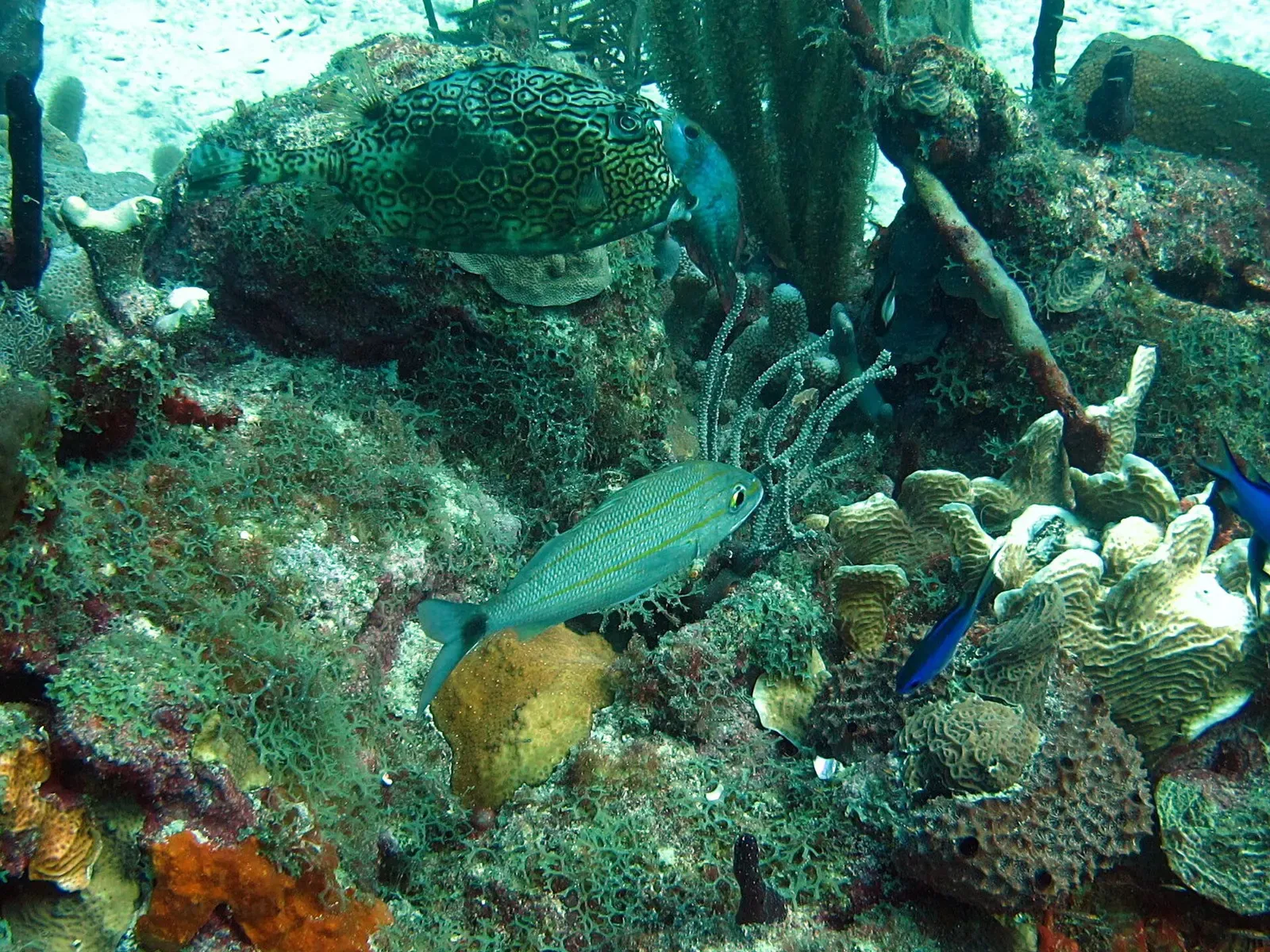

Taíno artefacts in place in a 9 m freshwater cave