Ninety litres so the body can keep one
An open-circuit regulator hands you gas at the pressure you are sitting in. At the surface that costs a litre per litre. At 40 metres, where the ambient pressure is five times higher, every lungful is billed at five times the surface price — so a diver who breathes 18 litres a minute on land is spending about 90 litres a minute down there.
Almost none of it does anything. You metabolise roughly a quarter of the oxygen in a breath and none of the nitrogen, and then you post the rest into the sea as bubbles. The cylinder does not empty because you used the gas. It empties because you rented it at depth and gave it back.
A closed-circuit rebreather breathes the same gas around a loop. Carbon dioxide is pulled out chemically, and the only thing topped up is the oxygen the body actually burned. Metabolism is a chemical rate, not a pressure one: a diver at rest to moderate work consumes something like 0.8 to 1.5 litres of oxygen a minute, and that figure is the same at 6 metres and at 60. The consumption line goes flat.
The gap is not a percentage. An aluminium 80 holds about 2,300 litres of air, which is a little over two hours of surface breathing and twenty-five minutes at 40 metres. Three litres of oxygen at 200 bar is 600 litres, and at metabolic rates that is somewhere between six and a half and twelve and a half hours — at any depth you like. At 40 metres the regulator is moving ninety litres a minute so that the body can keep one.
What the loop is made of
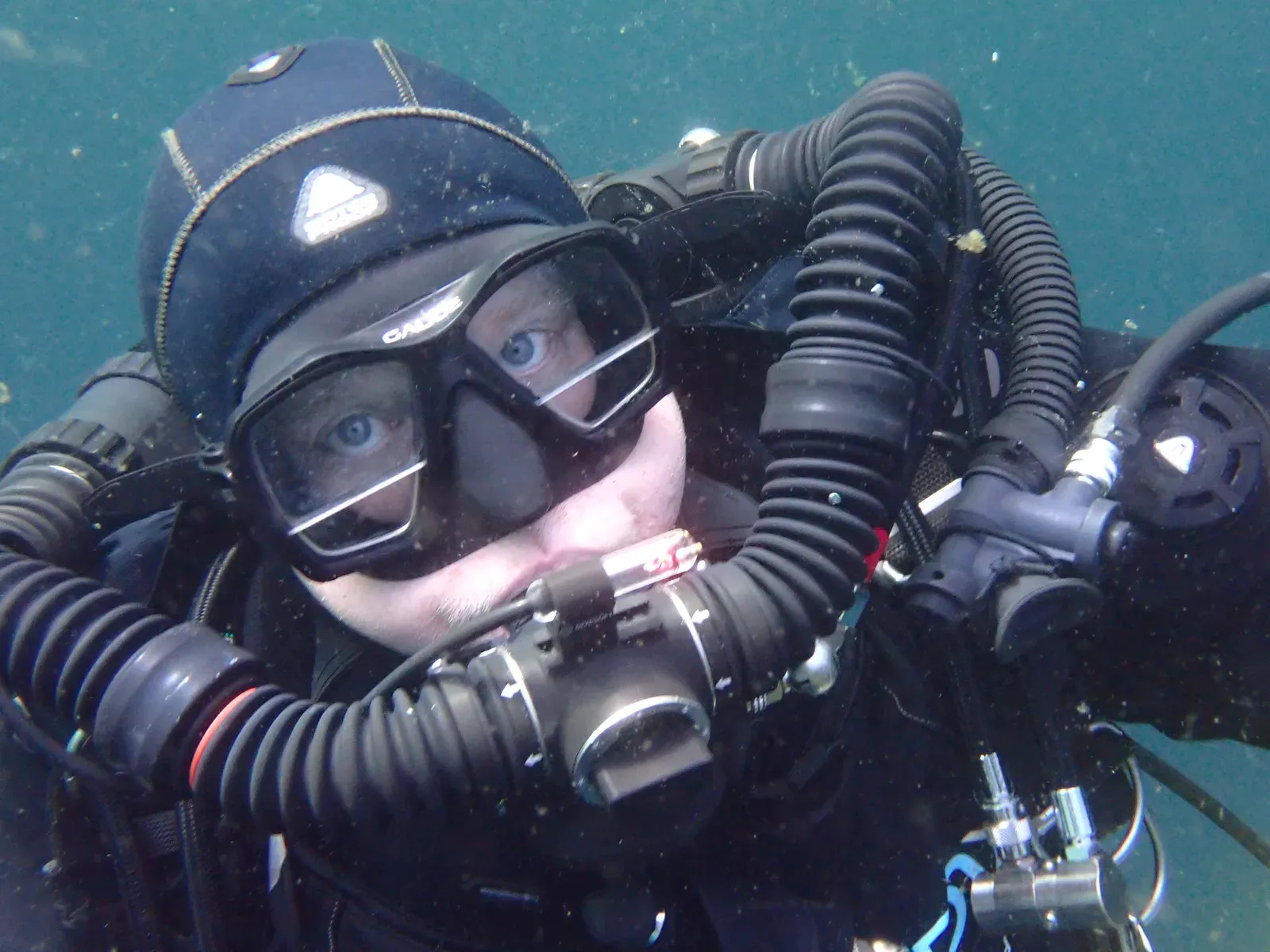
Four parts do the work. A scrubber full of soda lime takes the carbon dioxide out of the exhaled gas; the reaction is chemical, it produces heat and water, and it is the reason the gas you inhale from a loop is warm and humid rather than dry and cold. A counterlung is a flexible bag that holds the breath between exhaling and inhaling, so the loop has somewhere to put its volume. Oxygen cells — usually three of them, so the electronics can take a vote — measure the partial pressure in the loop many times a second. And a solenoid injects oxygen whenever that measurement falls below the number the diver has chosen, while a second cylinder of diluent, air or trimix, is added on the way down to keep the loop from collapsing as it compresses.
That chosen number is the setpoint, and it is the whole design. Open circuit fixes the fraction of oxygen in the cylinder and lets its partial pressure do whatever depth makes it do. A rebreather fixes the partial pressure and lets the fraction do whatever it must.
It is worth being clear about what runs out first, because it is not the gas. In a bench study of an Inspiration under a workload simulating six metabolic equivalents, 2.64 kg of Sofnolime reached carbon dioxide breakthrough at 202 minutes and 2.38 kg of Spherasorb at 138. Three hours, give or take, and less if the water is cold or the diver is working. The oxygen supply is measured in half-days; the scrubber is the clock, and unlike a pressure gauge it does not show you how much is left.
The best nitrox for every depth, and where that stops
Hold the setpoint at 1.3 bar and the loop is obliged to become whatever mix delivers 1.3 bar at your current depth. At 10 metres that is EAN65. At 20 it is EAN43. At 30 it is EAN32 — the mix you would have had to choose on the surface, arriving exactly where it is legal. At 40 metres it is EAN26, and by 60 the loop is holding EAN19, which is leaner than air.
The right-hand panel is the part that surprises people. A rebreather is not a machine for breathing rich gas deep. It is a machine for breathing rich gas shallow, and the decompression arithmetic follows that shape rather than the one the marketing implies.
Run it through Bühlmann and the pattern is stark. At 20 metres, air gives you 49 minutes before you owe a stop and the loop at 1.3 gives you over three hours — the scrubber gives out long before the nitrogen does. At 30 metres it is 20 minutes against 32. At 40 metres it is 11 against 13. And at 45 metres, where the loop is down to the equivalent of EAN24, it is nine minutes against nine minutes. The advantage has gone.
This is why deep rebreather divers are not diving a rebreather to save decompression on nitrogen. Below about 40 metres the setpoint has nothing left to give, and what the loop buys instead is that helium becomes affordable. A trimix diluent on open circuit is a logistics exercise and an invoice; on a loop it is one small cylinder, because you are barely spending it. The deep advantage is gas economy purchased as narcosis relief and gas density relief, not as shorter stops.
Both ways of getting it wrong are silent
Here is the counterweight, and it deserves the same arithmetic as the rest.
Andrew Fock’s analysis of 181 recreational closed-circuit deaths between 1998 and 2010 put the fatality rate at roughly 4 per 100,000 dives — about ten times that of open-circuit recreational scuba, which sits near 0.5. In his own comparison table that places rebreather diving above skydiving and hang gliding, and an order of magnitude below base jumping. British Sub-Aqua Club data over a similar period had rebreather divers accounting for 14 per cent of fatalities on 4 per cent of the dives.
The causes are the thing to read closely. Hypoxia was the single largest identified cause, 31 of the 181. Hypercapnia accounted for 17 and hyperoxia for 7, and equipment-related problems for 44 per cent overall. Two-thirds of the fatal dives, where enough was known to judge, involved a high-risk dive or a high-risk decision — continuing with an alarm sounding, entering the water with a valve shut.
What makes those numbers different in kind from open-circuit numbers is that you cannot feel any of it. Too little oxygen in the loop produces no sensation of suffocation, because the urge to breathe is driven by carbon dioxide, and the scrubber is diligently removing that. Too much produces nothing either, until a convulsion underwater. Carbon dioxide breakthrough at least announces itself, with breathlessness and a headache, though by then there is often little to be done at depth. And the instrument standing between the diver and both silent failures is three galvanic cells with a service life of only 12 to 18 months, which can read correctly at the surface and still be current-limited at depth — flattening out, and quietly under-reporting, exactly where the partial pressure matters most.
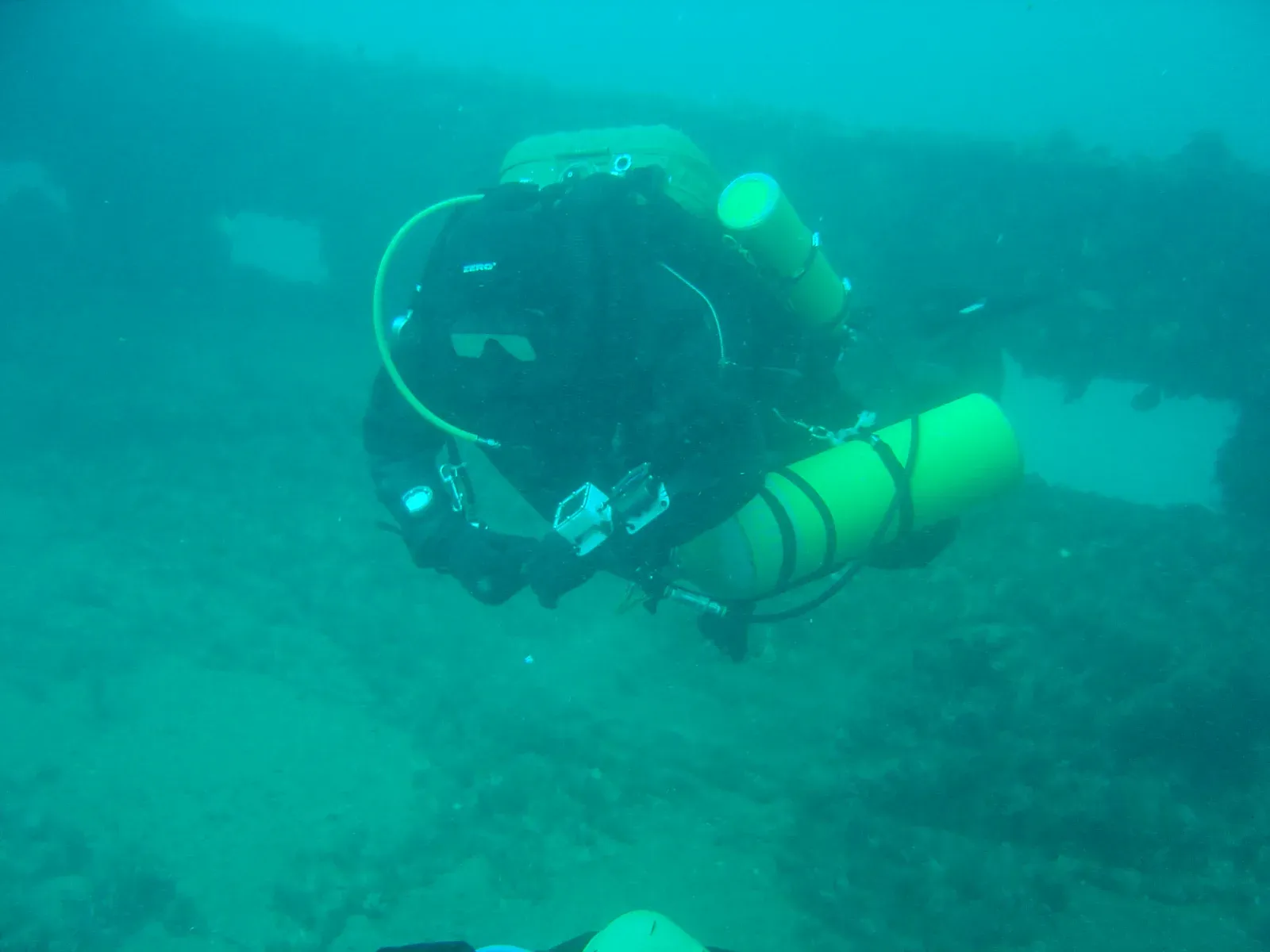
Which is why the answer to every loop failure is the same, and it is not on the loop. It is a cylinder of open-circuit gas, enough to get to the surface with the stops paid, carried on every dive. Fock’s fault-tree analysis put a rebreather’s chance of a component failure at 25 times that of a manifolded twin set — a number he immediately qualifies by noting that adequate bailout is what makes it survivable.
Who it is actually for
A rebreather is not a better way to do the dives you are already doing. On a 25-metre reef for 50 minutes, it is several thousand pounds and an hour of assembly and checklists to solve a problem an aluminium 80 had already solved.
These are sites in our data where the trade actually pays: deep enough that open circuit is counting minutes, or long enough that it is counting litres.
| Site | Depth | Level | Best months |
|---|---|---|---|
| San Francisco Maru Chuuk Lagoon · Micronesia | 27–64 m | Advanced | Nov–May |
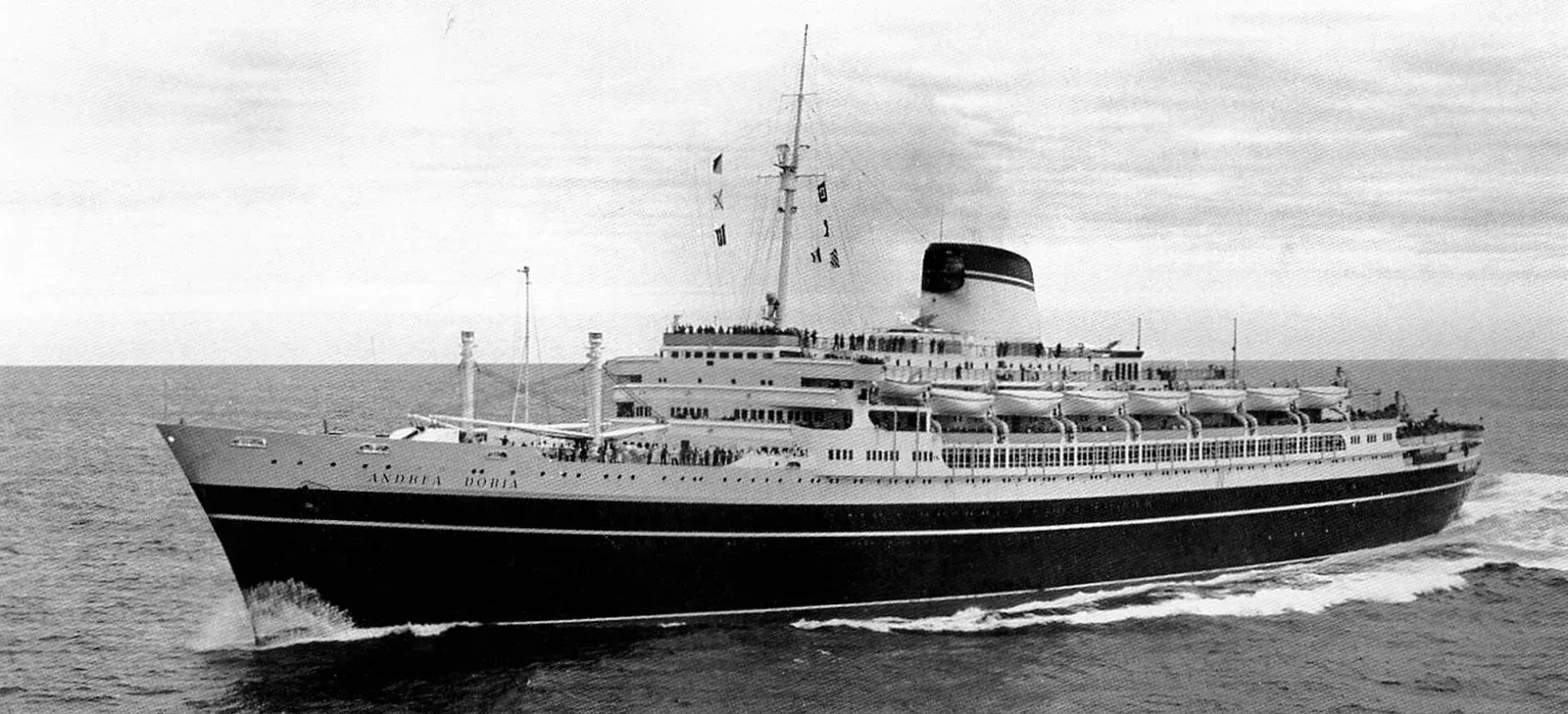
| SS Andrea Doria Long Island Wreck Valley · United States | 58–73 m | Advanced | Jul–Sep |
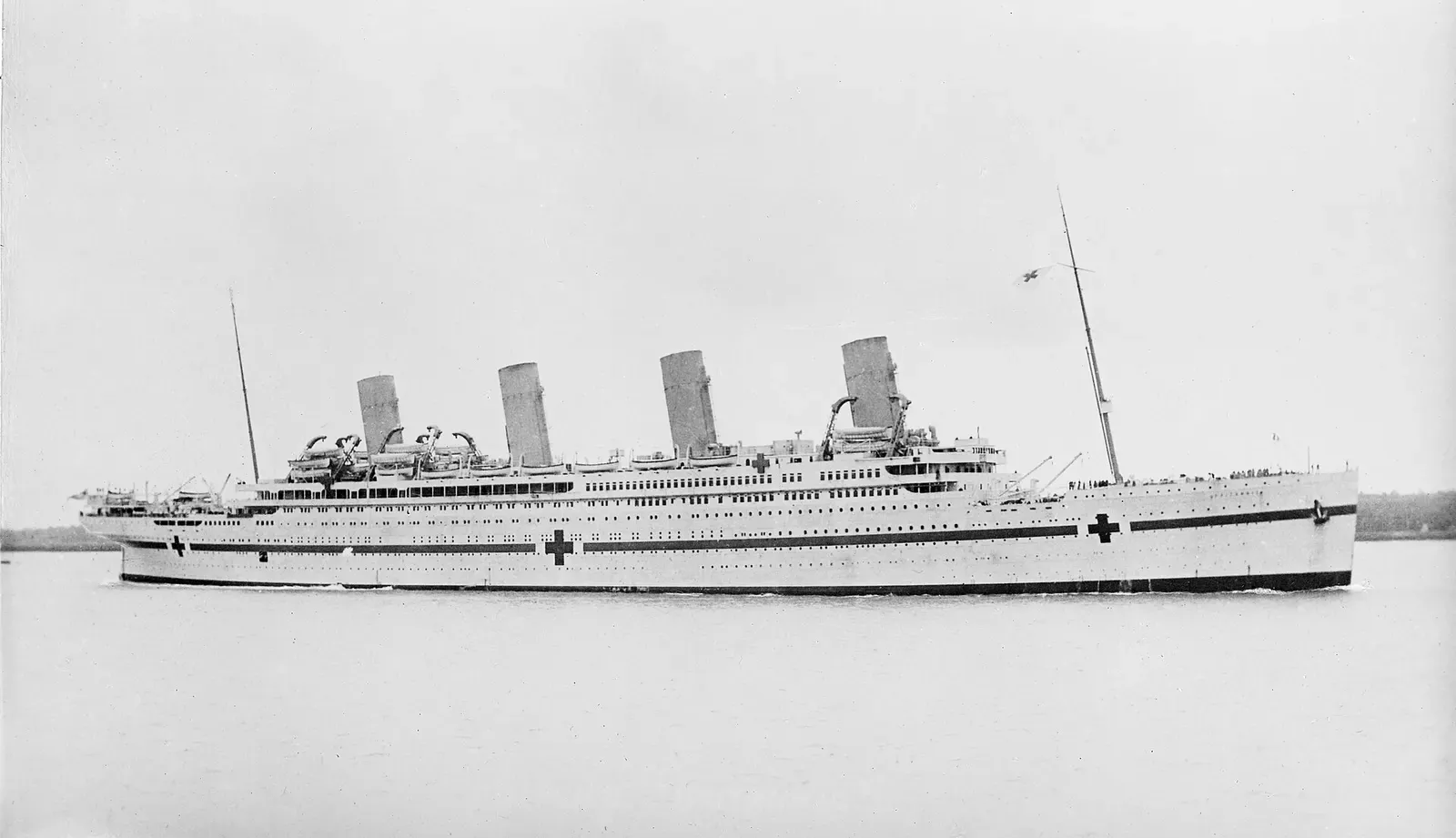
| HMHS Britannic Kea Channel · Greece | 80–122 m | Advanced | Jun |
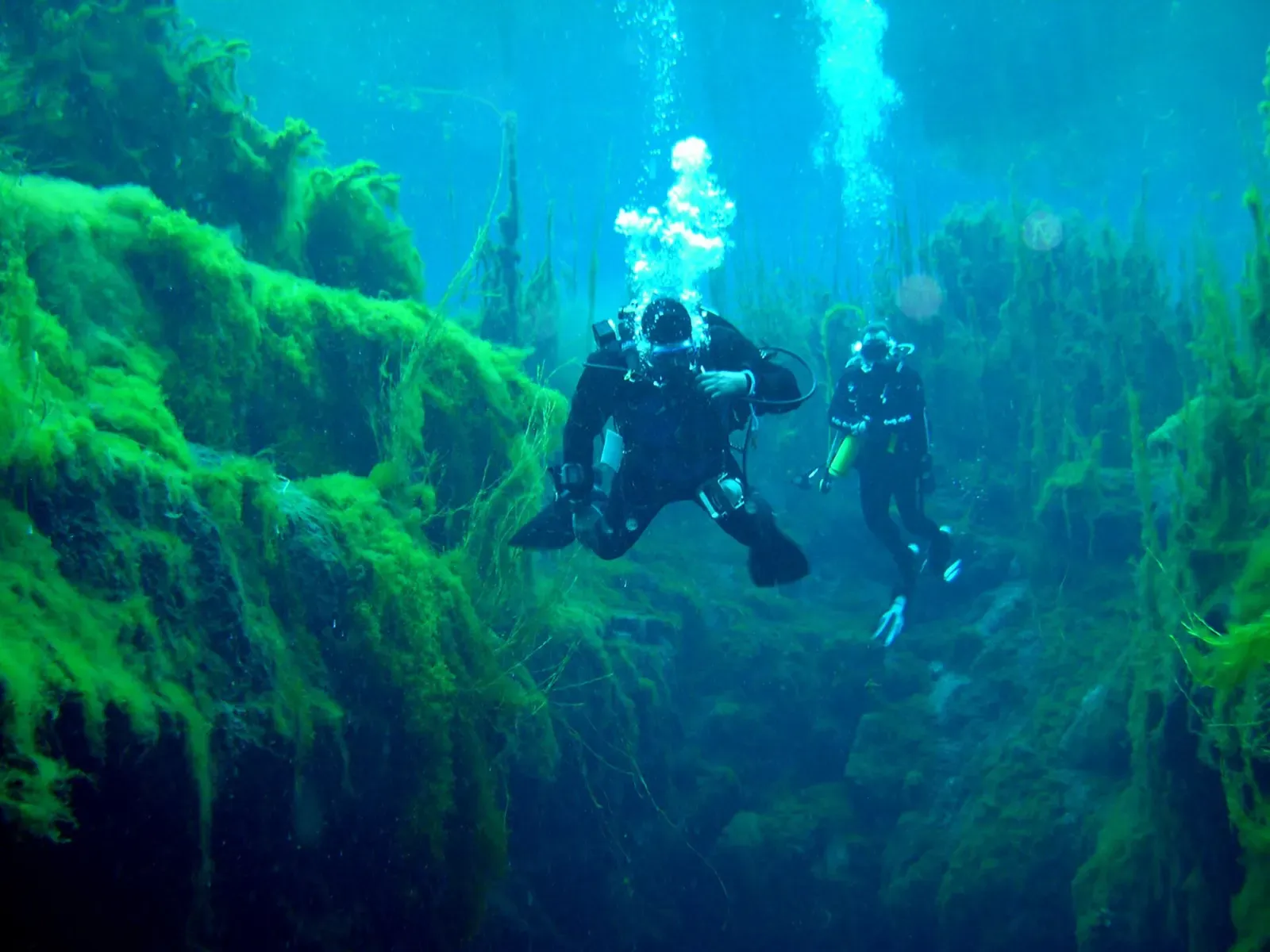
| The Shaft Mount Gambier · Australia | 36–124 m | Advanced | May–Aug |
| Cenote Nohoch Nah Chich Riviera Maya Cenotes · Mexico | to 71.6 m | Advanced | Nov–Apr |
| SS Justicia Malin Head · Ireland | to 70 m | Advanced | Jun–Aug |
| HMS Triumph Gallipoli · Turkey | to 73 m | Advanced | Jun–Sep |
| The Stern Espiritu Santo · Vanuatu | to 73 m | Advanced | Apr–Nov |
| SMS Szent István Premuda · Croatia | to 66 m | Advanced | Jun–Sep |
| B-17 Vis · Croatia | 65–72 m | Advanced | Jun–Sep |
| IJN Kyo Maru Subic Bay · Philippines | to 69 m | Advanced | Nov–May |
| Florida Thunder Bay · United States | to 63 m | Advanced | Jul–Sep |
| Samaesan Hole Pattaya & the Sattahip Wrecks · Thailand | 85–100 m | Advanced | May–Jul |
| Corveta Ipiranga Fernando de Noronha · Brazil | to 62 m | Advanced | Aug–Oct |