
Riviera Maya Cenotes · Mexico · Cenote · Cave & cavern
Cenote Pet Cemetery
White formations and the remains of a prehistoric camel
Area photo: diego_cue · CC BY-SA 3.0
Cenote Pet Cemetery is a shallow cavern decorated with delicate white stalactites, stalagmites and columns. Much of the site lies in daylight at about 3 m, making it suitable for advanced snorkellers as well as a cavern dive to a maximum of 7 m.
Where it is and how deep
20.3179° N, 87.4097° WApproximate position — the dashed circle shows where the site lies; your operator's briefing has the mooring.
The dive
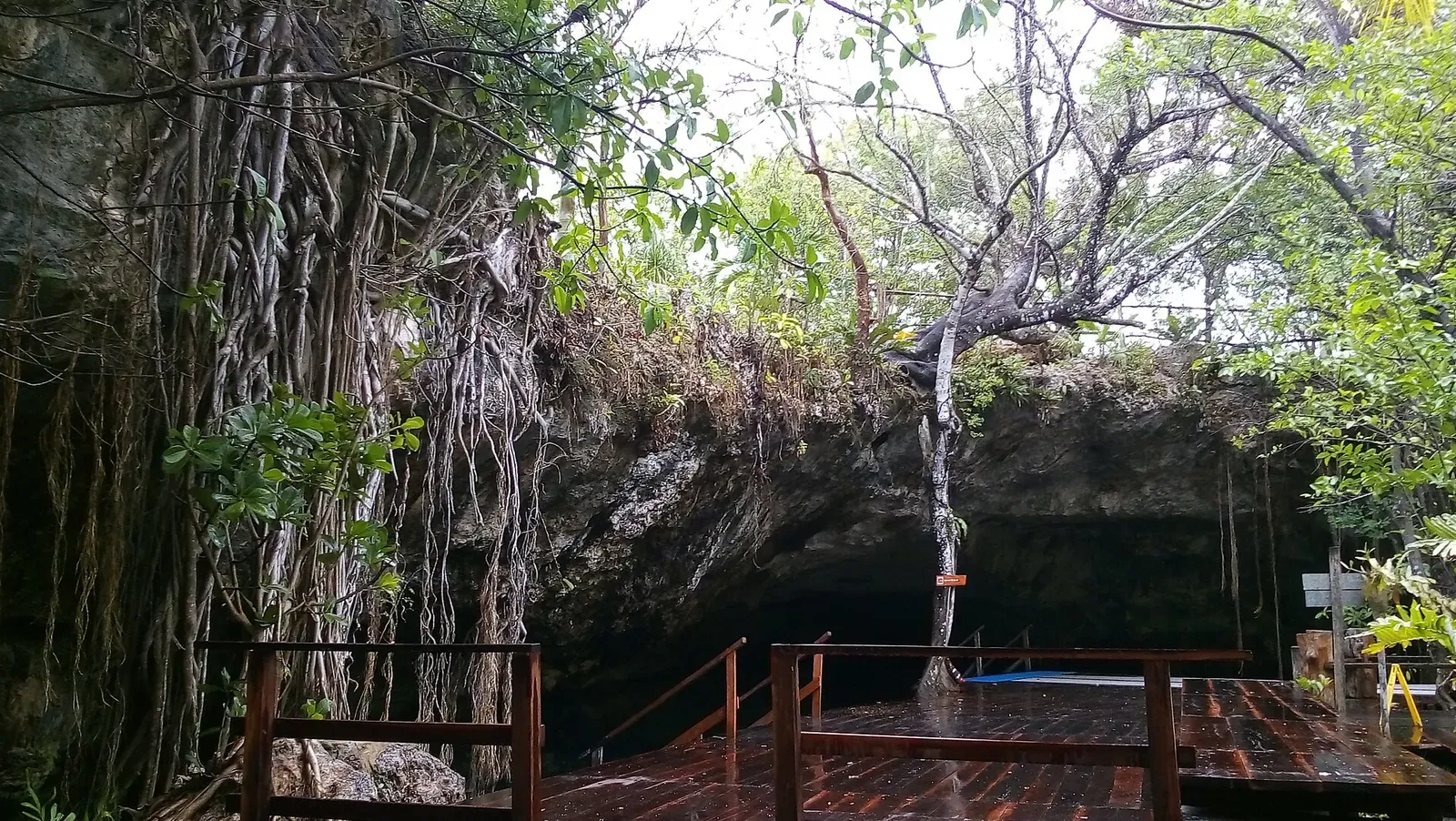
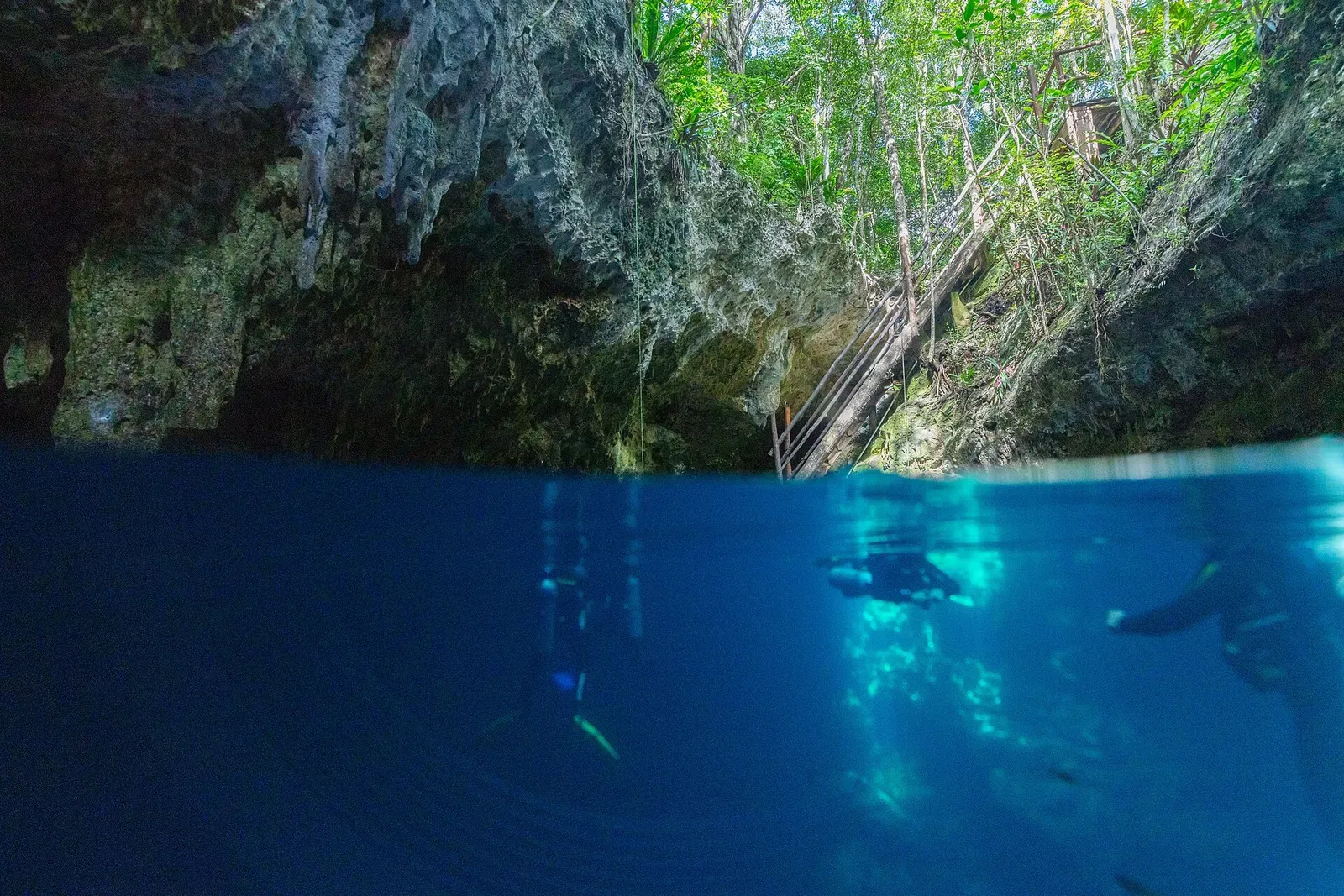
Platforms and wooden steps give access to the water. Much of Pet Cemetery lies at about 3 m with a broad area of daylight, offering shallow exploration and suitable conditions for advanced snorkellers.
The cavern contains delicate white stalactites, stalagmites and columns in clear water. Its maximum depth is 7 m, deeper than the extensive shallow section; animal skeletons found here include the fossilised remains of an extinct prehistoric camel.
Background
Pet Cemetery takes its name from the animal skeletons found in the cenote. Among them are the fossilised remains of an extinct prehistoric camel, giving the name a connection to the animals whose remains were discovered here.
Marine life and season
The sources we used don't single out particular species here.
| Jan | Feb | Mar | Apr | May | Jun | Jul | Aug | Sep | Oct | Nov | Dec |
|---|---|---|---|---|---|---|---|---|---|---|---|
| Good | Good | Good | Good | Good | Good | Good | Good | Good | Good | Good | Good |
Season follows Riviera Maya Cenotes: Cenote water temperature holds steady all year; Dos Ojos gets busier in the December–April peak season while most other cenotes stay quiet.
Questions divers ask
Is Pet Cemetery suitable for snorkelling?+
The shallow, daylight section at about 3 m is suitable for advanced snorkellers; the cavern dive reaches 7 m.
How is Pet Cemetery entered?+
Access is via Cenotes Dos Ojos, with an easy water entrance and exit using platforms and wooden steps.
Why is the cenote called Pet Cemetery?+
The name comes from animal skeletons found in the cenote, including fossilised remains of an extinct prehistoric camel.
What formations occur at Pet Cemetery?+
The cavern contains delicate white stalactites, stalagmites and columns, with much of the shallow section in daylight.
Sources
- Cenote Pet Cemetery — Pro Dive International
- Cenote Pet Cemetery (OpenStreetMap) — OpenStreetMap contributors
- Cenote Pet Cemetery — Todo Tulum
More dive sites in Riviera Maya Cenotes
An aquatic garden before the decorated cavern passages
Massive columns and tree roots on a shallow cavern line
Cenote
Cenote Dreamgate
Densely packed stalactites above the cavern circuits
Cenote
Cenote Tak Be Lum
Dripstone formations beneath a rock ceiling
Tree branches emerging from a hydrogen sulfide cloud
Cenote
Cenote Taak Bi Ha
A small entrance opening into a broad formation-filled room
The Barbie Line and Bat Cave cavern routes
Cenote
Cenote Dos Palmas
Four permanent cave lines from one platform
Similar dives elsewhere
Taíno artefacts in place in a 9 m freshwater cave
A network of shallow, easily navigated coral caves

Sponge-painted canyons and an archway into a shallow pool
Cave & cavern · Nevis · Saint Kitts and Nevis
The Caves
Coral tunnels and grottos with swim-throughs no deeper than 12 m