Thunder Bay · United States · Wreck · Freshwater
Typo
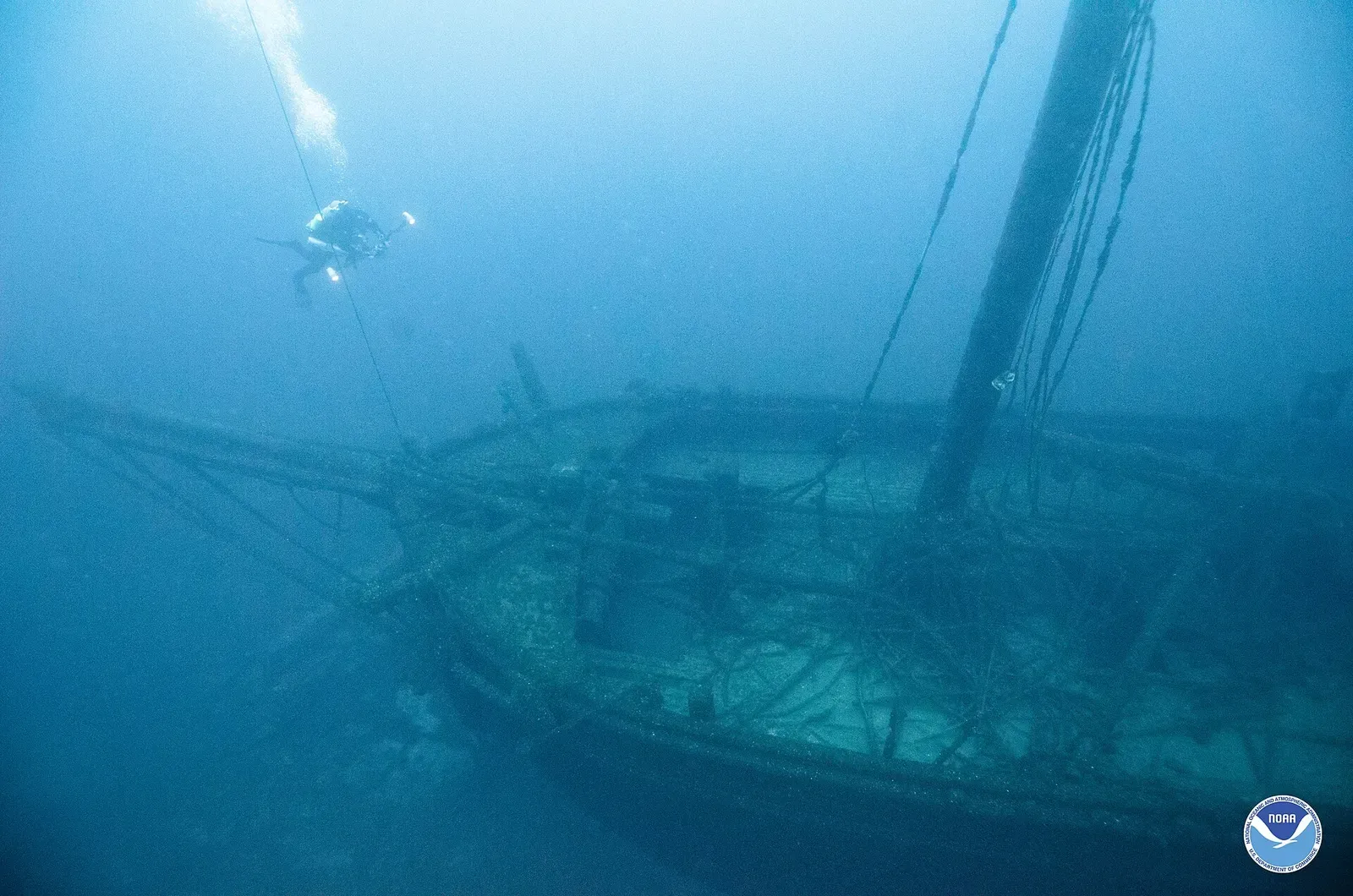
Foremast standing and the bell still on the windlass
Photo: NOAA's National Ocean Service · CC BY 2.0
A wooden three-masted schooner of 1873, run down from behind by a steamship in 1899 while carrying coal and lost with four of her seven crew. At 59 m she sits upright with the hull nearly whole, the foremast still standing to the crosstrees and the ship's bell hanging over the windlass, and the coal that spilled as she sank lying in a debris field behind her.
Where it is and how deep
45.2914° N, 83.3158° WApproximate position — the dashed circle shows where the site lies; your operator's briefing has the mooring.
The dive
The foremast is the landmark: it still stands to the crosstrees, so the wreck announces itself before the deck does on the way down. Below it the hull is nearly all intact, a 42-metre three-masted schooner (137 feet) sitting upright on the bottom at 59 m in water dark enough that the whole dive runs on torchlight. Forward, the ship's bell still hangs atop the windlass where it has been since 1899.
The stern is where the damage is — that is where the W.P. Ketchum struck her, into the cabin the crew slept in — and behind the wreck the coal she was carrying lies spilled in a debris field on the lake floor. The main mast is broken, with topmasts, crosstrees, spars and wire rigging spread across the deck. Bottom time at this depth is a handful of minutes, so most teams take the mast, the deck line and the stern break and leave the rest. Ascents are long, and everything on the site is protected.
The wreck
- Vessel
- Typo
- Type
- Wooden three-masted schooner
- Length
- 42 m (138 ft)
- Built
- 1873
- Sunk
- 1899
- Cause
- Struck from behind by the steamship W.P. Ketchum while carrying coal, and sank rapidly
- Lies
- Upright, hull nearly intact except for stern damage; foremast standing to the crosstrees
The Typo was launched in 1873 by Wolf & Davidson in Milwaukee, Wisconsin, a 42 m wooden three-masted schooner (137 ft). On 14 October 1899, 26 years into her career and loaded with coal for Racine, she was struck from behind by the steamship W.P. Ketchum. The blow fell on the stern cabin the crew lived in, and only three of her seven got off before she sank. The cold fresh water has kept nearly all of her hull intact apart from that stern damage, and the coal that spilled from her as she went down still lies in a debris field behind the wreck.
Marine life and season
The sources we used don't single out particular species here.
| Jan | Feb | Mar | Apr | May | Jun | Jul | Aug | Sep | Oct | Nov | Dec |
|---|---|---|---|---|---|---|---|---|---|---|---|
| Off-season | Off-season | Off-season | Off-season | Fair | Good | Prime | Prime | Prime | Fair | Off-season | Off-season |
Season follows Thunder Bay: The season runs late May to early October, with July and August warmest; the lake is unworkably cold and rough otherwise.
Know before you go
- Broken topmasts, spars and wire rigging lie loose across the deck; entanglement at 59 m is expensive to sort out, so carry a cutter and stay off the debris.
Sources
- Typo — NOAA Thunder Bay National Marine Sanctuary
- List of shipwrecks in Thunder Bay National Marine Sanctuary — Wikipedia
Photo credits
- Diver above the three-masted schooner Typo sitting upright on the bottom of Lake Huron with her masts standing by NOAA's National Ocean Service, CC BY 2.0, via Wikimedia Commons
More dive sites in Thunder Bay
Wreck
Ghost schooner upright at 56 m, masts still standing
Wreck
Steering wheel and chained windlass on a broken schooner
Wreck
The sanctuary's largest wreck, 162 m and inverted
Wreck
An intact 1848 schooner on an even keel at 56 m
Wreck
Three masts still on deck at 63 m
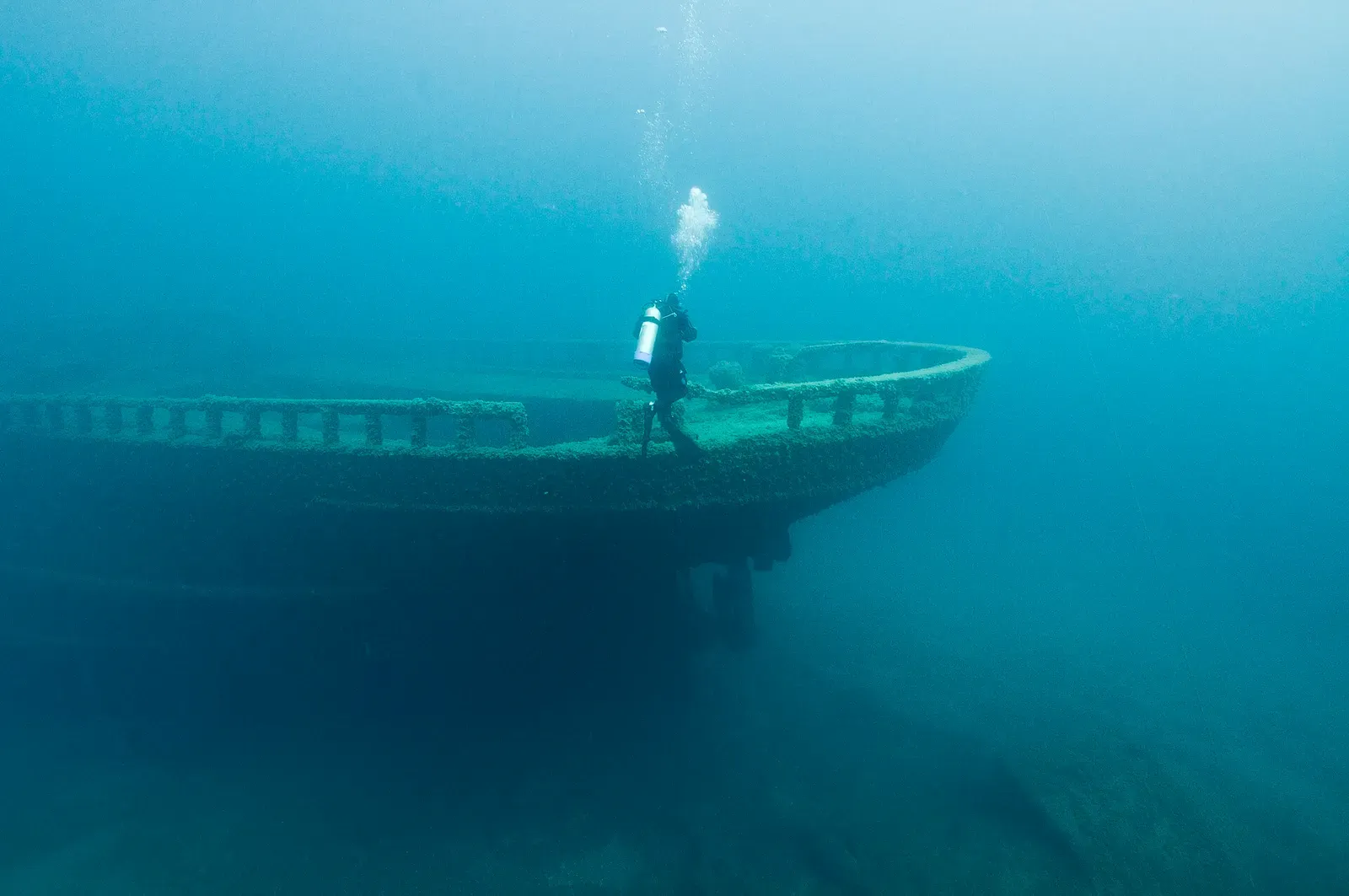
Upright steel freighter with engine and boilers still in place
Wreck
A Great Lakes freighter lying inverted at 53 m
An 1862 schooner in 18 m on a mooring buoy
Similar dives elsewhere
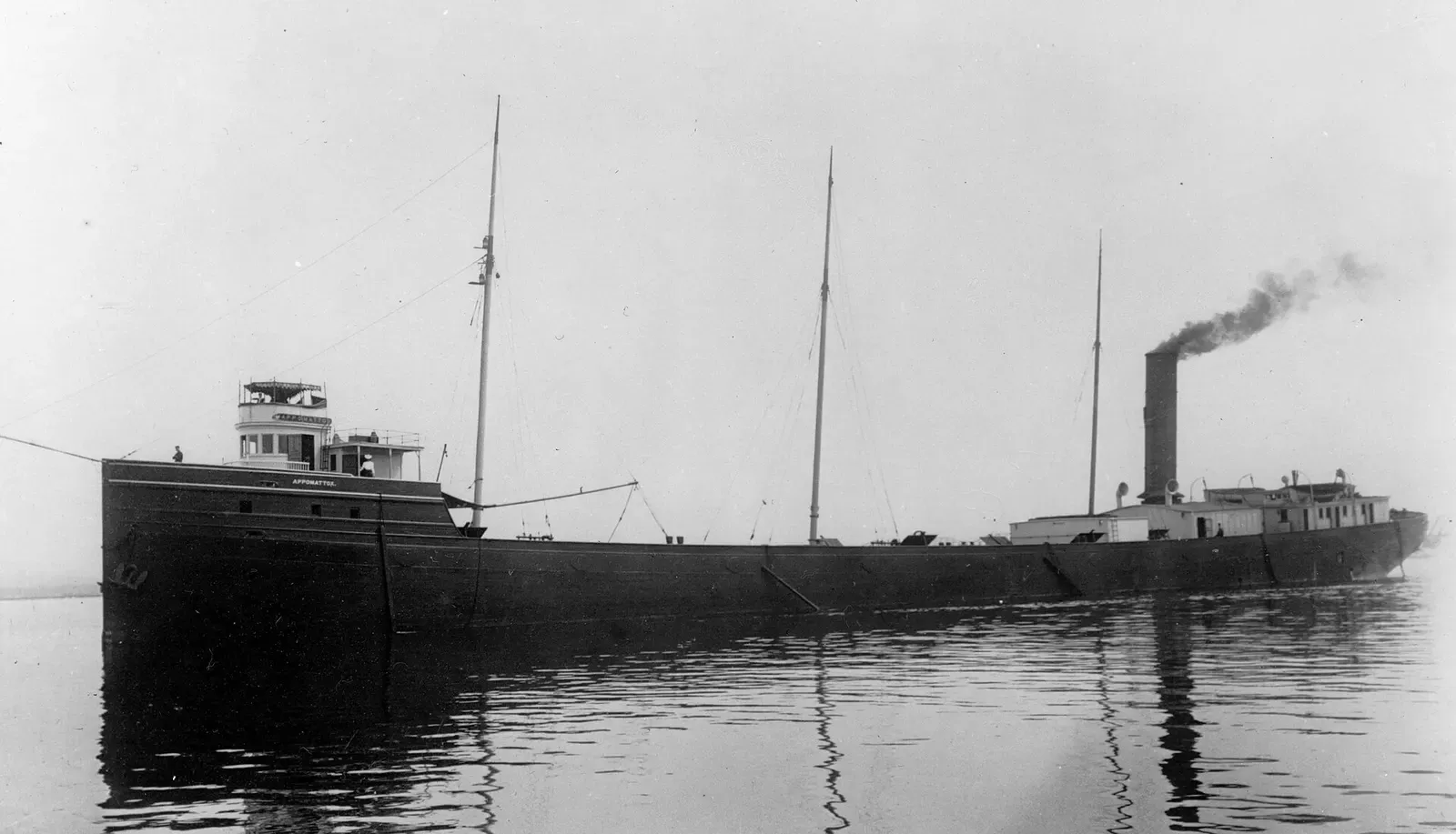
Remains of the largest wooden steamer on the Great Lakes, in 5 m
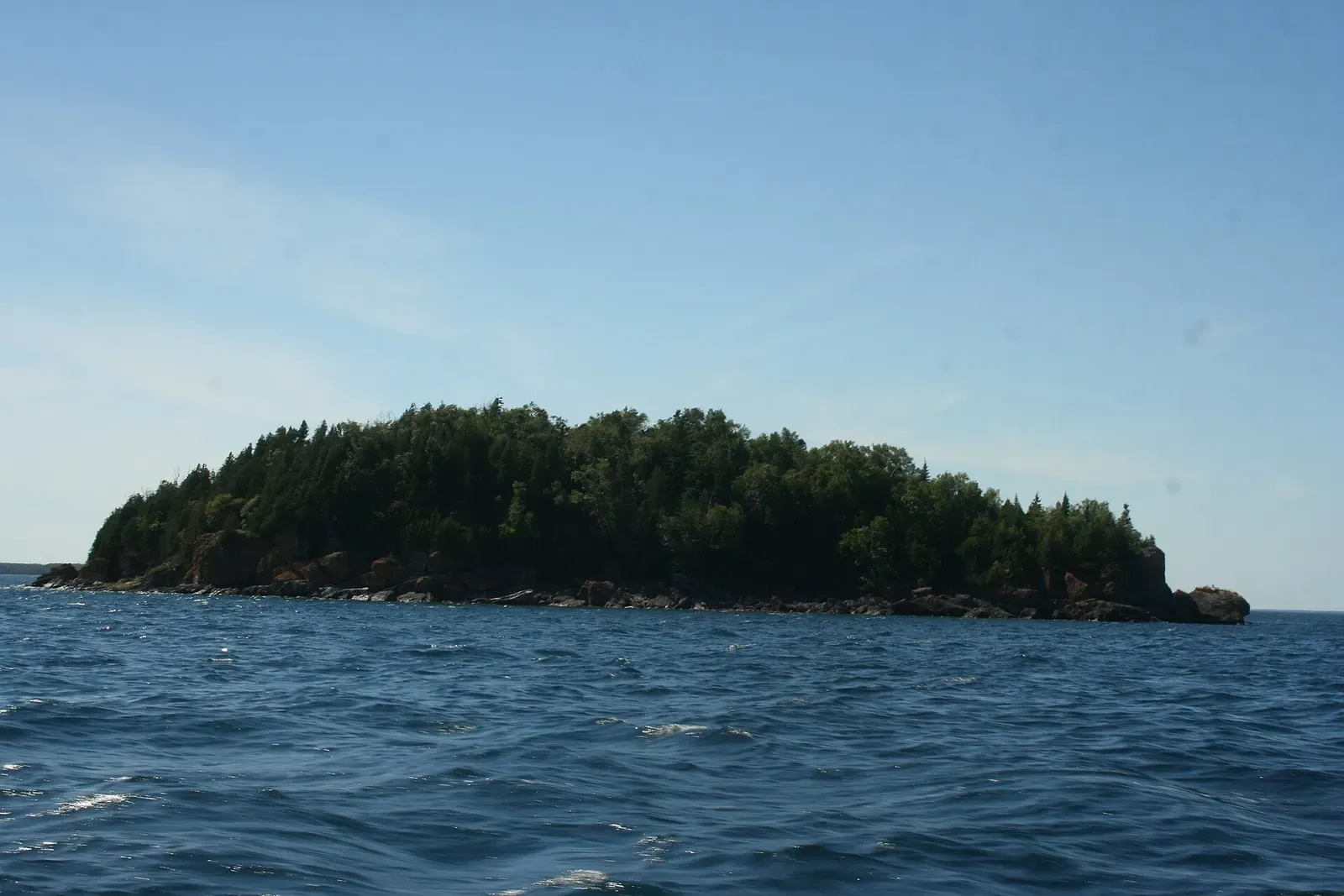
Bowsprit still extending from an 1852 hull at 32 m
Wreck
Bermuda
Alger Underwater Preserve & Munising · United States
Upright 1870 schooner with open cargo hatches and schools of rock bass


A 1940 Lunenburg schooner scuttled for divers at 17 m